 Lynden Siding
 Why Siding Fails Faster in Whatcom County
Siding in Lynden works harder than siding in drier parts of the country. Whatcom County sees a long, wet fall-through-spring stretch, moisture pushed in off the Salish Sea, and enough shade under mature trees and roof overhangs to keep moss and algae going most of the year. Add driving rain that comes in sideways during winter windstorms, and you've got a climate that finds every weak seam, every gap in caulking, and every spot where water can sit instead of run off. None of that means your siding is doomed — it means it needs to be inspected with a local eye, not a generic one.
Most siding failures don't happen overnight. They start small: a hairline crack, a soft spot near a downspout, a patch of moss that never quite dries out. By the time paint is visibly peeling or a board is spongy to the touch, water has usually been getting behind the surface for a while. Catching the early signs saves money and, more importantly, protects the wall framing and sheathing behind the siding — repairs to structural rot cost far more than replacing siding on its own.
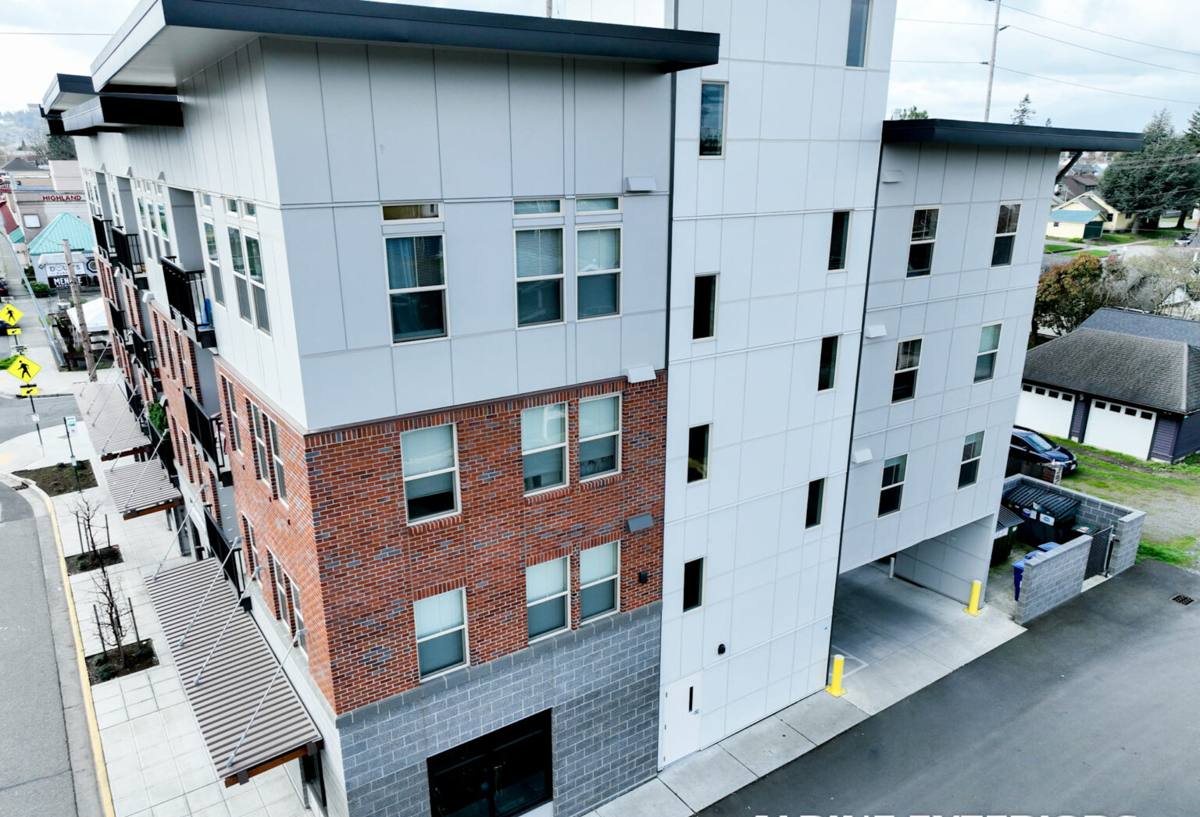
The Early Warning Signs Most Homeowners Miss
Paint and Finish Problems
Paint that's bubbling, peeling, or chalking heavily is often the first visible clue that moisture is moving through the siding rather than shedding off of it. On wood and composite products, a finish that fails every three to five years instead of holding for a decade is a sign the substrate underneath is absorbing water it shouldn't be.
Warping, Bowing, or Buckling
Boards that look wavy, especially after a wet winter, usually mean the material has swelled and hasn't fully returned to shape. Wood-based and OSB-based siding products are especially prone to this because the wood fibers expand when they take on moisture and don't always spring back cleanly.
Soft or Spongy Spots
Press a gloved hand or the blunt end of a screwdriver (not the point) against the siding near the bottom edge of the wall, around window trim, and near any penetration like a hose bib or vent. If it gives more than it should, or feels soft compared to the surrounding area, water has likely gotten into the material itself.
Persistent Moss and Algae Growth
A little moss on the north side of a house in this region is normal and not automatically a red flag. What matters is whether it keeps coming back heavily in the same spot right after cleaning, or whether it's growing on a south- or west-facing wall that should dry out between rains. Persistent regrowth in one location often means that section stays damp longer than it should — sometimes because of a gap, a failed caulk line, or a drainage plane problem behind the siding.
Signs That Mean the Damage Has Already Spread
- Visible cracks or splits that run through a board rather than sitting on the surface
- Gaps opening up at seams, corners, or where siding meets trim
- A musty or damp smell noticeable from inside an exterior wall, especially in a closet or corner room
- Peeling wallpaper, bubbling interior paint, or soft drywall on an exterior wall
- Visible staining or streaking that runs down from a seam or fastener
- Insect activity — carpenter ants and certain beetles are drawn to softened, moisture-damaged wood
- Siding that has visibly separated from the wall or that flexes when pushed
Any one of these on its own is worth a closer look. Two or more together, especially the interior signs, usually mean it's time to get someone out to open up a section and see what's happening behind the surface — not just patch what's visible.
Why Some Siding Materials Show These Signs Sooner
Not all siding ages the same way, and a lot of what looks like "bad luck" with a particular wall is really the material reaching the point where its weaknesses show. Wood and engineered-wood products (including OSB-based composite sidings) rely on an intact factory coating and careful field-cutting to keep moisture out — once that coating is compromised at a cut edge, a nail hole, or a scratch, the wood fiber underneath can wick water and swell. Vinyl siding doesn't rot, but it can warp, fade unevenly, and crack in cold snaps, and it relies entirely on what's behind it (the water-resistive barrier and flashing) to actually keep a wall dry, since vinyl itself is not a sealed skin. Primed solid-wood siding needs repainting on a strict schedule, and any gap in that schedule shows up as exactly the paint failure and softening described above.
This is a big part of why our company standardized on James Hardie fiber cement siding and stopped installing wood, OSB-based composite, primed wood, or vinyl products. Fiber cement doesn't absorb water the way wood fiber does and won't support rot the way organic material can. It holds paint and factory finish far longer, resists the freeze-thaw and wet-dry cycling that's constant in this climate, and is non-combustible, which matters given Washington's wildfire seasons. That's a material-level advantage, not a workmanship trick — but it only pays off if the installation details (flush trim, proper flashing, correct fastening, sealed joints) are done right, which is the other half of long-term performance no matter what product is on the wall.
Common Siding Materials: How They Tend to Age
| Material | Typical Weak Point in This Climate | What Homeowners Usually Notice First |
|---|---|---|
| Solid wood (cedar, primed spruce) | Requires strict repainting schedule; end grain and cut edges absorb water | Peeling paint, cupping boards, soft spots near ground level |
| OSB-based composite (LP SmartSide type) | Edge swelling if factory seal is broken at cuts or fasteners | Puffy or "mushroomed" edges, dark staining at seams |
| Vinyl | Depends entirely on the barrier behind it; cracks in hard freezes | Warping, fading, cracked panels, gaps pulling open at seams |
| Fiber cement (uncoated or budget brands) | Performance varies with formulation and finish quality | Inconsistent paint adhesion, coating wear at cut edges |
| James Hardie fiber cement (ColorPlus) | Still requires correct installation and flashing | Long, low-maintenance service life when installed to spec |
What Causes Premature Failure — Beyond the Material Itself
Even the best siding product fails early if it's installed wrong. Some of the most common culprits we see on inspections:
- Missing or improper flashing above windows, doors, and where a roof meets a wall
- Siding installed tight to the ground or to a deck/patio surface, wicking up moisture directly
- Caulk used as a substitute for flashing instead of as a secondary seal
- Nails driven too tight or through the wrong zone of the board, restricting natural movement
- Poor or missing rainscreen/drainage gap, trapping moisture against the wall sheathing
- Gutters and downspouts dumping water directly onto a wall section instead of away from the foundation
This is why a siding inspection isn't just "does the surface look okay." It has to account for how water is actually managed around the whole wall assembly, since the siding is only one layer of a larger drainage system.
A Practical Self-Check Before You Call a Contractor
You don't need special tools to catch most early problems. Walk the exterior on a dry day and work through this:
- Look at every wall from a few feet back — check for warping, wavy lines, or panels that don't sit flush
- Check corners, window trim, and door trim for gaps or cracked caulk
- Look under eaves and behind shrubs for shaded areas with heavier moss or algae buildup
- Press gently on siding near the bottom of the wall and around any exterior faucet or vent
- Check where the siding meets the foundation — it should have clearance, not sit flush on concrete or soil
- Look at gutters and downspouts for signs they're overflowing onto a wall during heavy rain
- From inside, check exterior-wall closets and corners for musty smell, soft drywall, or peeling paint
If two or more of these turn up something, it's worth having a contractor take a closer look rather than waiting for the next wet season to make the problem worse.
Repair, Patch, or Full Replacement?
Not every sign of trouble means a full re-side. A single damaged board, a failed caulk joint, or isolated flashing problem can often be repaired in place if the surrounding material is still sound. The harder call is when damage is spread across multiple walls or has been present long enough that the sheathing behind the siding is affected — patching in that case just delays a bigger repair and can mask ongoing rot. A straightforward way to think about it:
| Situation | Usually Handled By |
|---|---|
| One or two damaged boards, sound material elsewhere | Spot repair |
| Recurring moss/algae in isolated spots, no soft spots | Cleaning + flashing/caulk correction |
| Soft spots or cracking on multiple walls | Section or full replacement, sheathing inspection |
| Interior signs (smell, stained drywall, peeling paint) | Open the wall, assess sheathing before deciding |
| Siding older than its expected service life with widespread wear | Full replacement, opportunity to upgrade material |
When a full replacement is on the table, it's also the natural point to reconsider the material itself. If a home has gone through this cycle once with wood, OSB composite, or vinyl, switching to James Hardie fiber cement at that stage addresses the root cause instead of just replacing like-for-like and starting the clock over.
The Cost of Waiting
Deferred siding problems compound. Water that gets behind failing siding doesn't stop at the siding — it reaches the water-resistive barrier, then the sheathing, then framing, and eventually insulation and interior finishes. A repair that would have been a few hundred dollars in siding and caulk work can turn into thousands once sheathing replacement, mold remediation, or framing repair are involved. In a climate like Lynden's, where the wet season runs long and doesn't give walls much time to dry between storms, that timeline moves faster than in drier regions.
If you've noticed any of the signs above — paint failure, soft spots, persistent moss, or anything showing up on the inside of an exterior wall — it's worth getting a straightforward, no-pressure look at what's actually happening before it turns into a bigger project. We're happy to walk the exterior with you, point out what we see, and lay out honest options, whether that's a repair, a partial re-side, or a full replacement.