 Lynden Siding
 Exterior Work Built for Everson's Climate
Everson sits in the Nooksack River valley in Whatcom County, close enough to the Salish Sea that homes here deal with the same marine air pattern that shapes weather across the rest of the county: long stretches of damp, overcast days, driving rain that comes in sideways more often than straight down, and a moss season that can run from October through April. Add in the valley's tendency to hold moisture a little longer than the drier ground east of it, and you've got siding, trim, and roofing that work hard year-round just to keep water on the outside of the house where it belongs.
We're a Lynden-based crew, and Everson is well within the territory we work regularly. That matters more than it sounds like it should — a contractor who drives this valley every week knows which north-facing walls stay damp longest, which older homes were built with siding details that don't hold up to today's rain volumes, and which products actually perform out here versus which ones just look good in a showroom.
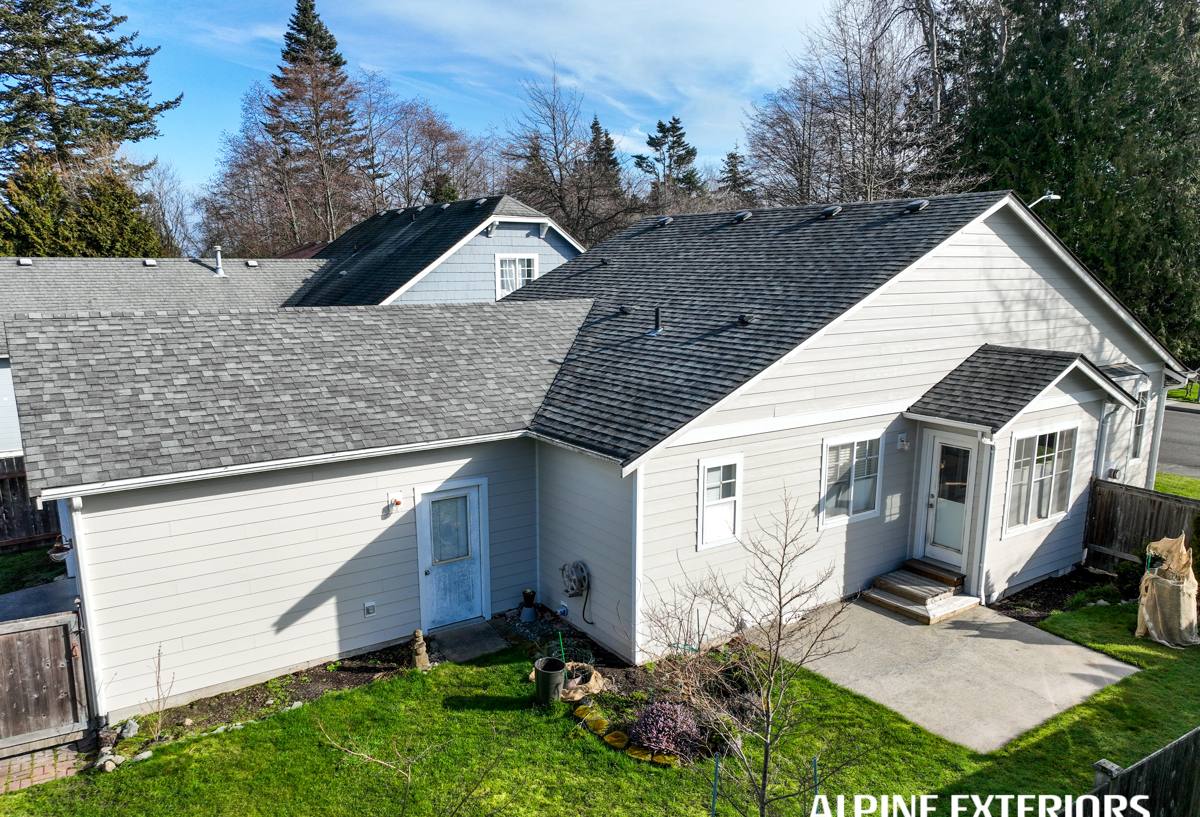
What Local Homes Face
Moisture That Doesn't Let Up
Whatcom County doesn't get the heaviest rainfall totals in the state, but it gets a lot of low-intensity, long-duration wet weather — the kind that sits against a wall for days at a time rather than blowing through in an hour. That's a different stress than a hard summer downpour. It's slow, patient moisture exposure, and it finds every gap in flashing, every failed caulk joint, and every siding product that wasn't designed to handle sustained wetting.
Moss, Algae, and Shaded Walls
Between tree cover, valley fog, and long wet winters, north- and east-facing walls in this area often stay damp longer than the rest of the house. That's exactly the environment moss and algae need to take hold. Once organic growth establishes itself on a siding surface, it holds moisture against the material and accelerates whatever the underlying product is already prone to — swelling, delamination, coating failure, or rot, depending on what's actually behind the siding.
Wind-Driven Rain
Storms moving through the valley frequently push rain at an angle rather than straight down, which puts real pressure on lap joints, butt seams, and anywhere siding meets a window, door, or trim board. Poor installation details show up here first — not as a dramatic failure, but as a slow water stain that eventually turns into something worse.
Why We Only Install James Hardie
We get asked fairly often why we don't offer vinyl, LP SmartSide, or other fiber cement brands like Cemplank or Allura. The honest answer is that we made a standardization decision based on what performs consistently in this exact climate, and we'd rather install one product correctly on every job than juggle multiple systems with different moisture tolerances and warranty terms.
What We Walked Away From
- Vinyl siding — inexpensive and low-maintenance in the right climate, but it expands and contracts significantly with temperature swings, can warp or crack in impacts, and its seams are a long-term weak point against wind-driven rain.
- LP SmartSide — an engineered wood product that performs well when detailing is perfect, but wood-based substrates depend on flawless caulking and flashing to keep moisture out over decades in a climate like ours; any lapse in maintenance shortens its life.
- Primed spruce and cedar — real wood siding can look excellent, but it requires ongoing refinishing, and in a valley with this much sustained dampness and moss pressure, the maintenance schedule is demanding and unforgiving of gaps.
- Other fiber cement brands (Cemplank, Allura) — chemically similar to Hardie in some respects, but we standardized on one manufacturer so our crews install to one spec, one warranty structure, and one finish system, rather than mixing installation methods across brands.
What Hardie Gets Right for This Valley
James Hardie fiber cement is non-combustible, dimensionally stable across our temperature swings, and doesn't feed mold or moss growth the way wood-based products can. Its ColorPlus factory-applied finish is baked on under controlled conditions rather than field-painted, which means better fade and moisture resistance over time — a real advantage in a place where a wall might not fully dry out for weeks at a stretch. Hardie also builds specific HZ10 products engineered for damp, moderate climate zones like the Pacific Northwest, which lines up with what Everson actually experiences rather than a one-size-fits-all national spec.
Our Siding Process
Assessment and Product Selection
We start by looking at the whole exterior, not just the siding that's failing. That includes checking trim, window flashing, and any areas showing moss growth, staining, or soft spots that hint at moisture already behind the surface. From there we walk through Hardie's plank, shingle, and panel options and colors, matched to the home's style and to what performs best on the sides of the house that take the most weather.
Tear-Off and Moisture Barrier
Old siding comes off, and we inspect the sheathing underneath before anything new goes up. If there's rot or water damage from years of moisture intrusion, it gets addressed before a single new board is installed — covering up a wet wall with new siding just delays the same problem. A proper weather-resistive barrier goes on next, lapped and sealed correctly so water sheds outward at every seam.
Installation to Manufacturer Spec
Fiber cement siding is only as good as its installation. Fastener placement, gapping, caulking at joints, and clearance at grade and roof lines all matter — and all of them affect whether the manufacturer's warranty actually holds. We install to Hardie's published specifications, not shortcuts, because the difference between a 30-year performing wall and a problem wall usually comes down to details most homeowners never see.
Trim, Flashing, and Finish Details
Windows, doors, corners, and roof-to-wall transitions are where most water intrusion actually starts, not the flat field of siding. We pay particular attention to these areas given how much wind-driven rain this valley sees.
Comparing Siding Options for This Climate
| Product | Moisture Tolerance | Maintenance | Typical Lifespan |
|---|---|---|---|
| James Hardie Fiber Cement | Excellent — non-combustible, won't rot or feed moss | Low — factory finish, occasional wash | 30-50 years with correct install |
| Vinyl | Fair — seams vulnerable to wind-driven rain | Low, but prone to warping/cracking | 20-30 years, shorter in impact-prone areas |
| LP SmartSide | Good if detailing is perfect; wood-based core is moisture-sensitive | Moderate — depends on caulking upkeep | 20-30 years, shorter if maintenance lapses |
| Cedar / Primed Spruce | Fair — natural wood, absorbs moisture without upkeep | High — regular refinishing required | 15-30 years depending on maintenance |
Roofing, Windows, and Decks in the Same Climate
Siding is rarely the only exterior system under stress in this valley. We also handle roofing, window replacement, and deck construction, and we look at all of them together on a given home rather than in isolation. A roof with worn flashing will feed water down behind good siding just as easily as bad siding will; old windows leak at the same rate whether the walls around them are new or original. Homeowners who are already planning a siding project often find it's the right time to address an aging roof or drafty windows at the same visit, since scaffolding and access are already in place.
Why a Local Crew Matters in Everson
National contractor networks and out-of-area crews tend to install the same way regardless of climate. A crew based in Lynden, working Whatcom County day in and day out, has seen firsthand which details fail here — the north wall that never quite dries, the corner trim that takes the brunt of valley wind, the flashing detail that looks fine in a dry climate but leaks here. That local knowledge shapes how we detail every job, not just what product we recommend.
Signs It's Time to Replace Siding
- Visible warping, buckling, or soft spots when pressed
- Persistent moss or algae growth that returns after cleaning
- Peeling paint or bubbling finish, especially on shaded walls
- Rising energy bills that suggest failing insulation behind the siding
- Visible gaps at seams, corners, or trim after storms
- Interior signs of moisture — musty smell, staining on interior walls near exterior corners
Get an Honest Look at Your Home's Exterior
If you're noticing any of the signs above, or you're just planning ahead for a home in Everson, we're happy to come out, take a real look at what's going on, and give you a straightforward assessment — no pressure, no upsell into products we don't believe in. Fill out the form below to schedule a free estimate.