 Lynden Siding
 Exterior Work in Custer, Washington
Custer sits in the northwest corner of Whatcom County, close enough to the Strait of Georgia and Birch Bay that salt-laden air is simply part of daily life, and far enough into the county's rural stretch that homes often sit exposed on open lots with little windbreak. That combination shapes how we approach every siding, roofing, window, and deck project we take on out here. It's a different set of conditions than what a house in downtown Bellingham or inland Lynden deals with, and the exterior materials and detailing need to match.
We've worked on homes throughout Whatcom County long enough to know that "close to Lynden" doesn't mean "same climate as Lynden." Custer catches more direct wind off the water, more sustained damp periods, and a longer moss season than areas just a few miles inland. That's the lens we bring to every estimate.
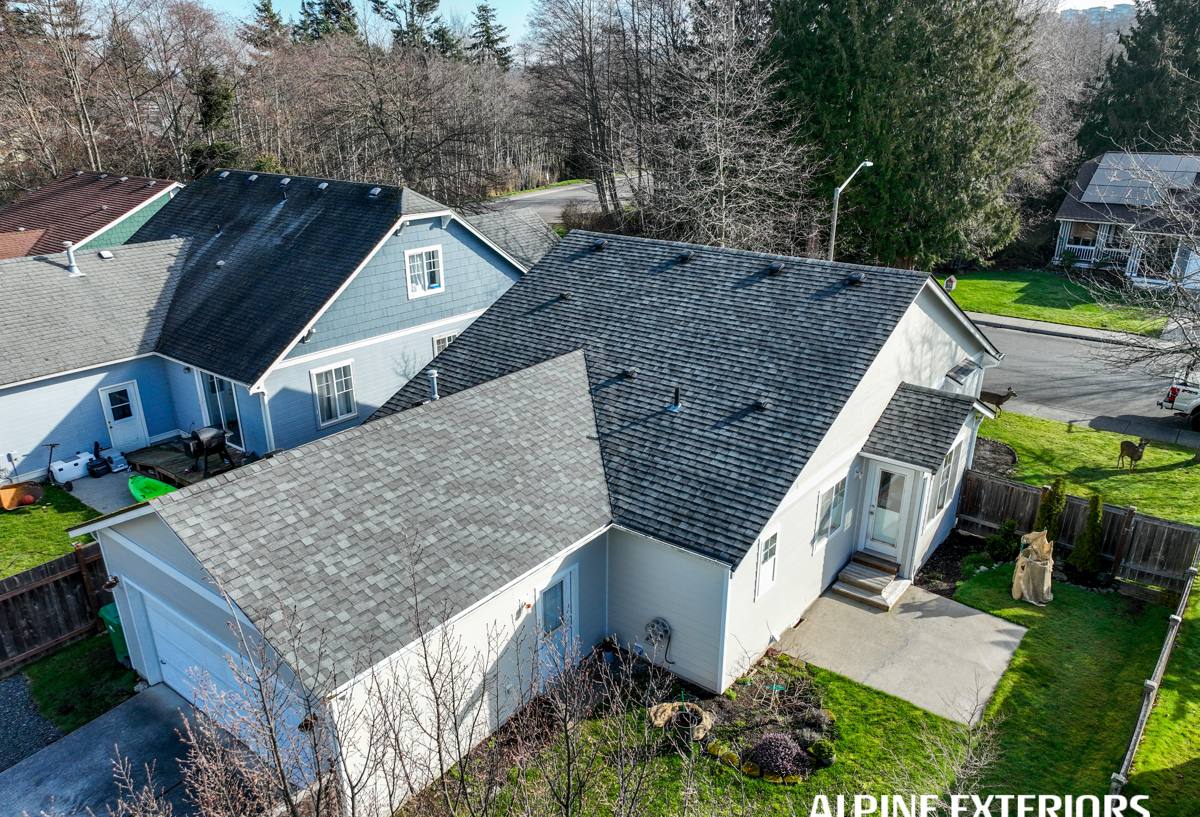
What the Custer Climate Does to a House
Salt Air and Corrosion
Proximity to Puget Sound and the Strait means airborne salt finds its way onto siding, trim, flashing, and fasteners. Over years, salt exposure accelerates corrosion on unprotected metal, degrades cheaper paint films faster than inland exposure would, and can pit or chalk certain siding finishes prematurely. It's a slow process, but it's constant, and it's one of the reasons material choice and fastener quality matter more here than they would twenty miles inland.
Driving Rain
Open, low-lying terrain near the water means wind-driven rain hits Custer homes at an angle, not just straight down. That's a very different load on a wall assembly than vertical rainfall. Driving rain pushes moisture into laps, seams, and penetrations that would stay dry in a more sheltered location. A siding system and installation detail that works fine in a wooded inland lot can fail here if it wasn't designed and installed with wind-driven moisture in mind.
Moss and Algae Season
Whatcom County's wet season runs long, and Custer's humidity and shade patterns near tree lines and low ground keep siding and roofing damp for extended stretches. That's exactly the environment moss and algae need to establish. On roofs it shortens shingle life and can lift edges; on siding it stains and, on materials that absorb moisture, can contribute to swelling or delamination over time. Homes with limited sun exposure on the north and west faces see this the worst.
Freeze-Thaw and Temperature Swings
Custer doesn't see the deep freezes of the Cascades, but Whatcom County still cycles through enough freeze-thaw days each winter to stress any siding material that holds moisture. Water that's absorbed into a porous substrate and then freezes expands, and repeated cycles of that will crack paint, open seams, and eventually compromise the material underneath.
Why We Only Install James Hardie Fiber Cement Here
Given everything above, the siding on a Custer home has to handle sustained moisture exposure, salt air, and long damp stretches without absorbing water, warping, or feeding mold and moss. That's the reasoning behind our standardizing on James Hardie fiber cement for every siding job we do, in Custer and across our service area.
Fiber cement is a blend of cement, sand, and cellulose fibers, engineered to resist moisture absorption in a way that wood-based and wood-adjacent products cannot match. It won't rot, it's non-combustible, and it holds paint and factory finishes far longer than wood-based siding because it doesn't expand and contract with humidity the way wood fiber does. James Hardie also makes a specific HZ5 product line engineered for regions like ours, with harsher moisture and freeze-thaw cycling than the softer HZ10 line built for the Southeast.
The factory-applied ColorPlus finish is part of why we specify Hardie over field-painted alternatives. It's baked on in a controlled environment, backed by its own finish warranty, and it holds up to UV and moisture exposure better than a coat of paint applied on site in variable weather — a real consideration in a climate where you don't get many long dry stretches to work with.
We get asked periodically about vinyl, LP SmartSide, or other engineered wood products, and we're upfront about why we don't install them. Vinyl can warp and fade with UV and thermal cycling, and its seams and J-channels give wind-driven rain more opportunities to get behind the cladding. Engineered wood products, even coated ones, still have wood fiber as their core, and if that coating is ever compromised — by a nail pop, a hairline crack, or an installation gap — moisture has a path into a material that isn't designed to shed it. In a climate like Custer's, with this much sustained dampness and salt exposure, we don't think those trade-offs are worth it. Fiber cement doesn't have that vulnerability, and it's what we put on our own trucks and stand behind.
James Hardie Siding Profiles We Install
| Product | Best For | Notes |
|---|---|---|
| HardiePlank Lap Siding | Most Custer homes, traditional and farmhouse styles | Available in smooth or cedar-textured finish |
| HardiePanel Vertical Siding | Accent walls, gables, modern designs | Often paired with lap siding for contrast |
| HardieTrim Boards | Corners, window and door casing, fascia | Matches siding durability at high-exposure edges |
| HardieShingle Panels | Gable accents, Craftsman-style detailing | Staggered or straight-edge textures available |
Beyond Siding: Roofing, Windows, and Decks
A siding upgrade only performs as well as the rest of the exterior envelope around it. We handle roofing, windows, and decks for the same reason: on a home exposed to Custer's wind and moisture, these systems all interact. A roof that's shedding granules or has failing flashing sends water down onto siding it was never meant to soak. Old windows with degraded seals let moisture track down into wall cavities behind otherwise sound siding. A deck attached to the house with poor ledger flashing is one of the most common sources of hidden rot we find on older homes in this area.
When we look at a Custer property, we look at the whole envelope, not just the walls. If a roof is near the end of its service life or window seals are failing, we'll say so, even if it's outside the scope of the siding work you called us about. It's a more honest estimate, and it avoids a homeowner spending money on new siding only to have a roof leak undermine it two years later.
Our Process on a Custer Job
- On-site assessment — we walk the exterior, check current siding, trim, flashing, and any visible moisture or moss damage, and note the home's exposure to wind and sun.
- Moisture and structural check — where we suspect trapped moisture behind existing siding, we'll open up a section to look before quoting the full scope, rather than guessing.
- Detailed written estimate — materials, labor, and timeline, with any roofing, window, or deck concerns flagged separately so you can decide what to prioritize.
- Proper install — correct fastener spacing and type, house wrap or weather-resistive barrier integrity, flashing at every penetration and horizontal transition, and manufacturer-spec clearances at grade and roof lines.
- Final walkthrough — we go over the finished work with you before we consider the job done.
Cost Factors for Custer Siding Projects
Every home is different, and we don't publish blanket pricing because it isn't honest — the real cost depends on the specifics below. What we can tell you is what tends to move the number up or down.
| Factor | Why It Matters |
|---|---|
| Home size and wall complexity | More corners, gables, and dormers mean more cutting, trim, and labor time |
| Existing siding removal | Tear-off and disposal of old siding adds cost versus a bare or already-stripped wall |
| Hidden moisture damage | Rotted sheathing or framing found during tear-off requires repair before new siding goes on |
| Siding profile and finish | Vertical panels, shingle accents, and custom ColorPlus colors run higher than standard lap siding |
| Trim and flashing detail | Homes with more window and door openings need more precision flashing work |
| Access and site conditions | Multi-story sections, steep grades, or tight lot access affect labor and equipment needs |
Why a Local Crew Matters in Custer
A crew that works Whatcom County regularly knows what wind-driven rain does to a wall that isn't flashed correctly, because we've opened up enough of those walls to see it firsthand. We know which sides of a Custer home tend to take the worst of the weather off the water, and we plan the work and the detailing around that instead of applying a one-size-fits-all approach. That local knowledge shows up in small decisions — how tight we run flashing laps, where we add extra attention around window heads, how we sequence work around this area's wet stretches — that don't show up on a spec sheet but matter over the life of the siding.
It also means when you call us after the job is done, you're calling a crew that's still local, still working in the county, and still standing behind work done down the road from the next job.
Maintenance: What Custer Homeowners Should Watch For
- Rinse siding annually to remove salt residue and organic growth before it sets in, especially on north- and west-facing walls
- Check caulking around windows, doors, and trim joints yearly — gaps let wind-driven rain behind the cladding
- Keep gutters clear so overflow doesn't run down siding faces repeatedly
- Trim back vegetation and tree cover that keeps siding shaded and damp longer than necessary
- Watch for moss or algae staining on roofing and siding and address it early rather than letting it spread
- Have flashing at deck ledgers, roof-to-wall transitions, and window heads inspected periodically, since these are the most common points where hidden leaks start
Let's Look at Your Home
If you're in Custer and dealing with aging siding, moss buildup, or just want an honest read on how your home's exterior is holding up against the weather off the water, we're glad to come take a look. There's no pressure and no cost to get our assessment and a written estimate — fill out the form below and we'll get in touch to schedule a time that works for you.