 Lynden Siding
 Blaine's Exterior Challenge: Salt Air Meets Northwest Rain
Blaine sits at the very top of Whatcom County, right against the water and the border, which means homes here deal with a combination of conditions that most siding products were never designed to handle well. Salt-laden air off the water works its way into seams, fasteners, and any exposed wood trim. Add in the driving, wind-blown rain that comes through in the fall and winter storm cycles, and you have an exterior environment that punishes weak points fast. Add a long, damp moss season on top of that, and it's easy to see why so many Blaine homes show premature paint failure, soft trim, and green-tinged siding within just a few years of installation.
We've worked on homes throughout Whatcom County long enough to know that Blaine isn't quite the same as siding a house in Lynden or Ferndale. The proximity to Semiahmoo Bay and the open water changes how wind hits a house, how much moisture sits on north-facing walls, and how much salt exposure the cladding takes over a winter. A siding system that holds up fine ten or fifteen miles inland can fail faster here if it wasn't chosen with coastal exposure in mind.
Why We Only Install James Hardie Fiber Cement
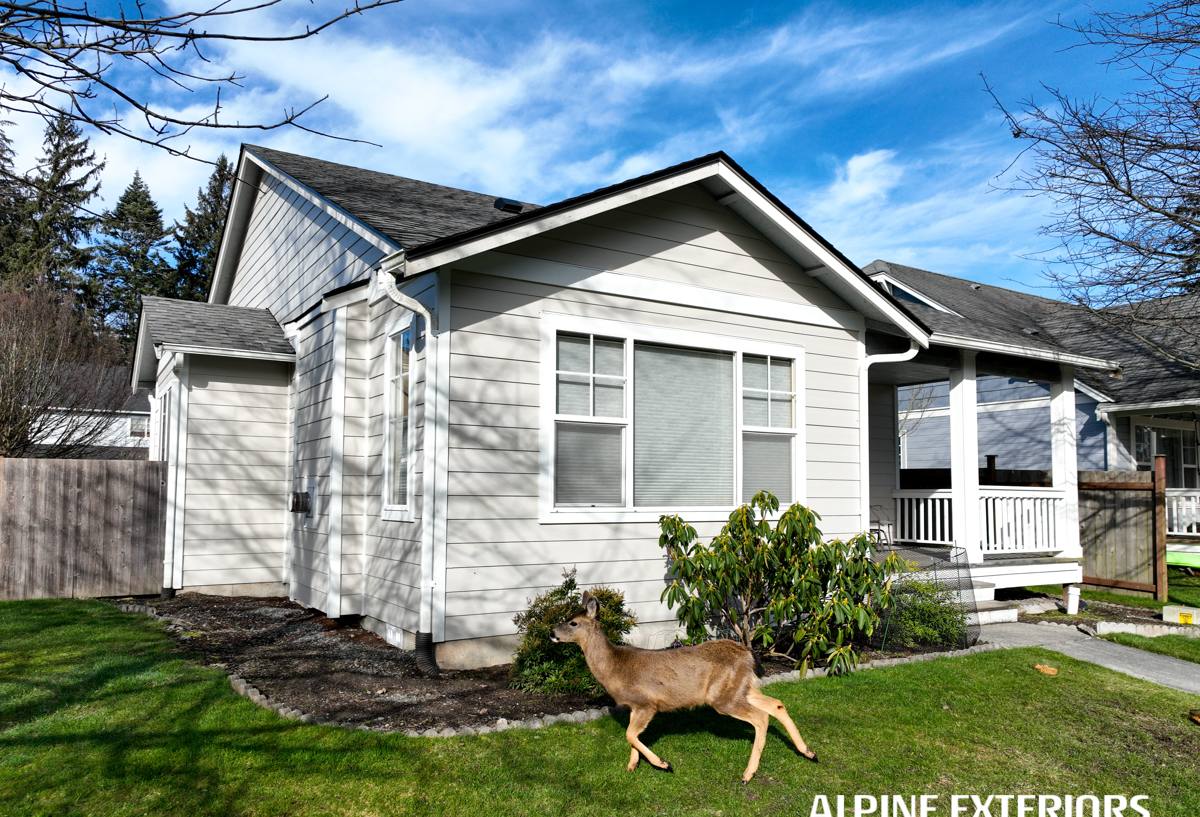
Lynden Siding Company made a deliberate decision years ago to stop installing anything other than James Hardie fiber cement siding. That wasn't a marketing choice — it came out of watching too many other products struggle against exactly the conditions Blaine throws at a house: constant moisture, salt air, and long stretches of shade and dampness that keep moss and mildew active almost year-round.
What Fiber Cement Does That Other Materials Don't
James Hardie siding is a non-combustible fiber cement product engineered specifically for regional climate demands, including the wet, marine-influenced conditions found along the Washington coast. It doesn't rot, it doesn't provide a food source for moss and mildew the way untreated wood does, and it holds paint and factory finish far longer than wood-based alternatives because the substrate itself doesn't expand and contract with moisture the way wood fiber does.
We go into more detail elsewhere on why we don't install products like LP SmartSide, vinyl, Cemplank, Allura, primed spruce, or cedar. In short: each of those has real strengths, but each also comes with a maintenance burden, moisture vulnerability, or installation sensitivity that we're not willing to put our name behind in a climate like this one. Hardie is what we install because it's what we've seen actually last.
Siding Options for Blaine Homes
James Hardie's HZ10 product line is engineered for climates with more humidity, rain, and temperature swings — which describes Whatcom County's marine climate well. We typically recommend HZ10 lap siding, panel siding, or shingle-style siding for Blaine properties, matched to the home's architecture and exposure.
| Product | Best Use | Why It Fits Blaine |
|---|---|---|
| HardiePlank lap siding | Most home styles, full re-sides | Traditional look, holds ColorPlus finish through wet winters |
| HardiePanel vertical siding | Modern designs, accent walls, gable ends | Fewer horizontal seams for water to catch on |
| HardieShingle siding | Craftsman and cottage-style homes | Classic shingle look without the rot risk of cedar shakes |
| HardieTrim boards | Corners, fascia, window trim | Replaces wood trim that rots first in salt air exposure |
Every Hardie product we install comes with the factory-applied ColorPlus finish, which is baked on under controlled conditions rather than field-painted. That matters in an area like Blaine, where a field-applied paint job has to cure in whatever weather shows up, and often doesn't get the same bond strength or UV resistance.
Roofing That Matches the Exposure
Siding is only part of the equation on a coastal property. Roofs in Blaine take a beating from wind-driven rain and salt exposure too, and a compromised roof will undermine even the best siding job by letting moisture into the wall assembly from above. We handle roof installation and repair alongside siding work so the whole exterior envelope gets evaluated together — flashing, underlayment, ventilation, and the siding-to-roof transition points where a lot of leaks actually start.
What We Look For on a Blaine Roof
- Flashing condition around chimneys, vents, and roof-to-wall intersections
- Moss growth and the underlying shingle or roofing damage it can hide
- Attic ventilation, which affects moisture buildup from the inside out
- Gutter and drainage performance during heavy, sustained rain
- Fastener corrosion in areas with more direct salt air exposure
Windows and How They Fit Into the Exterior Envelope
Old, poorly sealed windows are one of the most common ways water and cold air get into a Blaine home. When we're already opening up a wall for siding replacement, it's often the most efficient time to address windows that are past their service life, since the flashing and sealing work can be integrated into the siding installation rather than done as a separate, disconnected project later. We install windows built to handle the same wind and moisture exposure the siding has to deal with, and we make sure the window-to-siding transition is properly flashed — a detail that gets rushed on a lot of lower-budget jobs and causes leaks down the road.
Decks: Built for Wet Weather, Not Just Summer
A deck in Blaine spends most of the year exposed to rain, standing moisture, and the same moss pressure that affects roofs and siding. We build and repair decks with attention to proper drainage, ledger board flashing, and materials that hold up under sustained wet conditions rather than just looking good for a few dry months. A poorly flashed ledger board is one of the more common sources of hidden rot damage we find on older homes in this area, and it's a detail worth getting right the first time.
Common Deck Issues We See in the Area
- Soft or spongy decking boards from trapped moisture underneath
- Rot at the ledger board where the deck attaches to the house
- Moss buildup on shaded decks that never fully dry out
- Rusted or corroding fasteners from salt air exposure
- Inadequate gap spacing that traps debris and holds water against the wood
Why a Local Crew Matters
A crew that works throughout Whatcom County and understands what Blaine's exposure to the water actually does to a house builds differently than a crew working from a generic install manual. That shows up in small decisions: how tight the seams get caulked, how much overlap is used at horizontal joints, where extra flashing goes around window and door openings, and how fasteners are spaced and driven. None of that is visible after the job is done, but it's the difference between siding that looks right for a year and siding that performs for decades.
We also know the practical side of working in Blaine — permitting expectations, typical weather windows for installation, and the kind of site conditions (tight lots, mature landscaping, proximity to water) that come up more often here than elsewhere in the county.
What Affects Your Project Cost
Every home is different, but a few factors consistently move the price of a siding, roofing, window, or deck project up or down. We give straightforward, honest estimates rather than lowball numbers designed to get a foot in the door.
| Factor | Impact |
|---|---|
| Extent of existing damage or rot | Hidden rot found during tear-off can add scope once walls are opened |
| Home size and architectural complexity | More corners, gables, and trim details mean more labor and material |
| Siding profile chosen | Lap, panel, and shingle styles vary in material and install time |
| Number of window or door openings | Each opening needs flashing and trim work integrated with the siding |
| Accessibility of the site | Tight lots or difficult access can add time and equipment needs |
What to Expect Working With Us
We start with an honest inspection, not a sales pitch. If your existing siding, roof, windows, or deck have more life left in them than you think, we'll tell you that. If there's hidden rot or damage once we open things up, we'll show you before proceeding rather than surprising you on the invoice. We only install James Hardie fiber cement siding because it's the product we trust to hold up to Blaine's combination of salt air, driving rain, and moss — not because it's the only thing we know how to install.
If you're dealing with aging siding, a roof that's showing its age, drafty windows, or a deck that's starting to feel soft underfoot, we're happy to take a look and walk you through your options honestly. Reach out for a free, no-pressure estimate — there's a form right below to get started.