 Lynden Siding
 Siding Built for Sumas, Not Just Installed There
Sumas sits at the far edge of Whatcom County, tucked against the base of Sumas Mountain right at the Canadian border. It's a small town with a distinct feel from the bigger population centers to the west, but the exterior of a house here faces the same core problem every home in this county deals with: months of sustained moisture, punctuated by heavy rain events, with long gray stretches where nothing on the outside of a building truly dries out. Homes in this part of Whatcom County don't fail because of one bad storm. They fail slowly, from siding and trim that never got a real chance to dry between one wet week and the next.
We're based in Lynden, a short drive from Sumas, and we've built our business around understanding that pattern rather than treating siding as a one-size-fits-all product. What holds up on a dry-climate house doesn't necessarily hold up out here, and what looks fine on day one doesn't tell you much about how it will look in year eight.
What Sumas Homes Actually Face
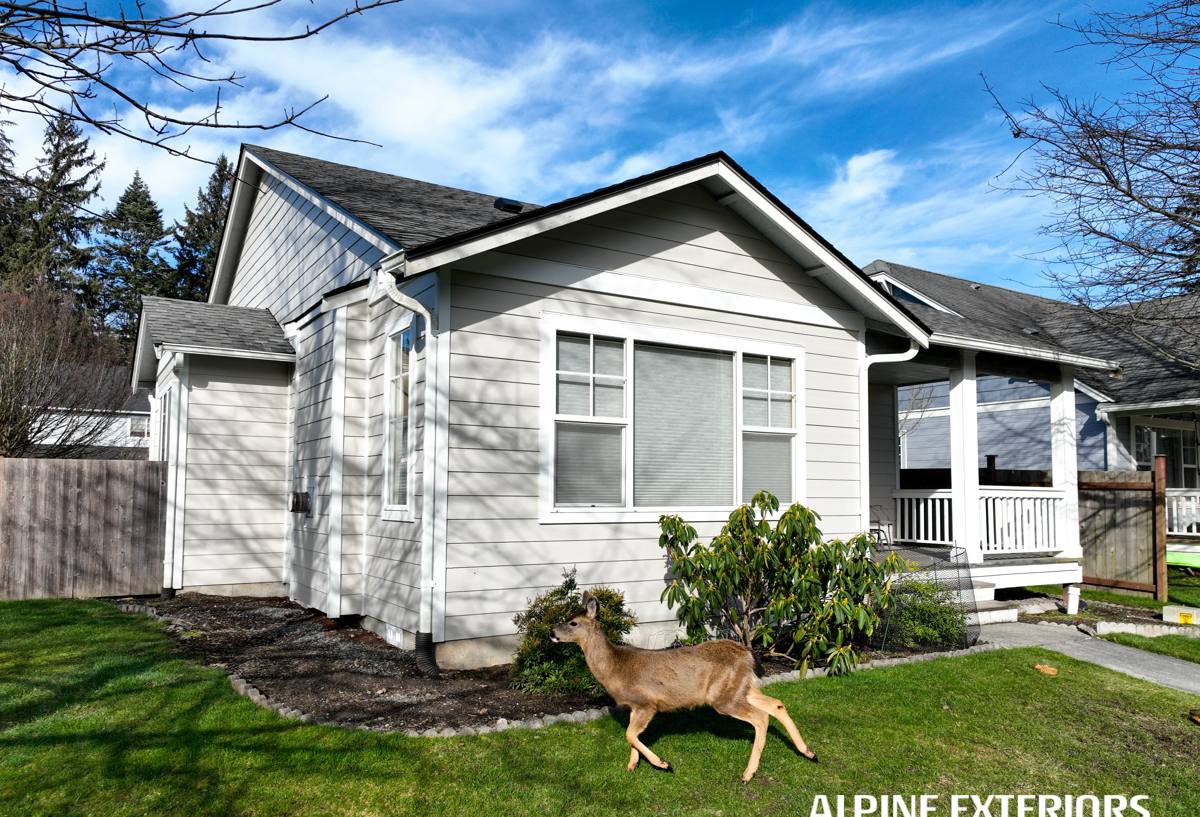
Whatcom County's weather is shaped by its position between the Salish Sea and the Cascade foothills. Moisture-laden marine air pushes inland through the county for much of the year, and by the time it reaches communities like Sumas near the mountains, it's often dropped as steady, driving rain rather than the light drizzle people associate with the coast. Combine that with shaded lots, mature tree cover, and the valley terrain around Sumas, and you get siding, trim, and fascia boards that stay damp far longer than they would in a more open, sun-exposed location.
That extended dampness is exactly the environment moss and algae need. It's also the environment that punishes siding materials with weak points at seams, fastener heads, and butt joints — because those are the spots where trapped moisture does its damage first, often from the inside out, long before a homeowner notices anything from the curb.
The Three Things We See Most Often
- Moss and algae staining on north-facing walls, under eaves, and anywhere sunlight and airflow are limited
- Swelling, delamination, or soft spots on wood-based or engineered wood siding where paint film has failed and water has gotten behind it
- Caulk and trim failure around windows and butt joints, which is usually the first sign that moisture has been working its way in for a while
Why We Standardized on James Hardie Fiber Cement
We install James Hardie fiber cement siding exclusively. We don't install vinyl, LP SmartSide, Cemplank, Allura, or primed wood species like spruce or cedar. That's not a marketing position — it's a decision we made after years of seeing which products actually held up to Whatcom County's climate and which ones needed constant attention or premature replacement.
Fiber cement is made from cement, sand, and cellulose fibers. It doesn't have the organic wood content that gives moisture something to feed on, and it isn't a petroleum-based product that can warp, crack, or fade under UV and thermal cycling the way vinyl can. James Hardie's HZ5 product line in particular is engineered for the wetter, harsher climate zones of the Pacific Northwest, which matters more in a place like Sumas than it would somewhere drier.
What That Means for a Sumas Home Specifically
- Non-combustible material, which matters given the mix of rural and wooded properties in the Sumas area
- Factory-applied ColorPlus finish that resists the fading and chalking that flat latex paint on wood siding shows within a handful of years out here
- A material that doesn't rot, swell, or delaminate when it stays damp for weeks at a time
- A strong transferable warranty backed by a national manufacturer, not just an installer's word
Where the Trouble Actually Starts
Most siding failures we get called out to look at aren't a material problem in isolation — they're an installation problem that the wrong material made worse. Flashing installed backward or skipped entirely. Butt joints with no gap for the material to move. Fasteners driven too high or too low on the panel. Any of those mistakes shortens the life of any siding product, but they're especially unforgiving with materials that are sensitive to trapped moisture. Fiber cement is more tolerant of minor installation imperfections than wood-based products, but it still has to be installed to manufacturer spec — proper clearance from grade and roofing, correct nailing patterns, and flashing details that actually shed water rather than trap it — to deliver the lifespan it's capable of.
This is where a local crew matters more than people expect. A crew that works Whatcom County year-round knows where water tends to collect on a valley-floor lot near Sumas, how much clearance to leave at grade on properties that sit low relative to nearby fields or drainage, and which details get skipped by installers who are used to drier climates. It's the difference between siding that's technically installed and siding that's installed to actually perform where it's going.
Comparing Siding Options for This Climate
| Material | Moisture Tolerance | Typical Maintenance | Fire Resistance |
|---|---|---|---|
| James Hardie Fiber Cement | High — non-organic, engineered for wet climates | Occasional wash; factory finish holds color for years | Non-combustible |
| Vinyl | Moderate — doesn't rot, but seams and gaps can trap moisture behind it | Low, but prone to warping/fading over time | Combustible, can melt or deform near heat |
| Primed Wood / Cedar | Low to moderate — vulnerable once paint film fails | Repainting and caulk maintenance every few years | Combustible |
| Engineered Wood (LP SmartSide) | Moderate — treated, but still wood-based and moisture-sensitive at cut edges | Periodic caulking and touch-up at seams and edges | Combustible |
None of these products are automatically wrong for every situation. But for the specific combination of driving rain, shade, and long damp stretches that Sumas and the rest of Whatcom County deal with, fiber cement has consistently been the material that needs the least from a homeowner over time.
Our Full Exterior Scope in Sumas
Siding rarely fails in isolation from the rest of the exterior envelope. We handle siding, roofing, windows, and decks because those systems overlap — a roof that's shedding water onto a wall, a window that's flashed incorrectly, or a deck ledger that's trapping moisture against the house can all undo good siding work. Looking at the whole exterior, not just one component, is how problems actually get solved rather than just relocated.
Roofing
Roof condition directly affects siding performance. Poor flashing at roof-to-wall transitions or clogged gutters overflowing onto a wall are two of the most common causes of premature siding damage we see.
Windows
Window flashing is one of the most common points of water intrusion in older homes throughout the county. When we replace siding, we check window flashing details as part of the job, not as an afterthought.
Decks
Deck ledger boards attach directly to the house structure, and a poorly flashed ledger is a direct path for water into the wall assembly behind it — something worth checking on older Sumas-area properties.
What a Sumas Siding Project Typically Involves
- An in-person assessment of the existing siding, trim, and any moisture damage already present
- Identification of specific problem areas — shaded walls, low-clearance sections, failed flashing points
- A written estimate covering material, install labor, and any necessary repair or flashing correction work
- Installation to James Hardie spec, including correct fastening, joint treatment, and clearance from grade and roofline
- A final walkthrough so you know exactly what was done and why
Questions Worth Asking Before You Hire Anyone
- Are they installing to the manufacturer's specific instructions for this climate zone, or just "how they always do it"?
- Do they carry proper licensing and insurance for exterior work in Washington?
- Will they show you the flashing and moisture-barrier details, not just the finished panel color?
- Do they work in this area regularly, or is this a one-off trip out to Sumas?
- Is the warranty from the manufacturer, the installer, or both — and what does it actually cover?
A Local Crew That Knows This County
We're not a national franchise dispatching whoever's available. We're based in Lynden, we work throughout Whatcom County including Sumas, and we see the same climate patterns repeat on home after home. That familiarity shapes every estimate we write and every install we run — where to add extra flashing attention, which walls need the most durable finish, and what a Sumas property's specific exposure calls for.
If your siding is showing moss buildup, soft spots, or paint that won't hold anymore, or if you're planning ahead for a project, we're happy to come take a look. There's no pressure and no obligation — just an honest read on where your home stands and what it would take to fix it right. Use the form below to request a free estimate.