 Lynden Siding
 Exterior Work Built for Nooksack's Climate
Nooksack sits in the flat, fertile stretch of Whatcom County between the foothills and the Nooksack River, close enough to the Salish Sea that homes here spend most of the year under a slow drip of moisture. It's not dramatic weather — no hurricanes, no hailstorms most years — but it is relentless. Damp air moves in off the water, settles into low-lying farmland, and doesn't leave for months. That kind of steady, low-grade exposure is exactly what wears down the wrong exterior products faster than homeowners expect.
We work on homes throughout the Nooksack area doing siding, roofing, windows, and decks, and the pattern we see is consistent: it's rarely one big failure that gets a homeowner to call us. It's usually a slow accumulation — a soft spot near a window trim, moss creeping up a north wall, a deck board that never quite dries out between rains. Those are climate problems, not just maintenance problems, and they call for materials and installation practices matched to this specific corner of Washington.
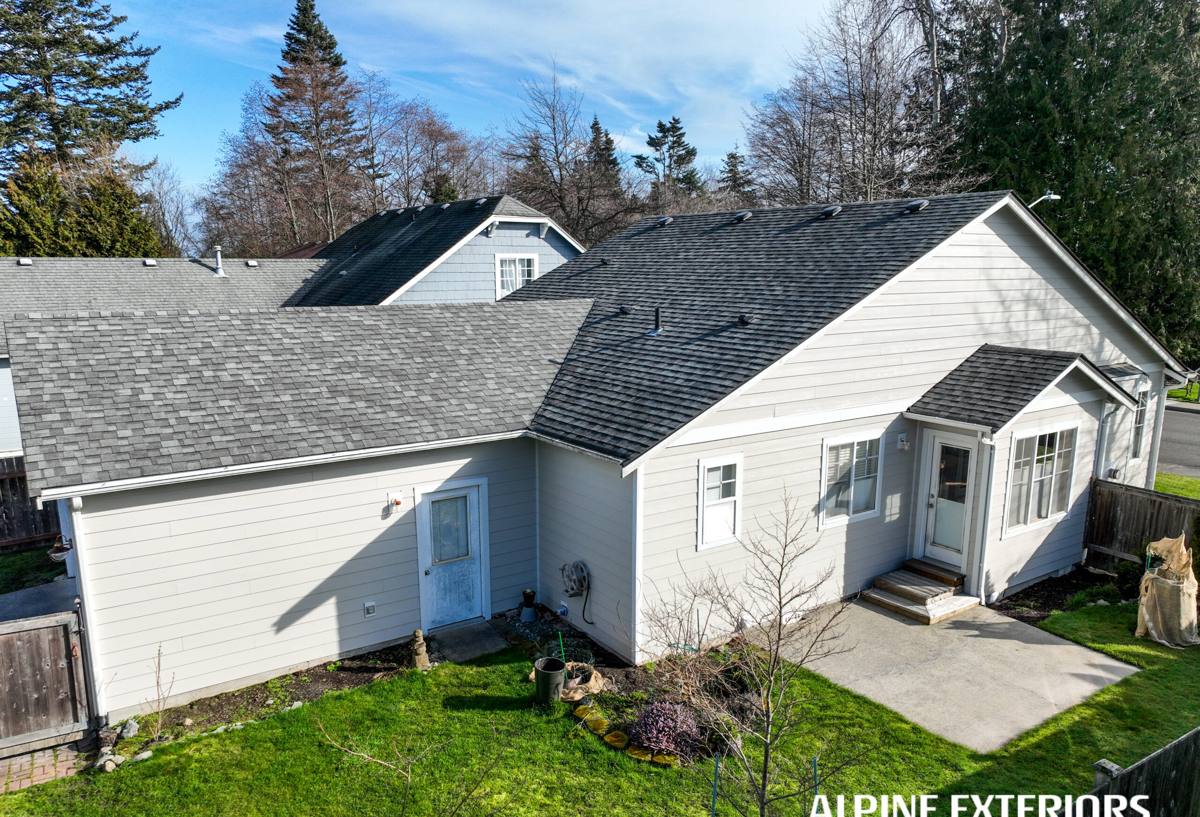
What Whatcom County Weather Does to a House
Salt Air and Moisture-Laden Wind
Air moving inland off the Sound carries fine salt and moisture with it, and homes in Whatcom County absorb that exposure year after year. Salt-laden moisture accelerates corrosion on fasteners and metal trim, and it keeps porous exterior materials — wood, some composites, unsealed edges — damp longer than they'd stay in a drier climate. Over time that constant dampness is what breaks down paint film, softens wood fiber, and opens the door to rot.
Driving Rain
This region doesn't just get a lot of rain — a good share of it comes in sideways during winter storms, driven by wind off the water and across open farmland with little to slow it down. Driving rain finds every gap in flashing, every hairline crack in caulk, and every seam that wasn't lapped correctly. A siding system that performs fine in a light, straight-down rain can still fail here if it wasn't detailed for wind-driven moisture at the joints, corners, and window and door openings.
A Long Moss and Algae Season
Cool, wet, and shaded conditions persist here for a large part of the year, and that's exactly what moss and algae need to establish themselves on roofs and north- or east-facing siding. Once moss gets a foothold, it holds moisture directly against the surface underneath it — which is worse than the rain itself, because that moisture doesn't run off, it sits. On wood-based siding products, that sustained contact is a direct path to soft spots and rot. On a roof, moss works itself under shingle edges and shortens the life of the roofing system.
Agricultural Surroundings
Nooksack and the surrounding area are still working farm country — dairy, berries, row crops — and that means homes here deal with fine airborne dust and organic material settling on exterior surfaces in a way that suburban or urban homes don't. It's a minor factor on its own, but combined with persistent moisture it adds to the grime and organic buildup that feeds moss and mildew growth on siding and roofing.
Why a Local Crew Matters Here
None of this is exotic knowledge, but it matters in the details — how deep to set a starter strip, how much clearance to leave at grade, which way to lap a joint against the prevailing wind direction, when to caulk and when not to. A crew that mostly works drier inland climates, or one that's just passing through on a storm-chasing sales route, doesn't carry that judgment. A crew that works Whatcom County year-round does, because they've seen what happens five and ten years later when those details are skipped.
Being local also means we're accountable after the job is done. If a question comes up two winters from now about how a piece of trim is handling the rain, we're not a phone number in another state — we're still working in the same towns, on the same kinds of homes, in the same weather.
Siding: Why We Only Install James Hardie
We install James Hardie fiber cement siding exclusively. We don't install vinyl, LP SmartSide, Cemplank, Allura, or bare wood siding like primed spruce or cedar — and we think homeowners deserve an honest explanation of why, not just a sales pitch for one brand.
Where Other Products Fall Short in This Climate
Vinyl siding is inexpensive and low-maintenance in dry climates, but it's a plastic product that expands, contracts, and can warp with temperature swings, and it doesn't hold paint if a homeowner ever wants a different color. LP SmartSide and other engineered wood products use a wood-strand core, which means the long-term performance comes down entirely to how well the seams, cuts, and fastener penetrations are sealed against moisture — a real risk in a climate where wind-driven rain finds every gap. Untreated or primed wood siding (spruce, cedar) can look excellent when new, but it demands a repainting and caulking schedule most homeowners underestimate, and in a long, damp, moss-prone climate like this one, that maintenance gap is where rot starts. Cemplank and Allura are fiber cement products like Hardie, and they're not junk — but they don't carry the same factory-applied ColorPlus finish system, the same regionally engineered HZ product line, or the same track record and warranty backing that led us to standardize on one manufacturer instead of mixing brands.
What Hardie Gets Right for This Region
James Hardie fiber cement is non-combustible, doesn't absorb water the way wood-based products do, and resists the swelling, cracking, and moss-friendly texture that make other sidings struggle here. The HZ5 product line is engineered specifically for climates with significant moisture exposure, which fits Whatcom County. ColorPlus finish is baked on at the factory under conditions no field-applied paint job can match, which means better color retention and less need for the repainting cycle that wood and some engineered products require. It's also backed by a strong transferable warranty — meaningful protection for a homeowner making a long-term investment in a house that's going to sit in this weather for decades.
We're not going to tell you every other product is worthless — plenty of them have a place. We're telling you why, after years of doing exterior work in this specific climate, we stopped installing anything else.
What Correct Installation Actually Involves
Material choice only gets a homeowner halfway there. Fiber cement siding installed with the wrong fastener pattern, insufficient clearance at grade, or caulked joints where a gap should have been left for drainage can still fail early, regardless of brand. Our installation follows Hardie's published specifications, which includes:
- Correct starter strip height and minimum clearance from grade, decks, and roof lines to keep the bottom edge of the siding out of standing moisture
- Proper fastener type, spacing, and penetration depth so panels stay secured without splitting
- Weather-resistant barrier and flashing detail at every window, door, and penetration — the points where driving rain actually gets in
- Correct joint treatment at butt seams and corners, sized for expansion rather than sealed tight in a way that traps moisture
- Field-touch-up of any cut edges with manufacturer-approved product to preserve the factory finish's protection
Skipping any one of these doesn't usually cause an immediate problem — it causes a problem in year six or year eight, which is exactly the kind of failure that's hardest for a homeowner to trace back to the installation.
Beyond Siding: Roofing, Windows, and Decks
Siding is only one piece of how a house handles this climate, and we treat it that way. A roof that's holding moss or losing granules lets water sit exactly where it shouldn't, and it's often the first thing to show wear before siding problems become visible. We handle roof replacement and repair with attention to the same moss and moisture issues discussed above, including proper ventilation, which matters as much as the roofing material itself in a climate this damp.
Windows are a common failure point on older Nooksack-area homes — original or aging units lose their seal, fog between panes, or let drafts and moisture in around the frame, and that moisture damage often shows up in the siding and trim around the window before the window itself gets replaced. We install and integrate replacement windows as part of a full exterior job or on their own.
Decks in this climate face their own version of the same problem: constant damp, limited sun exposure on shaded lots, and standing water if drainage and board spacing weren't done right. We build and repair decks with materials and detailing suited to staying dry and structurally sound through a long wet season rather than just a few years of good looks.
Signs Your Home May Need Attention
A lot of exterior damage in this climate is gradual and easy to miss until it's significant. Worth checking for:
- Moss or dark streaking on north- or east-facing siding and roof sections
- Soft or spongy spots when pressing on wood trim, fascia, or siding near ground level
- Peeling or bubbling paint, especially around window and door trim
- Visible gaps or cracked caulking at siding joints and window edges
- Musty smell or visible mildew inside near exterior walls
- Warped, cupped, or discolored deck boards
- Granule loss or bald patches on asphalt shingle roofs
None of these mean a full replacement is automatically necessary — sometimes it's a repair, sometimes it's a maintenance fix. But they're worth having a local crew take a look at before they turn into structural issues.
Cost Factors Homeowners Should Understand
Every home is different, and we don't quote sight-unseen, but these are the main variables that drive cost on siding, roofing, window, and deck projects in this area:
| Factor | Why It Matters |
|---|---|
| Home size and wall complexity | More corners, dormers, and trim detail mean more material and labor time |
| Extent of existing damage | Rot or moisture damage found under old siding or roofing adds repair scope before new material goes on |
| Material tier and color | Hardie panel style, plank width, and ColorPlus color selection affect material cost |
| Access and site conditions | Tight lots, landscaping, or multi-story sections can affect labor and equipment needs |
| Scope bundling | Combining siding with roofing, windows, or deck work in one project can reduce overall disruption and sometimes overall cost |
What to Expect Working With Us
We start with an on-site look at the actual condition of your home — not a phone estimate — because in this climate, what's underneath the existing siding or roofing often matters as much as what's on top. From there we walk through material options honestly, including why we'll steer you toward Hardie for siding rather than a cheaper alternative that won't hold up here. We handle the permitting and scheduling logistics, and we stay reachable after the job is finished, because a Whatcom County exterior needs to be checked on through a few wet seasons, not just installed and forgotten.
If you're noticing moss buildup, soft trim, drafty windows, or a deck that never quite dries out, it's worth having someone look before those small signs turn into bigger repairs. We offer free, no-pressure estimates for homeowners in the Nooksack area — you can request one using the form below.