 Lynden Siding
 Why Roofs Around Nooksack Wear Out Faster Than the Warranty Suggests
Every asphalt shingle sold in this country carries a lifespan number printed on the wrapper — 25 years, 30 years, sometimes "lifetime." Those numbers come from lab testing in controlled conditions, not from a roof deck outside Nooksack that spends half the year wet. Whatcom County sits in a spot where marine air pushes inland, driving rain comes in sideways during winter storms, and shaded, tree-lined lots hold moisture long after a sunnier neighborhood has dried out. Add a moss season that can stretch from late fall through spring, and you have a climate that quietly shortens the working life of a roof no matter what the packaging promised.
This isn't a reason to panic about your roof. It's a reason to replace it correctly the first time, with materials and details chosen for what actually happens here — not for a showroom in a dry climate. That's the difference between a roof that needs attention again in twelve years and one that goes the distance.
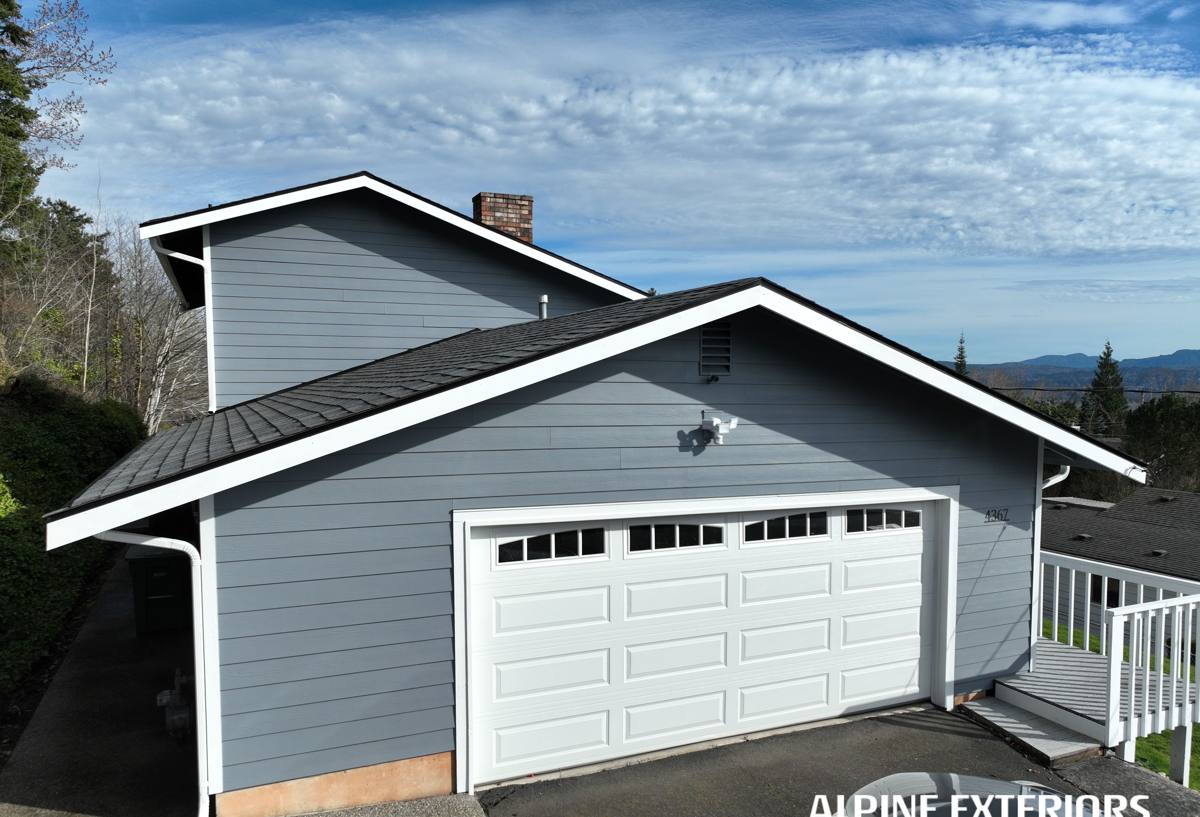
Signs a Nooksack Roof Needs Replacement, Not Another Repair
Repairs make sense when the damage is isolated — a cracked pipe boot, a handful of wind-lifted shingles, a flashing leak at a chimney. Replacement becomes the honest answer when the problems are spread across the whole roof or point to failure underneath the shingles themselves. Common signs we see on homes in and around Nooksack:
- Granule loss heavy enough that you can see bare, shiny patches on multiple slopes, not just one weathered area
- Moss that keeps returning within a season or two of cleaning, especially on north-facing or shaded slopes
- Soft or spongy decking felt underfoot during an inspection, a sign moisture has already worked past the shingles
- Curling, cupping, or cracked shingles across large sections rather than a few isolated spots
- Daylight visible through the attic sheathing, or water staining on rafters near the eaves and valleys
- A roof already past 20–25 years old, regardless of how it looks from the ground
If you're only seeing one or two of these on a roof that's otherwise holding up, a repair may still be the right call — we'll tell you that if it's true. If several of these are present at once, patching becomes a cycle of spending money without solving the underlying problem.
What a Correct Roof Replacement Actually Involves
A roof replacement is more than swapping old shingles for new ones. The materials you can't see after the job is done are what determine whether the roof holds up through another decade of Whatcom County winters.
Full Tear-Off and Deck Inspection
We remove the existing roofing down to the deck rather than laying new shingles over old — layering over a failing roof traps moisture and hides problems instead of fixing them. Once the deck is exposed, we check every sheet of sheathing for soft spots, delamination, or rot and replace anything compromised before a single new shingle goes down.
Underlayment and Ice-and-Water Protection
Given how much driving rain this area sees, underlayment isn't a formality — it's a second line of defense. We install synthetic underlayment across the field of the roof and self-adhering ice-and-water membrane at the eaves, valleys, and any low-slope transitions, where wind-driven rain is most likely to work its way backward under the shingles.
Ventilation That Matches the Climate
A roof that can't breathe traps humid attic air against the underside of the deck, which accelerates rot and, indirectly, feeds moss growth by keeping the deck cold and damp. We balance intake at the eaves with exhaust at the ridge so the attic actually vents the way it's supposed to, rather than just adding a vent because the old roof had one.
Flashing, Valleys, and Penetrations
Most roof leaks don't start in the open field of shingles — they start at a flashing detail: a chimney, a skylight curb, a valley, a plumbing vent. We install new flashing at every one of these rather than reusing old pieces, since flashing is inexpensive compared to the water damage a bad seal causes later.
Moss and Algae Resistance
Where budget allows, we recommend algae-resistant (AR) shingles, which use copper- or zinc-infused granules to slow the biological growth that drives moss and black streaking in shaded, damp climates like this one. It's not a permanent fix — nothing is — but it meaningfully extends the time between cleanings on a shaded Nooksack roofline.
Choosing a Roofing Material for a Nooksack Home
Most homes in this area are well served by asphalt composition shingles, but it's worth understanding the trade-offs before you decide. We'll walk through all of these honestly during your estimate rather than steering you toward whatever is easiest to install.
| Material | Typical Lifespan Here | Moisture & Moss Behavior | Maintenance | Relative Cost |
|---|---|---|---|---|
| 3-Tab Asphalt Shingle | 15–20 years | Moderate; moss-prone without AR granules | Periodic moss treatment recommended | Lowest |
| Architectural (Laminate) Shingle | 25–30 years | Better shedding profile; AR options widely available | Occasional cleaning in shaded areas | Moderate |
| Standing Seam Metal | 40–50+ years | Excellent — sheds moss and water quickly, minimal biological growth | Low; occasional fastener/seam check | Highest |
| Cedar Shake | 20–30 years with upkeep | Attractive but moisture-sensitive; requires diligent maintenance in wet climates | High — regular treatment and inspection needed | High |
Cedar shake can look great on the right home, but we're upfront that it demands more ongoing attention in a climate with this much sustained moisture — that's a maintenance conversation, not a knock on the material itself. For most Nooksack homeowners weighing cost against durability, a quality architectural shingle with algae-resistant granules hits the practical middle ground, while metal is worth serious consideration on steep or heavily shaded roofs where moss has been a chronic fight.
How Our Roof Replacement Process Works
- On-site inspection and estimate — we get on the roof (not just the ground) to check deck condition, ventilation, flashing points, and slope before quoting anything
- Written scope and material selection — you get a clear breakdown of what's being replaced, what underlayment and flashing are specified, and why
- Scheduling around weather — we plan tear-off days around dry weather windows rather than opening a roof and hoping the rain holds off
- Tear-off and deck repair — old roofing removed, deck inspected and repaired as needed, debris hauled off site
- Underlayment, flashing, and shingle installation — installed to manufacturer spec so your warranty stays valid
- Final walkthrough — we go over the finished roof with you before calling the job done
Permits, Timing, and Working Around Whatcom County Weather
Roof replacement in Washington typically requires a building permit, and we handle that process as part of the job rather than leaving it to the homeowner. The bigger practical challenge in this area is weather sequencing: an open roof deck and a sudden squall don't mix. We build in dry-weather scheduling and use temporary protection when a job spans more than a day, so your home isn't left exposed if a system moves in faster than forecast. Late spring through early fall tends to offer the most predictable stretches of dry weather for tear-off work, though we replace roofs year-round when conditions allow — waiting for a "perfect" week isn't realistic here, and a well-managed winter install is often better than delaying a roof that's already failing.
Why It Matters to Hire a Crew That Already Works in Nooksack
Roofing crews that mostly work drier climates sometimes under-spec ventilation, skip ice-and-water membrane in areas that don't strictly require it by code, or treat moss as a cosmetic issue rather than a moisture indicator. A crew that regularly works Nooksack and the greater Lynden area has already seen which details matter here — which valleys silt up with debris from tree cover, which slopes stay shaded and damp longest, and how fast moss returns without the right shingle and cleaning combination. That local pattern recognition shows up in fewer callbacks and a roof that's actually built for the conditions it has to survive, not just the conditions on a spec sheet.
Before You Hire: A Quick Vetting Checklist
- Do they get on the roof for the estimate, or just quote from the ground or a photo?
- Is the estimate itemized — tear-off, decking, underlayment, flashing, ventilation — or just a single lump sum?
- Are they licensed and insured in Washington, and will they provide proof without being asked twice?
- Do they pull the permit themselves, or leave that step to you?
- Do they explain material trade-offs honestly, including where a cheaper option is a reasonable choice?
- Will they put warranty terms — both manufacturer and workmanship — in writing?
If a contractor can't answer these clearly before you sign anything, that's worth noticing before the roof comes off, not after.
Get a Straight Answer About Your Roof
If your roof is showing granule loss, recurring moss, or you're just not sure whether it needs a repair or a full replacement, we're glad to take a look and give you an honest read — no pressure, no inflated urgency. Use the form below to request a free estimate for your Nooksack or Lynden home.