 Lynden Siding
 Why There's No Single Answer to "What Will This Cost?"
Every homeowner in Lynden asking about siding replacement wants a number. That's fair — it's a real investment and you deserve a straight answer. The honest one is that siding costs vary more than almost any other exterior project because so much depends on what's underneath your current siding, not just what goes on top of it. Two houses of the same size on the same street can land tens of thousands of dollars apart once the crew pulls the old siding off and sees what's really there.
This page walks through the actual cost drivers, in plain terms, so you can evaluate quotes intelligently instead of just comparing bottom-line numbers. A cheap number that skips prep work or uses a thin, unstable product isn't a deal — it's a second project you'll pay for again in ten years.
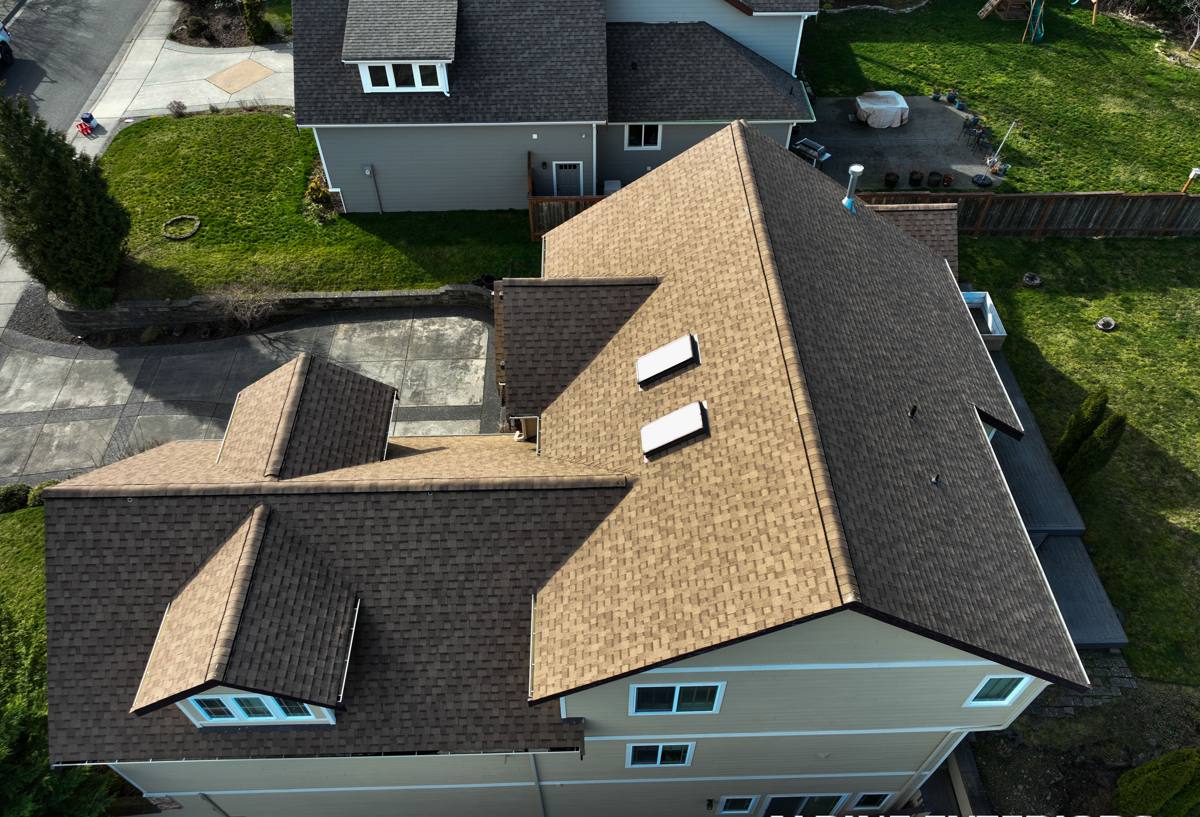
The Real Cost Drivers, In Order of Impact
Contractors get asked "how much per square foot" constantly, and the honest answer is that square footage is only one factor among several that matter more. Here's what actually moves the price on a Lynden project:
| Factor | Why It Matters |
|---|---|
| Substrate condition | Rotten sheathing, soft trim, or water damage behind the old siding has to be replaced before new siding goes on — this is the single biggest source of quote surprises |
| Material choice | Fiber cement, vinyl, wood, and engineered wood products differ significantly in material cost, install labor, and how long the job takes |
| House complexity | Dormers, multiple gables, tight eaves, and lots of trim detail all add labor hours regardless of material |
| Tear-off vs. overlay | Removing old siding down to the studs costs more up front but avoids trapping moisture — overlay is rarely the right call in this climate |
| Moisture barrier system | A proper weather-resistive barrier and flashing detail package add cost but are non-negotiable in a region with this much driving rain |
| Access and site conditions | Second stories, tight lot lines, landscaping to protect, and scaffolding needs all factor into labor time |
Why Substrate Condition Is the Wildcard
On a lot of Lynden homes — especially anything from the 1970s through the 1990s with builder-grade siding — the sheathing behind the walls has been absorbing moisture slowly for decades. You often can't see this until the old siding comes off. A contractor who gives you one firm number before ever opening a wall is either guessing or planning to hit you with change orders later. A better approach is an honest range up front, with the sheathing and trim replacement priced as a per-unit rate so you know exactly what you're paying for if problems turn up.
What Material You Choose Changes the Math Significantly
This is where most of the long-term cost difference actually lives, and it's worth understanding before you fixate on the install quote. Vinyl siding is the cheapest material up front, but it's also the thinnest and most vulnerable to wind damage, sun fading, and the kind of impact denting that happens with hail or a stray branch. It doesn't rot, but it also doesn't hold up visually the way homeowners expect over a 15-20 year window, and repairs mean hunting for a discontinued color match.
Engineered wood products like LP SmartSide use a wood-strand core that's more moisture-resistant than raw lumber, but it's still a wood-based product at heart — it depends heavily on caulking, paint maintenance, and correctly sealed cut edges to keep water out over time. Primed spruce and cedar are honest, attractive materials, but they ask a lot of ongoing maintenance from the homeowner: repainting or restaining on a cycle, checking for insect damage, and accepting that a coastal, wet climate is hard on any wood product no matter how well it's installed.
We install exclusively James Hardie fiber cement siding for a specific reason: it's non-combustible, it doesn't absorb moisture the way wood-based products do, and Hardie's HZ product lines are engineered specifically for climate zones like ours — wet, humid, and prone to long stretches without much drying time between rain events. The ColorPlus factory finish also removes the repainting cycle that drives the long-term cost of wood and engineered wood products up over a 20-30 year ownership period. It typically costs more than vinyl on day one. It costs less than every alternative once you count maintenance and one fewer full re-side over the life of the house.
Labor: What You're Actually Paying For
A siding crew's time isn't just nailing panels to a wall. On a proper job, labor covers:
- Full tear-off and haul-away of old siding and building paper
- Inspection and repair of sheathing, framing, and trim
- Installing a code-compliant weather-resistive barrier
- Correct flashing at every window, door, and roof intersection
- Proper fastener spacing and clearance per manufacturer installation specs
- Caulking and sealing at seams, corners, and penetrations
- Final trim, corner boards, and paint or finish touch-up
Skipping or rushing any one of these steps is how a siding job looks fine for two years and then starts failing at year five. Flashing details in particular are where a lot of callback problems originate — and they're invisible once the siding is up, which is exactly why they matter so much during the estimate and install process, not just at final walkthrough.
Local Climate Factors That Affect Your Cost and Material Choice
Whatcom County's climate isn't gentle on exterior surfaces, and Lynden homes take a specific combination of punishment. Proximity to the Puget Sound and Georgia Strait means salt-laden air corrodes fasteners and finishes faster than an inland climate would. Add in driving rain that comes sideways off winter storms, pushing water into seams and laps that would stay dry in a calmer climate, and a long moss season where shaded north-facing walls stay damp for months at a stretch. All three of these factors show up in what fails first on an older house: corroded nails, soft trim at the bottom courses, and moss-stained siding that's held water against the wall longer than it should have.
None of this means siding is a bad investment in this area — it means material and installation quality matter more here than they would in a drier climate. A product and installation approach that's marginal in Arizona can fail outright in Lynden within a decade.
Permits and Whatcom County Considerations
Most straightforward siding replacement jobs in Lynden don't require a building permit if you're not altering structural elements, but any project that involves replacing rotted sheathing, adding insulation, or touching window and door flashing in a way that changes the building envelope may trigger permit requirements. A contractor familiar with Whatcom County and City of Lynden code should know when this applies and handle it as part of the project rather than leaving you to sort it out.
Tear-Off vs. Overlay: Why It's Not Really a Choice
Some contractors offer to install new siding directly over old siding to save on labor and disposal costs. It's cheaper, and in a dry climate it sometimes gets away with it. In a climate like ours, it's a bad trade. Overlaying siding traps moisture between two layers, hides existing rot instead of fixing it, and makes flashing details at windows and doors nearly impossible to do correctly since the wall plane has shifted outward. A full tear-off costs more up front because you're paying for removal, disposal, and a proper look at what's behind the wall — but it's the only way to actually know what you're buying and to get flashing and moisture barrier details right.
Getting an Estimate You Can Actually Trust
The estimate itself tells you a lot about the contractor before a single panel goes up. A vague, single-line "siding replacement: $X" quote leaves too much room for scope disagreements later. A quote worth trusting should break out material, labor, sheathing/trim repair (even as a contingency rate), and disposal separately, and should specify the exact product line, not just "fiber cement" or "engineered wood."
| Ask For | Why |
|---|---|
| Itemized scope, not a lump sum | Lets you see exactly what's included and compare quotes apples-to-apples |
| Named product and product line | "Fiber cement" covers a range of quality — the specific line and thickness matter |
| Written contingency rate for rot repair | Protects you from open-ended change orders once the wall is opened |
| Manufacturer installation instructions referenced | Warranty coverage often depends on installation matching the manufacturer's published spec |
| Timeline and weather contingency plan | Wall assemblies left open in a rainstorm cause real damage — a contractor should have a plan for it |
A Practical Pre-Estimate Checklist
Before you call around for quotes, a short walk around your own house will make you a sharper buyer:
- Note any visibly soft, cracked, or discolored siding sections, especially near the ground and roofline
- Check north-facing and shaded walls for moss or persistent green staining
- Look at corner boards and window trim for paint failure or gaps
- Note how many stories, dormers, and roof intersections the house has — this drives labor time
- Decide whether you're also planning window replacement soon, since sequencing that work with siding can save money
Timeline: What a Realistic Project Looks Like
A full tear-off and re-side on an average single-family home typically runs from a few days up to two or three weeks depending on size, complexity, and how much sheathing repair is needed. Weather is the biggest variable in our region — a crew that respects the climate will pace tear-off in sections rather than opening an entire wall to a forecast that includes rain, which is a normal and correct way to run the job here, not a sign of slow progress.
The Bottom Line on Cost
Siding replacement in Lynden is a project where the cheapest bid and the best value are frequently not the same number. The real cost comparison isn't vinyl-quote versus Hardie-quote — it's the vinyl-quote-plus-repainting-and-early-replacement versus the Hardie-quote-installed-once-and-maintained-normally. Given the salt air, driving rain, and moss season this area deals with every year, we've standardized on James Hardie fiber cement specifically because it holds up to those conditions with the least ongoing maintenance and the strongest warranty backing of the options we've evaluated.
If you'd like a clear, itemized look at what your specific home would need — not a generic per-square-foot number — we're happy to walk the exterior with you and put together a free, no-pressure estimate using the form below.