 Lynden Siding
 Exterior Work in a Coastal Whatcom County Climate
Ferndale sits close enough to the Strait of Georgia and Bellingham Bay that homes here deal with a different mix of weather stress than properties further inland around Lynden. Salt-laden air moves in off the water, driving rain comes in sideways during fall and winter storms, and the long stretch of gray, damp months between October and April keeps exterior surfaces wet far longer than most siding products were ever designed to handle well. None of this is exotic or unusual for western Whatcom County — it's simply the baseline condition every exterior surface on a Ferndale home has to survive, year after year, for decades.
We're a Lynden-based crew that works throughout this corner of Whatcom County, and Ferndale is a regular part of our service area. That matters because the right exterior approach for a home two hours inland isn't always the right approach for a home sitting closer to open water. We size up each property for its actual exposure — how much wind-driven rain it takes, how much shade keeps north walls damp, how close it sits to salt air — before recommending anything.
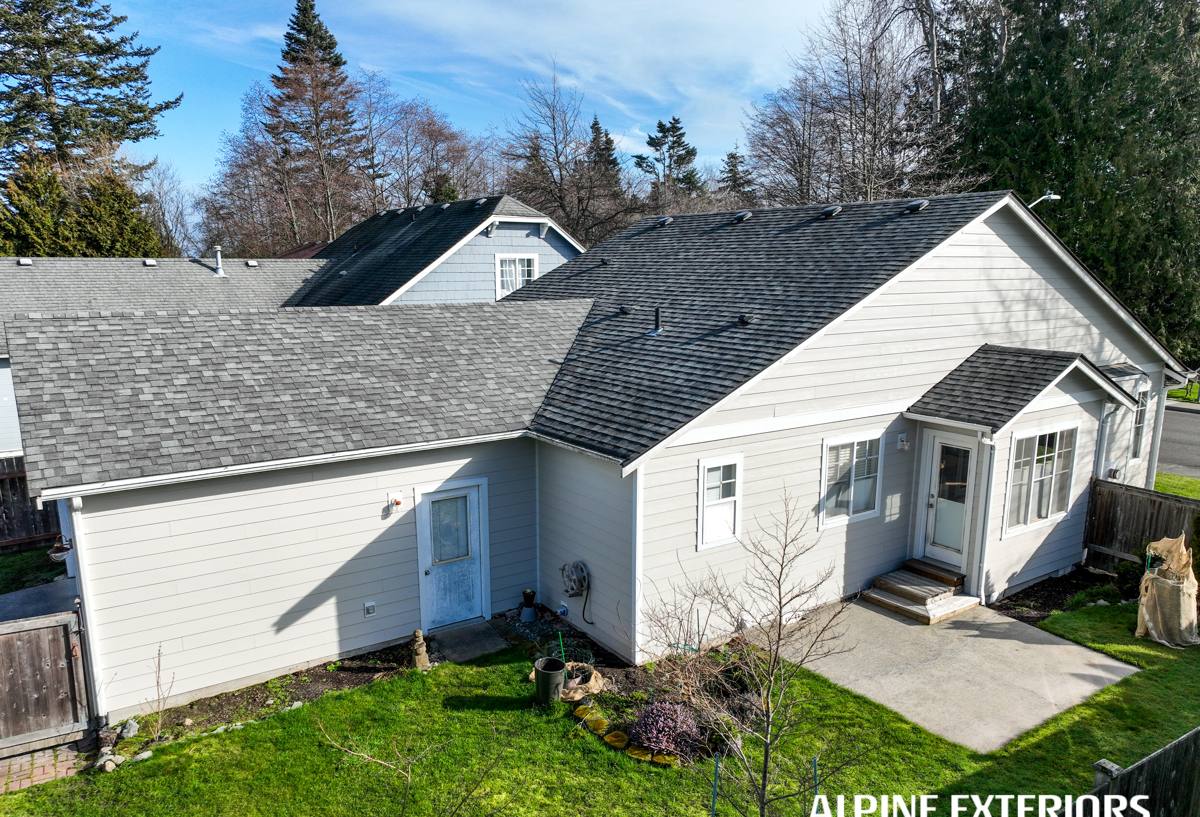
What Salt Air Actually Does to a House
Salt air doesn't just affect boats and dock hardware. It settles on exterior surfaces, works into fasteners, trim, and flashing, and accelerates corrosion on anything metal that isn't properly rated or protected. Over time it can also degrade certain paint films and coatings faster than the same products would wear in a drier, inland location. The practical result for homeowners is that materials and finishes that hold up fine in Lynden or Sumas can show wear noticeably sooner in Ferndale, particularly on the sides of a home that face open exposure.
This is one of the reasons we pay close attention to fastener and flashing choices on every job, not just the siding material itself. A great siding product installed with the wrong hardware in a salt-air environment is still a callback waiting to happen.
Driving Rain and Wall Assemblies
Rain that falls straight down is manageable for almost any siding system. Rain that gets pushed sideways by wind — which happens regularly along this stretch of the coast — tests the whole wall assembly: the siding, the water-resistive barrier behind it, the flashing at windows and doors, and the drainage plane that's supposed to let any moisture that gets past the siding find its way back out. A siding installation that ignores proper drainage gaps, correct flashing laps, and sealed penetrations will eventually let moisture into the wall cavity, even if the siding material itself is excellent. This is true no matter what brand of siding is on the wall — installation quality is often the bigger variable than the product label.
Moss, Mildew, and the Long Wet Season
Whatcom County's wet season runs long, and Ferndale's tree cover and proximity to water can keep shaded walls and north-facing exposures damp for extended stretches. That's ideal growing conditions for moss, algae, and mildew on exterior surfaces. Wood-based and wood-composite sidings are especially vulnerable here because they're organic material — moss and mildew can take hold in surface texture and joints, and sustained moisture exposure invites rot at the core, not just cosmetic staining.
This is a big part of why we standardized on James Hardie fiber cement siding for every siding job we do. Fiber cement is not an organic wood product — it doesn't feed mold, mildew, or moss the way wood fiber does, and it holds its shape and structure in sustained damp conditions far better than wood-based alternatives. That doesn't mean a Ferndale home will never see any surface growth on siding — anything exposed to this climate can pick up organic growth on the surface over time — but the material itself isn't breaking down or rotting from the inside the way wood products can.
Why We Only Install James Hardie
We get asked fairly often why we don't offer vinyl, LP SmartSide, cedar, primed spruce, or other fiber cement brands like Allura or Cemplank. The honest answer is that after years of installation and service work in this climate, we decided to standardize on one product line we trust completely rather than offer several products with different long-term track records.
- Non-combustible material — fiber cement doesn't burn, which matters as wildfire smoke and dry-season fire risk have become more of a regional concern even here in western Washington.
- Factory-applied ColorPlus finish — baked-on color that resists fading and chipping far better than field-applied paint, which matters when a house is taking direct salt air and UV exposure.
- Climate-engineered HZ product lines — Hardie's HZ5 formulation is engineered for cold, wet, freeze-prone climates, which describes a Ferndale winter reasonably well.
- Structural stability in moisture — fiber cement doesn't swell, cup, or rot the way wood-based sidings can when they take on repeated moisture exposure.
- A strong transferable warranty — meaningful if you plan to sell the home down the road, since a documented warranty on the exterior is a selling point buyers notice.
We're not going to pretend other products are worthless — vinyl is inexpensive and low-maintenance in mild climates, cedar has real aesthetic appeal, and LP SmartSide has improved over the years. But for the specific combination of salt air, driving rain, and a long wet season that Ferndale homes face, we think fiber cement is the more honest long-term recommendation, and Hardie is the fiber cement manufacturer whose engineering and finish quality we trust enough to put our name behind.
Siding Options That Fit Coastal Whatcom County Homes
HardiePlank Lap Siding
The most common choice for Ferndale homes — traditional horizontal lap profile available in several exposure widths and textures, from smooth to a cedar-like woodgrain. It reads as classic Pacific Northwest exterior style and works on nearly any home style common in this area.
HardiePanel Vertical Siding
Often used as an accent on gables, entryways, or in combination with lap siding to break up a large wall plane. Vertical siding sheds water efficiently when flashed correctly, which is a real advantage in a driving-rain environment.
HardieShingle
A textured, dimensional look for homes wanting a more traditional or craftsman appearance, often used as an accent material on gables or upper stories.
HardieTrim
Matching trim boards for corners, window and door casings, and fascia — keeping the whole exterior envelope in one consistent, moisture-stable material rather than mixing fiber cement field siding with wood trim that will weather differently.
Beyond Siding: Roofing, Windows, and Decks
Siding doesn't work in isolation — it's one part of a home's overall weather defense. We also handle roofing, window replacement, and decking, and in a climate like Ferndale's, those systems all interact.
Roofing
A roof that's shedding water properly, with intact flashing at valleys, chimneys, and wall intersections, keeps water away from the top of your siding system in the first place. Roof-to-wall flashing details are a common point of leaks in older homes throughout this area, and we check them as part of any siding or roofing evaluation.
Windows
Window flashing and integration with the siding plane is one of the most common failure points we find on older homes — original construction details that were adequate decades ago often don't meet current best practices for keeping wind-driven rain out of the wall assembly. When we replace siding around existing windows, we address flashing integration as part of the job, not as an afterthought.
Decks
Decks in this climate take a beating from the same sustained moisture that stresses siding — ledger board connections, joist hardware, and decking material all need to handle repeated wet-dry cycling without failing structurally or cosmetically.
Comparing Common Siding Choices for This Climate
| Material | Moisture Resistance | Salt Air Durability | Maintenance | Typical Lifespan |
|---|---|---|---|---|
| James Hardie Fiber Cement | High — doesn't absorb and swell | Strong with correct fasteners/flashing | Low — factory finish, occasional wash | 30-50+ years with proper install |
| Vinyl | Moderate — can warp with heat/cold cycling | Can chalk and fade faster near salt air | Low | 20-30 years typical |
| Cedar | Low without diligent upkeep | Vulnerable to salt-accelerated weathering | High — regular staining/sealing | Varies widely with maintenance |
| LP SmartSide (engineered wood) | Moderate — engineered but still wood-based | Sensitive to sustained moisture exposure | Moderate | Manufacturer-rated, install-sensitive |
These are general tendencies, not guarantees for any individual product installation — installation quality affects every material's real-world performance significantly, sometimes more than the base material choice itself.
What Correct Installation Actually Involves
Because we only install one siding product, we've been able to focus entirely on getting the installation details right rather than juggling different manufacturer specs across multiple product lines. For a home in a coastal-exposure area like Ferndale, that includes:
- Correct starter strip and clearance from grade, decks, and roof lines to keep water from wicking up into the bottom of the siding
- Proper fastener spacing, type, and corrosion resistance rated for the exposure the wall actually faces
- A continuous, correctly lapped water-resistive barrier behind the siding
- Rain screen or drainage gap detailing where the wall assembly calls for it
- Careful flashing integration at every window, door, and penetration
- Manufacturer-specified caulking and joint treatment, not generalized "whatever's on the truck" caulk
Skipping or rushing any one of these steps is how a good material still ends up with a moisture problem five or ten years down the road. It's also why we'd rather walk a homeowner through what correct installation looks like than just quote a number.
Signs Your Ferndale Home's Exterior May Need Attention
- Visible moss or algae buildup that keeps returning even after cleaning
- Soft or spongy spots on wood siding or trim, especially near ground level or under windows
- Peeling, cracking, or chalking paint that reappears within a year or two of repainting
- Visible gaps, warping, or cupping in existing siding boards
- Rust streaking from fasteners or trim hardware
- Water stains on interior walls near exterior corners or window headers
Any of these can point to a moisture issue that's worth having looked at before it becomes a larger repair. A lot of exterior problems are far cheaper to address early than after several more wet seasons have passed.
Working with a Local Crew
There's real value in hiring a contractor who works this specific stretch of Whatcom County regularly rather than a crew that's unfamiliar with how local weather patterns actually behave on a wall. We know what wind-driven rain does to west- and south-facing exposures near the water, how long moss season really runs here, and where salt air tends to show up first on a house. That local knowledge shapes how we flash, fasten, and detail every job — not just what material we recommend.
If you're weighing a siding replacement, a roof repair, new windows, or deck work on a Ferndale property, we're happy to take a look and give you a straightforward, no-pressure assessment of what your home's exterior actually needs. Reach out below for a free estimate — there's no obligation, and no pressure to sign anything on the spot.