 Lynden Siding
 Ferndale Roofs Work Harder Than the Average Roof
Ferndale sits close enough to Bellingham Bay and the Strait of Georgia that salt-laden air is a real factor in how roofing materials age here, not just a talking point. Add in Whatcom County's long stretch of driving rain from fall through spring, and a moss season that can run eight months or more in shaded, north-facing sections of a roof, and you've got a climate that punishes shortcuts. A roof that would hold up fine in a drier, inland climate can fail early here if it wasn't installed with this specific combination of weather in mind.
We work on homes throughout Ferndale and the surrounding Whatcom County area regularly, and the failure patterns we see are consistent: fasteners and flashing that corrode faster than expected near the water, moss that lifts shingle edges and traps moisture underneath, and underlayment or ventilation systems that were adequate on paper but never accounted for how much wet weather this area actually gets in a given year. A roof replacement done right here isn't just "install shingles" — it's building a system that's matched to this exact climate.
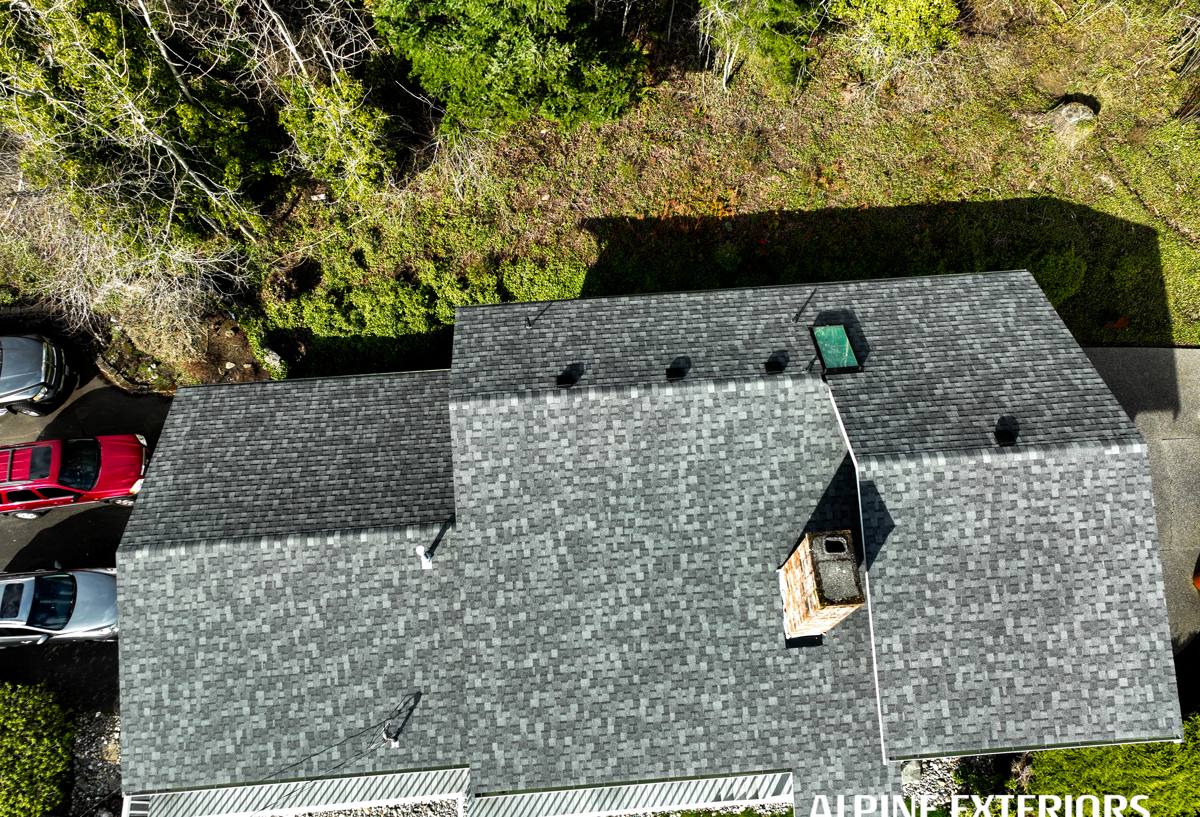
Signs a Ferndale Roof Needs Replacement, Not Another Repair
Roof repairs make sense when a problem is isolated — a cracked pipe boot, a section of flashing that pulled loose in a windstorm, a handful of damaged shingles. Replacement becomes the honest recommendation when the roof's overall condition means repairs would just be patching a system that's failing broadly. In our experience with local homes, that point tends to arrive sooner here than in drier parts of the state, simply because moisture exposure is more constant.
- Granule loss heavy enough that you're finding grit in gutters every season, not just after a storm
- Moss or algae growth that comes back within weeks of being cleaned off
- Shingles that are cupping, curling at the edges, or cracking when walked on
- Soft spots in the decking you can feel underfoot, or sagging visible from the ground
- Daylight visible through the roof deck from inside the attic
- Water staining on ceilings or in the attic that shows up in more than one spot
- A roof that's at or past the manufacturer's expected lifespan for its material
- Rising energy bills tied to poor attic ventilation or insulation failure at the roofline
If you're only seeing one or two of these, a repair may still be the right call. If several are present at once, that's usually a sign the roof system as a whole is wearing out, not just one component of it.
What a Correct Roof Replacement Actually Involves
Tear-Off and Deck Inspection
We remove the old roofing down to the deck rather than layering new material over old — layering hides problems and voids most manufacturer warranties. Once the deck is exposed, we inspect every sheet of plywood or OSB for soft spots, delamination, or rot, which is common to find in older homes where a slow leak went unnoticed for years. Damaged sections get replaced before anything new goes down; skipping this step is one of the most common corners cut in this trade, and it's the one that causes the most expensive problems down the road.
Underlayment and Water Protection
Given how much rain this area sees, underlayment choice matters more here than in drier climates. We use synthetic underlayment as a standard base layer, with self-adhering ice-and-water membrane at the eaves, valleys, and around every penetration — chimneys, vents, skylights — where water intrusion is most likely to start. These are the areas that fail first when a roof wasn't built for sustained wet weather.
Flashing and Fasteners
Flashing around chimneys, walls, and roof-to-roof transitions gets replaced, not reused, on every full replacement. Given the salt air exposure closer to the water, we pay close attention to fastener and flashing material selection — the wrong grade of metal can corrode faster than expected in coastal-influenced air, even a few miles inland.
Ventilation
Proper intake and exhaust ventilation keeps the attic space at a consistent temperature and moisture level, which does two things: it protects the roof deck from the underside, and it slows moss growth by reducing the damp, cool conditions moss thrives in. A roof can be installed perfectly on top and still fail early if the attic underneath isn't breathing correctly.
Choosing a Roofing Material for This Climate
There's no single "best" roofing material — the right choice depends on your budget, your roof's exposure to shade and moisture, and how much long-term maintenance you're willing to take on. Here's how the common options compare specifically for a Whatcom County coastal-influenced climate.
| Material | Typical Lifespan | Moss/Moisture Resistance | Maintenance Needs |
|---|---|---|---|
| Architectural asphalt shingle | 25–30 years | Good, especially with algae-resistant granules | Periodic moss/debris removal |
| Standing seam metal | 40–50+ years | Excellent — sheds moisture, little surface for moss to grip | Low; occasional fastener/sealant checks |
| Cedar shake | 20–30 years with upkeep | Requires active maintenance to resist rot and moss in wet climates | High — regular treatment and inspection |
We're upfront with Ferndale homeowners about trade-offs rather than pushing one product. Cedar has real visual appeal, but in a climate this wet it needs a homeowner who's committed to ongoing maintenance, or moisture problems can develop underneath the shakes over time. Metal costs more upfront but demands the least from you afterward. Asphalt shingle remains the most common choice because it balances upfront cost, appearance, and performance well — especially when paired with algae-resistant granules, which matter more here than in most parts of the state.
Moss: The Slow Damage Most Homeowners Underestimate
Moss doesn't just look bad. As it grows, it holds moisture directly against the shingle surface and works under the shingle tabs, gradually lifting them and breaking the seal that keeps water out. On roofs with significant shade — from mature trees, which are common on many Ferndale lots — moss can establish itself within a year or two of a roof being cleaned, and left unchecked for several seasons, it accelerates granule loss and shortens the roof's usable life significantly.
A correctly installed roof reduces this pressure but doesn't eliminate it entirely. Zinc or copper strips near the ridge, algae-resistant shingles, good attic ventilation, and periodic gentle cleaning (never pressure washing, which strips granules) all work together to keep moss from taking hold. We talk through this with every Ferndale customer during the estimate, because moss management here is an ongoing relationship with the roof, not a one-time install decision.
Our Process, Start to Finish
- On-site inspection and estimate — we walk the roof and attic, document existing conditions, and give you a written, itemized quote with no pressure to decide on the spot.
- Material selection — we go through the honest trade-offs for your specific roof's exposure, shade, and budget.
- Permitting — we handle the permit process required for roof replacement in the jurisdiction covering your property.
- Tear-off and deck repair — old roofing removed, deck inspected, any damaged sheathing replaced.
- Installation — underlayment, flashing, ventilation components, and final roofing material installed to manufacturer specification.
- Cleanup and magnetic sweep — job site cleared of debris and swept for stray nails and fasteners.
- Final walkthrough — we go over the finished roof with you and answer any questions before calling the job done.
Cost Factors for a Ferndale Roof Replacement
Every roof is different, so we won't quote a number without seeing yours, but the main variables that drive cost on most Ferndale projects are consistent:
| Factor | Why It Matters |
|---|---|
| Roof size and pitch | More surface area and steeper pitches increase labor and material needs |
| Number of layers to remove | Tear-off of multiple existing layers adds labor and disposal cost |
| Deck condition | Rot or soft spots found during tear-off require sheathing replacement |
| Material choice | Asphalt, metal, and cedar carry significantly different material costs |
| Roof complexity | Valleys, dormers, chimneys, and skylights all add flashing and labor time |
| Ventilation upgrades | Adding or correcting intake/exhaust ventilation adds scope but improves longevity |
We give you a firm, itemized number after the on-site inspection — not a rough phone estimate that changes once we're on the roof.
Why It Matters to Hire a Crew That Already Works Ferndale
Roofing crews that work primarily in drier inland climates sometimes default to specs and details that are perfectly fine there but fall short in a coastal-influenced, high-rainfall area like Ferndale. Underlayment coverage, flashing metal grade, and ventilation sizing all benefit from being handled by a crew that's used to designing for sustained wet weather and salt air exposure, not just following a generic checklist.
There's also the practical side: knowing the permitting process for Whatcom County jurisdictions, understanding how local wind patterns off the water affect fastening and edge details, and having a working relationship with local material suppliers so a project doesn't stall waiting on backordered product. None of that shows up on a spec sheet, but it shows up in how smoothly the project runs and how the roof performs five and ten years out.
Get a Straight Answer on Your Roof
If your roof is showing its age, or you just want an honest opinion on whether repair or replacement makes more sense for your Ferndale home, we're glad to take a look. We'll walk the roof, explain what we find in plain terms, and give you a written estimate — no pressure, no scare tactics. Fill out the form below to schedule a free estimate.