 Lynden Siding
 Acme sits in the wooded foothill country of Whatcom County, southeast of Lynden, where dense tree cover, seasonal creeks, and a marine-influenced Pacific Northwest climate combine to put real, sustained stress on a home's exterior. Homes here don't just get rained on — they sit under canopy that keeps siding shaded and damp long after a storm has passed, in a county where driving rain and salt-tinged marine air off the Sound work their way inland on winter systems. That combination is exactly why we tell homeowners in Acme that "what worked somewhere drier" isn't a reliable standard for a siding decision here. It has to hold up to moisture that lingers, not just moisture that falls.
Lynden Siding Company is a local Whatcom County exterior contractor, and Acme is part of our regular service area alongside Lynden itself. We install siding, roofing, windows, and decks, and on every one of those jobs the same question drives our material choices: how does this hold up to a long, wet, shaded season, year after year, without babysitting? For siding specifically, our answer has been the same for a long time — we install James Hardie fiber cement, exclusively. This page walks through why, and what that actually means for a home in Acme.
What Acme's Climate Does to Exterior Siding
A few features of this area matter more than most homeowners realize when they're comparing siding materials:
- Shade and moss pressure. Acme's tree cover keeps north- and east-facing walls damp well after a storm clears, which is the exact condition moss and algae need to establish themselves on siding.
- Driving, wind-blown rain. Whatcom County's winter storms don't just fall straight down — wind pushes rain sideways into wall assemblies, testing every seam, joint, and piece of trim.
- Marine-influenced humidity. Even away from the immediate coastline, this part of Washington sees persistent damp air for months at a stretch, which is hard on any material that swells, wicks, or holds moisture.
- Temperature swings between seasons. Materials that expand and contract with wet-to-dry or cold-to-warm cycles are more prone to warping, cupping, and joint failure over time.
None of that is unique to Acme, but the degree of shade and dampness from the surrounding tree cover makes it a slightly harder environment than open farmland closer to town. That's worth factoring into a siding decision, not glossing over.
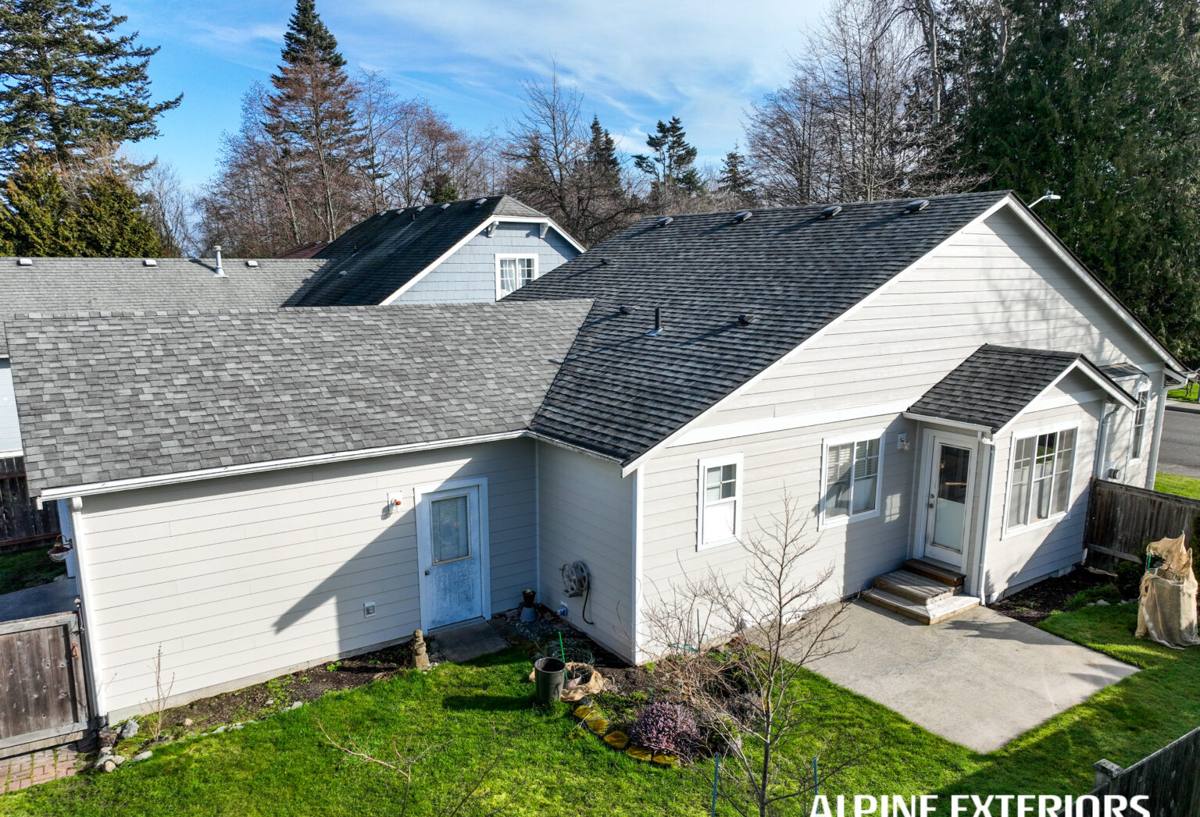
Why We Only Install James Hardie
We used to install a broader range of siding products. We don't anymore, and it wasn't a marketing decision — it came from watching how different materials actually perform on Whatcom County homes five, ten, and twenty years after installation, particularly on shaded, damp lots like the ones common around Acme.
Fiber Cement vs. the Alternatives
James Hardie siding is fiber cement: a mix of cellulose fiber, sand, and cement that's manufactured to resist moisture absorption, won't rot, and is non-combustible. That last point matters in Whatcom County too — wildfire smoke and dry-season fire risk have become a real regional concern, and non-combustible siding is a meaningful layer of protection that wood-based products simply can't offer.
We don't install LP SmartSide, vinyl, Cemplank, Allura, primed spruce, or cedar. Each of those has legitimate uses and each has real fans. But we standardized on one product because a contractor who installs five different siding systems is, by definition, not a specialist in any of them — and siding failure in this climate is almost always an installation and moisture-management problem, not a "the material was bad" problem. Specializing lets our crew get installation details right every time instead of switching mental models from job to job.
What Hardie Gets Right for This Area
| Concern in Acme's Climate | How Hardie Fiber Cement Responds |
|---|---|
| Persistent shade and moisture | Fiber cement doesn't absorb water the way wood-based products do, reducing the conditions that let rot and moss take hold |
| Driving, wind-blown rain | Correctly installed with proper flashing and rainscreen detailing, it sheds and manages water rather than trapping it |
| Wildfire and ember exposure | Non-combustible material — it does not contribute fuel to a structure fire |
| Long-term color and finish | ColorPlus factory-applied finish is baked on and warranted separately from the substrate, reducing repaint cycles |
| Freeze/thaw and wet/dry cycling | Dimensionally stable — resists the warping and cupping that plagues some wood and engineered wood products |
James Hardie Product Lines and How We Choose
Hardie isn't one product — it's a system, and part of doing this right is matching the product line to the home and its exposure.
- HZ5 products are engineered for regions with more freeze/thaw cycling and are a common baseline in the Pacific Northwest.
- Lap siding is the most common style for traditional home profiles and comes in a range of exposure widths.
- Board and batten (vertical siding) works well for accent walls, gables, and more modern or farmhouse-style exteriors, which fit naturally into Acme's rural aesthetic.
- Panel and trim products handle soffits, fascia, and detail work so the whole exterior system — not just the field siding — is moisture-resistant and non-combustible.
ColorPlus finishes come in a curated palette engineered to hold color and resist fading, which matters on a shaded lot where mildew and grime, not sun, are usually the bigger long-term threat to appearance.
Installation Is Where Siding Actually Succeeds or Fails
Fiber cement is a forgiving, durable material — but only when it's installed correctly. Most siding failures we get called out to inspect, on any brand, trace back to installation shortcuts, not the material itself. In a climate like Acme's, the details matter even more than usual:
What Correct Installation Involves
- Proper flashing at windows, doors, and any wall penetration so water is directed out, not into the wall cavity
- A drainage plane or rainscreen gap behind the siding so incidental moisture can escape rather than sit against the substrate
- Correct fastener type, spacing, and depth per Hardie's published installation specs
- Manufacturer-specified clearances from grade, roofing, and decking so siding isn't sitting in a moisture trap
- Caulking and sealing only where Hardie's guidelines call for it — over-caulking can trap moisture just as easily as under-caulking lets it in
This is also part of why the warranty matters. James Hardie backs its products with a strong, transferable limited warranty, but that warranty structure assumes installation to spec. A crew that knows the product cold, and installs it the same careful way every time, is what actually protects that warranty and the home behind it.
Roofing, Windows, and Decks: The Full Exterior Picture
Siding doesn't work in isolation. On a shaded, damp lot like the ones common in and around Acme, the roof, windows, and any deck or outdoor structure are all part of the same moisture-management system as the siding.
Roofing
A roof with failing flashing or clogged, moss-choked gutters sends water exactly where you don't want it — down the wall behind the siding. We look at roof condition and drainage as part of any siding conversation, not as a separate line item.
Windows
Window flashing integration is one of the most common failure points we find in older homes. New siding installed around poorly flashed windows just repeats the same problem under a fresh face. We address window flashing as part of a siding project whenever it needs it.
Decks
Decks in a shaded, wet climate face the same moss and moisture challenges as siding, and ledger board attachment to the house is a moisture-intrusion point worth getting right the first time.
What a Siding Project Looks Like for an Acme Home
Whether we're doing a full re-side or replacing damaged sections, the process is straightforward:
- An honest, no-pressure look at your current siding, trim, and any moisture or rot issues we can identify
- A conversation about Hardie's lap, board-and-batten, or panel options and which fits your home
- A clear, written estimate — no vague allowances or surprise change orders
- Installation to Hardie's published specs, including flashing, drainage plane, and fastening details
- A final walkthrough so you know exactly what was done and how to maintain it
Why a Local Crew Matters in Acme
Acme isn't downtown Lynden — it's a more rural, wooded pocket of Whatcom County, and a crew that knows the difference tends to plan better. We know which walls on a shaded lot are going to fight moss no matter what siding you choose, which is why gutter and roof drainage often come up in the same conversation as siding. We know what driving rain off a Whatcom County storm does to poorly flashed trim, because we've replaced it. That kind of local, repeated exposure to this specific climate is worth more than a national installer parachuting in for a week.
If you're weighing a siding project in Acme — whether it's a full replacement, storm damage repair, or you're just trying to understand your options before committing — we're happy to take a look and give you a straight answer. Reach out for a free, no-pressure estimate; there's a form below this page ready whenever you are.