 Lynden Siding
 Deming's Exterior Climate Challenge
Deming sits back in the foothills along the Mount Baker Highway, tucked into the tree cover and river valleys that run through this part of Whatcom County. That setting is beautiful, but it's also demanding on a home's exterior. The tree canopy that shades Deming properties also keeps siding damp longer after every rain. Add in the marine-influenced weather that moves through the whole Whatcom County corridor — driving rain off the Salish Sea, humid air, and stretches of gray, low-sun winter days — and you get siding that rarely gets a real chance to dry out between storms.
That combination is what drives moss and algae growth on north-facing walls, trim, and anything shaded by trees or the house itself. It's also what breaks down products that aren't built to handle sustained moisture exposure. Homeowners in Deming often see the same pattern: siding that looked fine for a few years starts showing dark streaking, soft spots, or peeling paint well before it should, especially on the shaded or wooded side of the lot.
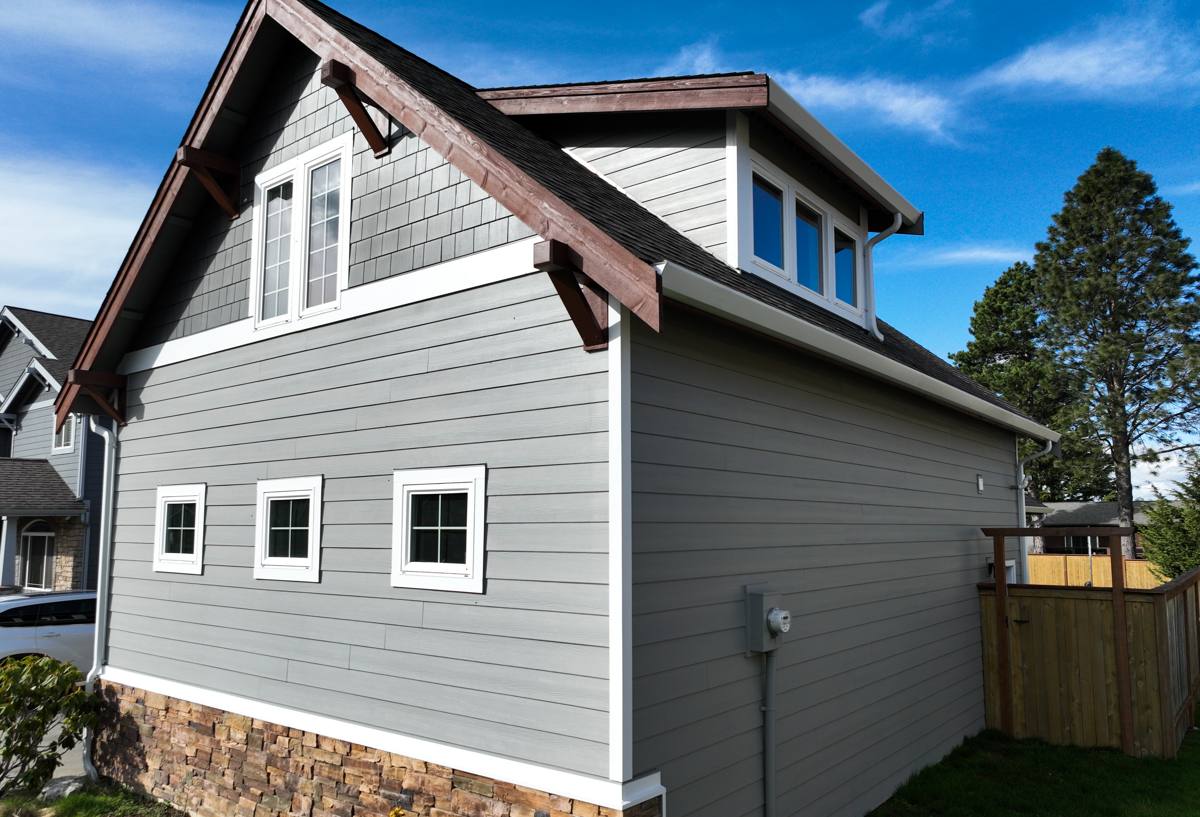
Why We Install Only James Hardie Fiber Cement
We made a deliberate decision as a company: we install James Hardie fiber cement siding, and nothing else. We don't install vinyl, LP SmartSide, Cemplank, Allura, primed spruce, or cedar. That's not a marketing line — it's a standard we hold to because we've seen how exterior products perform in exactly this kind of climate over time.
What Hardie Gets Right for This Area
- Fiber cement is non-combustible, which matters given Whatcom County's wildfire smoke seasons and general fire risk near wooded properties like many in Deming.
- It doesn't absorb and swell with moisture the way wood-based or engineered wood products can, which is critical in a climate that stays damp for long stretches.
- Hardie's factory-applied ColorPlus finish is baked on under controlled conditions, giving more consistent, longer-lasting color than field-painted products — important when a home sits under tree cover and doesn't get much direct sun to help siding dry and cure evenly.
- Hardie backs its products with a strong, transferable limited warranty, which protects the investment if the home changes hands.
Vinyl can crack in cold snaps and fade over time, and it doesn't hold paint if a homeowner ever wants to change the look. Wood and engineered wood products need consistent maintenance — caulking, painting, moisture inspection — to hold up in a climate this wet, and a missed cycle can shorten their life significantly. We'd rather install one product correctly than offer several and let homeowners find out the hard way which one wasn't right for their site conditions.
Hardie Product Lines That Fit Deming Homes
James Hardie makes climate-engineered product lines, and the HZ5 line is built for regions like ours — colder, wetter Pacific Northwest weather. Depending on the home, we typically work with:
| Product | Best Use | Why It Fits Deming |
|---|---|---|
| HardiePlank lap siding | Most homes, traditional or modern look | Widely used, proven track record in wet climates, wide color and texture range |
| HardieShingle | Accent areas, gables, dormers | Withstands moisture better than cedar shingle in shaded, damp locations |
| HardiePanel | Modern vertical siding, board-and-batten look | Clean lines for contemporary builds without wood's maintenance burden |
| HardieTrim | Corners, window and door trim, fascia | Resists the rot that plagues wood trim in constantly damp corners and shaded eaves |
What a Deming Siding Project Looks Like
Every property in Deming is a little different — some are open to more sun, others are deep in tree cover with year-round shade and higher moisture exposure. Before we quote a job, we look at the specific site: how much direct sun the walls get, where moss and algae are already forming, whether there's existing moisture damage behind the current siding, and how the home's trim, flashing, and water management are holding up.
Our General Process
- On-site evaluation of the existing siding, sheathing, and moisture conditions
- Discussion of Hardie product lines, profiles, and colors that fit the home and its exposure
- Removal of old siding and inspection of the wall assembly underneath
- Repair of any rot or moisture damage found before new siding goes on
- Installation of proper weather-resistive barrier and flashing details
- Installation of Hardie siding and trim to manufacturer specification
- Final walkthrough
That step where we open up the wall matters more in a climate like this than almost anywhere else. Hidden moisture damage behind old siding is common in Whatcom County homes, especially on shaded walls, and it's not something you want covered back up without being addressed first.
Installation Quality Matters as Much as the Product
Fiber cement siding is only as good as the installation behind it. Correct nailing patterns, gaps, caulking, and flashing details are what keep water from finding its way behind the siding in the first place. In a driving-rain, high-moss climate, a poorly installed product — even a good one — can fail early. We install to Hardie's published specifications because cutting corners on flashing or fastening is exactly the kind of thing that shows up as a problem two or three winters later, not on day one.
Roofing, Windows, and Decks — The Full Exterior
Siding doesn't work in isolation. Roofing, windows, and decks all affect how water moves around a home, and problems in one area often show up as damage in another. We handle all four:
- Roofing — a roof in poor condition or with failing flashing sends water directly down onto walls and trim, undermining even well-installed siding.
- Windows — window flashing and integration with the siding plane is one of the most common failure points on any home; we treat it as part of the siding job, not a separate afterthought.
- Decks — ledger board connections and deck-to-wall transitions are another common spot for hidden rot in wet climates, especially where a deck sits under tree cover.
Because we handle all of these, we can look at a Deming property as one exterior system rather than a set of disconnected repairs.
Why a Local Crew Matters Here
Deming isn't a big commercial strip — it's a mix of rural properties, wooded lots, and homes tucked along the Nooksack River corridor. A crew that works this area regularly knows what that terrain and tree cover do to a house: where moss tends to build up fastest, which sides of a home take the worst weather, and how much drying time siding realistically gets between storms here compared to a more open, sunnier part of Whatcom County. That local knowledge shapes decisions on flashing details, ventilation, and where extra attention is worth spending during installation. It also means a shorter drive for follow-up if a homeowner ever has a question after the job is done.
Maintaining Hardie Siding in a Deming Climate
Fiber cement is low-maintenance compared to wood, but "low-maintenance" doesn't mean "no maintenance," especially in a climate this wet. A simple annual routine goes a long way:
- Rinse siding down once a year, focusing on shaded, north-facing, or tree-covered walls where moss and algae build up fastest
- Keep gutters clear so water isn't overflowing onto siding below
- Trim back vegetation and tree branches that keep walls shaded and damp longer than necessary
- Check caulking at trim joints and around windows every year or two and re-caulk as needed
- Watch for any soft spots, staining, or gaps at trim and flashing points, and address them early rather than waiting
What Affects the Cost of a Siding Project
| Factor | Why It Matters |
|---|---|
| Home size and wall complexity | More corners, gables, and dormers mean more cutting, trim work, and labor |
| Condition of the existing wall | Rot or moisture damage found during removal adds repair work before new siding goes on |
| Product line and profile chosen | Lap, shingle, and panel styles carry different material and labor costs |
| Trim and detail work | Extensive trim, window casing, and accent details add time and material |
| Site access | Tree cover, slopes, or tight access on rural lots can affect staging and labor time |
We don't quote a job without seeing the property first, since the real cost drivers — hidden damage, site access, and how much trim and detail work is involved — only show up on inspection.
If you're weighing a siding, roofing, window, or deck project on a Deming property, we're happy to take a look and walk you through what we're seeing and what it would take to do the job right. Reach out for a free, no-pressure estimate using the form below.