 Lynden Siding
 Two Different Materials, One Big Decision
If you're re-siding a home in Lynden, you've probably run into both of these names: James Hardie fiber cement and LP SmartSide engineered wood. They get compared constantly because they occupy the same price and performance tier — both are a step up from vinyl, both come pre-primed or pre-finished, and both are marketed as low-maintenance alternatives to solid wood siding. But they are built from fundamentally different raw materials, and that difference matters more here in Whatcom County than it does in a lot of other places.
We install James Hardie exclusively. We don't install LP SmartSide. This page explains what SmartSide actually is, what it does well, and why our company drew the line where we did — not to talk down a competitor's product, but to walk you through the same reasoning we use when a customer asks us directly.
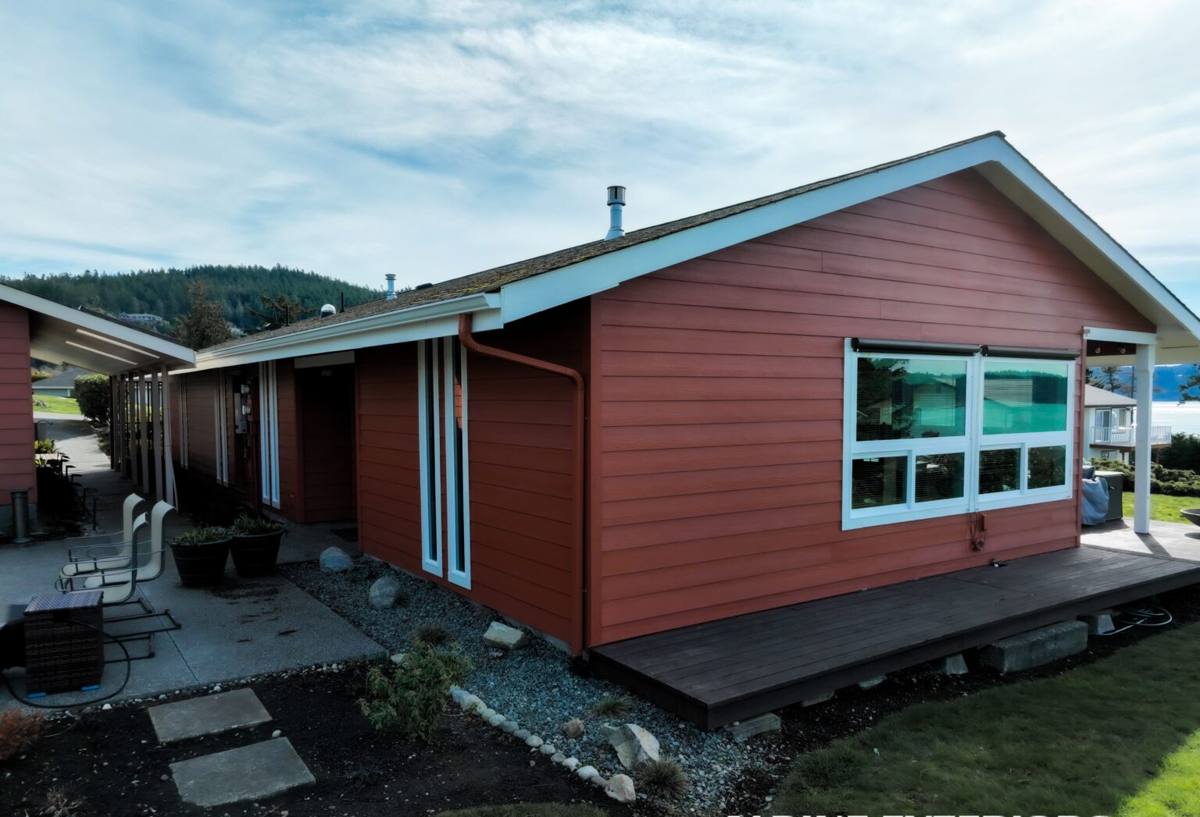
What LP SmartSide Actually Is
LP SmartSide is an engineered wood product. The core is strand board — wood fibers bonded together with resin, similar in concept to OSB — treated with a zinc-borate solution for insect and fungal resistance, then coated with a resin-saturated overlay and factory primer. It's manufactured to look like traditional wood lap siding, and it does that well. It's lighter than fiber cement, easier to cut with standard woodworking tools, and generally less expensive per square foot installed.
LP has improved the product significantly since its earlier generations (which had a rough reputation for swelling and fastener-related moisture intrusion). The current SmartSide product line carries a solid warranty and performs reasonably well in a lot of climates. We're not disputing that.
Why Wood-Based Composition Is the Sticking Point in This Climate
Lynden sits in a corridor that gets consistent marine moisture off the Salish Sea and Puget Sound, funneled up the Nooksack valley, on top of routine winter rain that can run weeks without a real dry stretch. Add the moss and algae growth that thrives on north-facing walls and shaded siding runs here, and you have a climate that spends a lot of the year testing whether a siding's outer layer can keep water away from what's underneath it.
SmartSide's weak point, structurally, is still wood. The zinc-borate treatment and resin overlay are real engineering improvements, but the core material is still an organic, wood-fiber substrate. If the factory-applied coating gets breached — at a cut edge that wasn't field-primed, a fastener hole, a butt joint, a spot where caulking failed or was never applied correctly — moisture has a path into a material that can swell, delaminate at the edges, or support fungal growth once it's wet. Fiber cement doesn't have that failure mode, because there's no organic material in the substrate to begin with. That's the core distinction, and it's the one that matters most in a county where the siding rarely gets more than a few consecutive dry days to fully release moisture it's picked up.
Installation Sensitivity
SmartSide's performance is heavily dependent on installers following LP's detailing requirements exactly — sealing every cut end, maintaining clearance off grade and off roof lines, keeping fasteners in the right zones, caulking every joint per spec. Skip a step and you've created a moisture entry point that may not show a problem for a couple of years. Fiber cement has installation requirements too, and doing it wrong causes its own problems, but the consequence of a missed detail is different: Hardie's cement core doesn't rot or swell the way a wood-fiber core can when water gets past a compromised edge.
Long-Term Maintenance
Both products need periodic caulk inspection and repainting over their lifespan — factory finishes don't last forever on either one. But SmartSide's maintenance conversation includes checking for swelling at edges and joints, especially after a wet winter, in a way that fiber cement simply doesn't require. For a homeowner who wants to do a walk-around once a year and not think much harder about it than that, that's a meaningful difference in what "low maintenance" actually means day to day.
James Hardie: What the Material Is and Why We Standardized On It
James Hardie fiber cement siding is made from Portland cement, sand, and cellulose fiber, cured into a rigid board. It is non-combustible — it won't contribute fuel to a fire, which matters for insurance conversations as much as for peace of mind. It doesn't rot, and it isn't a food source for insects or fungus, because there's no organic material in the substrate for them to work on. It holds paint and factory finish exceptionally well because the surface is dimensionally stable — it doesn't expand and contract with moisture the way wood-based products do, so the finish doesn't get stressed and crack at the same rate.
Hardie's ColorPlus factory finish is baked on in a controlled environment, cures harder than field-applied paint, and typically holds color and resists fading noticeably longer than site-applied paint jobs — which matters when your job is facing west-facing sun exposure part of the year and driving winter rain the rest of it.
HZ5 Engineering
James Hardie manufactures different product formulations for different climate zones, and the Pacific Northwest falls under their HZ5 (or comparable high-moisture zone) engineering — meaning the product formulation itself accounts for the freeze-thaw and moisture exposure patterns common to our region, rather than shipping the same board to every climate in the country. For a county that sees the volume of rain Whatcom does, that's not a marketing detail, it's a relevant spec.
Warranty Structure
James Hardie backs its siding with a long, transferable limited warranty, and ColorPlus finishes carry their own separate finish warranty. Transferability matters more than people expect — it's a real selling point if you list the home down the road, and it signals that the manufacturer is confident enough in the product's real-world durability to stand behind it for decades, not just the first few years.
Side-by-Side: The Practical Differences
| Factor | James Hardie Fiber Cement | LP SmartSide |
|---|---|---|
| Core material | Cement, sand, cellulose fiber | Engineered wood strand board |
| Combustibility | Non-combustible | Combustible (treated wood product) |
| Moisture vulnerability | Does not rot or swell | Can swell/delaminate if coating is breached |
| Installed weight | Heavier, requires proper fastening technique | Lighter, easier to handle |
| Factory finish | ColorPlus baked-on finish | Factory primed, often field-painted |
| Cut-edge sensitivity | Low — cement core is stable at cuts | High — every cut edge needs sealing |
| Typical installed cost | Higher | Moderate |
| Warranty transferability | Long, transferable limited warranty | Manufacturer warranty, terms vary by product line |
Where Cost Fits In
We'll be straight about this: SmartSide is generally less expensive installed than James Hardie, and for some budgets that gap matters. What we'd ask you to weigh against that is the cost of repainting more frequently if you go with a field-finished product, the cost of repairing a swollen edge or joint down the road if a detail was missed during install, and the cost difference between a siding job you do once and one you're maintaining more actively for the next 20-plus years. In a climate that gives siding this little downtime to dry out, that math tends to favor the material with no organic core.
What to Ask Any Contractor Before You Decide
- What warranty does the product carry, and is it transferable to a future buyer?
- Does the installer follow the manufacturer's fastening and clearance specs exactly, or "close enough"?
- Is every cut edge sealed per manufacturer instructions, especially at butt joints and trim returns?
- What's the factory finish — baked-on, or field-primed and painted after install?
- How does the product perform specifically in high-moisture, low-sun-exposure climates like ours?
- What does long-term maintenance actually look like — caulk checks, repainting cycle, edge inspection?
Our Bottom Line
LP SmartSide is a legitimate, engineered product that has come a long way from its early-generation issues, and there are climates and budgets where it makes sense. Our decision to install only James Hardie fiber cement comes down to Whatcom County's specific conditions — the salt-tinged marine air, the driving rain that runs most of the fall and winter, and the moss season that follows it. We'd rather put a non-combustible, moisture-stable material on a Lynden home that doesn't depend on every caulk joint holding perfectly for the next twenty years, and back it with a warranty structure that reflects that confidence.
If you're weighing siding options for a home in Lynden or anywhere else in Whatcom County, we're glad to walk your specific project through this comparison in person. Reach out for a free, no-pressure estimate — we'll look at your home's exposure, existing siding condition, and budget, and give you a straight answer about what we'd recommend and why.