 Lynden Siding
 Exterior Work Built for Wiser Lake's Conditions
Wiser Lake sits in the rural country west of Lynden, where homes are spread across open farmland, tree-lined lake frontage, and quiet country roads. It's a different setting than a subdivision in town, and it puts different demands on a house. Wind has more room to build across open fields before it hits a wall. Moisture off the lake lingers in the yard and against the north side of a house longer than it would on a dry, exposed lot. And because many homes here sit on larger parcels with mature trees, shade and airflow patterns vary a lot from one property to the next, which changes how fast siding, trim, and roofing actually dry out after a storm.
We've been doing exterior work throughout Lynden and the surrounding Whatcom County countryside long enough to know that a house on Wiser Lake doesn't weather the same way as one three miles into town. That's not a marketing line — it's the reason we walk every property here in person before we talk about materials or price. A siding, roofing, window, or deck job that's engineered for the actual site holds up. One that's just "standard for the area" often doesn't.
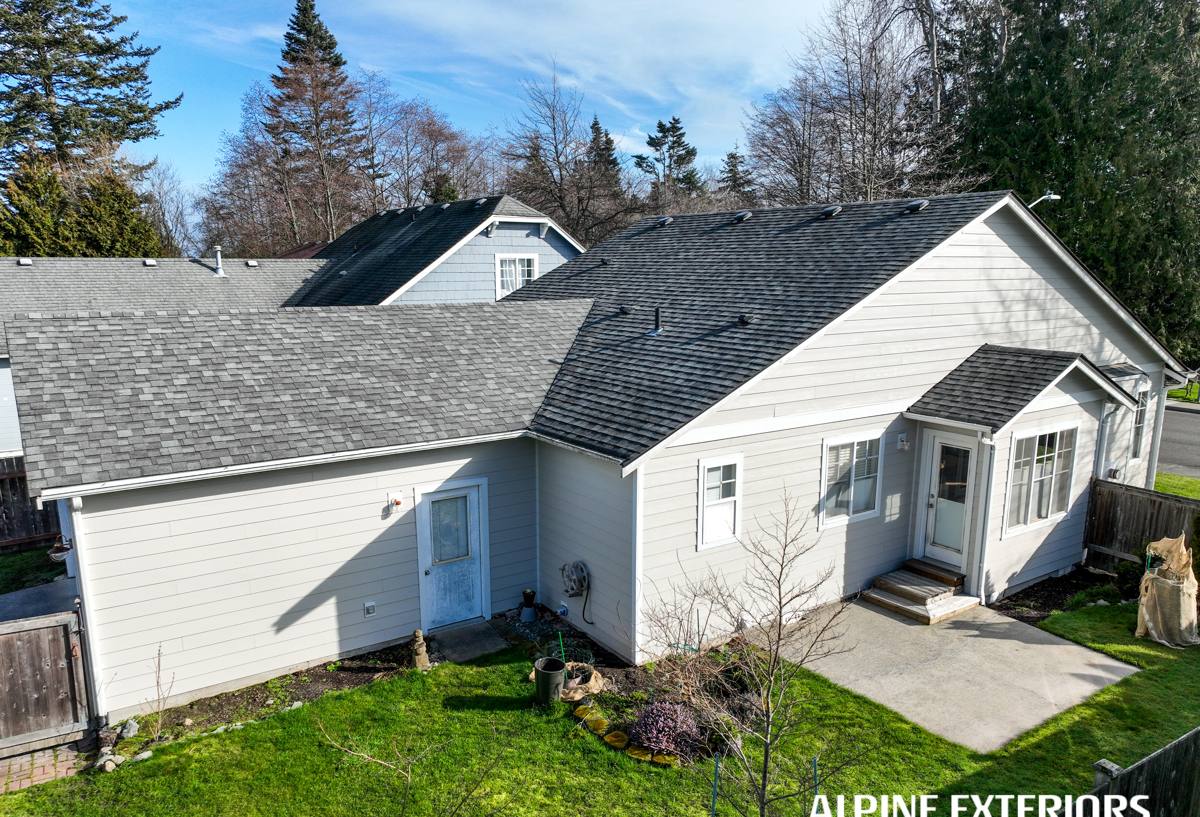
What Whatcom County Weather Does to a House Over Time
Lynden and the Wiser Lake area sit close enough to the Salish Sea and Puget Sound air currents that homes here deal with a mix of coastal and inland weather problems at once. Over a normal year, three things do most of the damage:
Salt-Tinged, Moisture-Heavy Air
Whatcom County's proximity to the coast means the air carries more salt and moisture than you'd find further inland in Washington. That combination is hard on fasteners, metal flashing, and any exterior material that isn't built to resist corrosion and moisture absorption. Over years, it's a slow, steady process — not a single storm — that wears down under-engineered materials.
Driving, Wind-Pushed Rain
This isn't gentle, straight-down drizzle. Storms here regularly bring rain sideways, driven by wind off open farmland and the lake itself. Driving rain finds every gap in flashing, every poorly lapped seam, and every spot where caulk was asked to do a job it was never meant to do. Homes with mature landscaping or lake-adjacent shade also tend to hold moisture against exterior walls longer after each event, which matters for anything installed without proper drainage planes and clearances.
A Long Moss and Algae Season
Between the moisture, the shade from trees around the lake, and Whatcom County's mild, wet stretch from fall through spring, moss and algae have a long window to take hold — on roofs, on north-facing siding, in gutters, and in any low-airflow corner of a house. Left unmanaged, moss holds water against building materials and accelerates rot and finish failure. It's one of the most common issues we see on older homes in this area, and it's largely preventable with the right materials, proper spacing and ventilation, and routine gutter and roof maintenance.
Why We Only Install James Hardie Fiber Cement Siding
We get asked fairly often why we don't offer vinyl, LP SmartSide, primed spruce, cedar, or other fiber cement brands like Cemplank or Allura. The honest answer is that after years of exterior work in this exact climate, we standardized on one product because it's the one that consistently performs the way homeowners expect it to, for as long as they expect it to.
Vinyl siding is inexpensive and easy to install, and for a lot of the country it does fine. But in a climate with sustained wind-driven rain and salt-tinged air, vinyl's seams, its tendency to expand and contract with temperature swings, and its vulnerability to impact damage make it a compromise we're not willing to build a reputation on. LP SmartSide and primed wood products like spruce use engineered or solid wood as their base, which means moisture management at every seam, joint, and cut edge is non-negotiable — miss one detail during install or maintenance and you're looking at swelling, delamination, or rot down the line. Cedar is a beautiful, genuinely traditional Pacific Northwest material, but it demands a maintenance commitment — refinishing, staining, moisture monitoring — that most homeowners don't want to sign up for decades into owning a house. And other fiber cement brands like Cemplank and Allura are reasonable products on paper, but we don't have the same install history, warranty confidence, or factory-finish consistency with them that we do with James Hardie.
James Hardie fiber cement is non-combustible, engineered specifically for the moisture and temperature swings of climates like ours through its HZ5 product line, and finished at the factory with ColorPlus Technology — a baked-on finish that resists fading and chipping far better than field-applied paint. It comes with a strong transferable warranty, and because we install it to spec on every job, that warranty actually means something. It's not the cheapest option on the market. It's the one we're willing to put our name on.
Siding: What Correct Installation Actually Involves
Fiber cement siding is only as good as the install behind it. The board is engineered to perform, but the flashing, the clearances, the fastening pattern, and the weather-resistive barrier underneath it are what actually keep water out of the wall.
- Proper weather-resistive barrier and flashing integration at every window, door, and penetration
- Correct fastener type, spacing, and depth per Hardie's published installation specifications
- Minimum clearance from grade, decks, roof lines, and other transitions to prevent wicking
- Properly lapped and caulked joints sized for our region's temperature and moisture swings
- Ventilation and rainscreen considerations for shaded, lake-adjacent, or low-airflow wall sections
On a Wiser Lake property with mature trees or lake-facing exposure, we pay particular attention to shaded wall sections and areas where landscaping sits close to the house — those spots dry out slower and need the drainage details done right the first time.
Roofing, Windows, and Decks: The Rest of the Envelope
Siding doesn't work in isolation — it's one piece of a building envelope that has to function as a system. We handle roofing, windows, and decks alongside siding because a house with new siding and a failing roof, or leaky window flashing, is still a house with a moisture problem.
Roofing
Given the moss pressure in this area, roofing work isn't just about the shingles or metal — it's about ventilation, gutter sizing, and keeping debris and shade-driven moisture from giving moss a foothold. A roof that's been neglected under tree cover for years often needs more than a simple wash before it's ready for new material.
Windows
Window flashing is one of the most common failure points we find on older homes in Whatcom County. Wind-driven rain exploits any gap around a window frame, and once water gets behind the exterior finish, the damage is often hidden until it's significant. Replacement windows are also a chance to correct decades-old flashing mistakes, not just upgrade the glass.
Decks
Decks on lake-adjacent or heavily shaded lots deal with more standing moisture and slower dry-out than decks in open, sunny yards. Ledger board flashing, joist protection, and material selection all matter more here than they would on a drier site.
Comparing Siding Options for a Wiser Lake Home
| Factor | James Hardie Fiber Cement | Vinyl | Wood / LP SmartSide |
|---|---|---|---|
| Moisture resistance | Engineered for wet, coastal-influenced climates | Resists rot, but seams and edges are vulnerable | Requires strict moisture management at every cut and joint |
| Finish durability | Factory-baked ColorPlus finish | Color molded in, but fades and chalks over time | Field-applied paint/primer, needs recoating |
| Fire resistance | Non-combustible | Combustible | Combustible |
| Maintenance | Low, periodic inspection and cleaning | Low, but impact damage is common | Higher, ongoing refinishing needed |
| Warranty | Strong, transferable when installed to spec | Varies widely by manufacturer | Varies, often shorter on finish |
Planning an Exterior Project on a Lake-Adjacent or Rural Whatcom County Lot
Properties around Wiser Lake often have a few things in common that affect how we plan a project: longer driveways and setbacks that change access and staging, mature trees that create both shade and debris considerations, and in some cases proximity to the lake itself, which can bring county or shoreline-related permitting into the conversation depending on the scope of work. None of that is a barrier — it's just part of doing the job right, and it's exactly the kind of thing a crew unfamiliar with the area might miss on the first walkthrough.
Here's what we typically walk through with a homeowner in this area before work starts:
- Confirming property access for material delivery and equipment, especially on longer or gravel driveways
- Assessing shade and airflow patterns around the house to plan moisture and moss mitigation
- Checking existing flashing at windows, rooflines, and deck ledgers for hidden past damage
- Reviewing any relevant county permitting requirements for the scope of work
- Timing the project around Whatcom County's wetter months where possible
Why a Local Crew Matters Here
Wiser Lake isn't downtown Lynden, and it isn't Bellingham. It's rural Whatcom County, with its own access patterns, its own microclimate quirks from the lake and surrounding farmland, and its own history of how houses in the area have aged. A crew that only works subdivisions in town, or that flies in from outside the county, doesn't have the local knowledge to make good judgment calls on a property like this — where the roofline sits under, how the ground drains toward the lake, which walls stay shaded most of the day.
We're a Lynden-based crew that works this area regularly. That means we've seen how moss builds on north-facing roofs near the lake, how driving rain off open farmland finds weak flashing, and which details matter most when a house sits close to water and mature trees. That local familiarity shapes every estimate and every install we do out here.
What to Expect When You Call Us
We start with an honest, in-person look at your home — not a generic quote based on square footage alone. For siding, that means checking your current material's condition, looking at moisture and shade patterns specific to your lot, and talking through what James Hardie's product lines and colors would look like on your house. For roofing, windows, or decks, it's the same approach: an honest assessment of what's actually happening with your home, not an upsell.
If you're in the Wiser Lake area and thinking about siding, roofing, windows, or a deck project, we'd be glad to come take a look. The estimate is free, there's no pressure, and you'll get a straight answer about what your home actually needs.