 Lynden Siding
 Maple Falls Sits in a Tougher Climate Than It Looks
Maple Falls is a quieter, more forested corner of Whatcom County than most people picture when they think of Western Washington siding problems. But the wooded lots, higher tree canopy, and proximity to the foothills that make the area beautiful also make it harder on exterior building materials. Homes here spend more of the year in shade, catch runoff and drip from surrounding trees long after a storm has passed, and sit through the same driving rain and long moss season that hits the rest of Whatcom County, just with less sun to dry things back out. Add in the salt-influenced weather systems that move through the broader Puget Sound and Whatcom County region, and you have an exterior that's rarely given a real chance to fully dry between wet stretches.
That combination — moisture, shade, and time — is exactly what siding, trim, and roofing were not designed to sit in indefinitely. It's not dramatic damage in year one. It's a slow accumulation: a soft spot behind a downspout, a paint film that starts failing two years early, a strip of green creeping up a north wall. We've worked on enough homes in this part of the county to know what that pattern looks like before it becomes a real repair bill.
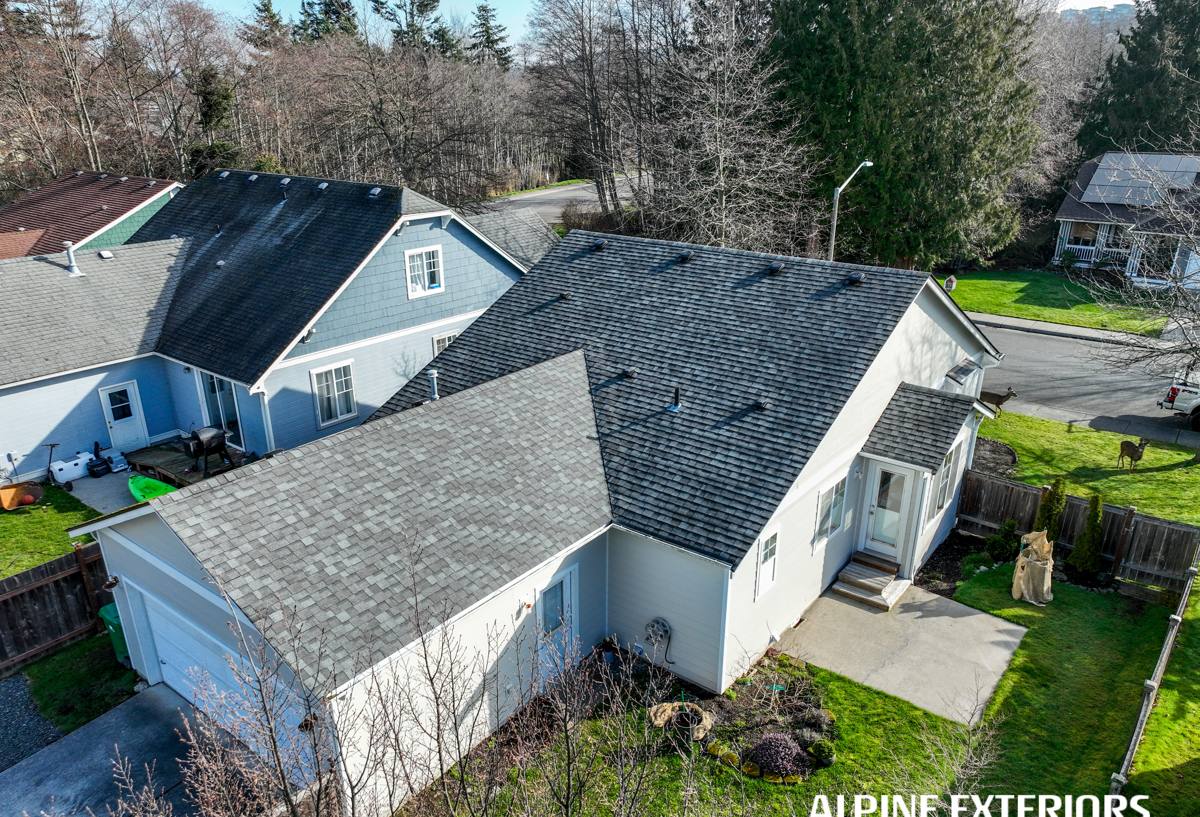
What Shade and Moss Actually Do to a House
Moss Isn't Just Cosmetic
Moss and algae get treated like a surface nuisance, but they hold moisture directly against whatever they're growing on. On a roof, that means shingles staying wet longer than they should, which shortens their service life. On siding, it means paint and caulk breaking down faster in those shaded, moss-prone zones — usually the north and east faces, under eaves, and anywhere tree cover blocks direct sun and wind.
Wood-Based Products Take the Brunt of It
Traditional wood siding, primed spruce trim, and even some engineered wood products are cellulose-based, meaning they're food for moisture and rot once the protective coating is compromised. In a shaded, high-moisture pocket like Maple Falls, that coating gets compromised faster than it would on a sunnier, more exposed lot. Once water gets behind a seam or into a cut edge, wood-based products swell, delaminate at the edges, or soften from the inside out — often before it's visible from the ground.
Signs Your Siding Is Losing the Fight
- Paint that's peeling, chalking, or needs recoating well ahead of schedule, especially on shaded walls
- Soft or spongy spots when you press on siding near the bottom edge or around window trim
- Visible moss or dark streaking that keeps coming back after cleaning
- Swollen, puffy seams or edges on panel siding, a classic sign of moisture intrusion
- Nail heads popping or siding pulling slightly away from the wall
- Musty smell or discoloration on interior walls that back up to exterior siding
Any one of these on its own isn't an emergency. Several together, especially on the shaded sides of the house, usually mean the siding system is past the point where paint and caulk will buy much more time.
Why We Standardized on James Hardie Fiber Cement
We install James Hardie fiber cement siding exclusively. We don't install vinyl, LP SmartSide, Allura, Cemplank, or bare cedar or primed spruce siding, and in an area like Maple Falls that decision matters more than it would somewhere drier and sunnier.
Fiber cement is made from cement, sand, and cellulose fibers processed together, which means it doesn't rot, isn't a food source for moss or fungus the way wood products are, and holds up to sustained moisture exposure without the swelling and delamination that plague wood-based and some engineered products. Hardie's ColorPlus finish is baked on at the factory under controlled conditions, which gives it better fade and moisture resistance than field-applied paint — a real advantage on shaded walls that never fully dry and would otherwise need repainting on a shortened cycle. Hardie also engineers specific product lines (its HZ5 line, for example) for wetter Pacific Northwest climates, which is a level of climate-specific engineering vinyl and most composite products simply don't offer.
None of this means other products are unusable everywhere — vinyl and engineered wood siding both have legitimate uses and reasonable track records in the right conditions. But for the moisture load and shade patterns common around Maple Falls, we'd rather put a non-combustible, factory-finished product on a home with a strong transferable warranty than install something we know is more sensitive to exactly the conditions this area produces.
Vinyl vs. Fiber Cement in This Climate
| Factor | Vinyl Siding | James Hardie Fiber Cement |
|---|---|---|
| Moisture behavior | Can warp or buckle; seams allow water behind panels | Doesn't rot or absorb moisture like wood; engineered for wet climates |
| Moss/algae resistance | Textured surface can trap growth | Factory finish resists staining and growth better |
| Fire performance | Combustible, can melt or deform near heat | Non-combustible material |
| Finish longevity | Color can fade or chalk over time | ColorPlus factory finish holds color longer |
| Impact resistance | Can crack in cold temperatures | More rigid, resists impact damage |
It's Not Just Siding — The Whole Envelope Works Together
Siding doesn't fail in isolation. A roof that's shedding water poorly, gutters that overflow onto the wall below, or a window that's letting moisture into the framing will undermine even correctly installed siding. That's why we handle roofing, windows, and decks alongside siding rather than treating them as separate projects.
Roofing
In a shaded, moss-heavy area like Maple Falls, roof maintenance and material choice directly affect how much moisture ends up running down the walls. A roof system that's shedding water properly and isn't holding onto moss reduces the load on everything below it.
Windows
Window flashing and trim are common failure points on older homes, and they're often where we find the first signs of hidden moisture damage during a siding assessment. Correctly integrated window flashing is part of doing a siding job right, not an afterthought.
Decks
Decks in this area deal with the same shade and moisture exposure as siding, just horizontally, which is often harder on materials. Ledger board attachment and proper drainage away from the house are as important as the decking material itself.
Why a Local Crew Matters Here
Maple Falls isn't downtown Bellingham or a typical Lynden subdivision — lots tend to be larger, more wooded, and more varied in grade and access than a standard suburban block. A crew that works across Whatcom County regularly knows what to expect: longer driveways, tree-root-heavy yards, septic systems to work around, and the reality that a truck may not be able to pull right up to the house. That kind of familiarity affects scheduling, material staging, and how a crew plans the job before they ever show up.
It also matters for follow-up. If a question comes up two years after installation — a caulk line, a trim detail, a warranty question — you want a company that's still local, still answers the phone, and still knows the area rather than a crew that worked a single job here and moved on.
What Cost Actually Depends On
We don't publish flat prices because siding jobs vary too much house to house, but the real cost drivers are consistent. Understanding them helps you evaluate any estimate you get, from us or anyone else.
| Factor | Why It Matters |
|---|---|
| Existing wall condition | Rot or damaged sheathing found during removal adds repair scope before new siding goes on |
| House size and complexity | Dormers, multiple gables, and cut-up walls take more labor per square foot than simple rectangular walls |
| Access and lot layout | Wooded or steep lots common around Maple Falls can slow staging and material handling |
| Trim and detail level | Board-and-batten accents, wider trim, or shadow lines add material and labor |
| Number of stories | Second-story and steep-roof work requires more scaffolding and safety setup |
Our Process on a Maple Falls Project
Every project starts with a walk-around assessment, not a sales pitch. We look at the current siding condition, check for soft spots and moisture staining, and note how sun and shade patterns hit different sides of the house. That tells us whether we're looking at a straightforward re-side or whether there's sheathing repair to plan for first. From there we walk through Hardie product lines, colors, and trim options that fit the home, give you a written scope and estimate, and plan the work around your schedule and site access. We handle the tear-off, any necessary sheathing or moisture-barrier repair, and the full Hardie installation to manufacturer specification, since correct installation is what makes the product warranty and the material's real-world performance hold up.
Get a Free, No-Pressure Estimate
If your Maple Falls home is showing early signs of moss, soft siding, or paint that's not holding up the way it used to, it's worth getting a second set of eyes on it before small problems turn into structural ones. We offer free estimates with no pressure attached — just an honest look at what your siding, roof, windows, or deck actually need. Use the form below to get started.