 Lynden Siding
 Serving Aldergrove Homeowners Just Across the Line
Aldergrove sits just north of the border from Lynden, part of the Fraser Valley region of British Columbia. It's close enough to our home base that we treat it the same way we treat any neighborhood in our own service area: same crews, same materials, same standards. Homeowners in Aldergrove face essentially the same exterior punishment that Whatcom County homes do — the difference is a few miles and a border crossing, not a different climate.
We're a Lynden-based exterior contractor working in siding, roofing, windows, and decks. When Aldergrove homeowners call us, it's usually because they want a crew that already knows how Pacific Northwest weather chews through cheap or poorly-installed exteriors, and who won't need a learning curve to get it right.
What This Climate Does to a House
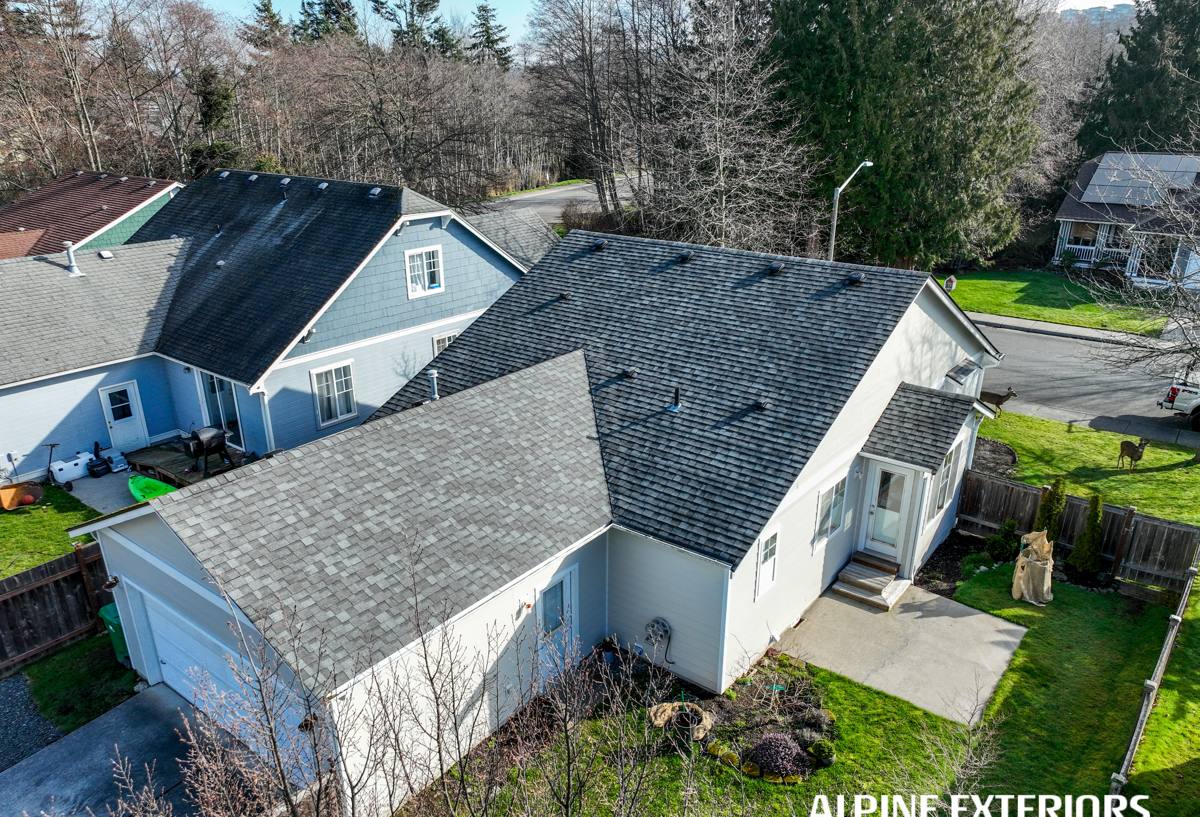
This part of the Pacific Northwest — inland from the Strait of Georgia but still close enough to catch marine influence — puts three specific stresses on a home's exterior year after year:
- Salt air exposure: Coastal air movement carries fine salt content that accelerates corrosion on fasteners, flashing, and any metal components on the exterior, and it slowly degrades lower-grade siding finishes faster than manufacturers' lab tests always suggest.
- Driving rain: Storms here don't just fall straight down — wind-driven rain gets pushed sideways into seams, laps, and trim joints. Any weak point in the water-management layer behind the siding eventually shows up as a soft spot, a stain, or worse.
- A long moss season: Cool, damp conditions for much of the year mean moss and algae get a long runway to establish themselves on roofs, in siding laps, and on north-facing walls that don't get much direct sun.
None of this is dramatic on its own. It's cumulative. A house that looks fine after year one can show real damage by year eight or ten if the siding, flashing, and water management weren't installed with this specific climate in mind.
Why Moss and Moisture Are a Package Deal
Moss doesn't just sit on a surface and look bad — it holds moisture against whatever it's growing on. On a roof, that means shortened shingle life. On siding, especially anything wood-based or wood-adjacent, sustained moisture contact is exactly the condition that leads to rot, delamination, and paint failure. Keeping moss from getting a foothold, and choosing materials that don't feed it the way organic-based products can, matters more here than in drier parts of the country.
Why We Install Only James Hardie Fiber Cement Siding
We made a decision a while back to standardize on James Hardie fiber cement siding and stop installing vinyl, LP SmartSide, or wood products like cedar and primed spruce. That's not a marketing position — it's a practical one, built around exactly the climate conditions described above.
Fiber cement is non-combustible and doesn't rely on paint or a factory coating alone to resist moisture the way wood-based products do — it's cement, sand, and cellulose fiber, engineered to be dimensionally stable in wet-dry cycling. James Hardie also builds region-specific HZ product lines engineered for different climate zones, which matters in a place that swings between heavy winter rain and drier summer stretches. The ColorPlus factory finish is baked on under controlled conditions rather than field-applied, which reduces the chance of an uneven or under-cured coat — a real risk with any site-painted product in a region where dry, low-humidity install windows aren't guaranteed.
We're not going to tell you every other product is unusable — vinyl and engineered wood siding both have real advantages, mainly upfront cost. But in this climate, we've seen enough of the long-term maintenance burden, moisture callbacks, and premature finish failure on those products that we no longer put our name behind installing them. Hardie is what we install because it's what we're comfortable standing behind for the long haul.
How Siding Materials Compare in This Climate
| Factor | James Hardie Fiber Cement | Vinyl Siding | Wood / Engineered Wood |
|---|---|---|---|
| Moisture resistance | Strong — dimensionally stable, engineered for wet climates | Good on its own, but seams and J-channels can trap water | Vulnerable if coating fails or water gets behind panels |
| Moss/algae resistance | Doesn't feed organic growth; factory finish holds up to cleaning | Resistant to rot, but can still host surface algae | Organic material — most susceptible to moss and mold if damp |
| Salt air durability | High — fiber cement doesn't corrode | Can become brittle over time with UV and salt exposure | Coatings degrade faster; fasteners more prone to corrosion |
| Fire resistance | Non-combustible | Melts/deforms under heat | Combustible |
| Typical maintenance | Occasional wash; repaint only if desired, decades out | Low, but cracks/fades over time | Regular repainting/resealing required |
| Upfront cost | Mid-to-higher | Lowest | Mid-range, varies by species/product |
Full Exterior Services, Not Just Siding
Siding is only part of how a house handles this climate. We work on the full exterior envelope because siding, roofing, windows, and decking all interact with each other — a leak at a window flashing or a failing roof edge can undo good siding work, and vice versa.
Roofing
Roofs here take the brunt of the driving rain and moss exposure described above. We handle roof inspections, repairs, and full replacements with an eye toward proper ventilation and moss-resistant material choices, since a roof that traps moisture underneath shingles ages faster regardless of the shingle brand.
Windows
Window flashing and sealing details are one of the most common sources of hidden water intrusion on older homes in wet climates. When we replace windows, we make sure the surrounding flashing integrates properly with the siding system rather than treating it as an afterthought.
Decks
Outdoor living structures take constant direct exposure to rain and, in this region, extended damp seasons. We build and repair decks with materials and fastener choices suited to long-term moisture exposure, not just what looks good on install day.
What Working With a Local Crew Looks Like
Being close to the border doesn't change the fundamentals of the job, but it does mean a few practical things for Aldergrove homeowners:
- We're already familiar with the regional climate conditions your home is dealing with — we're not learning on your project.
- Scheduling and site visits are straightforward given the short distance between Lynden and Aldergrove.
- We can speak plainly about material and process differences between siding options because we work with them regularly, not occasionally.
- If your project involves cross-border logistics of any kind — permitting, material delivery, or scheduling around your own timeline — we'll walk through what that looks like with you directly rather than guessing.
We'd rather have that conversation early, during a walkthrough or estimate, than make assumptions about your specific property before we've actually looked at it.
A Homeowner's Exterior Inspection Checklist
Whether or not you're ready to replace anything, it's worth doing a basic visual check of your home's exterior once or twice a year — especially heading into or coming out of the wet season. Look for:
- Moss or algae buildup on the roof, especially on north-facing slopes or areas shaded by trees
- Green or dark staining on siding, particularly near ground level or under eaves with poor drainage
- Soft, spongy, or bubbling spots on siding panels or trim — a sign moisture has gotten behind the surface
- Gaps, cracking, or peeling paint/finish around window and door trim
- Rust staining around fasteners or metal flashing
- Gutters and downspouts that are clogged, sagging, or directing water toward the foundation or siding instead of away from it
- Deck boards that feel soft underfoot or fasteners that have started to pull or corrode
Catching these early usually means a repair. Ignoring them for a few more wet seasons usually means a replacement.
Signs It Might Be Time to Replace Your Siding
Not every issue means a full re-side. But a few signs tend to point toward replacement rather than patching:
- Warping, buckling, or visible separation between siding panels
- Recurring paint failure even after repainting
- Soft or rotted sections found in more than one area of the house
- Rising energy bills that suggest the wall assembly behind the siding isn't performing the way it should
- Siding that's simply reached the end of its practical service life and is costing more in patch repairs than a replacement would cost over time
If you're not sure which category your home falls into, that's exactly what an on-site walkthrough is for — we'd rather tell you honestly that a repair will hold for several more years than push a replacement you don't need yet.
Ready to Talk About Your Home
If you're in Aldergrove and dealing with siding, roofing, window, or deck concerns — or just want an honest read on how your exterior is holding up against the rain, salt air, and moss this region deals with every year — we're happy to come take a look. Fill out the form below for a free, no-pressure estimate.