 Lynden Siding
 Why Storm Damage Looks Different on Whatcom County Roofs
Roofs in the Ferndale area take a specific kind of punishment that doesn't match what you'd read in a generic storm-damage article written for a drier climate. Sitting close to Bellingham Bay and the Strait of Georgia, homes here get a steady dose of salt-laden air that speeds up corrosion on flashing, fasteners, and metal roof edges. Layer on top of that the driving, sideways rain that comes with winter windstorms off the water, and a moss season that can run eight or nine months out of the year, and you end up with roofs that fail in ways a typical inland home never sees.
A single storm rarely does all the damage on its own. More often, wind and rain expose weaknesses that moss growth, salt exposure, and age had already been working on quietly for years. That's why storm damage repair in this area isn't just about patching what the wind ripped loose — it's about understanding what condition the roof was already in before the storm hit.
What Actually Counts as Storm Damage Here
Homeowners often assume storm damage means a hole you can see from the driveway. In practice, most of what we get called out for in Ferndale and the surrounding Whatcom County communities is less obvious:
- Shingles lifted or creased by wind gusts, but not fully torn off — these look fine from the ground but no longer seal properly
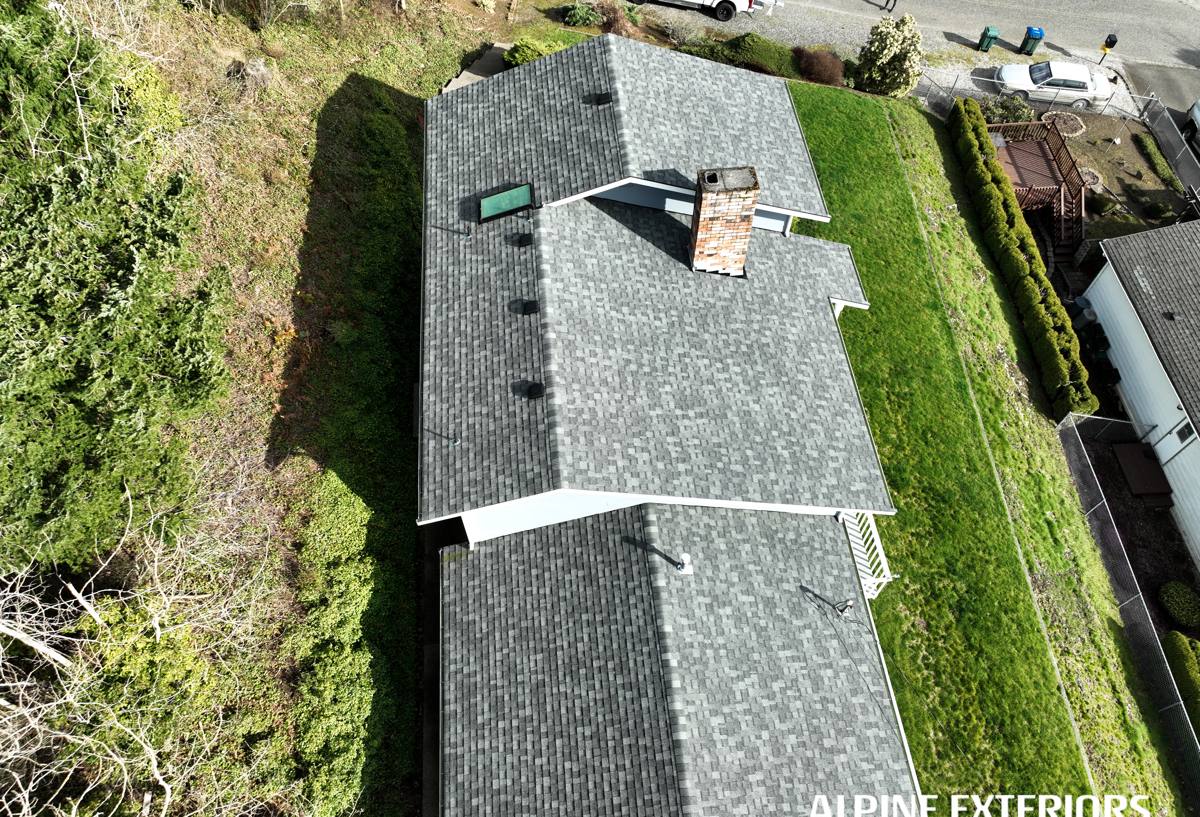
- Flashing around chimneys, vents, and skylights pushed loose or bent by wind, opening a path for wind-driven rain
- Moss mats that trapped water during a storm and forced it sideways under shingle edges instead of down the roof plane
- Granule loss from wind-blown debris or hail, which thins the shingle's UV and weather protection even without a visible puncture
- Gutter and downspout damage that redirects heavy rain against fascia and roof edges instead of away from the house
- Fastener backout on metal roofing or ridge caps, loosened by repeated wind uplift over several storm cycles
None of these require a full roof replacement on their own. But left alone through another wet season, any one of them turns into decking rot, interior water stains, or a much bigger repair bill.
What a Correct Repair Actually Involves
Starting Below the Surface, Not Just at the Shingle
A storm repair that only replaces the shingles you can see from the ground is a temporary fix, not a real one. Once shingles are pulled back, we check the decking underneath for soft spots, staining, or delamination — because if water has been getting in for a while, the plywood or OSB underneath may already be compromised, and no amount of new shingle on top of soft decking will hold up through the next windstorm.
Matching Materials, Not Guessing
On a partial repair, matching the existing shingle profile, color, and exposure matters more than people expect. A mismatched patch doesn't just look wrong — it can create a different water flow pattern across the roof plane, which sometimes causes leaks in a spot that never leaked before. When an exact match isn't available because a roof has aged or weathered, we'll tell you honestly rather than pretend a close-enough shingle will blend in.
Flashing and Ventilation Get Rechecked, Not Just Reused
Because salt air accelerates corrosion on exposed metal, any flashing disturbed during a storm repair gets inspected for pitting and thinning, not just re-bent and reinstalled. We also check that ridge and soffit ventilation weren't blocked or damaged, since restricted airflow traps moisture under the roof deck — which, combined with our damp climate, is exactly the condition that leads to hidden rot.
Repair or Replace: How That Decision Actually Gets Made
Not every storm-damaged roof needs to come off. The honest answer depends on the roof's age, how widespread the damage is, and what we find once we're actually up there.
| Factor | Repair Usually Makes Sense | Replacement Usually Makes Sense |
|---|---|---|
| Roof age | Under roughly 12-15 years, shingle still has flexibility | Near or past its rated lifespan, shingles brittle or curling |
| Extent of damage | Isolated to one slope or a small area | Multiple slopes affected, or damage scattered across the roof |
| Decking condition | Solid, dry decking under the affected area | Soft, stained, or rotted decking found once shingles are pulled |
| Moss history | Light growth, no sustained trapped moisture | Heavy, long-term moss growth with signs of granule loss roof-wide |
| Insurance scope | Adjuster approves a repair-only scope | Adjuster's own inspection supports full slope or roof replacement |
We'll walk you through which column your roof actually falls into, with photos and a plain explanation — not a sales pitch toward the more expensive option.
Our Process, Start to Finish
- Inspection and documentation — we get on the roof (or use a pole camera where access is unsafe), photograph the damage, and check decking and flashing condition, not just shingles
- Honest scope and estimate — you get a written explanation of what's damaged, what's pre-existing wear, and what we recommend, with a cost range based on the actual scope
- Insurance coordination if applicable — if you're filing a storm claim, we can meet your adjuster on-site and provide documentation that matches what they need to see
- Temporary protection — if there's active leaking, we'll get a tarp or temporary seal on the affected area to stop further interior damage while repairs are scheduled
- The repair itself — decking replaced where needed, underlayment restored, matching shingles or roofing material installed, flashing rechecked and resealed
- Cleanup and final check — nails and debris cleared from gutters and the yard, and a final walk-through so you know exactly what was done
What to Do in the First 24 to 48 Hours After a Storm
What you do immediately after noticing storm damage affects both how much worse it gets and how smoothly an insurance claim goes, if you're filing one.
- Photograph any visible damage from the ground — don't get on the roof yourself, especially on wet or mossy surfaces
- Check attic spaces or ceilings for new water stains, even small ones, since these often show up before an exterior leak is obvious
- Clear debris away from downspouts and gutters at ground level if it's safe to do so, to keep water moving off the roof
- Note the date and general weather conditions of the storm for your records
- Avoid signing anything or paying a deposit to a contractor who showed up unsolicited right after the storm — get a second opinion first
- Call for an inspection before the next heavy rain, since one storm cycle rarely finishes the damage — the next one usually does
Why a Crew That Already Works This Area Matters
Storm damage repair isn't a specialty that requires exotic equipment — it requires knowing what's normal for a given area and what isn't. A crew that regularly works Ferndale and the rest of Whatcom County knows which roof styles and ages are common locally, how fast moss regrows given our rainfall pattern, and which flashing details tend to fail first under the salt-air exposure closer to the water. That local pattern recognition is what separates a repair that holds up through the next storm season from one that reopens in six months.
It also matters for response time. After a regional windstorm, roofing crews get busy fast, and homeowners who wait weeks for an inspection often end up with a small repair that turned into a decking replacement simply because water had more time to sit. Working from Lynden, we're not driving in from out of the area to reach Ferndale, which means faster inspection scheduling when it counts.
Preventing the Next Round of Damage
A storm repair that ignores the conditions that made the roof vulnerable in the first place is only buying time. A few things genuinely extend the life of a repair in this climate:
Moss Management
Given how long moss season runs here, periodic moss treatment and physical removal — done carefully, without pressure-washing that strips granules — keeps water moving off the roof instead of pooling under moss mats.
Gutter and Ventilation Upkeep
Clear gutters and functioning ridge and soffit vents reduce the two biggest contributors to hidden roof damage: standing water at the edges and trapped moisture underneath the deck.
Periodic Flashing Checks
Because salt air corrodes exposed metal faster here than in drier inland areas, having flashing checked every few years — not just after a storm — catches thinning or pitting before it becomes a leak.
If a recent storm left you with lifted shingles, a slow drip in the attic, or just a nagging feeling something's not right up there, we're happy to take a look. Fill out the form below for a free, no-pressure estimate — we'll tell you honestly what we find, whether that's a small repair or something more.