 Lynden Siding
 Siding Replacement for Acme Homes
Acme sits in the wooded, hillier country southeast of Lynden, where the flat dairy and berry farmland of the valley floor gives way to forest and rising terrain on the way toward the Cascade foothills. It's a different setting than the open farmland closer to town, and it changes what a house's exterior actually has to deal with day to day. Homes out here get less direct wind off the water than a lot of Whatcom County, but they make up for it with heavier tree cover, deeper shade, and rain that lingers on walls and roof lines longer before it has a chance to dry. We work Acme regularly as part of our Lynden service area, and the approach we bring to a siding job here reflects what that combination of terrain and tree cover actually does to a house over time.
We install James Hardie fiber cement siding exclusively. For a shaded, moisture-holding property like a typical Acme home, it's the material we recommend without hesitation.
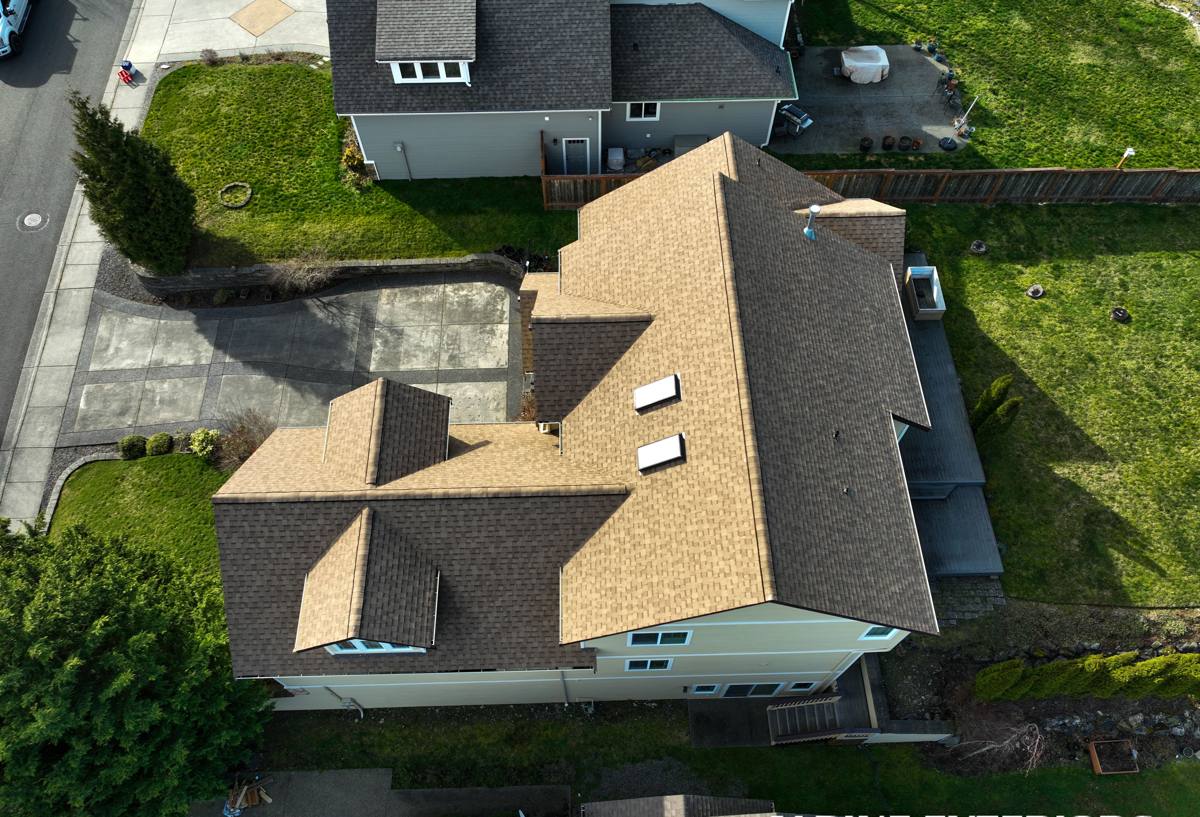
What the Acme Climate Does to a Home's Exterior
Driving Rain Off the Foothills
Whatcom County's weather moves through this whole corner of the state on the same general pattern — wind-driven rain that comes in at an angle more often than it falls straight down. Out toward Acme, where the ground starts climbing into the foothills, that rain can hit harder and linger longer, since the terrain slows down the same weather systems that clear a flat valley lot more quickly. Siding, trim, and flashing that aren't detailed to shed water moving sideways, not just rain falling from above, tend to show problems first at seams, corners, and butt joints.
Heavy Tree Cover and Deep Shade
This is where an Acme property usually differs most from a home closer to downtown Lynden. Dense tree cover blocks the sun that would otherwise help a wall dry out between storms, and it drops needles, leaves, and organic debris into gutters and along wall bases where it holds moisture directly against the siding. That combination — shade plus organic debris — is exactly what extends Whatcom County's already long moss and mildew season even further on a heavily wooded lot. Homeowners here often see growth on walls that would stay clean on a more open, sun-exposed property.
Marine Air, at a Distance
Acme sits well inland and uphill from the open water that drives the salt exposure closest to Bellingham Bay and the coast. It doesn't take the same direct spray a shoreline property does. But the same regional weather systems that carry salt-laden marine air across Whatcom County still reach this far inland on a wet, windy system, and combined with the sustained dampness under heavy tree cover, it's still enough to accelerate corrosion on lower-quality fasteners, flashing, and trim hardware over the life of a siding job.
Cooler Nights and Frost
Elevation and tree cover both keep an Acme property cooler and slower to warm than open farmland closer to Lynden, which means more frequent frost through the colder months. Moisture that's worked its way into a porous or poorly sealed material and then freezes expands as ice, which accelerates cracking and material failure faster than a purely wet-but-mild climate would.
Why James Hardie Is What We Install
We used to install a wider range of siding products before settling on one system. That decision came out of what we kept finding on service calls and tear-offs across Whatcom County — the materials that actually held up under sustained shade, moisture, and organic growth, and the ones that quietly turned into maintenance problems a few years in. For a shaded, moisture-holding property like a typical Acme home, the case for fiber cement is a strong one.
- Non-combustible core: Fiber cement doesn't feed a fire the way wood-based siding can, which matters for both household safety and insurance underwriting, especially on a wooded lot with real wildfire exposure during dry stretches.
- Factory-applied ColorPlus finish: The color is baked on under controlled factory conditions rather than brushed on in the field, so it resists fading and moisture intrusion far longer than site-applied paint — a real advantage on a wall that spends most of the year in partial shade and stays damp longer between dry spells.
- Climate-engineered HZ product lines: Hardie builds different formulations for different climate zones, including versions engineered for sustained moisture exposure and freeze-thaw cycling, which fits an elevated, tree-covered Acme lot well.
- Dimensional stability: Fiber cement doesn't swell, cup, or warp the way engineered wood siding can after repeated wet-season moisture cycles, which matters more here given how slowly a shaded wall actually dries out.
- Strong transferable warranty: Hardie backs its products with a solid warranty structure, provided installation follows spec, which gives homeowners real protection rather than a sales claim.
We don't install LP SmartSide, vinyl siding, Cemplank, Allura, primed spruce, or cedar. Each has a place in the broader market, and plenty of homeowners elsewhere are satisfied with them. But we made a professional call that one system we trust completely, installed correctly, is worth more to an Acme homeowner than a cheaper option that quietly shifts maintenance risk back onto them — especially on a shaded, slow-drying lot that doesn't forgive shortcuts.
Choosing the Right Hardie Product for an Acme Home
| Product Line | Best Use | Why It Fits This Area |
|---|---|---|
| HardiePlank lap siding | Most standard single-family homes | Traditional lap profile sheds wind-driven rain effectively when installed with proper overlap and flashing |
| HardiePanel vertical siding | Gables, accent walls, cabin and farmhouse-style homes | Common on wooded, rural properties where a vertical board-and-batten look fits the setting |
| HardieShingle siding | Craftsman details and accent sections | Textured look without the moisture absorption and upkeep of real wood shingle under heavy tree cover |
| HardieTrim boards | Corners, window and door casing, fascia | Factory-finished trim resists the same shade-driven moisture and freeze-thaw cycling as the field siding |
Color and profile choices come down to the individual home, but the underlying product family and installation approach stay consistent — we spec what fits an Acme property's actual shade and moisture exposure rather than defaulting to whatever's easiest to install.
What Correct Installation Looks Like on a Shaded Lot
Material choice only gets an Acme home halfway there. The rest comes down to installation detail, and on a heavily shaded, slow-drying property those details matter more than they would on an open, sun-exposed lot. That means fastening and clearance that keep siding from wicking moisture up out of consistently damp ground, joints that are properly lapped and sealed rather than simply butted together, and a house wrap and flashing system that does the real water-shedding work instead of relying on caulk to cover gaps. Gutters and downspouts need extra attention here too, since falling needles and leaf debris clog them faster under tree cover, and a clogged gutter that overflows onto a wall undoes a lot of otherwise good siding work.
Repair vs. Full Replacement
Not every siding problem on an Acme home calls for a full tear-off. An isolated impact-damaged section, a failed piece of trim around a window, or storm damage from a fallen branch can often be repaired and matched into existing Hardie siding. But if moisture has been tracking behind the wall for a while under sustained shade, or the home still has an older, non-Hardie product nearing the end of its service life, patching it usually just delays a bigger job while hidden rot keeps spreading underneath. We'll tell you honestly which situation you're actually looking at before we recommend anything.
Siding Readiness Checklist
- Shaded and north-facing walls checked for moss, mildew, or persistent dark staining
- Walls and trim inspected for soft spots, gaps at seams, or separation at corners
- Gutters and downspouts checked for debris buildup and proper flow away from the wall
- Grade clearance confirmed so siding isn't sitting too close to consistently damp ground
- Window and door flashing inspected for cracking or failure
- Any deck or porch ledger connections to the house checked for trapped moisture
Roofing, Windows, and Decks Alongside Siding
Siding damage on a shaded Acme property rarely starts with the siding itself. A roof valley that's collecting needles and losing its seal, a window that wasn't flashed correctly, or a deck ledger trapping moisture against the wall can all surface as siding damage long before anyone traces the water back to where it's actually getting in. Because we handle roofing, windows, and decks along with siding, we look at an Acme property as one connected exterior system exposed to the same shade, moisture, and organic debris, rather than treating each component as a separate job and missing where the real problem started.
Cost Factors for Acme Siding Replacement
| Factor | What It Affects | Why It Matters Here |
|---|---|---|
| Tear-off vs. overlay | Labor scope and substrate access | Tear-off reveals hidden moisture and rot damage common under older siding on a shaded, slow-drying lot |
| Substrate condition | Repair costs before new siding goes on | Sustained shade and dampness can rot sheathing and framing well before it's visible from outside |
| Tree and debris management | Gutter and drainage detailing | Heavy tree cover means gutter and flashing details need to account for ongoing debris, not just rain |
| Grade and drainage | Siding clearance and moisture management | Wooded, uneven lots can hold ground moisture longer than open, well-drained farmland |
| Site access | Labor time and equipment needs | Rural properties with longer driveways or limited staging area can affect scheduling and setup |
Exact costs depend on the specific property and its exposure, which is why we walk the home in person before giving a real number instead of quoting off a generic price sheet.
Why a Local Crew Matters in Acme
A crew that works this part of Whatcom County regularly understands how shade, sustained moisture, and forest debris behave on real houses here over a full year, not just how a product performs on a spec sheet. That experience shapes practical decisions on install day — which walls stay wet the longest, where extra flashing attention pays off, and which gutter and drainage details are worth the added time so a homeowner isn't dealing with moss or a callback after the next wet season. Acme's mix of elevation, forest cover, and distance from the open water gives it a different exposure profile than Lynden's flat farmland or the towns closer to the coast, and a crew with real local experience treats that difference seriously instead of applying a one-size-fits-all approach built for a more open, sun-exposed lot.
What to Expect When You Call Us
- A walk-through of the home, inside and out where relevant, looking at siding, trim, gutters, roofing, and any deck connections together
- An honest assessment of whether you're looking at a repair, a partial replacement, or a full re-side
- A clear explanation of why we recommend James Hardie for a shaded, moisture-holding property like yours
- A written estimate with no pressure to sign on the spot
If your Acme home needs new siding, or you'd just like an honest second opinion on moss, staining, or soft spots you've noticed on a shaded wall, we're glad to take a look. Reach out using the form below to schedule a free, no-pressure estimate.