 Lynden Siding
 Roof Repair in Nooksack: Built for This Corner of Whatcom County
Nooksack sits along the river that gave it its name, a short drive east of Lynden in the flat, low-lying farmland that makes up this part of Whatcom County. It's the kind of place where roofs take a steady beating year after year — not from any one dramatic storm, but from the accumulated wear of a long wet season, moss that never fully lets go, and marine air moving in off the Salish Sea that carries a faint salt tinge even this far inland. A roof repair here has to account for all of that, not just the one leak that finally got a homeowner's attention.
Lynden Siding Company works roofs, siding, and exteriors throughout this stretch of the county, and Nooksack is one of the areas we're in regularly. That matters for repair work specifically, because a lot of what causes a Nooksack roof to fail isn't visible from the ground, and it isn't something a contractor unfamiliar with this climate tends to look for. Because we also handle siding and trim, a roof repair call out here is a chance to flag any moisture creeping into the fascia or siding at the roofline too, rather than treating the roof as if it exists in isolation from the rest of the exterior.
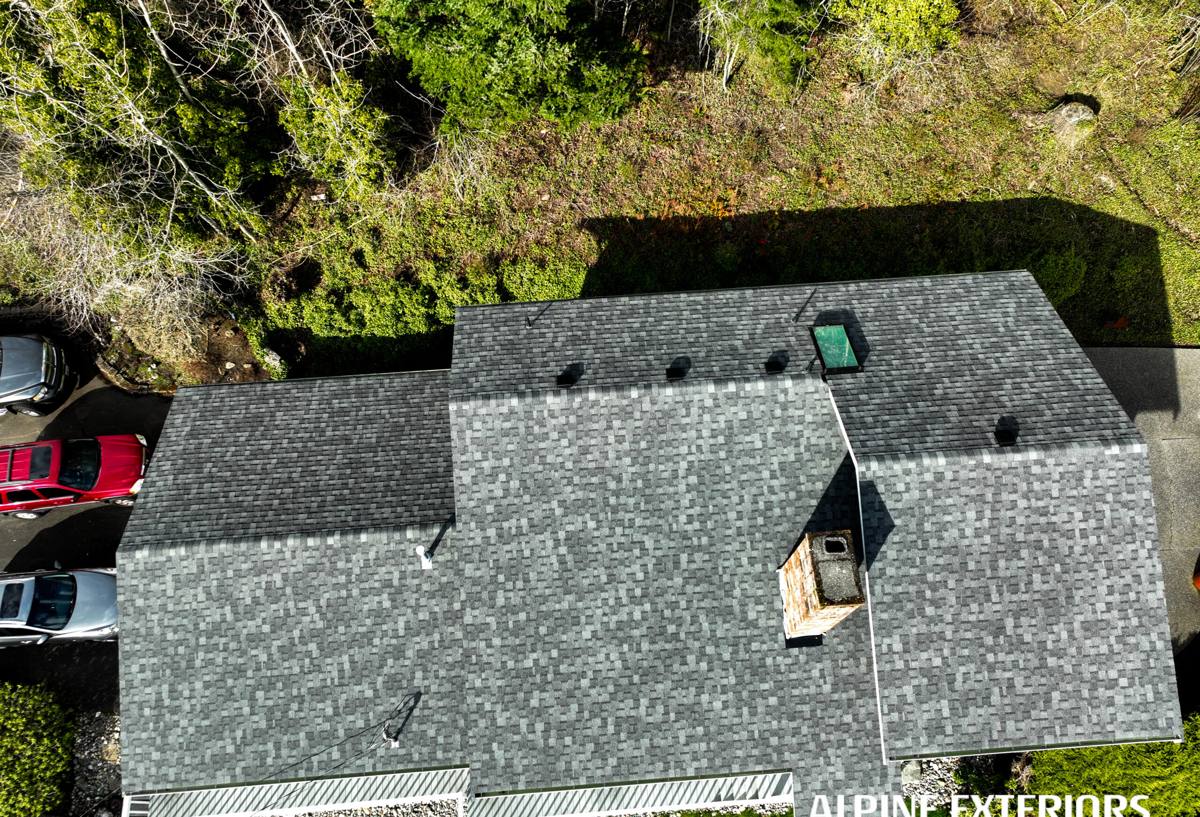
What This Climate Actually Does to a Roof
Moss That Doesn't Take a Season Off
Whatcom County's moss season runs long compared to drier parts of the state — mild temperatures and consistent moisture mean moss can establish and spread across most of the year on a shaded or north-facing roof plane. Once it takes hold, moss holds water directly against roofing material, works under shingle tabs and shake edges, and gradually lifts material that was otherwise still sound. By the time moss is visible from the ground, it's usually already done some of that damage underneath.
Driving Rain Finds Weak Flashing First
Rain in this part of the county rarely falls straight down. Wind pushes it sideways into valleys, around chimneys and vent pipes, and up under flashing that's lapped the wrong way or has lost its seal. That directional load is harder on a roof than a simple annual rainfall number suggests, and it's almost always where a repair call actually starts — not a failed shingle in the middle of a slope, but a compromised flashing detail at a transition point.
Salt-Tinged Air and Slow Metal Wear
Marine air moving up from the Salish Sea carries a light salt content that settles on exposed metal — flashing, fasteners, gutter hardware — and accelerates corrosion over years of exposure. It's a slower process than the moss and rain damage, but it's part of why we don't treat metal components as an afterthought on a repair. Using corrosion-resistant fasteners and flashing on a repair costs little more than standard hardware, and it's the difference between a fix that holds and one that needs redoing in a few years.
What a Correct Roof Repair Actually Involves
Diagnosing the Real Problem Before Patching Anything
A visible leak inside the house and the actual point of water entry on the roof are often not in the same place — water can travel along rafters or sheathing before it shows up on a ceiling. Before we patch anything, we trace the leak to its actual source, check the surrounding roofing and flashing for related wear, and look at the roof deck underneath for soft spots or staining that would tell us the damage goes deeper than the surface. Patching over a symptom without finding the cause is the single most common reason a "repaired" roof leaks again the next wet season.
The Repairs We See Most Often on Nooksack-Area Roofs
Some problems show up more than others in this specific area, given the terrain and building stock:
- Flashing that's lifted, rusted through, or lost its seal around chimneys, skylights, and roof-to-wall transitions
- Moss-lifted shingles or shakes on shaded, north-facing slopes and roofs under mature trees
- Nail pops and cracked sealant around vent pipe boots, a common weak point on older roofs
- Valley wear where two roof planes meet and water volume concentrates
- Gutter and downspout issues that back water up under the roof edge rather than carrying it away
- Isolated wind damage — lifted or missing shingles — after a storm, before it turns into a bigger leak
Repair Materials and Methods That Actually Hold Up Here
Not every repair method is equal, even for the same underlying problem. A quick surface patch might stop a leak for a season, while a proper repair addresses the flashing, underlayment, and fastening underneath it so the fix outlasts the next few wet winters. We explain the difference before doing the work, not after.
| Repair Approach | What It Actually Fixes | Realistic Lifespan | When It's the Right Call |
|---|---|---|---|
| Surface sealant / caulk patch | Covers a visible gap, doesn't address underlying flashing or underlayment | A season or two, often less in driving rain | True short-term stopgap only, rarely the right long-term fix |
| Flashing repair or replacement | Corrects the actual water path at valleys, chimneys, and penetrations | Matches the life of the surrounding roofing | Most legitimate leak repairs around penetrations and transitions |
| Section reshingling | Replaces a localized area of damaged or moss-lifted roofing down to the deck | Matches the life of the surrounding roofing | Isolated storm or moss damage on an otherwise sound roof |
| Deck repair plus reroofing of the area | Replaces water-damaged sheathing before new roofing goes back down | Matches a full roofing installation | When moisture has reached and softened the roof deck itself |
We use corrosion-resistant flashing and fasteners on every repair in this area as a standard, not an upgrade — given the salt-tinged marine air this part of the county sees over time, it's not worth cutting that corner to save a small amount on hardware.
How Our Repair Process Works
- We inspect the roof in person, including the attic or roof deck from the underside where accessible, to find the actual source of the problem rather than guessing from the ground.
- We explain what we found in plain terms — what's causing it, how far it extends, and what a proper fix requires — before any work starts or any price is set.
- We give you a clear, written scope and price for the repair, with no vague allowances or surprise add-ons once the work is underway.
- We complete the repair using flashing, fasteners, and materials matched to this climate, not whatever's fastest or cheapest to install.
- We check the surrounding roofing while we're up there — a repair call is a chance to flag other developing issues before they turn into their own service call.
What Happens After the Repair
We stand behind the labor on every repair we do, and if something isn't right after the fact, we come back and make it right. We'd rather earn the next call from you when your roof eventually needs more work than treat a repair as a one-time transaction.
Signs a Nooksack Roof Needs Repair Now
Most roof problems give some warning before they become a full interior leak. It's worth a call if you're seeing:
- Moss buildup in valleys or on shaded slopes that keeps coming back after cleaning
- Granules collecting in gutters or piling up at the base of downspouts
- Curling, cupping, or missing shingles, especially after a windstorm
- Water staining on interior ceilings, particularly near exterior walls, chimneys, or skylights
- Daylight visible through the roof deck when viewed from inside the attic
- Flashing that looks lifted, rusted, or is missing sealant where it should be intact
- A soft or spongy feel to the roof surface in any one area
Any single item on that list is worth a look. Caught early, most of these are a straightforward repair. Left through another wet season, several of them tend to compound into something bigger and more expensive.
Repair or Replace? Honest Guidance
Not every roof problem in Nooksack calls for a full replacement, and we don't default to recommending one just because we're already on the roof. The right call depends on a few specific factors:
| Factor | Leans Toward Repair | Leans Toward Replacement |
|---|---|---|
| Roof age | Roof is well within its expected service life | Roof is at or past the age where the material is typically rated to perform |
| Extent of damage | Damage is localized to one area or penetration | Moss, wear, or leaks are spread across multiple roof planes |
| Roof deck condition | Deck is dry and solid under the affected area | Deck shows soft spots or staining from long-term moisture |
| Repair history | This is a first or infrequent repair call | The roof has had several repairs already in a short span |
We'll walk the roof, tell you honestly which side of that table your situation falls on, and explain the reasoning — not just hand you a number.
Why Hiring a Crew That Already Works Nooksack Matters
A contractor who works this specific area regularly has already seen how moss, wind-driven rain, and salt-tinged marine air behave on real roofs here over time, not just how a product performs on a spec sheet. That translates into practical judgment on the job: which roof orientations in this part of the valley need extra attention because of tree shade, how much flashing work a given valley or chimney actually needs, and which shortcuts tend to turn into callbacks two winters later. It also means someone who shows up, does the work, and is still a local business if you need a follow-up — not a crew that drove in from out of the area for one job and is hard to reach afterward. We're licensed and insured to work in Washington, and we treat every repair call in Nooksack the way we'd want a roof on our own house handled — sound work, plain explanations, and nothing left for you to worry about once we've packed up.
Get a Free, No-Pressure Estimate
If you're dealing with a leak, storm damage, or a roof that just needs an honest look, Lynden Siding Company is glad to come out to your Nooksack-area property and give you a straightforward read on what it actually needs. Use the form below to request a free estimate — no pressure, no upsell script, just what the roof needs and what it costs to do it right.