 Lynden Siding
 Roof Replacement in Blaine: Built for a Coastal Border Town
Blaine sits at the northern edge of Whatcom County, right against the water near Semiahmoo Bay and Drayton Harbor, close enough to the Canadian border that Pacific storm systems come ashore here with real force. That coastal position puts more strain on a roof than most homeowners realize until they're standing in the attic with a flashlight looking at a water stain that wasn't there last year. We're based just up the road in Lynden, and Blaine is regular territory for our crew — enough that we've watched roofs age here differently than roofs in more sheltered, inland parts of the county.
Roof replacement is one of the largest exterior investments a homeowner makes, and it's also one of the least visible once it's finished. That combination is exactly why the details underneath the shingles or panels matter more than the sales pitch, especially in a town that deals with this much salt air, wind-driven rain, and moss pressure every year.
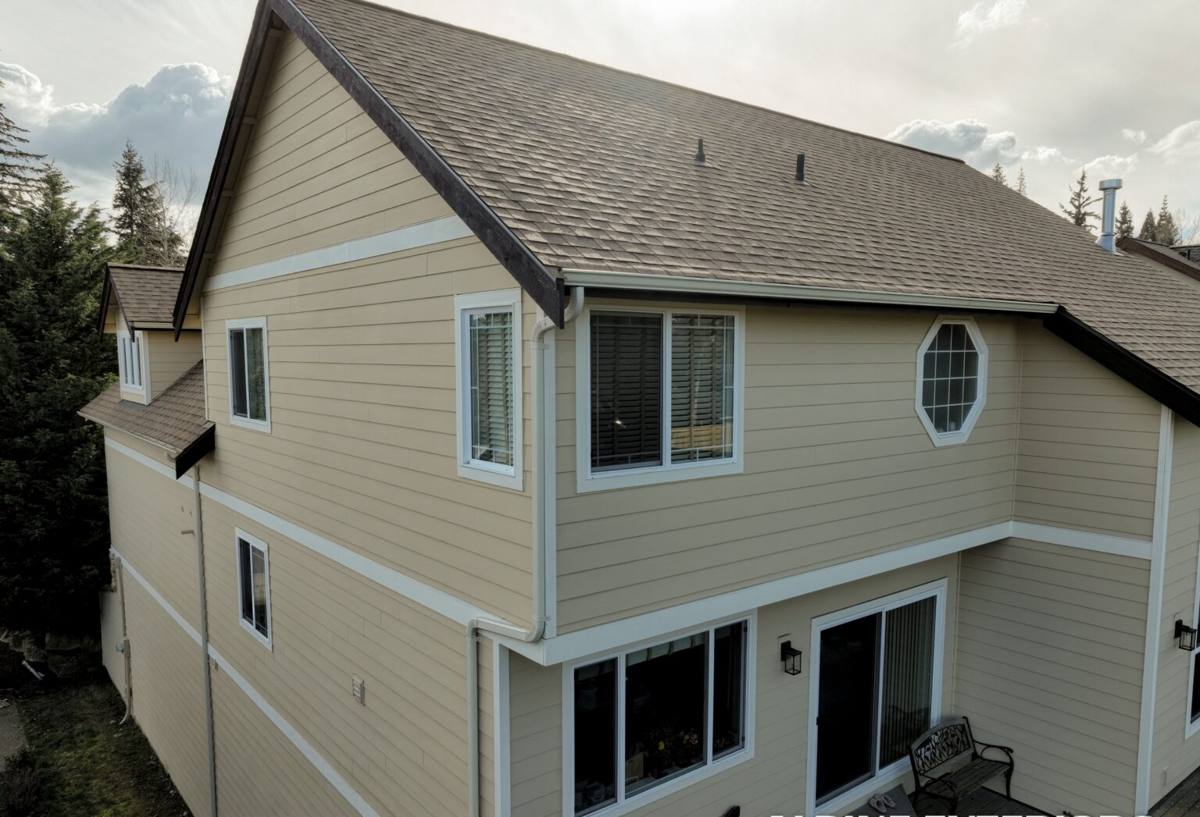
What Blaine's Climate Does to a Roof
Salt Air and Corrosion
Homes anywhere near the bay or harbor take a steadier dose of salt-laden air than towns set further inland. Salt accelerates corrosion on fasteners, flashing, vent caps, and any other exposed metal on a roof, which means hardware choices that would last decades in a dry inland climate can start failing years sooner this close to the water. It's a slow, mostly invisible process — a roof can look structurally sound from the ground while corroded fasteners quietly lose their holding power at the deck.
Wind-Driven Rain
Storms coming off the water don't drop rain straight down. Wind pushes it sideways into valleys, around chimneys and vent pipes, and up under shingle edges and flashing laps that would stay dry in a calmer climate. That sideways load is harder on a roof than the same annual rainfall total would suggest, and it's exactly the kind of moisture that finds any gap a less careful installation left behind.
A Long Moss Season
Mild temperatures and near-constant moisture add up to a moss and algae season that can run most of the year on shaded or north-facing roof planes. Moss does more than look bad — it holds water directly against the roofing material, works into granule layers and shake surfaces, and can lift shingle edges as it spreads. In Blaine, tree-shaded lots and roofs that don't get much direct winter sun tend to see it establish earliest and come back the fastest after cleaning.
Signs a Blaine Roof Needs Replacement, Not Another Repair
Not every roofing problem calls for a full tear-off, and an honest contractor won't push you toward one. But a few signs, especially in combination, usually mean patching has run its course:
- Moss or dark staining across multiple roof planes, not just one shaded corner
- Granules collecting heavily in gutters or at the base of downspouts
- Curling, cupping, or missing shingles, particularly after a windstorm off the water
- Rust staining or visibly corroded fasteners, flashing, or vent caps
- Water staining on interior ceilings or attic rafters near exterior walls
- Soft or spongy roof deck when walked on, or daylight visible through the boards from inside the attic
- A third or later repair to the same section of roof, or a roof already near the end of its rated life
Any one of these on its own might be a targeted repair. Several together, especially on a roof that's already past its expected lifespan, usually means the next leak is a matter of when, not if.
Roofing Materials That Hold Up This Close to the Water
There's no single best roofing material for every Blaine home — it depends on budget, roof pitch, how much shade the roof gets, and how long you plan to stay in the house. What matters is understanding the honest trade-offs for a salt-air, high-moisture climate before deciding.
| Material | Salt Air & Moss Behavior | Typical Maintenance | Realistic Lifespan Here |
|---|---|---|---|
| Architectural asphalt shingle | Performs well with proper ventilation and corrosion-resistant fasteners | Periodic moss removal, gutter checks | 18-25 years |
| Standing seam metal | Sheds water and moss well; needs marine-grade fasteners and coatings near the water | Low; occasional fastener and sealant checks | 35-50 years |
| Cedar shake | Absorbs moisture readily; needs strong airflow underneath to dry between storms | Higher; regular treatment and moss control | 15-25 years with consistent upkeep |
| Composite/synthetic shingle | Resists moisture absorption well; salt tolerance varies by product | Low to moderate | 25-40 years depending on product |
We'll walk you through which option actually fits your roof's exposure, pitch, and budget instead of defaulting to whatever's easiest to sell. A roof facing the water directly and a roof tucked behind trees on the same street can reasonably end up with different recommendations.
What a Correct Roof Replacement Involves
A roof replacement is more than stripping old shingles and nailing down new ones. In a town that sees this much wind-driven rain and salt exposure, the details underneath the finished surface matter as much as the material itself.
Tear-Off and Deck Inspection
A full tear-off lets us actually see the roof deck, not just the shingles. Soft, delaminated, or water-stained sheathing gets replaced before anything new goes down — covering over a compromised deck just hides the problem for a few more years.
Underlayment
A quality synthetic or self-adhered underlayment gives a second line of defense if wind ever drives rain up under a shingle tab or panel seam, which happens more often here than in calmer inland climates.
Flashing
New flashing at every chimney, vent pipe, skylight, and roof-to-wall transition — not caulk smeared over old, corroded flashing. This is one of the most common places a rushed roofing job cuts corners, and it's exactly where salt-air corrosion and wind-driven rain do the most damage over time.
Ventilation
Proper intake and exhaust ventilation keeps the attic and roof deck dry and helps prevent the moisture buildup that leads to premature sheathing rot, which is a real risk in a climate with this much sustained damp weather.
Ice-and-Water Shield at Vulnerable Areas
Extra protection at eaves and valleys, where wind-driven rain and debris are most likely to collect and back up during a heavy storm off the water.
Our Process for a Blaine Roof Replacement
- On-site inspection: We walk the roof and attic in person before quoting anything, checking deck condition, ventilation, flashing, and how exposed the roof is to wind and salt air off the water.
- Written scope and estimate: A clear, itemized scope of work, not a one-line price, so you know exactly what's included before any tear-off begins.
- Tear-off and deck repair: Old roofing comes off completely, the deck gets inspected, and any soft or damaged sheathing is replaced before new materials go down.
- Underlayment, flashing, and ventilation installed to spec: The details that don't show in the finished look but determine how the roof performs through its first real winter storm.
- New roofing installed: Shingles, panels, or shakes installed to manufacturer specification, with fastener and flashing choices matched to Blaine's coastal exposure.
- Final walkthrough and cleanup: We review the finished roof with you, confirm warranty paperwork, and make sure the property is cleared of debris and old material.
Cost Factors for a Blaine Roof Replacement
| Factor | What Drives It | Coastal Blaine Consideration |
|---|---|---|
| Roof size and pitch | More square footage and steeper pitches increase labor and material | Steeper roofs shed wind-driven rain faster but are more exposed during install |
| Material choice | Asphalt, metal, shake, and composite carry different upfront costs | Higher-grade materials often pay back through lower moss and corrosion maintenance |
| Deck condition | Discovered once old roofing is removed | More likely on roofs with a long history of moss or past leaks near the water |
| Flashing and penetrations | Number of chimneys, vents, valleys, and skylights | Each penetration is a place wind-driven rain can get in without careful detailing |
| Ventilation upgrades | Whether existing intake and exhaust venting meets current standards | Matters more in a climate with this much sustained damp weather |
These are general drivers, not a quote. Every roof in Blaine sits at a slightly different distance from the water and under different tree cover, so we walk the property and get into the attic before putting a real number on the work. Two houses on the same street can need very different scopes once we're actually up there.
Timing a Roof Replacement Around Blaine's Weather
Whatcom County's wettest, windiest stretch typically runs from late fall through winter, and Blaine's exposed coastal position makes that stretch harder on both the roof and the install crew than it is further inland. Spring and summer generally offer the driest, most stable working conditions, which matters because underlayment and roofing materials perform best when they can be installed and allowed to set up without a storm system moving through partway. That said, a roof with active moisture intrusion doesn't benefit from waiting for the ideal season — a compromised deck gets worse with every wet month, not better.
Why a Crew That Already Works Blaine Matters
A crew that works this stretch of coastal Whatcom County regularly sees how salt air, wind-driven rain, and moss actually behave on real Blaine roofs over a full year, not just how a product performs on a spec sheet. That experience shapes practical decisions on install day: which roof orientations need extra flashing attention, which valleys collect the most wind-blown debris, and which fastener grade is worth the extra cost so you're not dealing with a callback after the next big storm off the water. Blaine's exposure isn't identical to more sheltered towns further inland in the county, and a roof built without that difference in mind tends to show it within a few wet seasons.
Get a Free, No-Pressure Estimate
If your Blaine home needs a roof inspection, a repair evaluated honestly, or a full replacement built for this coastline rather than against it, we're glad to take a look and give you a straightforward assessment. Reach out using the form below to schedule a free estimate — no pressure, no upsell script.