 Lynden Siding
 Building New in Ferndale: Why Window Installation Deserves Extra Attention
Ferndale sits close enough to Bellingham Bay and the Strait of Georgia that salt-laden air is a real factor in how a house ages, and it's a short drive from Lynden through the same wet, low-pressure weather systems that roll off the water most of the year. If you're framing a new home or outbuilding here, the windows aren't just a finish item you pick from a catalog — they're one of the first weather barriers your house gets, installed at a stage when getting it wrong is cheap to fix and getting it wrong later is not.
New-construction window installation is a different job from swapping out an old window in an existing wall. It happens before siding, before most of the water-resistive barrier is buttoned up, and it sets the pattern that every other trade builds around. We install new-construction windows on builds around Lynden and Ferndale regularly enough to know which details the local climate actually punishes, and which ones are just extra steps for the sake of a checklist.
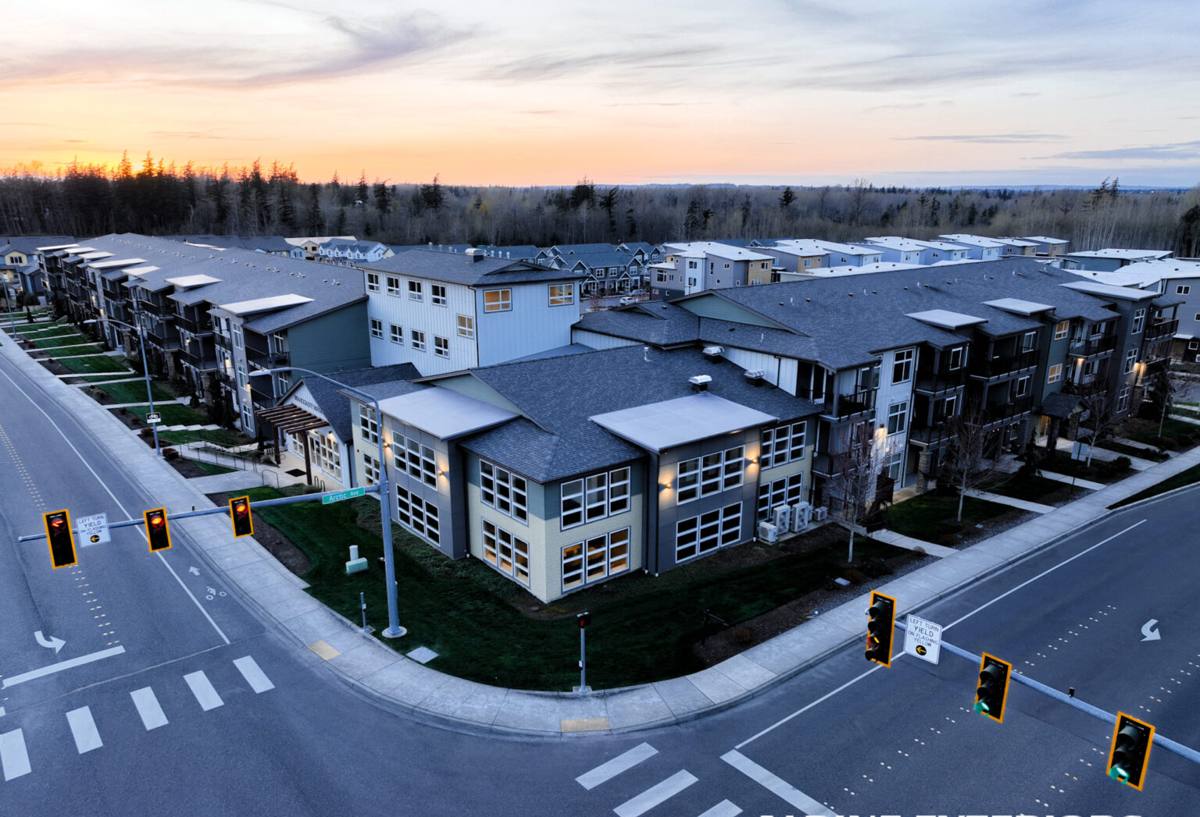
New-Construction Windows vs. Replacement Windows: Not the Same Job
It's worth being clear about the distinction, because the terms get used loosely:
- New-construction windows have a nailing flange (fin) that gets fastened directly to the wall sheathing and integrated into the building's water-resistive barrier before siding goes on. This is the correct approach when the wall is open.
- Replacement (retrofit) windows are designed to install into an existing frame with the siding already in place, using different flashing and sealing methods because the wall can't be opened up.
Using the wrong type, or installing a new-construction window the way you'd install a retrofit one (or vice versa), is one of the more common errors we get called to fix on newer homes. For a build in Ferndale, where wind-driven rain hits walls at an angle for a good part of the year, the nailing-fin, flange-integrated approach done correctly the first time is what actually keeps water out of the wall assembly for the long run.
What the Local Climate Asks of Your Window Assembly
Salt Air
Proximity to the coast means airborne salt settles on and around window components over time. It doesn't melt anything overnight, but it accelerates corrosion on unprotected fasteners and hardware and can degrade certain sealants and finishes faster than they'd wear inland. That's a material and fastener selection question as much as an installation one.
Driving Rain
Whatcom County gets a lot of rain that doesn't fall straight down — it's pushed sideways by wind off the water. Windows here need to shed water that's hitting the frame at an angle, which is a flashing and sill-pan question, not a caulk question. Caulk is a backup layer, not the primary defense.
Long Moss Season
Extended damp, shaded conditions for much of the year mean anything that traps or holds moisture against wood — sills, trim, or a poorly lapped WRB — stays wet longer than it would in a drier climate. Moss and algae growth on window sills and surrounding trim is usually a sign that water is sitting somewhere it shouldn't, not just a cosmetic issue.
None of this means Ferndale needs exotic materials. It means ordinary materials installed with attention to sequencing and flashing lap direction will outperform premium materials installed carelessly, every time.
What a Correct New-Construction Window Install Involves
On a properly sequenced job, the window opening goes together in a specific order — skipping or reversing steps is where most long-term leaks start, even if the window looks fine on install day.
- Rough opening check. Confirm the opening is square, plumb, and sized correctly before the window ever shows up on site.
- Sill pan flashing. A sloped, sealed sill pan under the window gives any water that gets past the window somewhere to drain instead of soaking into the framing.
- Water-resistive barrier prep. The WRB (housewrap) is cut and folded into the opening so water is always directed outward and downward, never into the wall.
- Window set and fastened. The unit is set in the opening, shimmed and squared, and the nailing fin fastened per the manufacturer's schedule — not just "enough nails to hold it."
- Flashing tape at jambs and head. Side flashing goes on first, then head flashing laps over it, shingle-style, so water always moves down and out, never in behind a seam.
- WRB integration finished. The housewrap is lapped back over the flashing at the top, completing the drainage path before siding starts.
- Interior air sealing. A separate air-sealing detail at the interior side of the rough opening controls condensation and drafts — this is often skipped, and it shouldn't be.
Every one of those steps matters more, not less, in a climate that sees sustained wind-driven rain. Skipping the sill pan or reversing a flashing lap doesn't usually cause a visible problem for a year or two — it shows up later as rot inside a wall that's expensive to open back up and repair.
Our Process, Start to Finish
For new-construction work in Ferndale and around Lynden, we coordinate directly with the builder or homeowner on timing, since window installation has to happen at a specific point in the framing schedule — after sheathing and WRB, before siding.
- Plan review and product selection. We look at the window schedule, opening sizes, and elevations to confirm products and flashing details before anything is ordered.
- Rough opening inspection. We verify openings are correct before install day so there are no surprises once windows are on site.
- Install per manufacturer instructions. Flashing, sill pans, and fastening schedules follow the manufacturer's published details — this protects the warranty and gives you a documented install method if questions ever come up.
- Photo documentation at key stages. Sill pan and flashing steps happen behind the siding, so we document them while they're visible.
- Final walkthrough. Operation, sealing, and trim are checked before we call the job done.
Window Material and Frame Options for Coastal Whatcom County Builds
There's no single "right" window material for every new build — it depends on budget, exposure, and how the home is finished. Here's how the common options stack up for a build with Ferndale-area exposure to salt air and driving rain:
| Frame Material | Coastal/Salt Air Behavior | Maintenance | Typical Fit |
|---|---|---|---|
| Vinyl | Resists corrosion well; no metal hardware exposed to salt air on most units | Low — occasional cleaning | Budget-conscious builds, rental or spec construction |
| Fiberglass | Very stable in wet/salty conditions; dimensionally stable across temperature swings | Low | Mid-to-upper budget new builds wanting long service life |
| Wood (clad exterior) | Exterior cladding protects wood from direct weather, but any breach in the cladding needs prompt attention near salt air | Moderate — monitor cladding seams | Traditional or high-end aesthetic where wood interior is wanted |
| Aluminum | Prone to corrosion without a quality marine-grade finish; thermally less efficient | Higher — finish maintenance | Commercial or specific architectural applications |
We'll talk through what fits your build during the estimate rather than pushing one product — the right call depends on your design, budget, and how exposed the elevation is to weather off the water.
Common Mistakes We See on Ferndale-Area New Builds
Most of the window problems we get called to look at on newer homes trace back to a handful of repeatable errors, not bad luck:
- Sill pan flashing skipped or installed flat instead of sloped to drain outward
- Flashing tape lapped in the wrong order, so a seam faces uphill into the weather instead of shedding water down and out
- Retrofit-style caulking used as the primary seal instead of proper flange integration with the WRB
- Fasteners that aren't rated for coastal exposure used on flanges or trim near the water
- Interior air sealing skipped, leading to condensation issues that get blamed on the window itself
- Window installed before the rough opening was confirmed square, causing operational issues down the road
None of these are exotic failures — they're ordinary shortcuts that a wetter, saltier climate simply exposes faster than a drier one would.
Cost Factors on a New-Construction Window Job
Pricing on new-construction window installation depends on more than the number of openings. Here's what actually moves the number:
| Factor | Why It Matters |
|---|---|
| Window count and size | Larger and more numerous openings mean more flashing detail work, not just more units |
| Frame material chosen | Vinyl, fiberglass, wood-clad, and aluminum carry different material costs |
| Elevation exposure | Walls facing prevailing wind and rain may warrant extra flashing attention |
| Wall height and access | Second-story and taller openings require more setup and staging time |
| Coordination with other trades | Tight scheduling with framers and siding crews affects labor efficiency |
We'll give you a clear, itemized estimate once we've seen the plans and openings — no vague per-window guesses.
Why Hiring a Crew That Already Works Ferndale Matters
A crew that installs windows regularly in Lynden and Ferndale isn't guessing at what the climate here does to a wall assembly over time — they've seen it. That means fewer assumptions carried over from drier regions, flashing details sized for actual wind-driven rain exposure, and fastener choices that account for salt air rather than treating it as an afterthought. It also means someone who understands how local building department expectations and typical framing practices around Whatcom County line up with the window manufacturer's install requirements, so the warranty stays intact and the inspection goes smoothly.
New-construction window work is largely invisible once the siding goes on — the flashing and sill pan details that actually determine whether the wall stays dry for the next twenty years are hidden behind the finish. That's exactly why it's worth having a crew that treats those hidden steps as seriously as the parts anyone can see.
If you're planning a new build or addition in Ferndale or anywhere around Lynden, we're happy to walk through your plans and give you a straightforward, no-pressure estimate — just fill out the form below and we'll get back to you.