 Lynden Siding
 Ferndale's Climate Is Rough on Exterior Walls
Ferndale sits close enough to the water in Whatcom County that salt-laden air is a real factor on siding, not a theoretical one. Add in the driving rain that blows off the Strait during fall and winter storms, and a moss season that can stretch from October well into spring on shaded or north-facing walls, and you have three separate stressors working on the same wall assembly at the same time. Most of the repair calls we run in Ferndale trace back to one of these three, often in combination rather than isolation.
We're based in Lynden and work Ferndale regularly, so this isn't a generic list pulled from a national siding article. It's what we actually see when we pull a damaged board off a Ferndale house and look at what's underneath.
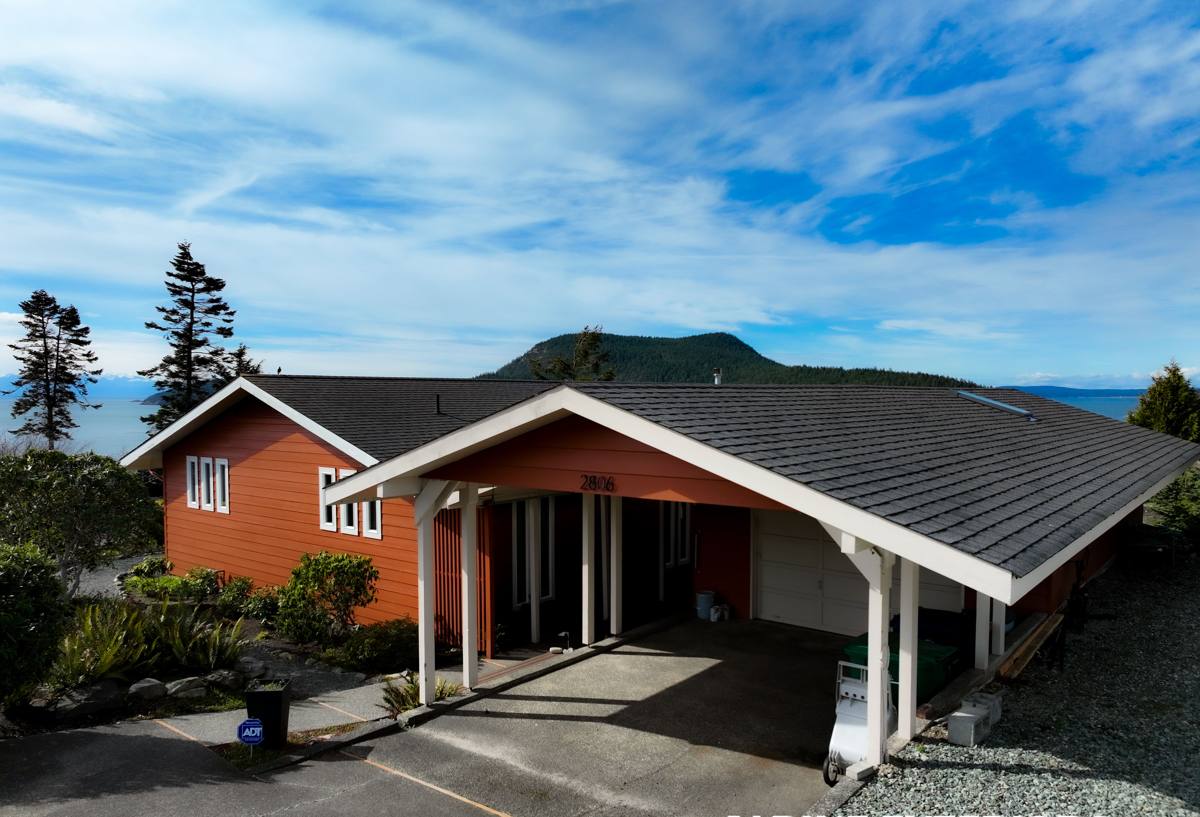
What Salt Air, Rain, and Moss Actually Do to a Wall
Salt Air and Metal Components
Salt-laden air accelerates corrosion on anything metal in the siding assembly — nail heads, flashing, trim fasteners, and hose bib or vent penetrations. Standard fasteners can corrode faster near the coast than the same fasteners would inland, and once a fastener head weakens or a flashing edge rusts through, water finds a path behind the siding long before the board itself looks damaged from the outside.
Wind-Driven Rain and Lap Joints
Rain that falls straight down is easy for siding to shed. Rain that's being pushed sideways by wind is a different problem — it gets forced up under laps, into butt joints, and around trim edges that were fine in calmer conditions. Ferndale's exposure to weather coming off the water means lap joints and horizontal seams take more of this pressure than the same details would see further inland, which is exactly where we find failed caulking and gapped laps on repair calls.
Moss, Algae, and Trapped Moisture
Moss and algae don't just look bad — they hold moisture against the siding surface far longer than bare siding would stay wet on its own. On shaded walls, under eaves, and anywhere air doesn't move freely, that trapped dampness keeps the substrate wet for days after a storm has passed. On wood-based or wood-fiber products, that's a direct path to rot. On fiber cement, it's less destructive but still degrades paint film and caulk faster over time.
Signs Your Ferndale Home Needs Siding Repair Now
- Soft or spongy spots when you press on a wall, especially near the bottom courses or under windows
- Visible gaps, cupping, or separation at lap joints and butt seams
- Persistent moss or dark streaking on the same section of wall every year, even after cleaning
- Paint that's bubbling, peeling, or chalking heavily in patches rather than evenly across the wall
- Rust staining bleeding down from nail heads or trim fasteners
- Caulk that's cracked, shrunk, or pulled away from trim and corner boards
- Interior signs — a musty smell, a stained baseboard, or a soft spot on an interior wall that shares an exterior wall with a suspect section outside
Any one of these on its own might be minor. Two or three showing up in the same area of the house usually means water has been getting behind the siding for a while, and the damage is worse than what's visible from the driveway.
What a Correct Repair Actually Involves
Diagnosing the Real Extent of the Damage
A repair that only addresses the board you can see is a repair that fails again in a year or two. Before we replace anything, we check how far the moisture has traveled — behind adjacent boards, into the house wrap or building paper, and into the sheathing itself. Cutting out a damaged section without checking what's behind it is the single most common shortcut that leads to a second repair call.
Getting the Water Management Right
Every repair has to restore, or improve, the drainage path the wall depends on — flashing above windows and trim, proper lap sequencing so water sheds outward at every seam, and house wrap or weather barrier that's intact and correctly overlapped behind the new material. On a coastal-exposure town like Ferndale, we typically upgrade fastener and flashing choices during a repair rather than just matching what corroded in the first place.
Matching Material and Finish
If the existing siding is James Hardie fiber cement with a factory ColorPlus finish, matching profile, plank width, and color is usually straightforward since the product line is standardized. If the existing siding is a different material — wood, vinyl, or another fiber cement brand — an exact match may not be available, and we'll tell you that honestly upfront rather than promising a seamless patch we can't deliver.
Fastening to Spec
Fiber cement siding has specific fastener spacing, penetration depth, and placement requirements from the manufacturer. Repairs done off-spec — too few fasteners, wrong placement relative to the board edge, or the wrong fastener material for a coastal environment — tend to loosen, crack the board around the fastener, or corrode early. We follow the same fastening spec on a repair that we'd follow on a full installation.
Repair or Replace? How We Make That Call
Not every damaged section needs a full re-side, and not every "small repair" request is actually a small repair once we're inside the wall. Here's how we weigh it:
| Factor | Favors Repair | Favors Replacement |
|---|---|---|
| Extent of damage | Isolated to one or two boards/sections | Recurring across multiple walls or the whole elevation |
| Underlying material | James Hardie fiber cement in otherwise good condition | Failing wood, aging vinyl, or a product reaching end of service life |
| Water intrusion history | First occurrence, source identified and fixable | Long-term chronic leak with sheathing or framing damage |
| Age of existing siding | Well within expected service life | Near or past the age where repairs stop being cost-effective |
| Cosmetic match | Matching material/color readily available | Discontinued profile or color, patch would be visibly mismatched |
When repair is the right call, we do the repair. When the underlying material is failing faster than it can reasonably be patched, we'll say so and lay out replacement as an option — not because it's the bigger job, but because it's the honest one.
Why We Repair — and Install — James Hardie Fiber Cement Only
We standardized on James Hardie for new installations because it's a non-combustible fiber cement product engineered for climates like ours, with factory-applied ColorPlus finish and a strong transferable warranty when installed to spec. That standard shapes how we approach repairs too: when we're patching Hardie siding, we use Hardie-compatible materials and fastening methods so the repair performs the way the original installation was designed to. When we're called to repair a different product that's chronically failing — recurring rot in wood, or a maintenance burden that keeps growing — we'll walk you through what's actually driving the problem and where replacement with a climate-engineered fiber cement product would put an end to the repeat calls, rather than just patching the same spot again next season.
Our Process for a Ferndale Repair Call
- On-site inspection of the damaged area and a check of adjacent sections and trim for hidden moisture
- Straight talk about what we found — repair scope, or replacement if that's genuinely the better call
- A written estimate before any work starts, no surprise change orders for anything we could have identified during inspection
- Removal of damaged material back to sound substrate, checking the weather barrier and sheathing underneath
- Repair or replacement of flashing and fasteners as needed for the coastal exposure
- Installation of matching or replacement siding to manufacturer fastening spec
- Final walk-through so you can see exactly what was done and why
Why a Crew That Already Works Ferndale Matters
A repair crew that only sees Ferndale once a year is guessing at conditions a crew that works the area regularly already knows firsthand — which wall orientations hold moss the longest, how much wind-driven rain a given elevation actually takes in a winter storm, and which fastener and flashing upgrades hold up under salt exposure versus which ones corrode again in a few seasons. That's the difference between a repair that's cosmetically fine for a year and one that actually solves the underlying moisture problem. We're a Lynden-based crew, and Ferndale is part of our regular service area, not a one-off trip.
After the Repair: Keeping Moss and Moisture From Coming Back
- Rinse moss and algae growth off siding at least once a year, more often on shaded north-facing walls
- Keep gutters clear so overflow isn't running down the wall face during heavy rain
- Trim back vegetation and tree cover that's keeping a wall section shaded and damp longer than the rest of the house
- Check and refresh caulking at trim and window edges every few years — it's cheap insurance against the next wind-driven rain event
- Walk the exterior after major storms and note any new staining, gaps, or soft spots before they become a bigger repair
If you're seeing damage on a Ferndale home and want a straight answer on whether it's a repair or something bigger, we're happy to take a look. The estimate is free, there's no pressure either way, and you'll get an honest assessment of what your siding actually needs — just fill out the form below.