 Lynden Siding
 Window Replacement for Abbotsford Homes Near the Border
Abbotsford sits just north of the international line from Lynden, and the homes on both sides of that line deal with the same weather: long stretches of damp, mild Pacific air, wind-driven rain that comes in sideways more often than straight down, and a moss season that can run most of the year in shaded spots. Windows take more of that abuse than almost any other part of a house. A roof sheds water in one direction and siding is a continuous surface, but every window is a hole cut into the wall with moving parts, multiple materials, and seams that all have to work together to keep water out. When any one of those pieces fails, it usually fails quietly — behind trim, under a sill, inside a wall cavity — long before anyone notices a problem from inside the house.
We're based in Lynden, in Whatcom County, and we've done enough window work in this corridor to know that a "standard" install detail sheet from a window manufacturer doesn't always account for how much water this region actually throws at a house over a wet winter. Salt-tinged marine air off the Strait of Georgia and Puget Sound keeps humidity high longer than it would in a drier climate, which is part of why moss and algae take hold on north-facing sills and frame joints and why wood components that would last decades somewhere drier can start failing here in half that time if they weren't detailed correctly.
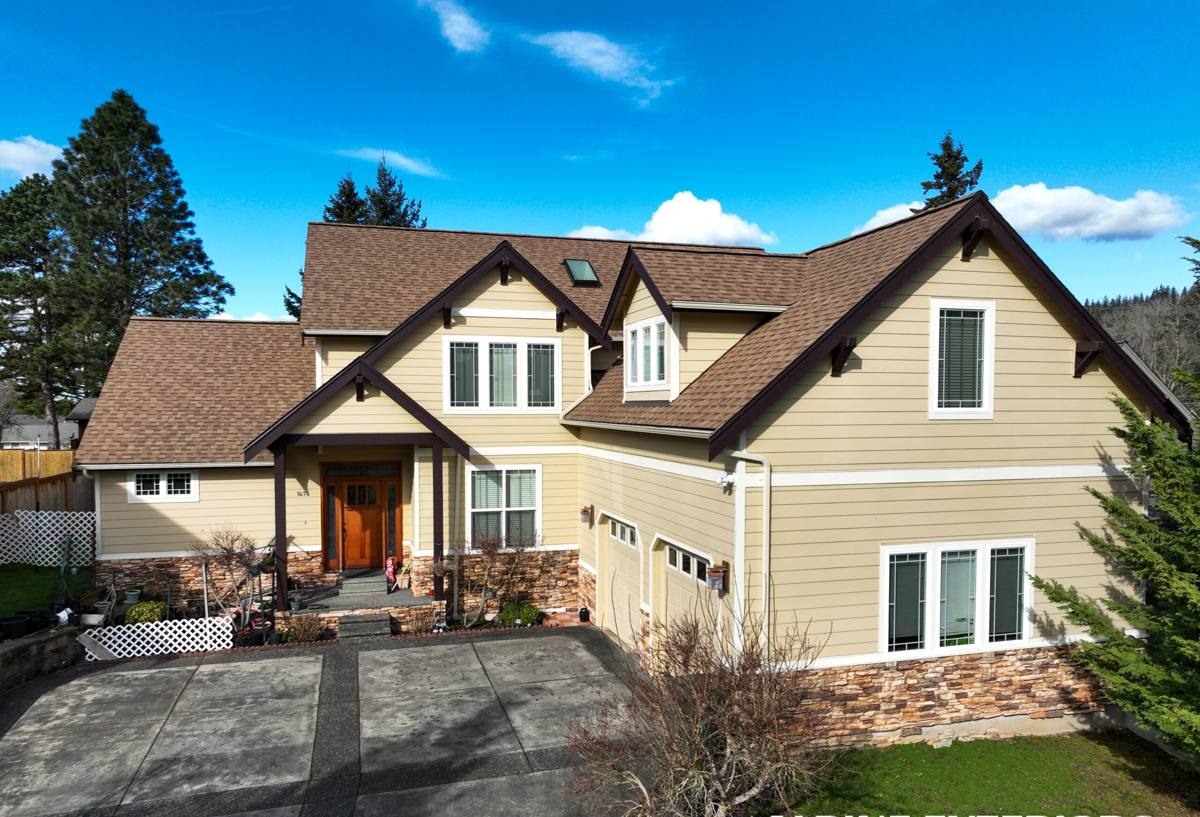
Signs Your Windows Are Overdue for Replacement
Not every window problem means a full replacement — sometimes a failed weatherstrip or a bad point of caulk is all that's wrong. But a few signs point toward the window itself being past the point of a simple repair:
- Fogging or a permanent haze between the panes of glass — the seal on the insulated glass unit has failed and moisture is trapped inside where it can't be cleaned
- Soft, spongy, or discolored wood at the sill, jamb, or the trim around the window
- A draft you can feel with the window fully latched, especially during a windy rain
- Windows that are painted shut, won't stay open on their own, or bind badly in the track
- Visible daylight, or a gap you can fit a business card into, around the sash or frame
- Moss or dark algae staining building up on the sill or in the corners of the frame year after year
- Interior condensation on cold mornings that goes beyond a light film and starts pooling or dripping
- A noticeable jump in heating costs that isn't explained by anything else changing in the house
Any one of these on its own isn't necessarily urgent. Several of them together, especially on a house with its original windows, is usually a sign the whole unit — not just the glass — has reached the end of its useful life.
What a Correct Window Replacement Job Actually Involves
Removal and opening prep
The old window has to come out without tearing the weather-resistive barrier or siding around it more than necessary, and the rough opening underneath needs an honest look before anything new goes in. This is often where a bad window job started years earlier gets discovered — soft framing, rot in the sill plate, or a stud that's been slowly absorbing moisture. Covering that damage back up with a new window is how a house ends up with the same failure a decade later, just hidden again.
Flashing and water management
This is the step that matters most and gets rushed most often. Water management around a window depends on layering materials in the right order — the weather-resistive barrier, flashing tape, and the window's nailing flange all need to shingle over each other correctly so that any water that gets past the glass or the frame sheds outward and down, never into the wall cavity. A sloped sill pan under the opening does the same job at the bottom, directing water back out instead of letting it pool. None of this is visible once the trim goes back on, which is exactly why it has to be done right the first time.
Setting, sealing, and insulating
A window has to be set level, plumb, and square, then shimmed without over-compressing the frame, which can bind the sash and cause early hardware wear. The gap between the window frame and the rough opening gets insulated — usually with a low-expansion foam or backer rod and sealant rather than standard foam, which can bow a frame out of square if it's used carelessly. Weep holes at the bottom of the frame, which let any trapped moisture drain back out, need to stay clear rather than getting sealed shut in the name of a tighter-looking finish.
Finish work
Interior trim, exterior trim, and a clean bead of exterior-grade sealant close out the job, along with cleanup of the old units and job site debris. A window replacement that looks finished from the street or from inside the room but skipped the flashing and insulation steps underneath is the kind of job that causes the most expensive repairs down the road.
Choosing the Right Window for This Climate
Frame material and glazing package both affect how a window performs in a climate that stays damp for most of the year. There's no single right answer for every house — budget, the style of the home, and how exposed a given wall is to wind and rain all factor in — but the trade-offs are worth understanding before you pick.
| Frame Material | Moisture Resistance | Maintenance | Typical Lifespan |
|---|---|---|---|
| Vinyl | Good — won't rot, but seams and welds can degrade over time | Low | 20–30 years |
| Fiberglass | Very good — dimensionally stable in wet/dry cycles | Low | 30–40+ years |
| Wood / wood-clad | Depends entirely on the cladding and finish upkeep | Higher — needs periodic attention | Varies widely with maintenance |
| Aluminum | Durable but conducts cold, prone to condensation without a thermal break | Low | 20–30+ years |
On glazing, double-pane windows with a low-emissivity (Low-E) coating and an argon or krypton gas fill are the baseline worth insisting on in this climate — they cut heat loss and help control interior condensation on cold, damp mornings, which is a common complaint in older single-pane or early double-pane homes. Triple-pane glass goes a step further on insulation value and is worth pricing out on north-facing or wind-exposed walls, though it adds weight and cost that isn't always justified on every opening in a house.
One detail specific to working this corridor: energy code requirements aren't identical on both sides of the border, and permit review will check windows against whatever standard applies to the property's jurisdiction. We build quotes around what a home actually needs to meet code and perform well here, not around whichever spec sheet is easiest to sell.
Our Process, Start to Finish
- Walkthrough and measurements — we look at every opening being replaced, note the condition of the rough opening where we can see it, and talk through what's actually bothering you about the current windows.
- Product selection and quote — we go over frame and glazing options in plain terms, with a written quote that spells out what's included, not just a bottom-line number.
- Scheduling — window openings are exposed to the weather during the swap, so we schedule around dry windows where possible and work efficiently to keep openings closed up as briefly as we can manage.
- Install day — removal, opening inspection, flashing, setting, insulating, and finish trim, one window or one room at a time so the house isn't wide open all at once.
- Final walkthrough — we check operation on every window, go over warranty paperwork, and clean up the site before we call it done.
Serving Abbotsford From Just Across the Line
Lynden is a short drive south of Abbotsford through the Sumas crossing, and we've treated this whole border corridor as one region for years rather than two separate service areas. That matters for window work specifically because the climate doesn't stop at the line — a house in Abbotsford is dealing with the same driving rain and moss season as a house in Lynden, and the same installation standards apply regardless of which side of the border you're on.
What's different is the logistics — permitting, payment currency, and material sourcing can work differently depending on which jurisdiction a property falls under, and we walk through those details with each Abbotsford homeowner up front rather than assuming one process fits both sides. We also plan site visits and delivery timing around typical border wait times, so a quote appointment or an install date doesn't get derailed by something outside the actual work.
What Drives the Cost
Window replacement pricing depends on more than the number of openings you're replacing, and a fair quote should spell out where the money actually goes rather than handing over a single flat number.
| Factor | Why It Matters |
|---|---|
| Number and size of windows | More or larger openings mean more material and labor time |
| Frame material and glazing | Fiberglass and triple-pane glass cost more upfront than vinyl and standard double-pane |
| Condition of the rough opening | Hidden rot or framing damage found during removal adds repair work before a new window can go in |
| Access and height | Second-story or hard-to-reach openings take longer and may need extra equipment |
| Trim and finish detail | Matching existing interior or exterior trim profiles adds time versus a simple standard finish |
Because so much of the real cost depends on what's found once the old window comes out, we'd rather give you an honest range after a walkthrough than a number pulled out of the air over the phone.
Checklist: What to Have Ready Before Your Estimate
- A rough count of how many windows you're considering replacing, and which rooms
- Any known trouble spots — drafts, fogging, soft wood, sticking sashes — noted by window
- Whether you want to keep the same window sizes and style, or change them
- Your general timeline, especially if you're trying to get it done before the wet season sets in
- Any permit, strata, or municipal requirements you're already aware of for your property
- How you'd like to be contacted for scheduling, since coordination sometimes crosses the border
If you're in Abbotsford and dealing with drafty, foggy, or hard-to-operate windows, we're happy to come take a look and put together a straightforward, no-pressure estimate — just fill out the form below and we'll get in touch.