 Lynden Siding
 Roofing a Home Near the Border, in a Climate That Doesn't Let Up
Aldergrove sits just north of the line from Lynden, close enough that the same weather system soaking one town is soaking the other an hour later. That's not a small detail when it comes to roofing. Homes in this corner of Whatcom County and the neighboring Fraser Valley deal with a specific combination of conditions: damp marine air carrying salt off the Strait of Georgia and Puget Sound, long stretches of driving rain rather than short downpours, and shaded, moisture-trapping rooflines that grow moss faster than almost anywhere else in the Pacific Northwest. A roof built for a drier climate, or installed by a crew that doesn't work this specific area regularly, tends to show problems within a few years rather than lasting out its warranty.
We install new roofs for homeowners on both sides of the border, and Aldergrove is part of our regular service area — not a stretch job we take once a year. That matters for a project like a full roof replacement, where local familiarity affects material choice, detailing decisions, and how the crew handles permitting and scheduling around the weather window.
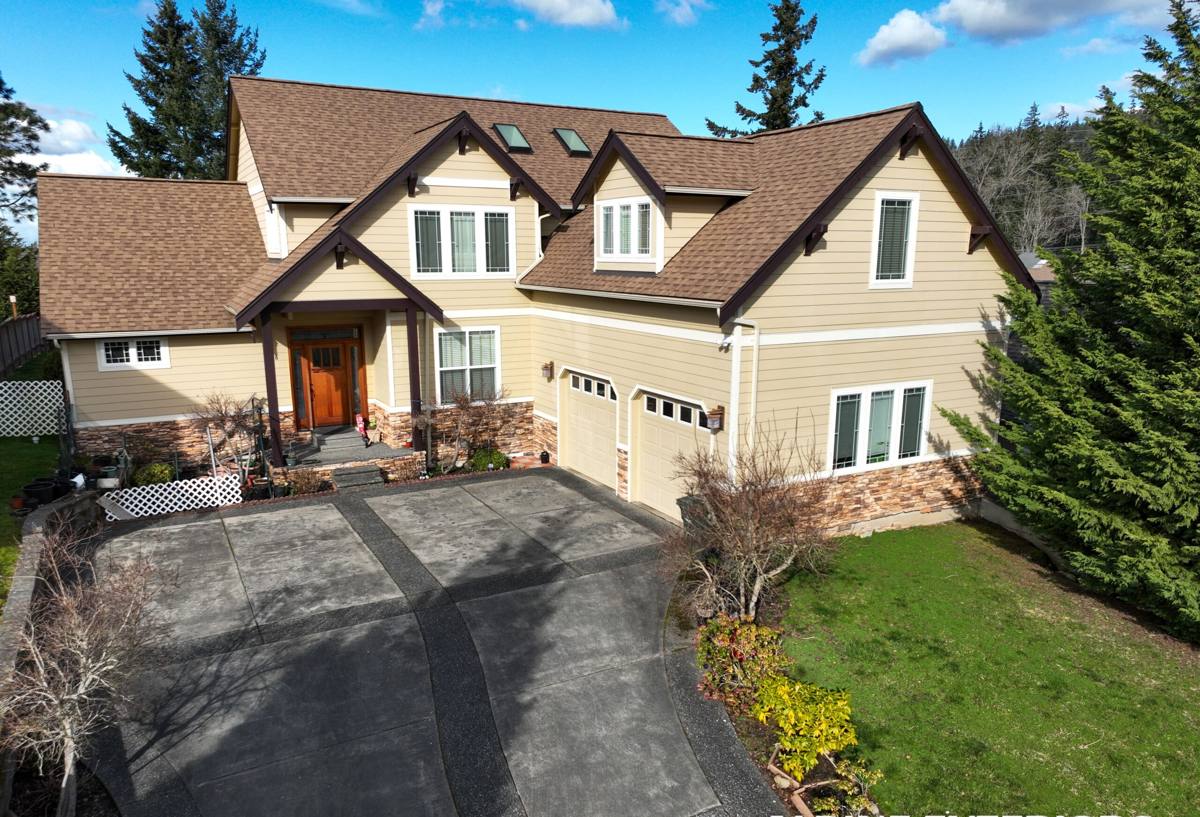
What This Climate Actually Does to a Roof
Salt Air and Metal Fatigue
Proximity to saltwater air accelerates corrosion on exposed metal — flashing, fasteners, vents, and any metal roofing components. Lower-grade fasteners and thin-gauge flashing corrode faster here than they would 50 miles inland. It's one of the reasons material and hardware selection matters more in this area than in a lot of the country.
Driving Rain, Not Just Wet Weather
Whatcom County and the neighboring BC lowlands get a lot of rain that arrives sideways, pushed by wind off the water. That kind of weather finds weaknesses that vertical rain never would — poorly lapped underlayment, undersized flashing, and gaps around penetrations that would be fine in a calmer climate. Roofs here need to be detailed for wind-driven moisture, not just water running downhill.
Moss and Shade
A long moss season is close to guaranteed on any roof with tree cover or a north-facing slope that doesn't dry out between storms. Moss isn't just cosmetic — its root structure lifts shingle edges, holds moisture against the roof deck, and shortens the life of the roofing material underneath it. New roof installations in this area should account for moss from day one, not treat it as a problem to solve later.
Signs an Aldergrove-Area Roof Is Due for Replacement
- Granules collecting in gutters or at downspout outlets — a sign the shingle surface is wearing thin
- Shingles that are cupping, curling at the edges, or visibly bare in patches
- Moss or dark streaking that keeps returning within a season of cleaning
- Soft spots or sagging when walked on, which usually points to deck damage underneath
- Daylight visible through the attic roof boards, or damp insulation after a storm
- A roof approaching or past 20-25 years old (asphalt shingle) or showing age-related wear regardless of material
- Repeated leak repairs in different spots each year rather than one recurring issue
What a Correct New Roof Installation Actually Involves
A roof replacement is more than swapping old shingles for new ones. In a climate that punishes shortcuts, the parts homeowners can't see matter as much as the finished surface.
Full Tear-Off and Deck Inspection
We remove the old roofing down to the deck rather than installing over an existing layer. That lets us actually see the plywood or plank sheathing underneath, replace any sections that are soft, delaminated, or rotted from long-term moisture exposure, and confirm the deck is properly fastened before anything new goes down.
Ice and Water Barrier at Vulnerable Points
Eaves, valleys, and areas around chimneys or skylights get a self-adhering waterproof membrane underneath the primary underlayment. These are the spots where wind-driven rain and ice damming (on the rare cold snaps this area does get) cause the most damage, so they get extra protection rather than relying on the field underlayment alone.
Underlayment Built for Wet Climates
We use synthetic or high-quality felt underlayment installed with proper overlap and fastening patterns designed for wind-driven rain, not just the manufacturer's minimum spec for a dry climate.
Flashing That Won't Corrode Early
Given the salt air, we favor corrosion-resistant flashing and fastener materials over the cheapest option available. Flashing around chimneys, walls, skylights, and roof-to-wall transitions is one of the most common leak points on any roof, and it's the one place where saving money up front costs the most later.
Balanced Attic Ventilation
Proper intake and exhaust ventilation keeps the underside of the roof deck dry and temperature-stable, which slows shingle aging from the inside and reduces the moisture buildup that feeds moss and mildew. A new roof is the right time to correct ventilation problems, not leave them for later.
Roofing Material Options for This Area
There's no single "best" roofing material — the right choice depends on budget, roof pitch, how much shade and moss pressure the home deals with, and how long the homeowner plans to stay in the house. Here's how the common options compare for a climate like Aldergrove's.
| Material | Typical Lifespan | Moss/Moisture Resistance | Salt Air Durability | Notes |
|---|---|---|---|---|
| Architectural asphalt shingle | 25-30 years | Moderate — benefits from copper/zinc strips | Good with quality fasteners | Most common choice; wide style and color range |
| 3-tab asphalt shingle | 15-20 years | Lower — thinner profile holds less up against moss | Fair | Lower upfront cost, shorter service life |
| Standing seam metal | 40-50+ years | Excellent — moss struggles to grip smooth metal | Very good with proper coating | Higher upfront cost; sheds moisture fast |
| Cedar shake | 20-30 years with upkeep | Poor without regular treatment | Fair | Traditional look, highest maintenance in this climate |
For most Aldergrove-area homes, a mid-to-high-grade architectural asphalt shingle with proper ventilation and moss-resistant strips hits the right balance of cost and durability. Homeowners planning to stay long-term, or dealing with heavy tree cover and constant moss pressure, often find metal roofing pays for itself in reduced maintenance and a much longer service life.
Our Installation Process
1. On-Site Assessment
We walk the roof, check the attic from the inside, and look at ventilation, decking condition, and existing flashing before quoting anything. This is also when we talk through material options based on the home's exposure, pitch, and shade.
2. Written Estimate and Material Plan
The estimate lays out material choice, tear-off scope, any deck repair contingencies, and a realistic timeline — no vague allowances that turn into surprise costs mid-project.
3. Scheduling Around the Weather
Roofing a house in a climate this wet means paying close attention to the forecast. We schedule tear-off and dry-in to happen inside a clear weather window whenever possible, and we protect open sections of the roof if conditions turn unexpectedly.
4. Tear-Off, Repair, and Installation
Old roofing comes off, the deck gets inspected and repaired as needed, and the new roofing system goes on in the sequence described above — underlayment, ice and water barrier, flashing, ventilation components, then the finished roofing material.
5. Cleanup and Final Walkthrough
We clear the site of old material and debris, including a magnetic sweep for stray nails, and walk the finished roof with the homeowner before calling the job done.
Why a Crew That Already Works Aldergrove Matters
Roofing a home right at the US-Canada border comes with a few extra logistics that a crew unfamiliar with the area can trip over — material and equipment movement across the line, awareness that permit requirements and building code details differ between Whatcom County and British Columbia jurisdictions, and simply knowing the microclimate patterns specific to this stretch between Lynden and the border. A homeowner in Aldergrove should always confirm what permits their specific project requires with the local building authority, but working with a crew that's done this before means fewer surprises and fewer delays.
Beyond the paperwork, there's a practical advantage to local experience: we've seen how roofs in this specific area age, which north-facing slopes hold moss the longest, and which details tend to fail first when the wind comes off the water. That shapes how we detail every roof we install here, not just the ones we've already done.
Maintaining a New Roof in This Climate
- Keep gutters and downspouts clear so water doesn't back up under the shingle edge
- Trim overhanging branches to cut down on shade and debris that feed moss growth
- Have moss treated or gently removed early rather than letting it establish and lift shingles
- Check attic ventilation isn't blocked by insulation or debris after any attic work
- Schedule a visual roof check after major windstorms, not just on a fixed annual schedule
- Address small flashing or sealant issues promptly — they're cheap fixes early and expensive ones once water gets behind them
What Affects the Cost of a New Roof
| Factor | Why It Matters |
|---|---|
| Roof size and pitch | Steeper roofs take longer to work safely and use more material per square foot of coverage |
| Material choice | Asphalt shingle, metal, and cedar carry different material and labor costs |
| Deck condition | Rotted or soft sheathing found during tear-off adds repair cost not visible during a surface inspection |
| Number of penetrations | Chimneys, skylights, and vents each need individual flashing detail work |
| Access and site conditions | Tree cover, tight lots, or difficult staging areas affect labor time |
| Tear-off layers | Removing multiple existing roofing layers takes more time than a single-layer tear-off |
Because deck condition often isn't fully known until tear-off, we build a clear contingency plan into the estimate rather than leaving it as an open-ended surprise.
If your roof in Aldergrove is showing its age or you just want an honest read on its condition, we're glad to come take a look. Fill out the form below for a free, no-pressure estimate from a crew that already knows this area's weather.