 Lynden Siding
 Siding Installation for Everson Homes: Why the Details Matter Here
Everson sits in the Nooksack River valley just outside Lynden, in one of the wettest, greenest corners of Whatcom County. That combination of flat, low-lying land, heavy tree cover, and near-constant moisture in the air makes exterior siding work here different from siding work almost anywhere else in the state. A product and installation method that holds up fine in a drier climate can fail early in Everson — not because the crew was careless, but because they didn't account for what this specific environment does to a wall assembly over time.
We install siding for homes throughout the Lynden and Everson area, and we've built our process around three things that define this climate: driving rain that gets pushed sideways into wall surfaces, marine air moving inland off the Salish Sea that keeps humidity elevated even on dry-looking days, and a moss season that runs longer here than in most parts of the country. None of these are dramatic, one-time events. They're a slow, constant load on your siding, and the installation has to be built to carry it.
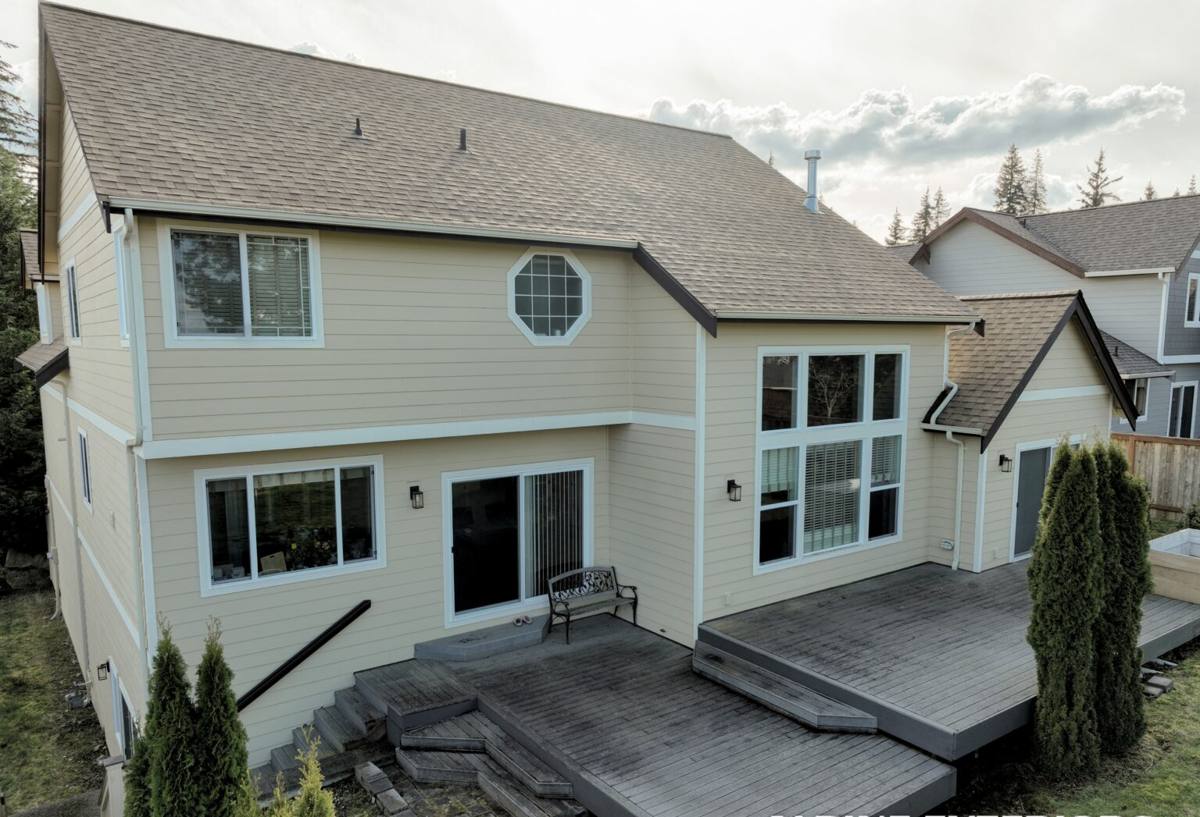
What Driving Rain and a Long Moss Season Actually Do to Siding
Rain in Everson rarely just falls straight down. Storm systems moving through the valley push moisture sideways, driving water into seams, laps, and trim joints that would stay dry in a calmer climate. Over years, that wind-driven rain finds every weak point in a siding installation — a short flashing lap, a caulk joint that wasn't backed properly, a fastener that split the material and opened a path for water.
Moss is the other half of the problem. Whatcom County's mild, wet winters and shaded, tree-lined lots give moss and algae months to establish themselves on any siding surface that stays damp. Textured or porous materials give moss more to grip onto, and once it's established, it holds moisture against the wall surface even longer than the weather alone would. That's a slow but real threat to anything on your home that isn't dimensionally stable or resistant to moisture absorption.
Why This Hits Some Materials Harder Than Others
Wood-based siding products — including primed spruce and engineered wood products like LP SmartSide — rely on their factory coating and field-applied paint to keep water out. In a climate with this much sustained moisture, any gap in that protection (a cut edge, a fastener hole, a hairline crack) gives water a way into the wood fiber, and once that happens, swelling and soft spots tend to follow. Vinyl siding doesn't absorb water the same way, but it flexes and gaps with temperature swings, and its seams and J-channels are exactly the kind of tight spaces where driving rain and trapped moisture do their damage over time.
What a Correct Siding Installation Involves in This Climate
Getting siding to actually perform in Everson's weather isn't about the visible surface — it's about everything underneath it. A correct installation is a system, and every layer has a job.
Weather-Resistive Barrier and Flashing
Before any siding goes up, the wall needs a continuous weather-resistive barrier, properly lapped shingle-style so water is always directed outward and down. Every window, door, and penetration needs flashing that integrates with that barrier — not caulk used as a substitute for flashing, which is one of the most common shortcuts we see on older installations in this area.
Fastening and Clearances
Fiber cement siding has manufacturer-specified fastener patterns, embedment depth, and clearance requirements from grade, roof lines, and decks. Skipping these — over-driving nails, closing up clearances to save a trim detail, fastening into the wrong layer — creates the exact entry points that wind-driven rain will eventually exploit.
Trim, Joints, and Caulking
Butt joints, corners, and trim-to-siding transitions need to be detailed so water sheds away from the joint rather than sitting in it. In a climate with this much sustained rainfall, a joint that's "close enough" today becomes a moisture problem in a few winters.
Why We Install Only James Hardie Fiber Cement
We don't install vinyl, LP SmartSide, Cemplank, Allura, primed spruce, or cedar. That's a deliberate standard, not a lack of options. James Hardie fiber cement is engineered specifically for climates like ours through its HardieZone system — homes in Washington fall under the HZ5 engineering profile, which is formulated for cooler, wetter regions with sustained moisture exposure rather than the hot, humid HZ10 profile used in the Southeast.
Fiber cement is dimensionally stable, non-combustible, and resistant to the swelling and softening that moisture-driven damage causes in wood-based products. Hardie's ColorPlus finish is baked on in a factory-controlled process rather than field-painted, which means the color coat is more consistent and better bonded than a job-site paint job can achieve, and it comes with its own dedicated finish warranty separate from the product warranty. For an Everson home dealing with driving rain and a long moss season every year, that combination of moisture resistance and finish durability is the difference between siding that needs attention every few years and siding that doesn't.
Our Installation Process
- On-site assessment — we look at your home's exposure, existing wall assembly, and any moisture or moss issues on the current siding before recommending a scope of work.
- Removal and substrate check — old siding comes off and we inspect the sheathing underneath for any hidden rot or damage that needs to be addressed before new siding goes on.
- Weather-resistive barrier and flashing — a continuous barrier goes on first, with flashing integrated at every window, door, and penetration.
- Hardie siding installation — panels or planks are installed to manufacturer fastening specs, with proper clearances from grade, decks, and roof lines.
- Trim, joints, and caulking — details are finished so every joint sheds water outward instead of holding it.
- Final walkthrough — we go over the finished work with you before calling the job complete.
How Siding Materials Compare in Everson's Climate
| Material | Moisture Behavior | Maintenance Burden | Typical Finish |
|---|---|---|---|
| James Hardie fiber cement | Dimensionally stable, resists swelling and moss-related moisture damage | Low — occasional cleaning | Factory ColorPlus finish, warrantied |
| Vinyl | Doesn't absorb water, but seams and channels trap moisture and flex with temperature | Low, but prone to cracking and fading | Color molded through, fades over time |
| LP SmartSide / wood-based | Absorbs water at cuts, fasteners, and coating gaps; sensitive to sustained moisture | Higher — coating needs monitoring and upkeep | Factory or field-applied, needs maintenance |
| Primed spruce / cedar | Natural wood movement; relies entirely on coating and upkeep for moisture protection | Highest — regular repainting and sealing | Field-painted or stained, ongoing upkeep |
What Affects the Cost of a Siding Job in Everson
Every home is different, and we'll always give you a specific number after an on-site look — but these are the main factors that move a siding estimate up or down.
| Factor | Why It Matters |
|---|---|
| Home size and wall complexity | More square footage, corners, and roof lines means more material and labor time |
| Condition of existing sheathing | Hidden moisture or rot found during tear-off adds repair work before new siding can go on |
| Siding profile and trim detail | Lap width, panel style, and trim complexity affect both material cost and install time |
| Site access | Tight lots, tree cover, or difficult staging can add time to prep and material handling |
| Scope of tear-off | Full removal versus over-existing installation changes both cost and long-term performance |
Signs Your Everson Home May Need New Siding
- Persistent moss or algae growth that returns shortly after cleaning
- Soft spots, bubbling, or visible swelling anywhere on the siding surface
- Paint that's peeling, chalking, or failing faster than it used to
- Warped, cracked, or separated panels, especially near corners and trim
- Visible gaps at seams, joints, or window and door trim
- Rising energy bills that suggest the wall assembly is no longer performing as insulation and a moisture barrier
Why It Matters to Hire a Crew That Already Works in Everson and Whatcom County
A crew that installs siding in a dry climate and a crew that installs it correctly for the Nooksack Valley are not solving the same problem. Local experience means knowing which details actually matter here — how much clearance to leave at grade on a low-lying lot, how to detail flashing for wind-driven rain instead of just vertical rainfall, and which parts of a wall assembly are most likely to trap moisture given the tree cover and humidity typical of this area. It also means familiarity with permitting and inspection expectations in Whatcom County, so the job moves without avoidable delays.
We work throughout Lynden and the surrounding Whatcom County communities, including Everson, and we install one product because we've seen what holds up here and what doesn't. If you're planning a siding project and want a straight answer about what your home actually needs, we're happy to take a look. Reach out for a free, no-pressure estimate — there's a form right below to get started.