 Lynden Siding
 Deck Building in Custer, Washington
Custer sits in the part of Whatcom County where marine weather is a daily fact of life, not an occasional inconvenience. Homes here deal with salt-laden air blowing in off the water, long stretches of driving rain through fall and winter, and a moss season that can run eight months or more if surfaces aren't managed. A deck built without those conditions in mind will look fine for a year or two and then start showing problems that are expensive to reverse — soft framing, corroded hardware, slick moss-covered boards, and finishes that fail early. A deck built for this climate, from the footings up, holds up the way it should for decades.
This page covers what deck building actually requires for a Custer property, what we do differently because of the local climate, and how to think about materials, drainage, and hardware before you commit to a plan.
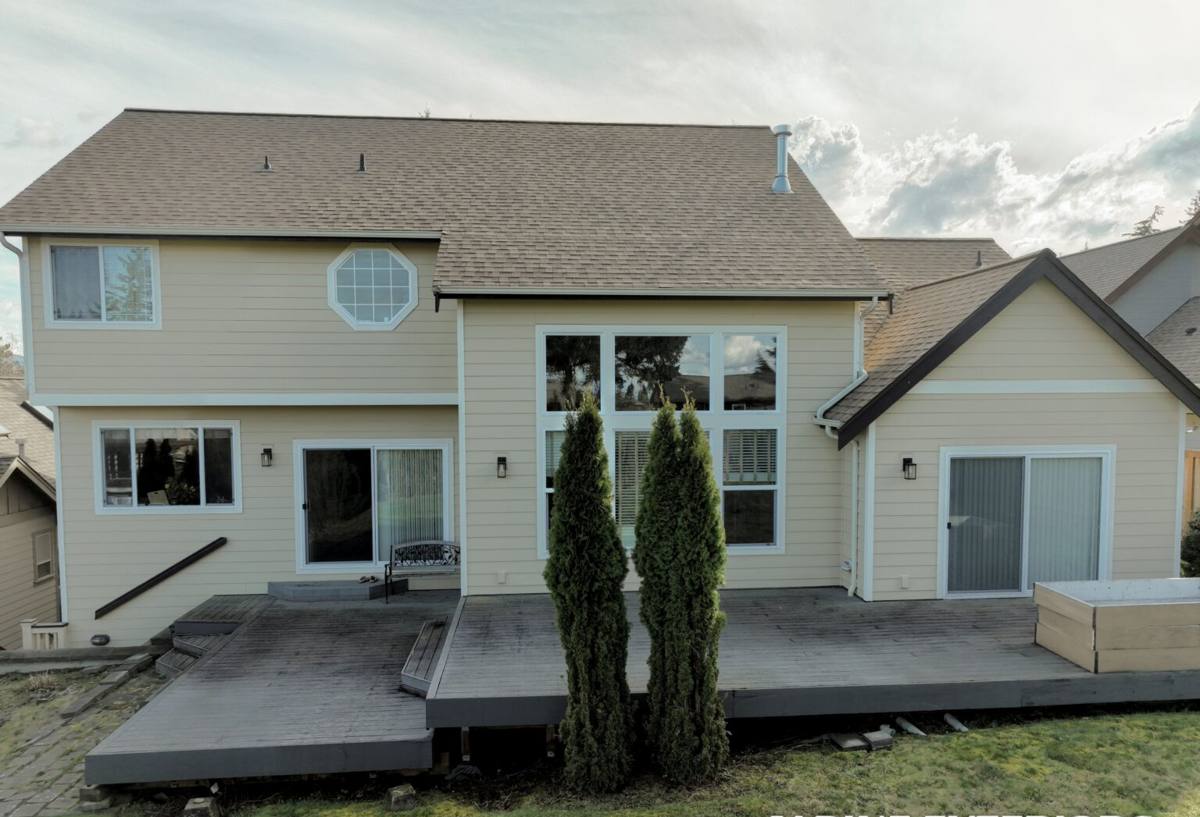
What Whatcom County Weather Does to a Deck
Three conditions drive almost every deck failure we see in this area, and they compound each other.
Salt Air
Properties closer to the water pick up airborne salt that settles on every exposed surface, including fasteners, joist hangers, and any exposed metal flashing. Standard hardware corrodes faster under this exposure. Once a fastener starts rusting, it loses grip strength long before it looks bad enough to notice from the surface.
Driving Rain
Wind-driven rain doesn't just fall on a deck — it gets pushed sideways into ledger connections, under poorly lapped flashing, and into end grain that isn't sealed. Water intrusion at the ledger board (where the deck attaches to the house) is one of the most common causes of structural deck failure nationwide, and this region's rain patterns make that connection point especially vulnerable if it isn't detailed correctly.
Long Moss Season
Shaded, north-facing, or tree-covered lots in and around Custer stay damp for most of the year, which is exactly what moss and algae need to take hold. Moss on decking isn't just cosmetic — it holds moisture against the board surface, accelerates rot in wood decking, and creates a genuinely slippery walking surface.
Foundation and Framing: Where a Deck's Lifespan Is Decided
Most of what determines whether a deck lasts 10 years or 30 years is invisible once the project is finished. That's the framing.
- Footings sized and set to the depth required for this soil and frost conditions, not just poured to a minimum
- Ledger board attached with proper flashing that sheds water away from the house band joist, not just caulked and hoped for
- Joist hangers and structural connectors rated for exterior, corrosion-resistant use — this matters more here than in a dry inland climate
- Joist spacing set for the actual decking material being installed, since composite and PVC boards often require tighter spacing than solid wood
- Beam and post sizing that accounts for actual span and load, not a guess based on what "looks about right"
The ledger connection deserves particular attention on Custer homes. It's the single point where a structural failure can happen quietly, behind the siding, with no visible warning until something gives. Correct flashing at that joint — installed so water is directed out and away rather than trapped against the house — is not optional in a climate that gets this much sideways rain.
Choosing Decking Material for This Climate
There's no single "best" decking material — there's a best material for a given budget, sun exposure, and maintenance appetite. Here's how the common options compare for a property dealing with salt air, rain, and shade-driven moss growth.
| Material | How it handles this climate | Maintenance | Typical lifespan |
|---|---|---|---|
| Pressure-treated wood | Affordable, needs sealing to resist moisture and moss; more prone to splintering and cupping in wet shade | Annual cleaning, resealing every 1-3 years | 10-15 years with upkeep |
| Cedar | Naturally rot-resistant and handles moisture well, but still needs finish maintenance to slow graying and moss growth in shaded spots | Cleaning and refinishing every 1-2 years | 15-20 years with upkeep |
| Composite decking | Resists moisture damage and won't splinter; some early-generation composites held moisture against the core in constant shade, so board selection and airflow underneath still matter | Periodic washing to prevent surface algae/moss film | 25-30 years |
| PVC/capped decking | Fully synthetic cap resists moisture absorption and is the most consistent performer in wet, shaded, salt-exposed spots | Occasional washing | 25-30+ years |
For lots with heavy tree cover or north-facing exposure — common around Custer — we lean toward recommending composite or capped PVC precisely because they don't absorb and hold moisture the way wood does. For sunnier, more open lots, a well-sealed cedar or treated wood deck can perform well and costs less up front. We'll walk your specific site conditions with you rather than push one product across the board.
Fasteners and Hardware: The Part Nobody Sees Until It Fails
In a salt-air environment, the fasteners and structural hardware matter as much as the decking on top. We use stainless steel or heavy hot-dip galvanized fasteners and connectors rated for coastal exposure rather than standard-duty exterior hardware. The cost difference at the fastener level is small; the cost difference in early corrosion and callback repairs is not. This is one of those details that's completely invisible in a finished photo and completely obvious ten years later when the wrong hardware started rusting deep into the wood fibers around it.
Drainage, Airflow, and Keeping Moss Off Your Deck
Moss doesn't grow because a deck is "old" — it grows because moisture sits somewhere long enough to let it establish. Design decisions made during construction determine how much of a moss problem you'll have later.
- Proper board gapping so water drains through instead of pooling on the surface
- Adequate clearance and airflow underneath the deck so the framing and joists can dry out between rain events
- Grading and drainage at ground level so water isn't channeled back up under the structure
- Positioning and material choice adjusted for shaded, tree-covered areas where moss pressure is highest
- Avoiding dead-end pockets where debris, needles, and leaves collect and hold moisture against boards
None of this eliminates the need for occasional cleaning — this is Whatcom County, and any exterior wood or composite surface benefits from a rinse and light scrub once or twice a year — but a deck designed with drainage and airflow in mind needs far less intervention to stay safe and presentable.
Our Process, Start to Finish
We keep the process straightforward and communicate clearly at each stage:
- On-site walkthrough: We look at your lot's sun exposure, shade pattern, existing drainage, and how the deck will connect to your home before recommending anything.
- Material and design discussion: Based on that walkthrough, we talk through decking material, layout, railing, and any structural considerations specific to your site.
- Written estimate: A clear, itemized quote so you know what you're paying for and why — no vague lump sums.
- Permitting: We handle the permit process for you where required, so the project is built to code and documented correctly.
- Construction: Footings, framing, ledger flashing, decking, and railing installed in sequence, with attention to the details that don't show up until years later.
- Final walkthrough: We go over the finished deck with you, including basic maintenance guidance specific to the material you chose.
Permits and Local Requirements
Deck construction in Whatcom County typically requires a building permit once the deck exceeds a certain height or size threshold, and inspections are generally required for footings and framing before decking goes down. Requirements can vary depending on your specific jurisdiction within the county. We handle this process as part of the job rather than leaving it on the homeowner's plate, and we build to pass inspection the first time rather than treating code minimums as a target to shave.
Why a Crew That Already Works Custer Matters
Deck problems in this region tend to be climate-driven, not workmanship-driven in the obvious sense — a crew that hasn't worked this specific mix of salt air, rain exposure, and shade patterns can build a technically sound deck by generic standards and still hand you a moss trap or a slow-corroding ledger connection within a few years. Working regularly in and around Lynden and Custer means we've seen how decks in this exact climate actually age, not just how they're supposed to perform on paper. That shows up in fastener selection, board spacing, material recommendations for shaded lots, and where we insist on flashing details that a lower bid might skip.
Caring for Your Deck After It's Built
A well-built deck in this climate still needs basic seasonal attention:
| Task | Frequency |
|---|---|
| Sweep debris and clear gaps between boards | Monthly during fall |
| Wash surface to remove algae/moss film | 1-2 times per year |
| Inspect and reseal wood decking | Every 1-3 years, depending on exposure |
| Check railing and fastener condition | Annually |
| Confirm under-deck drainage is clear | Annually, before wet season |
Staying ahead of this schedule is far cheaper than repairing rot or replacing corroded hardware down the line.
If you're planning a new deck or replacing one that's failed early in Custer or the surrounding Lynden area, we're happy to walk your property and give you a straightforward, no-pressure estimate. Use the form below to get started.