 Lynden Siding
 Why Siding Wears Out Faster in Ferndale
Ferndale sits close enough to the coast that salt-laden air is a real factor in how exterior materials age, and it shares the same soggy fall-through-spring stretch as the rest of Whatcom County. That combination is harder on siding than most homeowners realize. Salt air accelerates corrosion on fasteners and trim metal, driving rain off the Strait works its way into any gap in the weather barrier, and the long stretch of damp, low-sun months every year gives moss and algae plenty of time to take hold on north-facing walls and anything shaded by trees. None of that is dramatic on its own, but stacked year after year, it's what separates a wall system that lasts three decades from one that starts failing in ten or twelve years.
The siding itself is only part of the story. What's underneath it — the house wrap, the flashing, the gaps left for drainage — usually determines whether a home stays dry or slowly rots from the inside. A siding replacement is the one time a contractor can actually see and fix what's behind the old material, which is why it's worth doing right instead of just matching what was there before.
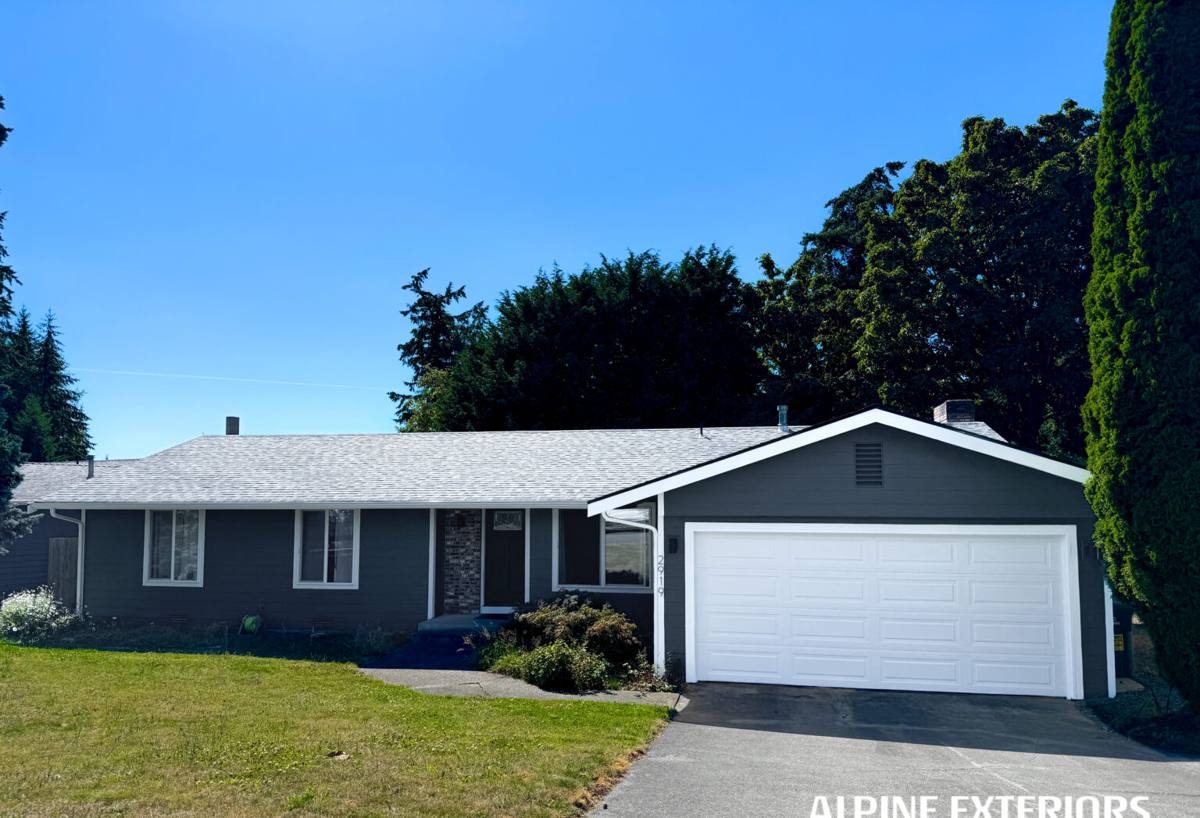
Signs a Ferndale Home Needs Replacement, Not Repair
Not every siding problem calls for a full tear-off. But there's a point where patching stops making sense, and homes in this area tend to hit it in a few predictable ways.
- Soft or spongy spots when you press on the siding, especially near the bottom courses or below windows
- Paint that won't hold — it blisters or peels again within a year or two of repainting
- Persistent moss or dark streaking that comes back within a season of cleaning
- Visible gaps, warping, or buckling panels, particularly on walls that face prevailing wind and rain
- Musty smell or discoloration on interior walls that back up to exterior siding
- Siding that's original to a home built more than 20-25 years ago, especially wood or older composite products
If you're seeing more than one of these, it's usually a sign the water-resistive barrier underneath has been compromised, not just the visible surface. That's a replacement conversation, not a caulk-and-paint one.
Trapped Moisture Is the Real Threat
Wood sheathing that's been wet under siding for years can look fine from a distance and still be structurally compromised. In a climate that stays damp for months at a time, moisture that gets behind siding doesn't dry out quickly — it sits there and does damage slowly. That's the main reason we push homeowners toward replacement once we see repeated failure points, rather than chasing individual repairs indefinitely.
What a Correct Siding Replacement Actually Involves
The finished siding is what everyone notices, but the job is won or lost in the layers nobody sees once the work is done.
Tear-Off and Inspection
Old siding comes off in full, not patched around, so the sheathing underneath can be inspected. Any soft, rotted, or delaminated sheathing gets identified and replaced before anything new goes back on. Skipping this step is the single most common shortcut that leads to callbacks a few years later.
Weather-Resistive Barrier and Flashing
A new house wrap goes on as the primary drainage plane, with special attention to window and door flashing, seams, and penetrations — the spots where nearly all water intrusion actually starts. In a place that gets driving, wind-blown rain as often as Ferndale does, flashing details matter more than the siding brand.
Drainage Gap and Ventilation
Correct installation leaves a small gap behind the siding so any moisture that does get past the outer layer can drain and the wall can dry out. This is especially important on walls that stay shaded and damp longer through the fall and winter.
Fastening and Manufacturer Spec
Nail pattern, fastener type, and clearance from the ground or roofline all follow the manufacturer's published installation instructions — not general habit. This is also where salt air exposure matters: using corrosion-resistant fasteners rated for the product and the environment isn't optional close to the coast.
Why We Install Only James Hardie Fiber Cement
We don't install vinyl, LP SmartSide, primed wood, or other fiber cement brands, and we're upfront about why. Vinyl can look fine for years but tends to warp, fade, and crack in temperature swings and impacts, and it isn't repainted the way fiber cement can be. Engineered wood products like LP SmartSide perform well when installed and maintained exactly to spec, but they're wood-based, which means moisture management has to be close to perfect over the product's life — a tall order in a climate that stays wet as long as this one does. Other fiber cement brands make a reasonable product, but we standardized on one manufacturer so our crews install one system, to one spec, every time, which is where consistency and quality control actually come from.
James Hardie's fiber cement is non-combustible, holds paint far longer than wood or vinyl because it doesn't expand and contract the same way, and its factory-applied ColorPlus finish is baked on under controlled conditions rather than field-painted. Hardie also engineers specific product lines (HZ5, for example) for wetter, more humid climates, which lines up with what this region actually needs. It's not the cheapest option on day one, but it's the one we're willing to put a long-term installation warranty behind.
Comparing Siding Materials for This Climate
| Material | Moisture Tolerance | Maintenance | Typical Lifespan Here |
|---|---|---|---|
| Vinyl | Doesn't rot, but can trap moisture behind it if installed poorly | Low, but can't be repainted to refresh color | 15-25 years before fading/warping issues |
| Primed wood / cedar | Poor — absorbs moisture, prone to rot in shaded, damp areas | High — regular repainting and caulking | 10-20 years depending on upkeep |
| LP SmartSide | Good if sealed edges and paint are maintained strictly on schedule | Moderate to high | 20-30 years with diligent maintenance |
| James Hardie fiber cement | Strong — engineered for wet climates, resists swelling | Low — factory finish holds color far longer | 30+ years when installed to spec |
These are general patterns, not guarantees — installation quality affects every material on this list more than the brand does. But the moisture-heavy stretch of the year in Whatcom County is exactly the condition Hardie's HZ product lines were engineered around.
Our Process for a Ferndale Siding Replacement
- On-site inspection and honest assessment of whether repair or full replacement makes sense
- Written estimate that covers tear-off, sheathing repair allowances, moisture barrier, and installation — no vague line items
- Scheduling that accounts for the wetter months, since siding shouldn't go on over wet sheathing or during sustained rain
- Tear-off, sheathing inspection and repair, then house wrap and flashing before a single piece of new siding goes up
- Installation to James Hardie's published spec, with attention to fastener type, clearances, and joint treatment
- Final walkthrough so you know exactly what was done and what to expect from the finish over time
Why Hiring a Crew That Already Works in Ferndale Matters
A lot of siding problems in this area trace back to installation details that a crew from a drier region simply wouldn't think twice about — clearance above grade, flashing laps that account for wind-driven rain, or fastener choices that hold up to salt air. A crew that regularly works in Ferndale and the surrounding Lynden area already knows which walls take the worst weather, which older homes tend to have hidden sheathing damage, and how to schedule around the wet season instead of fighting it. That local pattern recognition doesn't show up on a bid sheet, but it shows up in how the job holds up ten years later.
What to Check Before You Hire
- Ask exactly which fiber cement or siding product they install, and whether it's the only brand they stand behind
- Confirm the estimate includes sheathing repair, not just a vague "if needed" clause
- Ask how they handle flashing at windows, doors, and roof-to-wall transitions
- Check that they carry current licensing and insurance for exterior work in Washington
- Ask what warranty covers labor and installation specifically, separate from the manufacturer's material warranty
- Get a clear answer on timeline and how weather delays are handled
If your Ferndale home is showing signs of siding failure, or you're just trying to plan ahead before the next wet season sets in, we're happy to take a look and give you a straight answer — no pressure, no obligation. Fill out the form below for a free estimate.