 Lynden Siding
 Why Ferndale Decks Wear Out Faster Than You'd Expect
Ferndale sits close enough to the water that salt air is a real factor in how long a deck lasts — not just a coastal talking point. Add in Whatcom County's long wet season, driving rain off the Strait, and a moss and algae season that can run from fall through spring, and you've got a climate that's genuinely hard on outdoor structures. A deck that would last two decades in a dry inland climate can start failing at the joists and fasteners in half that time here if it wasn't built with this environment in mind.
Most of the deck problems we see in Ferndale aren't from bad luck. They're from decks that were built to a generic spec instead of a coastal-Whatcom spec — undersized flashing, the wrong fastener metal, decking laid tight with no room to shed water, or footings that were never quite deep or wide enough for what the frost and moisture cycle around here does to soil over time.
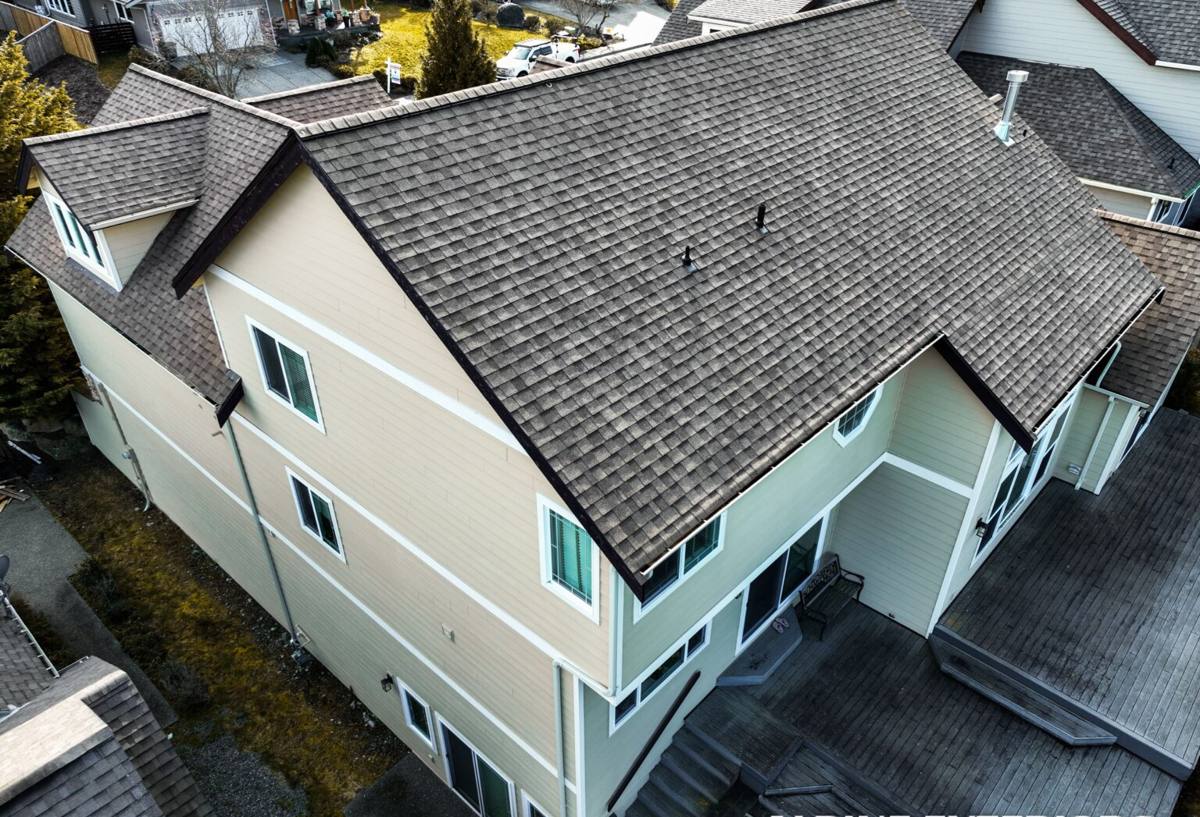
Signs Your Deck Has Reached the End of Its Life
Not every deck problem means a full replacement — sometimes a repair or partial rebuild is the honest answer. But there's a point where patching stops making sense and replacement is the more cost-effective, safer path. Walk your deck and check for these:
- Soft, spongy, or spring-back decking when you walk on it, especially near the house or along the rim
- Rust streaks or crumbling around fasteners and joist hangers
- Green or black staining that keeps coming back within weeks of cleaning — a sign moisture is trapped, not just sitting on the surface
- Gaps opening up at the ledger board where the deck meets the house
- Wobble in the railing posts or stairs
- Visible daylight or soft wood where a post meets its footing
- A deck older than 15–20 years that's never had the substructure inspected
If you're seeing two or more of these, it's worth having someone look at the framing underneath, not just the surface boards. Surface rot is often the least of the problem — what's happening at the ledger and the joists is usually what determines whether repair or replacement is the right call.
What a Correct Deck Replacement Actually Involves
Framing and Footings
This is where a deck's real lifespan gets decided, and it's the part nobody sees once the decking goes down. Footings need to be sized and set to the depth that actually holds up under Whatcom County's soil and moisture conditions, not the bare minimum. Joists should be spaced and sized for the decking material you're choosing, since composite and wood have different span requirements. We use pressure-treated framing lumber rated for ground contact where it's called for, and we don't cut joist spans to save a few boards.
Ledger Flashing
The ledger board — where the deck attaches to your house — is the single most common failure point we find on older decks, and it's directly tied to siding and water management, which is our core trade. If that connection isn't properly flashed, water works its way behind the ledger and into the rim joist and wall framing, and by the time you see damage from the outside, it's often been happening for years. We flash every ledger connection so water sheds away from the house, not into it.
Decking Material
Whether you go with wood or composite, the boards need proper gapping for airflow and drainage, hidden or corrosion-rated fasteners, and a layout that doesn't trap standing water or moss-friendly shade pockets. In a climate with a moss season this long, drainage under and around the deck matters as much as the boards themselves.
Fasteners and Hardware
Salt air corrodes ordinary galvanized fasteners faster than people expect. We use stainless steel or coated fasteners and joist hangers rated for the chemicals in modern pressure-treated lumber and for coastal exposure, so you're not looking at rust streaks and failing hardware in five years.
Decking Material Comparison for Whatcom County's Coastal Climate
| Material | How It Handles Salt Air & Moisture | Moss/Algae Resistance | Maintenance |
|---|---|---|---|
| Pressure-treated wood | Good if fasteners and flashing are correct; wood itself is moisture-resistant but end grain and cut edges need re-sealing | Needs regular cleaning; textured grain gives moss more to grip | Annual cleaning, periodic staining/sealing |
| Cedar | Naturally rot-resistant but softer; benefits from a breathable sealer in this climate | Better than treated pine but still needs cleaning | Sealing every 1–2 years to hold color and resist moisture |
| Composite decking | Doesn't absorb moisture or rot; core material won't corrode | Smoother, denser surface sheds moss more easily; still needs occasional washing | Occasional washing, no staining or sealing |
| PVC decking | Fully moisture-resistant, no wood fiber to hold water | Very low moss retention | Lowest maintenance; highest upfront cost |
We don't push one product on every job. Wood is a real, honest choice for homeowners who want that look and are willing to keep up with sealing. Composite and PVC cost more up front but trade ongoing maintenance for durability in a climate that's genuinely hard on exposed wood. The right call depends on your budget, how much upkeep you want to do, and how the deck sits — full sun, shaded, near the ground, or elevated all change the equation.
Our Deck Replacement Process
- On-site assessment — we inspect the existing deck down to the framing and ledger, not just the surface, so you know what's actually driving the need for replacement
- Honest scope and estimate — a clear breakdown of what needs replacing versus what can stay, with material options and straightforward pricing
- Permit handling — we pull the required Whatcom County permits so the work is inspected and legal, protecting you at resale
- Demolition — careful removal of the old deck, checking the rim joist and siding behind it for hidden water damage before we close anything back up
- Framing and flashing — footings, joists, and ledger flashing done to hold up in this climate, not just pass a quick glance
- Decking, railing, and stairs — installed to your chosen material's spec, with proper spacing and corrosion-rated fasteners
- Final walkthrough — we go over the finished deck with you and flag any maintenance you'll want to stay on top of
Cost Factors to Understand Before You Budget
| Factor | Why It Moves the Price |
|---|---|
| Size and shape | Multi-level decks, curves, and built-in benches or planters add labor beyond straight square footage |
| Decking material | Composite and PVC cost more per board than pressure-treated wood, but reduce long-term maintenance spending |
| Framing condition | If ledger, rim joist, or footings need repair beyond the deck itself, that's added scope worth doing right rather than skipping |
| Height and railing code | Decks above a certain height need code-compliant railings and sometimes different footing requirements |
| Stairs | Each additional stair run adds material, framing, and labor |
| Access | Tight side yards or elevated decks with limited equipment access can add time |
We don't quote decks off a square-footage rule of thumb without seeing the site. A flat, easy-access rebuild and a tall, multi-level deck with tricky access are genuinely different jobs, and the estimate should reflect that honestly.
Permits and Whatcom County Requirements
Most deck replacements in Ferndale require a Whatcom County building permit, particularly for decks above a certain height or attached to the structure. Skipping this isn't a shortcut worth taking — unpermitted deck work can become a real problem at resale, when a buyer's inspector or the county flags it. We handle the permit process as a standard part of the job, not an add-on, so the finished deck is inspected, documented, and won't come back to bite you when you sell.
Why Hire a Crew That Already Works Ferndale
A deck replacement is one of those projects where local knowledge genuinely changes the outcome. We already know what Whatcom County inspectors look for, what footing depths hold up in local soil, and how fast moss and algae come back on a north-facing or shaded deck near the coast. That's the difference between a deck that looks good on handoff day and one that's still solid ten years later.
We also know how ledger flashing failures show up in siding — because siding and water management is our core trade, not a side service. A deck contractor who only thinks about the deck can miss what's happening at the wall behind it. We don't.
Get a Free, No-Pressure Estimate
If your deck is showing its age, or you're just not sure whether it needs a repair or a full replacement, we're happy to take a look and give you a straight answer — no pressure, no upsell. Fill out the form below and we'll set up a time to come out and assess it in person.