 Lynden Siding
 Birch Bay's Coastal Climate and Your Windows
Birch Bay sits right on the water, and that changes what a window has to survive compared to a home a few miles inland. Salt-laden air moves off the Salish Sea and settles on everything, including window hardware, frame seams, and glazing edges. Add in wind-driven rain that hits windows at an angle instead of straight down, plus a long stretch of the year where moss and algae thrive on any shaded, damp surface, and you have a climate that is genuinely harder on windows than the drier, more sheltered parts of Whatcom County. A window that performs fine in Lynden proper may show problems years earlier in Birch Bay simply because of where it sits.
None of this means Birch Bay homes need exotic solutions. It means the material choices, flashing details, and sealant work have to account for salt exposure and sustained moisture from day one, not as an afterthought.
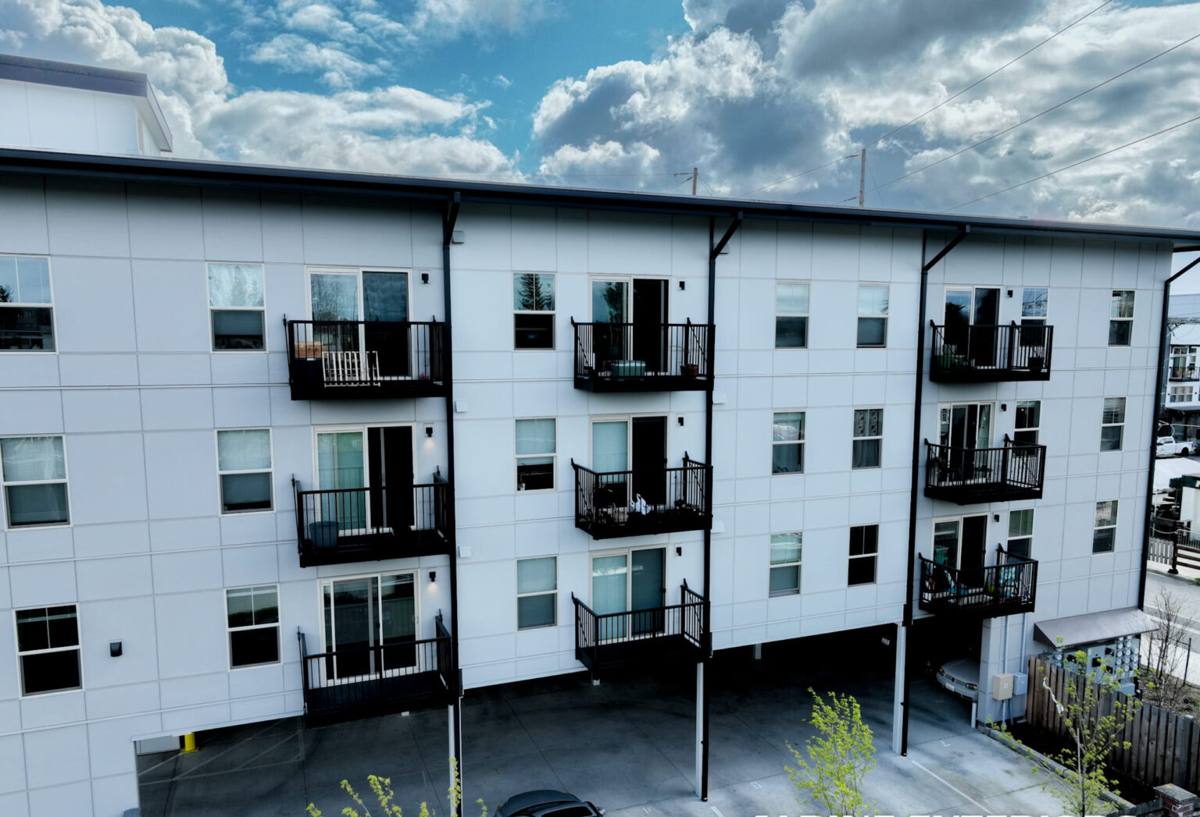
What Salt Air, Wind-Driven Rain, and Moss Season Actually Do to Windows
It helps to understand the specific failure paths, because they explain why certain shortcuts show up faster near the water.
Salt Air and Hardware
Salt is corrosive to exposed metal. Cheaper window hardware, screws, and cladding fasteners can pit and corrode well ahead of their expected life when they sit in a marine air environment. Locks stick, cranks bind, and rollers on sliders seize up. This is a hardware and fastener quality issue more than a frame issue, but it is one of the first signs a window was not spec'd for a coastal setting.
Wind-Driven Rain and Water Intrusion
Rain that comes in sideways finds every weak point in a window's flashing and sealant. Standard "point and caulk" installs that get away with sloppy work in calmer, drier climates tend to leak in Birch Bay within a few storm seasons. Once water gets behind the trim, it does not evaporate quickly in our humid marine air — it sits, and that is how rot starts in the surrounding framing.
Moss, Algae, and Sustained Moisture
Whatcom County's long wet season keeps north-facing and shaded window sills damp for months at a time. Moss and algae growth on sills and lower sashes is mostly cosmetic on its own, but it's also a signal: if organic growth is establishing itself, that surface is staying wet longer than it should, and wood components, sill pans, or weep systems underneath may be compromised or missing entirely.
Signs It's Time for Window Replacement
Not every issue means full replacement, but these are the signs we take seriously on coastal homes:
- Hardware that is stiff, corroded, or no longer locks securely
- Visible fogging or moisture between panes on double- or triple-glazed units (a failed seal)
- Soft or spongy trim, sill, or framing around the window when pressed
- Persistent moss, algae, or dark staining on sills that returns shortly after cleaning
- Drafts or a noticeable temperature difference near the window on windy days
- Visible daylight or gaps around the frame when the window is closed
- Paint or finish that is peeling from the inside out, which often points to moisture trapped behind the frame
- Windows that are original to an older home and have never been upgraded
Any one of these on its own might just need a repair. Two or three together, especially on a window that's been fighting salt air and rain for years, usually means replacement is the more honest recommendation.
Frame Material: What Actually Holds Up Near the Water
Frame material matters more in Birch Bay than it would a few miles inland, because the margin for error is smaller. Here's how the common options compare for a marine-air setting:
| Frame Material | Coastal Performance | Trade-Offs |
|---|---|---|
| Vinyl | Doesn't corrode; handles moisture well; good value | Can expand/contract more with temperature swings; quality varies a lot by manufacturer |
| Fiberglass | Very stable dimensionally, resists moisture and corrosion, holds paint finishes well | Higher upfront cost than vinyl |
| Aluminum-clad wood | Attractive, wood interior with a protective exterior shell | Cladding seams and fasteners are corrosion points if not properly sealed and maintained; more installation-sensitive |
| Bare wood | Traditional look, good insulator | Requires the most ongoing maintenance in a wet, salty climate; highest risk of rot if finish isn't kept up |
We don't push one material as universally "best" — it's a real trade-off between upfront cost, maintenance you're willing to do, and how the window needs to look. What we won't do is install a low-grade version of any of these materials on a Birch Bay home and call it coastal-ready, because the hardware, weatherstripping, and reinforcement quality inside a "budget" window are exactly what fails first in salt air.
Full-Frame vs. Insert Replacement: What Fits Your Home
There are two basic approaches to replacing a window, and picking the right one matters as much as picking the right frame material.
| Factor | Insert (Pocket) Replacement | Full-Frame Replacement |
|---|---|---|
| What it involves | New window fits inside the existing frame | Old frame is removed down to the rough opening |
| Best for | Existing frame is sound, dry, and square | Frame shows rot, water damage, or is significantly out of square |
| Cost | Generally lower | Higher, due to more labor and exterior trim work |
| Access to hidden damage | Limited — can't see behind the old frame | Full visibility to check and repair framing and flashing |
| Coastal consideration | Risky if the old frame is already trapping moisture | Better choice when water intrusion is suspected, since it lets us fix the root cause |
In Birch Bay specifically, we're more cautious about recommending inserts than we might be elsewhere, simply because there's a higher chance that an older frame near the water has hidden moisture damage. An insert installed over a compromised frame just seals the problem in.
What a Correct Installation Involves
The window itself is only part of the job. Most leaks and premature failures we see trace back to installation details, not the product. A proper coastal-grade install includes:
- Removing the old window and inspecting the rough opening and surrounding framing for rot or prior water damage
- Repairing or replacing any damaged framing before the new window goes in
- Installing a sloped sill pan so any water that does get past the exterior seal drains back out instead of sitting on the sill
- Applying flashing tape and house wrap integration in the correct shingle-lap sequence, so water is directed down and out at every layer
- Setting the window level, plumb, and square, then insulating the gap around the frame without over-packing it
- Sealing the exterior with an appropriate, flexible sealant rated for the material and movement expected, and finishing interior and exterior trim
Skipping the sill pan or rushing the flashing sequence is the single most common corner-cutting we see, because it doesn't show up as a problem right away — it shows up two or three wet seasons later as rot inside the wall.
Energy Performance and Local Code Considerations
Washington's energy code sets minimum performance requirements for replacement windows, and Whatcom County permitting follows the state code. Beyond meeting the minimum, a well-chosen window also cuts down on condensation on the interior glass during cold, damp stretches — a common complaint in homes near the water where indoor humidity tends to run higher. Proper glazing and a tight, correctly flashed install do more for comfort and condensation control than any single "upgrade" feature marketed on its own.
Why Hiring a Crew That Already Works Birch Bay Matters
Window replacement isn't a one-size-fits-all service, and a crew that mostly works drier, inland jobs can miss details that matter here. Working regularly in Birch Bay and along the Whatcom County coastline means we're used to:
- Sizing up which frame materials and hardware grades are actually worth the extra cost in a salt-air setting versus which upgrades are cosmetic
- Recognizing early signs of moisture damage in older coastal-adjacent framing before they become full rot
- Sequencing flashing and sealant work for wind-driven rain, not just vertical rainfall
- Knowing which installation shortcuts fail fastest in this specific climate, and refusing to take them
That's the difference between a window that looks right on install day and one that's still performing correctly five wet seasons from now.
Getting Started
If your windows are showing any of the signs above, or you're just trying to plan ahead before the next wet season, we're happy to take a look and give you a straight assessment — what actually needs replacing, what can wait, and what it will realistically cost. There's a form below to request a free, no-pressure estimate.