 Lynden Siding
 Why Bellingham's Climate Is Tough on Roofing
Bellingham sits close enough to the water that salt-laden air is a real factor in how exterior materials age, and it sits in a part of Whatcom County that sees long stretches of wet weather every fall, winter, and spring. That combination — moisture that barely lets up for months, plus airborne salt from the coast — is harder on a roof than most homeowners realize until they're dealing with the results: rusted fasteners, moss creeping under shingle tabs, and gutters that never fully dry out. A roof that would hold up fine in a drier inland climate can wear out faster here if it wasn't built with these specific conditions in mind.
Metal roofing, done correctly, handles this combination better than most other roofing materials available to homeowners. But "done correctly" is doing a lot of work in that sentence — the wrong panel profile, the wrong fastener, or a shortcut on flashing detail will show up as a leak or a corrosion problem within a few seasons, not decades. This page walks through what a Bellingham home actually needs from a metal roof, what a correct installation involves, and how our process is built around the realities of this specific area.
What Bellingham Homes Need From a Metal Roof
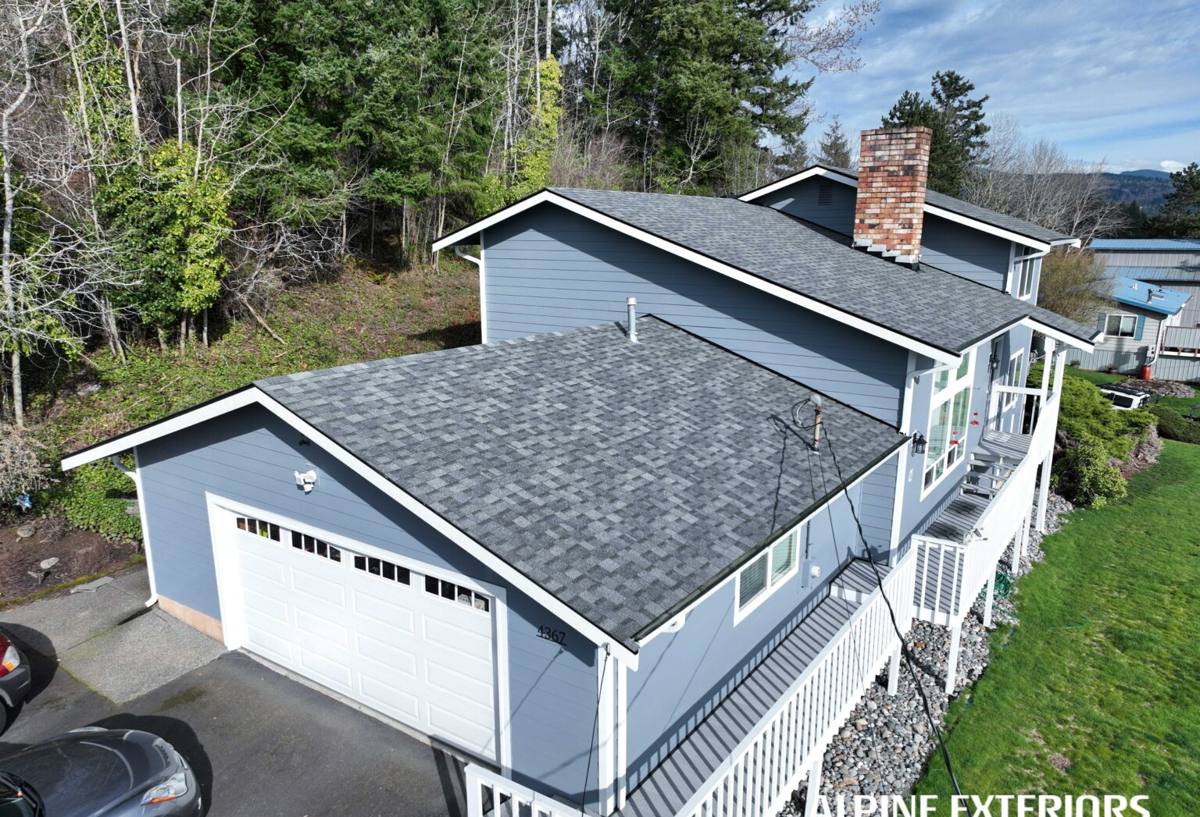
Three things drive most of the decisions on a metal roofing job in this area: sustained rain exposure, salt air proximity, and a moss season that can run most of the year on shaded or north-facing slopes. A correctly specified and installed metal roof addresses all three at once — but only if the panel type, fastening system, and underlayment are matched to the house rather than picked off a generic price sheet.
Standing Seam vs. Exposed-Fastener Metal Panels
Most homeowners comparing metal roofing options are really choosing between two panel families. Each has a legitimate place, and the right choice depends on the roof's slope, budget, and how long you want to go before any maintenance is needed.
| Panel Type | How It's Fastened | Best Fit | Long-Term Consideration |
|---|---|---|---|
| Standing Seam | Concealed clips, no exposed screws through the panel face | Most home profiles, especially where long-term low maintenance matters | Higher upfront cost, but no exposed fasteners to inspect or replace over time |
| Exposed-Fastener Panel | Screws driven directly through the panel into the deck or purlins | Budget-conscious projects, outbuildings, some simpler roof shapes | Fastener washers age and need periodic checking, especially in salt-air exposure |
In coastal-influenced areas like this one, we lean toward standing seam for primary homes whenever the budget allows, simply because it removes the one recurring maintenance item — exposed fastener washers — that salt air is hardest on. Exposed-fastener panels aren't a bad product; they're a different trade-off, and we'll walk through that trade-off honestly rather than push whichever one carries a better margin.
What a Correct Installation Actually Involves
The panel itself is only part of the system. Most metal roof problems we get called out to inspect trace back to something underneath the panel, not the panel itself.
Underlayment and Moisture Barrier
With the amount of driving rain this area sees, wind-driven moisture can work its way under panel laps if the underlayment isn't continuous and properly lapped. We use synthetic or self-adhered underlayment rated for the exposure level of the specific roof plane — a low-slope section facing prevailing weather gets treated differently than a steep, sheltered gable.
Fasteners and Metal Compatibility
Salt air accelerates galvanic corrosion when dissimilar metals are in contact — for example, the wrong fastener alloy against a given panel coating. We match fasteners, flashing, and panel material so they're electrochemically compatible, which matters more here than it would inland. This is a detail that's invisible on installation day and only shows up as staining or pitting years later if it's gotten wrong.
Flashing, Valleys, and Penetrations
Chimneys, vent stacks, and valleys are where the large majority of roof leaks originate, on metal roofs as much as any other material. Correct flashing detail — proper laps, sealant used as a backup rather than a primary seal, and step flashing integrated with the panel system rather than caulked over the top — is what separates a roof that sheds a Whatcom County winter without incident from one that develops a slow leak nobody notices until there's interior damage.
Ventilation
A metal roof over a poorly ventilated attic can trap moisture underneath the deck, which leads to condensation problems that have nothing to do with the roofing material and everything to do with airflow. We check and correct ridge and soffit ventilation as part of any metal roofing project — skipping this step is one of the more common shortcuts we see from installers who aren't thinking past the panel install itself.
Our Process
A metal roofing job on a Bellingham home generally follows the same sequence, adjusted for the specifics of the house:
- On-site inspection of the existing roof deck, flashing points, and ventilation before any pricing is finalized
- Panel and fastening system recommendation based on roof slope, exposure to prevailing wind and rain, and your budget — with the trade-offs explained plainly
- Deck inspection and repair once tear-off begins, since deck condition can't always be judged accurately from above
- Underlayment installation matched to each roof plane's exposure level
- Panel installation with fastener and flashing details suited to salt-air and high-moisture conditions
- Ventilation check and correction where needed
- Final walk-through covering what maintenance, if any, the specific system requires going forward
We don't skip the deck inspection step to move faster. Whatcom County's rain totals mean a compromised deck is more common than homeowners expect, and installing new panels over a soft or rotted deck just delays a much larger problem.
What Drives the Cost of a Metal Roof Here
Metal roofing costs more upfront than asphalt shingles, and the final number on any given house depends on a handful of factors more than on a single "price per square foot":
| Factor | Why It Matters |
|---|---|
| Panel type | Standing seam costs more installed than exposed-fastener panel, largely due to labor and clip hardware |
| Roof complexity | Valleys, dormers, and multiple planes add flashing work and labor time beyond a simple gable roof |
| Tear-off vs. overlay | Removing old roofing and repairing the deck costs more than a straightforward overlay, but is often the correct call given local moisture exposure |
| Coating and finish | Higher-grade coatings resist salt-air corrosion and fading longer, at a higher material cost |
| Accessibility | Steep pitches or difficult site access add labor time regardless of panel choice |
We'd rather walk a homeowner through these factors on their specific roof than quote a number sight unseen — two houses with the same square footage can price out very differently once slope, complexity, and deck condition are accounted for.
Living With Moss Season
Whatcom County's moss season isn't a short window — on shaded or north-facing roof planes, it can be close to year-round. Metal roofing doesn't eliminate moss growth entirely, especially where organic debris collects in valleys or against a chimney, but it removes the surface texture that moss and algae grip onto most easily on shingle roofing. Panels also shed accumulated debris and standing moisture faster than a shingle surface does, which cuts down on the conditions moss needs to establish itself.
What we tell homeowners honestly: keep valleys and any debris-catching areas clear a couple of times a year, and a correctly installed metal roof in this climate needs very little beyond that. It's a meaningfully lower-maintenance option than shingle roofing here, not a zero-maintenance one.
Why Local Experience on This Specific Area Matters
A roofing crew that hasn't worked in Bellingham and the surrounding Whatcom County coastline doesn't always account for how much salt-air exposure and sustained rain change the fastener, flashing, and coating decisions on a job. We've made the calls on real roofs in this specific area enough times to know which details actually matter here versus which ones are copied out of a national installation manual written for a different climate. That shows up in fastener selection, in how we handle valleys and penetrations, and in which panel and coating combinations we're willing to stand behind for a coastal-influenced property.
It also shows up in smaller, practical ways — knowing what local permitting and inspection expects, and being available if a question comes up after the job is done rather than being a crew that worked the area once and moved on.
Is Metal Roofing the Right Call for Your Home?
Metal roofing isn't automatically the right choice for every house or every budget, and we'll say so if it isn't the best fit for yours. It tends to make the most sense for homeowners planning to stay in the home long-term, for roofs with significant sun or salt-air exposure, and for anyone tired of dealing with moss and algae maintenance on a shingle roof. For some roof shapes and budgets, a well-installed shingle or other roofing system is still the more sensible option, and we'd rather tell you that upfront than sell a system that isn't the right match.
If you're weighing metal roofing for a home in the Bellingham area, we're happy to take a look at your specific roof and talk through what actually makes sense for it — no pressure, no generic sales pitch. Reach out using the form below for a free estimate.