 Lynden Siding
 Composite Decking Built for Nooksack's Weather, Not Just Its Looks
Nooksack sits in a part of Whatcom County where the weather doesn't do anything dramatic — it just doesn't let up. Long stretches of drizzle, damp ground for months at a time, and a marine-influenced climate that keeps humidity high even between rain events. Add in the moss and algae that thrive in that kind of shade and moisture, and a deck here has to work harder than a deck in a drier part of the state. Composite decking has become the default choice for a lot of Nooksack and Lynden homeowners for exactly that reason: it's built to shrug off the conditions that wear down wood decking year after year.
This page is about composite decking specifically for this area — what the climate demands, what a correctly built deck actually involves, and how we approach the work when we're on a Nooksack property.
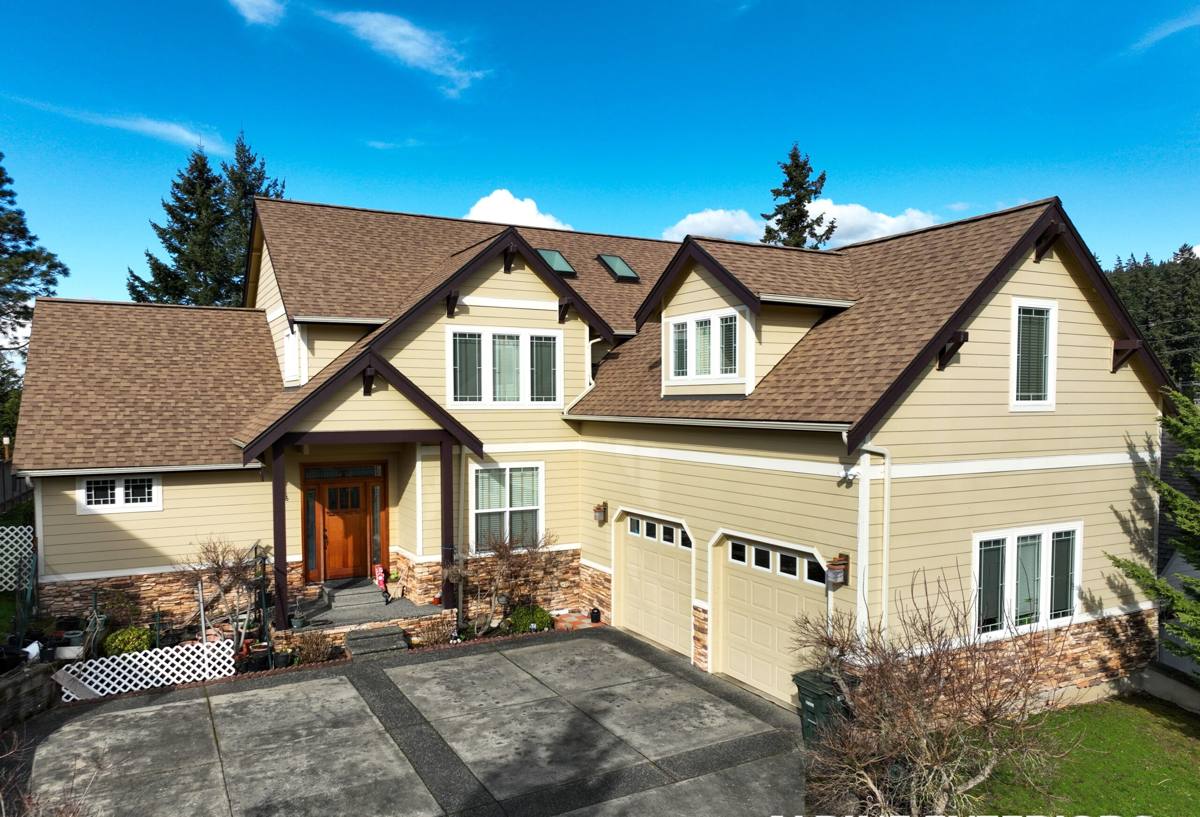
What Nooksack's Climate Actually Does to a Deck
It helps to be specific about what's working against a deck out here, because it changes what "good" decking looks like.
Persistent moisture
Whatcom County gets a long wet season, and Nooksack's proximity to the river valley and surrounding tree cover means decks often stay damp longer than they would in a more open, sun-exposed yard. Boards that can't shed water quickly stay wet, and wet wood is where rot and soft spots start.
Moss and algae growth
Shaded, moisture-holding surfaces in this region grow moss almost by default. On a wood deck that means regular scrubbing and, eventually, boards that never quite dry out between cleanings. Moss isn't just cosmetic — trapped moisture underneath it accelerates decay in wood and can leave a surface slick and unsafe.
Driving rain and wind-blown moisture
Rain here doesn't always fall straight down. Wind-driven rain gets up under railings, into end-grain, and behind ledger boards if flashing wasn't done right the first time. This is less about the decking material itself and more about the details of how the deck was built — something we'll get into below.
Salt-influenced air
Being in a coastal-influenced climate zone, homes throughout this part of Whatcom County deal with air that carries some salt content, which speeds up corrosion on fasteners, brackets, and any unprotected metal hardware. Over a decade, that adds up on a deck's structural connections even if the decking surface itself looks fine.
Composite vs. Other Decking Materials for This Area
There's no universally "best" decking material — there's the material that fits your climate, your maintenance appetite, and your budget. Here's an honest side-by-side for Nooksack conditions specifically.
| Material | Moisture/Moss Resistance | Maintenance | Typical Lifespan Here |
|---|---|---|---|
| Pressure-treated wood | Fair — absorbs moisture, moss takes hold easily in shade | Annual cleaning, periodic staining/sealing | 10-15 years before major repair |
| Cedar | Good natural rot resistance, but still porous | Regular sealing to hold color and resist moss | 15-20 years with upkeep |
| Uncapped composite | Better than wood, but surface can absorb some moisture over time | Occasional washing | 20-25 years |
| Capped composite | Best — sealed outer shell resists moisture intrusion and staining | Simple rinse or wash a few times a year | 25-30+ years, manufacturer-backed |
For a property in Nooksack, we typically steer homeowners toward capped composite boards specifically because of the moss and moisture issue. An uncapped or lower-grade composite can still take on surface staining from organic growth over time, which defeats a lot of the reason people switch away from wood in the first place.
What a Correct Composite Deck Installation Actually Involves
The decking boards get all the attention, but most of the failures we see on older decks in this region trace back to what's underneath and around them, not the surface material.
Substructure and spacing
Composite boards need consistent joist spacing — tighter than what's acceptable for some wood installations — because composite behaves differently under load and temperature swings. Manufacturer span tables exist for a reason, and skipping them is how boards start to feel spongy within a few years.
Ventilation underneath
In a climate that stays damp as long as this one does, airflow under the deck matters. A structure built tight to the ground with no room for air movement holds moisture against the framing longer, which shortens the life of everything composite boards are fastened to, even if the boards themselves don't rot.
Flashing and ledger connections
Where a deck attaches to the house is the single most common source of hidden water damage we run into. Proper flashing at the ledger board keeps wind-driven rain from working its way behind the siding and into the rim joist. This is a detail that's invisible once the deck is finished, but it's the difference between a deck that lasts and one that causes a rot problem inside a wall years later.
Fasteners and hardware
Given the corrosion pressure from coastal-influenced air, we use fasteners and structural hardware rated for exterior, corrosion-prone environments — not standard-grade hardware that looks fine on day one but starts rusting at the connection points within a few seasons.
Hidden fastening systems
Most composite boards today are designed for hidden clip systems rather than face-screwing. Done right, this gives a clean surface with no exposed fastener heads for water to sit on or moss to collect around.
Our Process for a Nooksack Composite Decking Project
- Site visit and assessment — we look at drainage, sun/shade exposure, existing structure (if replacing an old deck), and how the deck ties into the house.
- Material selection — we walk through board options and color/finish choices based on your budget and how much sun or shade the space gets, since shaded composite surfaces show moss buildup differently than sun-exposed ones.
- Permitting — decks tied to the home's structure typically require a permit through the county or city depending on exact location; we handle that paperwork.
- Substructure build or repair — framing, ledger flashing, joist spacing, and ventilation are addressed before a single composite board goes down.
- Decking installation — hidden-fastener composite boards installed to manufacturer spec, including expansion gaps that account for temperature swings.
- Final walkthrough — we go over care basics with you before we consider the job done.
Maintenance Reality: What Composite Actually Needs Here
Composite decking is often marketed as "maintenance-free," which isn't quite honest. It's maintenance-light compared to wood, but a Nooksack deck still needs some seasonal attention because of the moss and moisture load in this region.
- Rinse or sweep debris off the deck regularly, especially fallen leaves and needles that trap moisture against the surface
- Wash the deck with a mild soap and soft-bristle brush once or twice a year to prevent moss and algae from getting a foothold
- Avoid pressure washing at high PSI directly on composite boards, which can damage the cap layer over time
- Keep gutters and downspouts clear so runoff isn't dumping extra water directly onto or under the deck
- Check railing posts and structural connections annually for any sign of loosening or corrosion at fastener points
- Trim back overhanging vegetation where possible to reduce shade and speed up drying time after rain
Cost Factors to Expect
We won't quote a number without seeing the site, but the broad range for a composite deck project depends on a handful of factors: square footage, whether we're replacing an existing structure or building new, substructure condition, board tier (uncapped vs. fully capped composite), railing style, and any stairs or multi-level design. A straightforward composite deck replacement on an existing sound structure is a very different project than a new deck built from the ground up with new footings, framing, and railings. The honest answer is that composite decking costs more upfront than pressure-treated wood, and that difference is offset over time by lower maintenance and a longer service life — but it's a real tradeoff worth discussing against your specific budget and timeline.
Why Hiring a Crew That Already Works in Nooksack Matters
A lot of decking problems we get called out to fix aren't material failures — they're installation shortcuts that didn't account for local conditions. A crew that hasn't worked much in Whatcom County's wetter, moss-prone microclimates might build to a generic spec that works fine in a drier region but leaves a Nooksack deck fighting moisture from the day it's finished. Knowing how much airflow this area's decks need underneath, how flashing needs to handle wind-driven rain off the valley, and how corrosion-resistant hardware needs to be given the coastal-influenced air isn't guesswork for us — it's what we deal with on every project in this part of the county.
If you're weighing composite decking for a home in Nooksack, we're happy to walk the site, talk through material options honestly, and put together a free, no-pressure estimate. There's a form below — reach out and we'll get a time on the calendar.