 Lynden Siding
 Windows Around Wiser Lake Take a Different Kind of Beating
Wiser Lake sits in a part of Whatcom County where the weather doesn't do things halfway. Winters bring long stretches of driving rain that comes in sideways more often than straight down, summers are short, and the shoulder seasons stay damp long enough to grow moss on roofs, siding, and window sills alike. Add in the marine-influenced air that moves through this part of Washington off the Sound and the Strait, and you've got a slow, steady combination of moisture and salt-tinged humidity that never really lets up. None of that is dramatic on its own. But year after year, it's exactly the kind of exposure that finds every weak point in a window — a soft spot in the glazing, a gap in the flashing, a seal that's lost its stretch.
Homes around Wiser Lake are a mix of older lake cabins converted to full-time residences, newer builds on the surrounding acreage, and everything in between. Whatever the vintage, the window units that hold up longest here are the ones installed correctly the first time, with materials chosen for this specific climate rather than whatever was cheapest at a big-box store. This page is about that one job — replacing windows on a Wiser Lake home — and what actually needs to happen for it to be done right.
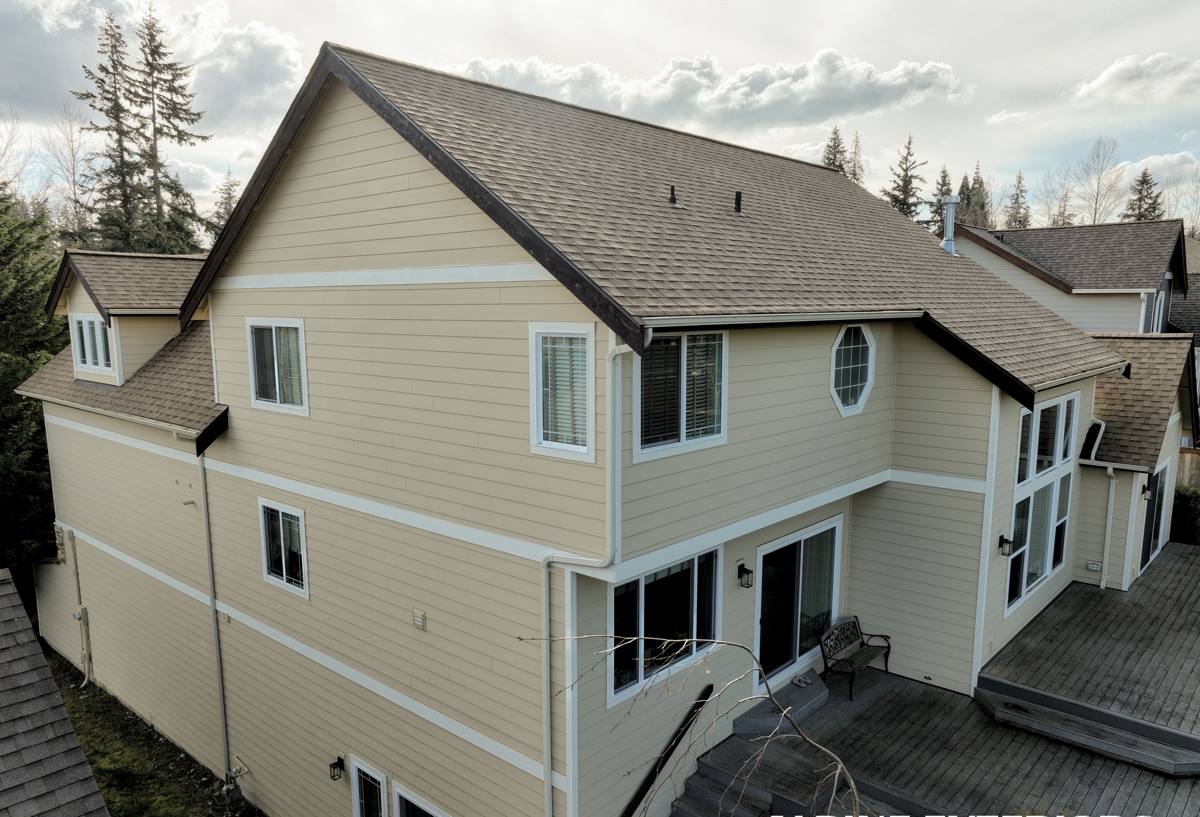
How Local Conditions Wear Down a Window System
It helps to understand what's actually failing when a window "gets old" out here. It's rarely the glass itself. It's almost always the system around the glass.
Driving Rain and Wind-Driven Moisture
When rain comes in at an angle instead of falling straight, it tests the flashing and the seal around a window far harder than a light, vertical shower ever would. Wind-driven rain pushes water sideways and even slightly upward into gaps that were never designed to shed water in that direction. Over time, that's what leads to soft framing, stained drywall below a sill, or a musty smell in a room that otherwise seems fine.
The Long Moss and Mildew Season
Whatcom County's damp stretch runs long — often eight or nine months of the year with enough moisture in the air to keep organic growth going. Moss and mildew don't just sit on the surface of old wood trim; given enough time, they hold water against it, which accelerates rot from the outside in. Window sills, especially on north- and west-facing walls that get less direct sun, are common trouble spots.
Marine and Salt-Tinged Air
You don't have to be right on the water to feel the effects of a marine climate. The salt-tinged air that moves through this region is harder on exposed metal hardware — hinges, cranks, screws, and cheaper aluminum components — than a fully inland, dry climate would be. It's a slow corrosion process, but it adds up, especially on hardware that isn't rated for coastal-adjacent exposure.
Signs a Wiser Lake Home Is Due for Replacement
Most homeowners don't wake up one day and decide they need new windows. It's usually a slow accumulation of small annoyances that eventually adds up to a clear answer. Here's what we look for, and what you can check yourself:
- Visible condensation or fogging between the panes of a double-pane window — this means the seal has failed and the gas fill (or simple dead air space) is gone
- Soft, spongy, or discolored wood at the sill or the base of the frame, inside or out
- Windows that are difficult to open, close, or lock — often a sign the frame has shifted or swollen
- Visible daylight or a noticeable draft around the frame when it's windy
- A cold wall or floor near the window even when the rest of the room is comfortable
- Peeling paint or bubbling finish on interior trim, which often points to moisture getting in from outside
- Noticeably higher heating bills compared to similar homes nearby
- Moss, algae, or persistent black staining on the exterior trim around the window opening
Any one of these on its own might just need a repair. Several of them together, especially on a home more than 20-25 years old, usually mean the window system as a whole has reached the end of its useful life.
What a Correct Window Replacement Job Actually Involves
Swapping in a new window is easy to do poorly and easy to get away with — for a while. Problems from a rushed or incomplete install often don't show up for a year or two, by which point the damage is already inside the wall. A correct job includes several steps that don't show up in a sales brochure but matter enormously in a climate like this one.
Removal Without Collateral Damage
The old unit comes out carefully, with attention to the condition of the framing underneath. This is the point where hidden rot or old water damage gets found — and it needs to get fixed before anything new goes in, not covered up.
Flashing and Water Management
This is the single most important part of the job for a wind-driven-rain climate. Proper flashing directs any water that gets past the exterior trim back out and away from the framing, using a shingled, overlapping sequence — house wrap, sill pan, side flashing, and head flashing installed in the correct order so water always has a path downhill and out.
Air Sealing and Insulation
The gap between the new window frame and the rough opening gets sealed with the right materials — not stuffed with whatever's on hand. Over-packed insulation can actually bow a frame and cause operating problems down the road; under-sealed gaps let in drafts and moisture.
Correct Fastening and Leveling
A window that isn't shimmed level and square will bind, won't lock properly, and will put uneven stress on the seals from day one — shortening its lifespan regardless of how good the unit itself is.
Interior and Exterior Finish Work
Trim, caulking, and paint or stain get finished cleanly on both sides, with attention to sealing every joint where water or air could otherwise find a way in.
Choosing a Window Built for This Climate
Not every window on the market is a good fit for a house that deals with sustained damp weather and salt-tinged air for most of the year. We steer customers toward frame materials and hardware that hold up to that specific combination, and we're upfront about the trade-offs of each option rather than pushing one product line.
| Frame Material | How It Handles Local Moisture | Maintenance | Typical Lifespan |
|---|---|---|---|
| Vinyl | Won't rot; performs well in sustained damp conditions | Low — occasional cleaning | 20-30+ years |
| Fiberglass | Very stable in temperature and moisture swings; strong seal retention | Low | 30-40+ years |
| Wood (unclad) | Attractive but needs consistent upkeep to resist the region's moss and moisture season | High — regular painting/sealing | Highly dependent on maintenance |
| Wood-clad (aluminum or vinyl exterior) | Wood interior warmth with a weather-resistant exterior shell | Moderate | 25-35 years |
| Aluminum | Prone to condensation and, without a thermal break, poor insulation in a wet climate | Moderate | Varies widely by quality |
For most Wiser Lake homes, we recommend vinyl or fiberglass frames with quality hardware and a good multi-point locking system. Both handle the region's moisture cycle well without the ongoing maintenance that unclad wood demands. Where a homeowner wants the look of wood, a wood-clad option gives you that appearance with a more weather-resistant exterior shell — it's a reasonable middle ground, and we'll walk through the honest trade-offs rather than just upselling it.
We also pay attention to glazing. A quality double-pane, low-E unit with argon fill is the standard we install for this climate — it manages both heat loss and condensation risk better than older single-pane or basic double-pane glass, without paying for triple-pane performance that most homes here don't need.
Our Process, Start to Finish
- Free on-site estimate. We walk the exterior and interior of each window being considered, check framing condition where visible, and talk through your priorities — energy performance, appearance, budget.
- Written quote. A clear, itemized quote with no surprise add-ons once work begins.
- Scheduling around the weather. We plan installs to minimize the time any opening is exposed, and we don't start a job we can't finish safely and dry.
- Removal and inspection. Old units come out, and we check the framing underneath before anything new goes in.
- Installation. Flashing, sealing, leveling, and fastening done to manufacturer specification and built for wind-driven rain exposure.
- Finish work and walkthrough. Interior and exterior trim finished, hardware tested, and a walkthrough so you know how to operate and maintain your new windows.
- Cleanup. Old units and debris hauled off — we don't leave a job site for you to finish cleaning.
What Affects the Cost of a Window Replacement Project
Every home is different, and we don't quote a job until we've seen it, but these are the main factors that move the price:
| Factor | Why It Matters |
|---|---|
| Number and size of windows | More openings and larger units mean more material and labor |
| Frame material | Vinyl, fiberglass, and wood-clad options are priced differently |
| Condition of existing framing | Hidden rot or water damage found during removal adds repair work before the new window can go in |
| Window style | Simple sliders and single-hungs cost less than casements, bays, or custom shapes |
| Glass package | Low-E coatings and argon fill add a modest cost but improve performance |
| Access and site conditions | Second-story windows or difficult access can add labor time |
We'll give you an honest range up front and flag anything — like suspected framing damage — that could change the number before we commit to a final quote.
Why It Matters to Hire a Crew That Already Works This Area
A window replacement crew that's spent time working in and around Lynden and greater Whatcom County already knows how this specific climate behaves — where wind-driven rain tends to hit hardest on a typical home orientation, how long the moss season really runs, and which frame and hardware choices actually hold up rather than just looking good on a spec sheet. That's a different starting point than a crew working from a generic install manual with no sense of the local weather pattern.
It also means straightforward, unglamorous things: showing up when we say we will, being reachable if a question comes up after the job is done, and standing behind the work because we're not going anywhere. For a home near Wiser Lake, that local accountability is worth as much as any specific product choice.
Caring for Your New Windows After Installation
A correctly installed window is largely maintenance-free, but a little seasonal attention keeps it performing well for decades in this climate:
- Rinse frames and tracks periodically to keep moss spores and organic buildup from taking hold, especially on shaded or north-facing walls
- Clear debris from window sills and tracks so water has a clear path to drain
- Check exterior caulking once a year and touch up any cracked or separated sections before wet season sets in
- Operate locks and hardware a few times a year, especially after a long stretch of damp weather, to keep them moving freely
- Watch for condensation between panes — it's the first sign a seal is starting to fail and worth addressing before moisture damage spreads to the frame
If you're noticing drafts, fogged glass, or sticking frames on a home near Wiser Lake, we're happy to take a look and give you a straight answer about whether repair or replacement makes sense — no pressure, no obligation. Use the form below to request a free estimate and we'll get back to you to schedule a time that works.