 Lynden Siding
 Siding Replacement for Nooksack Homes
Nooksack sits a short drive from Lynden, tucked into the river-bottom farmland along the Nooksack River in northern Whatcom County. It's a smaller, quieter community than Lynden itself, with a mix of older farmhouses, newer builds on acreage, and homes set back among mature trees along the river corridor. That setting is part of what makes siding work here a little different from a straightforward in-town job: river-adjacent lots hold dampness longer, tree cover keeps whole walls shaded for much of the day, and the same marine weather system that soaks the rest of the county reaches all the way up this valley. We work in Nooksack regularly as part of our Lynden-based service area, and this page is specifically about siding replacement — what the local climate demands from it, what a correct job actually involves, and why the material and process matter as much as the crew doing the work.
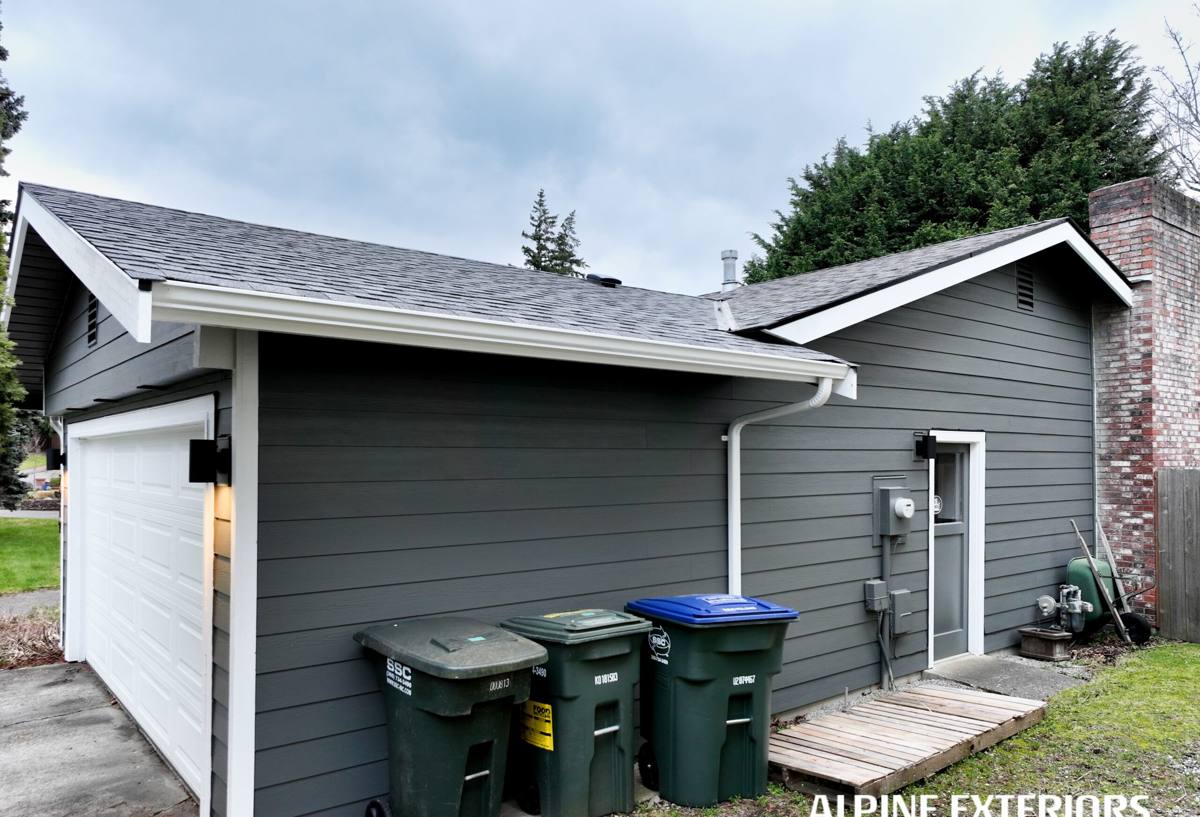
We install James Hardie fiber cement siding exclusively, on every replacement job we take on, in Nooksack and everywhere else we work. That's not a marketing line — it's a professional standard we settled on after years of seeing which materials actually hold up under this region's moisture and which ones become slow-motion maintenance problems.
What the Nooksack Climate Puts Siding Through
Salt-Tinged Marine Air, Even This Far Up the Valley
Nooksack is well inland from the shoreline, but the air moving through this part of the county still carries a faint edge of salt up from the Sound, the same marine system that shapes weather across northern Whatcom County. It's a slower, quieter form of exposure than a waterfront town would see, but over years it still works on fasteners, flashing, and lower-grade trim hardware. Material and hardware choices that assume a dry, purely inland climate tend to age faster here than the homeowner expects.
Driving, Wind-Driven Rain
Rain through the fall and winter months in this valley rarely falls straight down. Wind pushes it sideways into wall assemblies, window and door trim, and any seam where flashing is doing less work than it should. On an open farmhouse lot with little windbreak, that sideways load hits every wall about equally; on a tree-sheltered property it concentrates differently, often hardest on whichever wall faces the prevailing weather. Either way, it's the detail that separates a siding job that holds up for decades from one that starts letting water in behind the cladding within a few wet seasons.
River-Bottom Damp and a Long Moss Season
Nooksack's location along the river means fog and damp air tend to sit low and linger longer here than on higher ground a few miles away, especially on cool mornings. Combined with the mature tree cover common along the river corridor, that adds up to a moss and mildew season that can run most of the year on shaded, north-facing walls. It starts as staining or green growth that seems cosmetic, but sustained organic growth holds moisture directly against the wall assembly — exactly the condition that leads to hidden rot if it isn't dealt with.
Repair or Replace? Signs a Nooksack Home Needs New Siding
Not every problem calls for a full tear-off. But a handful of signs usually mean patching won't hold, and a real replacement is the more honest recommendation:
- Moss or dark staining that returns quickly after cleaning, especially on shaded or tree-lined walls
- Soft, spongy, or visibly warped siding, particularly low on the wall or around window and door trim
- Cracked, buckled, or missing panels after a windstorm off the valley
- Rust streaking running down from fasteners, trim, or flashing hardware
- Peeling paint or chalky, faded finish on older wood-based or engineered wood siding
- Musty odors or staining on interior walls that back up to an exterior wall
- Siding original to the house and older than 20-25 years, with no documented replacement history
Any one of these is worth a professional look. A few together, especially on a home that's had multiple wet seasons pass without attention, usually means the siding is past the point where spot repair makes financial sense.
What a Correct Siding Replacement Actually Involves
Tear-Off and Substrate Inspection
Old siding comes off first, and what's underneath gets a real inspection before anything new goes up. On a river-valley property, sustained dampness means sheathing rot is more likely to have already started behind failing siding than a homeowner might assume from the outside. Covering damaged sheathing with new siding just hides a problem that keeps getting worse — we'd rather find it now and repair it properly.
Weather-Resistive Barrier and Flashing
Most siding failures in this region trace back to water getting behind the cladding, not through it. That makes the house wrap, window and door flashing, and every wall penetration the most important step in the whole job, even though it's invisible once the siding goes up. We treat this step as non-negotiable, not a place to save time.
Installation to Manufacturer Spec
James Hardie's warranty depends on installation following the manufacturer's published specifications — correct fastener spacing and type, proper clearances above grade and roofline, and correct field-cutting and sealing at every joint. We install to that spec as the baseline on every job, not as an add-on.
Trim, Caulking, and Final Details
Corner boards, window and door trim, and caulking at every joint are what keep water from finding a way in at the details, not just the field of the wall. On a shaded, damp property like a river-bottom Nooksack lot, these details are also what determines how well the finished siding resists the moss and mildew that a more open, sun-exposed lot wouldn't deal with nearly as much.
Why We Install Only James Hardie Fiber Cement
We used to work with a wider range of siding products. We narrowed to one system after watching, over repeated jobs across this part of the county, which materials actually held up to sustained regional moisture and which ones turned into ongoing maintenance work within a few years.
- Non-combustible core: Fiber cement doesn't feed a fire the way wood-based siding can, which matters for both household safety and insurance underwriting.
- Factory-applied ColorPlus finish: Color is baked on under controlled factory conditions rather than brushed on in the field, so it resists fading, chalking, and moisture intrusion far longer than site-applied paint.
- Climate-engineered HZ product lines: Hardie builds different formulations for different climate zones, including versions engineered for sustained moisture exposure and freeze-thaw cycling — a real match for a river-valley property in this county.
- Dimensional stability: Fiber cement doesn't swell, cup, or warp the way engineered wood siding can after repeated wet-season moisture cycles.
- A strong transferable warranty: Hardie backs its products with a solid warranty structure, provided installation follows spec, which gives a homeowner real protection instead of a marketing claim.
We don't install LP SmartSide, vinyl siding, Cemplank, Allura, primed spruce, or cedar. Each has a place in the broader market, and plenty of homeowners elsewhere are satisfied with them. Our decision is a professional one: we'd rather stand fully behind one system we trust completely than offer a cheaper option that quietly shifts maintenance risk onto the homeowner a few years down the road, especially on a property that already deals with this much sustained dampness and shade.
Matching the Right Hardie Product to a Nooksack Property
| Product Line | Best Use | Why It Fits This Setting |
|---|---|---|
| HardiePlank lap siding | Most farmhouse and traditional single-family homes | Traditional lap profile sheds wind-driven rain effectively when installed with correct overlap and flashing |
| HardiePanel vertical siding | Gables, accent walls, modern or barn-style builds | Clean vertical lines that suit the mix of farmhouse and contemporary styles common on larger acreage lots |
| HardieShingle siding | Craftsman-style homes and accent sections | A textured, shingle look without the moisture absorption and upkeep of real wood shingle in a damp valley setting |
| HardieTrim boards | Corner boards, window and door casing, fascia | Factory-finished trim holds up to the same moisture and shaded-wall exposure as the field siding |
Color and profile are ultimately the homeowner's call, but the underlying product family and installation detail stay consistent — we specify what actually fits a Nooksack property's exposure rather than defaulting to whatever's fastest to install.
What Affects the Cost of a Siding Replacement
| Factor | Why It Moves the Price |
|---|---|
| Home size and story count | More square footage and higher walls mean more material, more staging, and more labor time |
| Sheathing condition underneath | Rot or soft spots found during tear-off require repair before new siding can go up correctly |
| Trim and detail complexity | Homes with more windows, dormers, or architectural detail take more time around corners and openings |
| Product line and profile | HardiePlank, HardiePanel, and HardieShingle differ in material and installation time |
| Site access | Rural and acreage lots can affect staging, equipment access, and how material gets moved to the wall |
We walk every property in person before quoting a number, because a flat per-square-foot estimate misses too much of what actually drives cost on an individual home.
Our Process, Start to Finish
- Inspection and estimate: We look at current siding condition, any signs of trapped moisture, and how sun, shade, and wind exposure vary across the home's walls.
- Tear-off and substrate check: Old siding comes off and the sheathing underneath gets inspected before anything new is installed.
- Weather barrier and flashing: House wrap, flashing, and every penetration get careful attention, since this is the step hardest to inspect once new siding is up.
- Installation to spec: James Hardie siding goes up following the manufacturer's published fastening, clearance, and sealing requirements.
- Final walkthrough: We review the finished job with the homeowner and cover basic care and maintenance expectations before calling it complete.
Why a Crew That Already Works Nooksack Matters
A crew that works this stretch of the Nooksack valley regularly knows how river-bottom damp, shaded tree-lined lots, and open farmland exposure actually behave on real homes here, not just how a product performs on a spec sheet. That experience shapes practical decisions on install day — which wall orientations on a given property stay wet longest, where extra flashing attention pays off, and which fastening details are worth the added time so a homeowner isn't dealing with a callback after the next winter storm. Nooksack's mix of river-adjacent, tree-shaded, and open farmland lots means exposure varies more from property to property here than in a uniformly built-up town, and a crew with hands-on local experience treats that difference seriously instead of applying the same approach to every house.
If your Nooksack home needs new siding, or you'd just like an honest second opinion on what's happening behind an aging wall, we're glad to take a look. Reach out using the form below to schedule a free, no-pressure estimate.