 Lynden Siding
 Deck Repair for Nooksack Homes
A deck in Nooksack takes a different kind of beating than a deck in a drier climate. Whatcom County's long wet season, the driving rain that comes off the Sound, and months of low, damp air that never quite lets wood dry out all work against a structure that's built mostly of exposed lumber and metal fasteners. Add in the moss that colonizes any shaded or north-facing surface for a good chunk of the year, and you have a structure that needs real attention every so often, not just a coat of stain when it starts looking gray.
We repair decks throughout the Nooksack area as part of our regular service territory around Lynden. That matters more than it sounds like it should. A crew that only shows up once for a one-off job doesn't have a feel for how a particular neighborhood's soil drainage, tree cover, or prevailing wind direction tends to shorten a deck's life. We do.
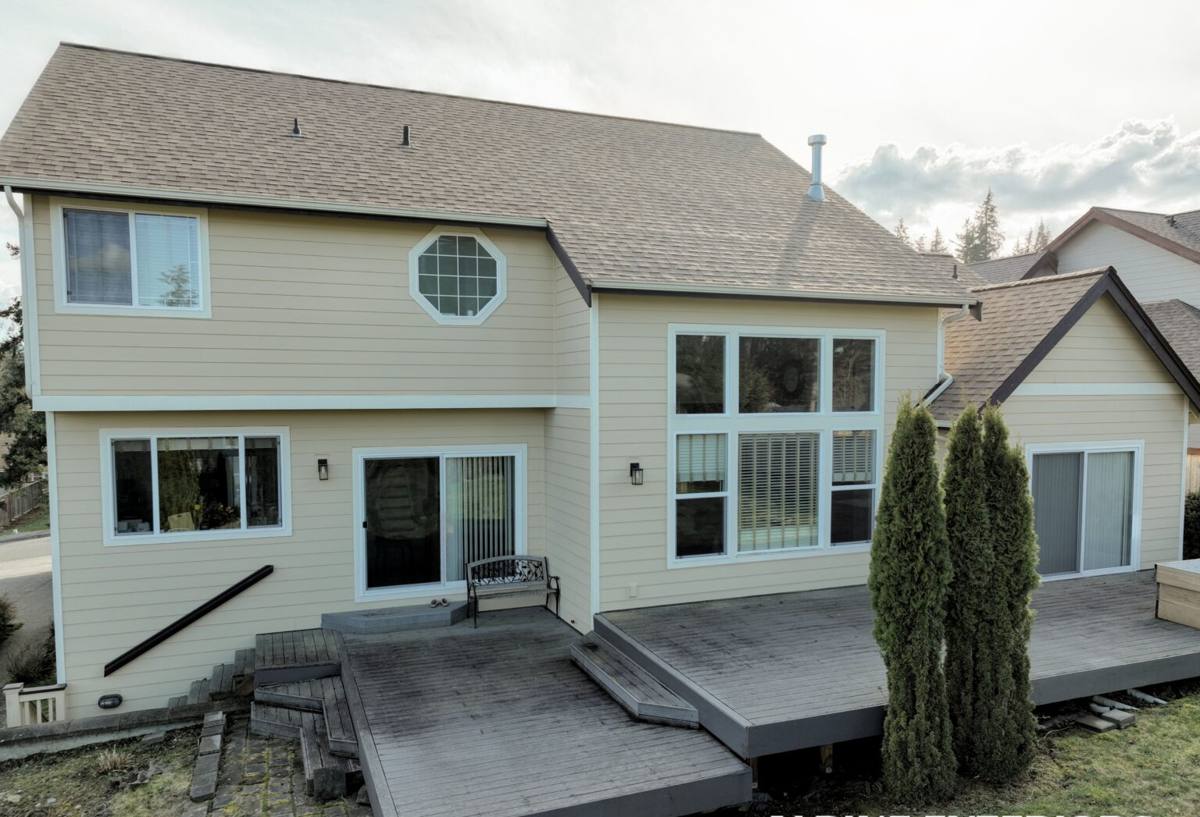
How the Regional Climate Wears Down a Deck
Moisture That Never Fully Leaves
Whatcom County doesn't get dramatic downpours as often as it gets steady, driving rain that soaks into every seam, gap, and fastener hole on a deck. Combined with long stretches of overcast, low-drying weather, that moisture doesn't evaporate quickly. Wood that stays damp for weeks at a time is wood that's at risk for rot, especially at ledger boards, joist ends, and anywhere two pieces of lumber sit face to face.
Moss and Organic Growth
Any deck surface that doesn't get regular sun — under trees, on the north side of a house, or in a low corner that stays shaded most of the day — will grow moss here. Moss holds water against the wood surface constantly, which accelerates decay well beyond what plain rain exposure would cause on its own. It also makes stairs and walking surfaces slick, which is a safety issue, not just a cosmetic one.
Fastener and Hardware Corrosion
Metal hardware — joist hangers, structural screws, bolts, flashing — takes a slow beating from the region's damp, salt-influenced air moving in off the water. Once galvanized coatings on older hardware start to break down, rust can work its way into the wood fibers around the fastener, weakening the connection long before the wood itself looks bad.
Common Repair Issues We Find in Nooksack
- Soft or spongy decking boards, usually starting at butt joints or anywhere water pools instead of shedding
- Ledger board separation or rot where the deck attaches to the house — often hidden until flashing is pulled back
- Rusted or failing joist hangers that no longer hold structural fasteners tightly
- Loose or wobbly railings and posts, frequently from post-base rot at ground contact points
- Stair stringer cracking from repeated freeze-thaw cycling combined with moisture saturation
- Moss-covered or persistently slick surfaces on shaded boards and stair treads
- Undersized or missing structural connectors on older decks built before current code requirements
What a Correct Deck Repair Actually Involves
A lot of deck repair work in this region gets done wrong — not maliciously, just incompletely. Replacing a rotten board without checking the joist underneath it, or caulking over a ledger board problem instead of fixing the flashing, buys a homeowner a year or two before the same issue comes back worse. A correct repair works from the structure outward, not just the visible surface inward.
Our Repair Checklist
- Inspect the full structure, not just the reported problem area — probe joists, beams, and posts for soft spots
- Check the ledger board and house-to-deck flashing, since this is the single most common source of hidden rot
- Evaluate every fastener and structural connector for corrosion, not just the ones that are visibly failing
- Confirm proper drainage and airflow underneath the deck — standing water or blocked ventilation causes repeat failures
- Replace deteriorated framing members, not just surface boards, when the damage has spread below the decking
- Verify railing and stair connections meet current structural standards, especially on older decks
- Treat or replace moss-affected boards and address the shade or drainage condition causing the growth, not just the symptom
Repair or Replace? A Cost-Factor Comparison
Not every deck problem calls for a full rebuild, and not every deck is worth patching. The right call usually comes down to how much of the structural framing is still sound versus how much has already been compromised.
| Factor | Favors Repair | Favors Replacement |
|---|---|---|
| Framing condition | Joists and beams are solid, only surface boards affected | Multiple joists or the ledger board show rot |
| Age of structure | Deck is under 15 years old with isolated issues | Deck is original to an older home and near end of service life |
| Code compliance | Railings, stairs, and connectors already meet current standards | Structure predates current fastening and railing code requirements |
| Extent of moss/moisture damage | Limited to a few shaded boards | Widespread across most of the deck surface |
| Budget goal | Extend usable life at lower upfront cost | Long-term reliability and a fresh warranty period matter more |
Our Process on a Nooksack Deck Repair
1. On-Site Inspection
We walk the full deck, get underneath it where possible, and check the framing, ledger connection, and hardware — not just whatever board prompted the call.
2. Honest Scope and Estimate
We tell you what actually needs fixing, what's optional, and what we'd watch but leave alone for now. If a repair isn't the right long-term move, we'll say so before you spend money on it.
3. Structural Work First
Any rotted framing, failed connectors, or ledger board issues get addressed before cosmetic work. This is the step that gets skipped most often elsewhere, and it's the one that determines whether the repair actually lasts.
4. Surface and Finish Work
Decking boards, railings, and stair components get replaced or refinished, with attention to proper spacing and fastening so water sheds instead of pooling.
5. Walkthrough
We go over what was done, what maintenance keeps it in good shape, and answer any questions before we consider the job finished.
Materials and Why We Choose What We Choose
For structural framing repairs, we favor pressure-treated lumber rated for ground contact where it's exposed to soil or persistent moisture, paired with corrosion-resistant structural hardware rated for treated wood. For decking surfaces, both quality wood and composite options have a place — the right choice depends on your budget, how much upkeep you want to do, and how the deck is exposed to sun and shade.
We're upfront about trade-offs rather than pushing one product as a cure-all. Composite decking resists rot and doesn't need staining, but it can hold heat differently and costs more upfront. Wood decking costs less initially and can be refinished, but it needs periodic sealing and cleaning to hold up through Whatcom County's wet stretches. We'll walk through what fits your situation rather than defaulting to whatever's easiest for us to install.
Why Hire a Crew That Already Works in Nooksack
Deck repair done by someone unfamiliar with this area often misses the conditions that actually caused the damage in the first place. A contractor from outside the region might replace a rotted board without recognizing that the real problem is a drainage pattern common to this part of the county, or use fasteners that aren't suited to the local moisture and salt-air exposure.
Working regularly around Lynden and the surrounding Nooksack area means we've seen how decks in this specific climate actually fail over time — not in theory, but from doing the repairs. That translates into fixes that address the cause, not just the symptom, and fewer surprise callbacks a year later.
Keeping a Repaired Deck in Good Shape
- Sweep leaves and debris off the deck regularly, especially in fall, so moisture doesn't sit trapped against the boards
- Treat moss growth early in shaded areas before it spreads and holds water against the wood
- Check railings and stair connections once a year for looseness, especially after winter
- Keep gutters and downspouts clear so runoff isn't draining directly onto or under the deck
- Reseal or restain wood decking on the manufacturer's recommended schedule, not just when it looks faded
If you're noticing soft boards, a wobbly railing, persistent moss, or you just haven't had your deck looked at in a while, we're happy to come take a look. We offer free, no-pressure estimates for deck repair work in Nooksack and the surrounding area — fill out the form below and we'll get in touch.