 Lynden Siding
 Building Decks That Actually Hold Up in Nooksack
Nooksack sits in one of the wetter, mossier corners of Whatcom County, and that matters more for a deck than almost any other part of a house. A deck isn't tucked under eaves or wrapped in siding — it's out in the open, taking direct rain, standing dew, and long stretches of shade from surrounding trees and fog off the valley. Salt-tinged air drifting in from the Strait, combined with driving rain that doesn't let up for days at a time, is a tough combination for fasteners, framing, and finishes that weren't chosen with this climate in mind.
We've built and repaired decks throughout the Lynden and Nooksack area long enough to know which construction shortcuts show up as problems two or three winters later — not because the deck looked wrong on installation day, but because it wasn't built for what this specific location does to wood, metal, and fasteners over time.
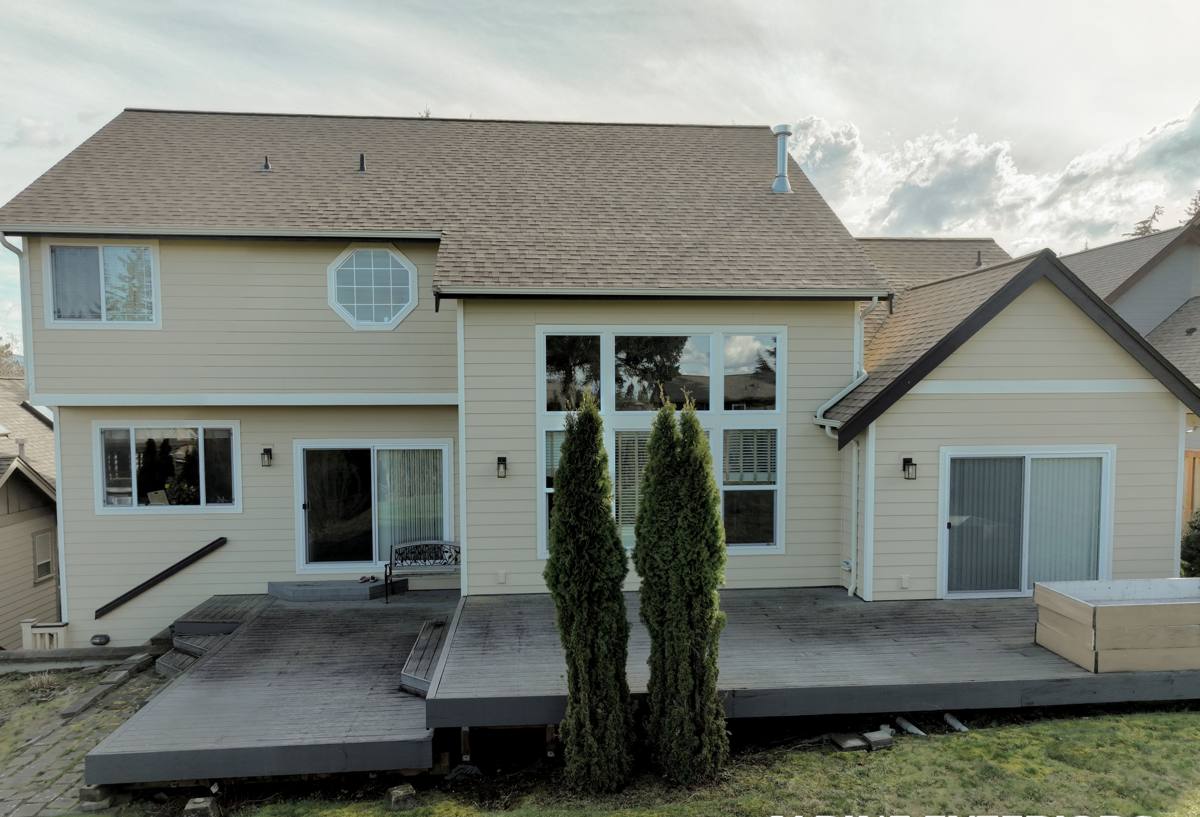
What This Climate Does to an Improperly Built Deck
Most deck failures we get called out to inspect aren't dramatic collapses — they're slow, quiet problems that started small and got expensive because nobody caught them early.
Moisture That Never Fully Leaves
Whatcom County's long wet season means a deck surface can stay damp for days after a storm, especially in shaded yards or under mature trees, which are common around Nooksack. Wood that can't dry out between rain events starts to hold moisture inside the boards, not just on the surface — that's when rot sets in at joints, fastener holes, and anywhere two pieces of material meet.
Moss and Algae Growth
A deck that stays shaded and damp through fall, winter, and much of spring is exactly the environment moss and algae need. Beyond looking bad, moss holds moisture against the decking surface constantly and makes boards slick and genuinely dangerous underfoot, particularly on stairs.
Corrosion on Fasteners and Hardware
The mix of salt-carried moisture and near-constant humidity accelerates corrosion on screws, joist hangers, and structural connectors faster than it would inland. Once a fastener starts rusting, it loses grip strength long before it looks obviously bad, which is why we don't treat hardware selection as an afterthought.
What a Correctly Built Deck Requires Here
Footings and Framing
Footings need to be sized and set to local frost and soil conditions, not just poured to a generic minimum. We look at drainage on the specific lot before we dig — a footing that sits in a low spot that collects water year-round is a problem waiting to happen, regardless of how deep it's poured.
Ledger Flashing and Waterproofing
Where a deck attaches to the house, the ledger board and its flashing are the single most important detail on the whole structure. This is the connection point most likely to let water into your home's framing if it's not flashed correctly — and it's also the detail that's easiest to do wrong because it's hidden once the decking goes down. We flash it to shed water away from the house, not just seal it and hope.
Joist Protection
Every cut end and top edge of a joist is a place water can soak in and start rot from the inside out. We protect joist tops with a waterproofing tape barrier before decking goes on — a step that adds very little to the project but meaningfully extends the life of the framing underneath.
Fasteners and Connectors
Given the corrosion pressure in this area, we use fasteners and structural hardware rated for the moisture and salt exposure this region sees, not the cheapest option that happens to fit. Mismatched or under-rated hardware is one of the most common shortcuts we find on older decks we're asked to repair.
Choosing the Right Decking Material for a Nooksack Property
There's no single "best" decking material — the right choice depends on how much upkeep you want to do, how shaded your yard is, and your budget. Here's how the common options compare for this specific climate:
| Material | How It Handles Moss & Moisture | Maintenance | Typical Lifespan Here |
|---|---|---|---|
| Cedar | Naturally rot-resistant but still needs sealing to resist moss and graying | Annual cleaning and re-sealing recommended | 15-20 years with upkeep |
| Pressure-Treated Pine | Treated for rot resistance; still traps moisture in shaded, damp spots | Cleaning and staining every 1-2 years | 15-20 years with upkeep |
| Composite | Doesn't absorb water or rot, but can still grow surface moss/algae if never cleaned | Occasional washing, no sealing or staining | 25-30+ years, manufacturer-dependent |
In shaded, moisture-heavy yards around Nooksack, we often steer homeowners toward composite for the surface decking specifically because it removes the "did I seal it in time this year" maintenance cycle. That said, plenty of homeowners want the look and feel of real wood and are willing to keep up with sealing — that's a completely reasonable choice as long as the maintenance actually happens on schedule. We'll walk through the honest trade-offs for your specific yard rather than pushing one material across the board.
Drainage and Airflow Underneath the Deck
One detail homeowners rarely think about until it's a problem: what happens to water once it hits the deck surface and drains through the gaps. If the ground underneath stays wet and airflow is blocked, the underside of the joists and decking can stay damp long after the surface has dried, which is exactly the kind of ongoing dampness that invites rot and moss growth from below.
We grade and, where needed, add drainage under a deck so water moves away from the structure instead of pooling underneath it, and we keep enough clearance and airflow below the frame for it to actually dry out between storms — which, in this part of Whatcom County, might mean planning for several wet days in a row rather than assuming quick sun exposure will handle it.
Railings, Stairs, and Permits
Most attached decks in Whatcom County require a building permit, and railing height, baluster spacing, and stair specifications are governed by code, not personal preference. We handle the permit application and inspection process as part of the build so you're not the one tracking down requirements or scheduling inspections. On a deck used through wet winters, we also pay close attention to stair and railing materials specifically — these are the areas most exposed to slick, mossy conditions, and the surfaces and grip need to account for that, not just look good on a dry day.
Our Process for a Nooksack Deck Project
- On-site assessment — we look at drainage, shade patterns, soil, and how the deck will connect to your home before recommending materials.
- Design and material selection — we walk through the honest trade-offs for your yard and budget, not a one-size-fits-all pitch.
- Permitting — we prepare and submit what's required through the county so the project is built to code from the ground up.
- Framing and waterproofing — footings, ledger flashing, and joist protection go in before any visible decking is installed.
- Decking, railing, and finish work — installed to shed water correctly and hold up to moss and moisture over time.
- Final walkthrough — we go over basic maintenance specific to the material you chose so you know what upkeep, if any, is expected.
Deck Maintenance Checklist for This Climate
Whatever material you choose, a little seasonal attention goes a long way in an area with this much rain and moss pressure:
- Sweep leaves and debris off the deck surface regularly, especially in fall — trapped organic matter holds moisture and feeds moss.
- Rinse or lightly scrub visible moss and algae buildup before it spreads, particularly on stairs and shaded sections.
- Check fastener heads and railing connections once a year for early signs of rust or loosening.
- Inspect the ledger board flashing area where the deck meets the house for any signs of staining or moisture intrusion.
- Reseal or restain wood decking on schedule — don't let it slide a season, since catching up later means more aggressive prep work.
- Confirm drainage under the deck isn't blocked by landscaping, mulch, or debris buildup over time.
Why It Matters That We Already Work in Nooksack
A deck built to a generic national spec sheet can still fail here — not because the crew was careless, but because they weren't accounting for how much moss pressure, standing moisture, and salt-influenced corrosion this specific part of Whatcom County sees compared to drier regions. Building decks around Lynden and Nooksack regularly means we're not guessing at how a given material or fastener holds up locally — we're basing material and hardware choices on what we've actually seen perform, and what we've had to go repair, in yards like yours.
That local pattern recognition is the difference between a deck that needs real attention in year four and one that's still solid well past year fifteen.
Get a Free Estimate for Your Nooksack Deck
If you're planning a new deck or need an honest look at repairing or replacing an existing one, we're happy to walk your property and talk through what makes sense for your yard, your budget, and this climate. There's no pressure and no obligation — just a straightforward assessment from a crew that already knows what this area does to a deck over time. Use the form below to request your free estimate.