 Lynden Siding
 Siding Built for the Nooksack Valley Climate
Nooksack sits low in the Nooksack River valley, close enough to the Strait of Georgia and Puget Sound to pick up salt-laden air on windy days, and squarely in the path of the driving, sideways rain that rolls through Whatcom County most of the year. Add a long, damp moss season that runs from fall through spring, and you have a set of conditions that punishes siding that isn't built for it. Homes here don't fail because of one big storm — they fail slowly, from years of moisture sitting where it shouldn't and organic growth working its way into seams and laps that were never sealed right in the first place.
This page is about one product, installed one way, for homes in and around Nooksack: James Hardie fiber cement siding. We don't install vinyl, LP SmartSide, cedar, or other fiber cement brands — Hardie is the only siding system we put on houses, and we think that matters more here than in drier parts of the state.
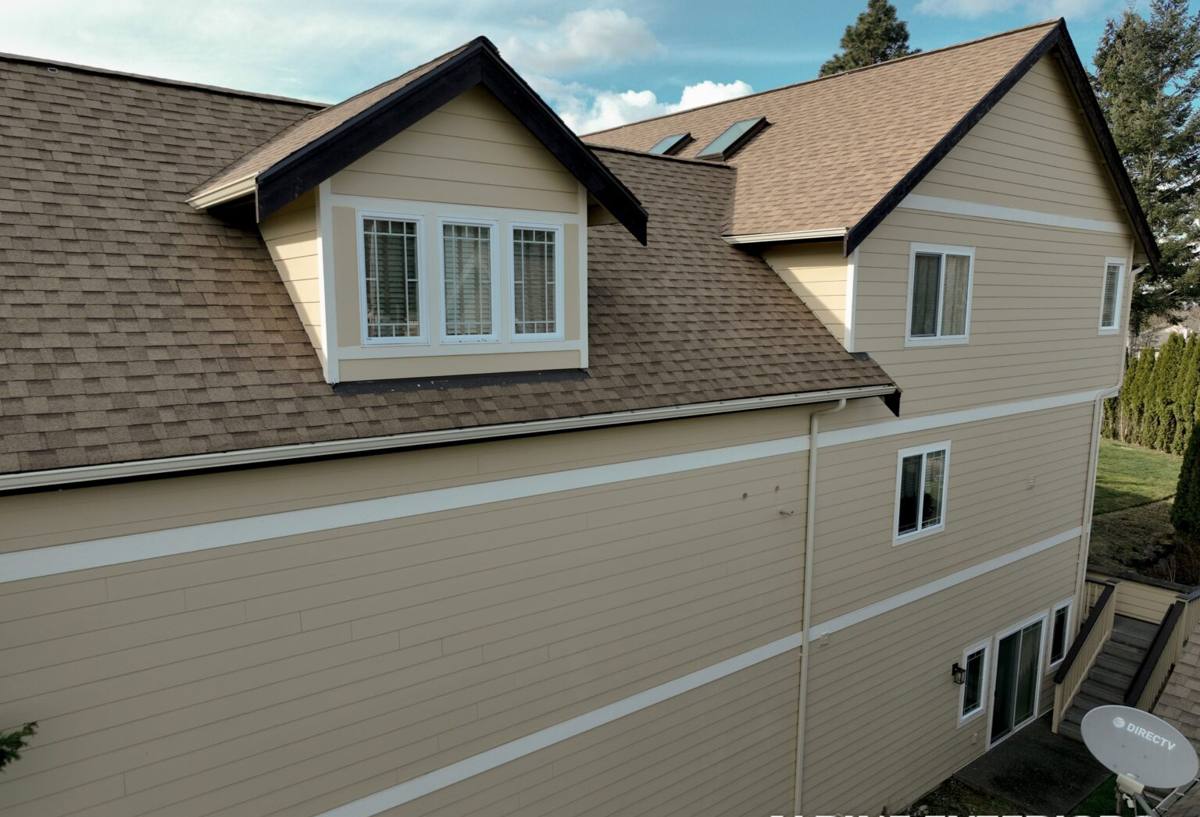
What Salt Air, Rain, and Moss Actually Do to Siding
Salt Air
You don't need to be waterfront to feel it. Moist marine air carries fine salt particles that settle on exterior surfaces and accelerate corrosion of fasteners, flashing, and any exposed metal trim. Over years, that corrosion can telegraph through paint and caulk lines, and it's part of why fastener quality and flashing details matter as much as the siding panel itself.
Driving Rain
Wind-driven rain doesn't just fall on a wall — it gets pushed sideways and upward into laps, corners, and butt joints. Siding that relies on face-sealed caulk joints as its primary defense (rather than proper shingle-lap drainage and a drainage plane behind it) will eventually let water in. Once water gets behind the cladding, how the wall assembly handles it — not just the siding material — determines whether you get a slow rot problem or a dry wall cavity.
Moss and Organic Growth
Whatcom County's damp, shaded microclimates are ideal for moss, algae, and mildew. These organisms hold moisture against the siding surface far longer than open air would allow, and they take hold fastest on porous or textured materials that don't shed water quickly, and on horizontal ledges — window sills, trim caps, butt joints — where debris collects.
Why This Combination Is Tougher on Siding Than a Single Factor Alone
- Salt accelerates fastener and flashing corrosion, which then creates new entry points for rain
- Rain that gets trapped behind siding has nowhere to dry out quickly in our humidity
- Trapped moisture is exactly what moss, algae, and wood rot need to establish
- Each factor makes the others worse — this is a compounding problem, not three separate ones
Why We Standardized on James Hardie
James Hardie siding is fiber cement — sand, cement, and cellulose fiber, cured into a dense, dimensionally stable board. It's non-combustible, doesn't swell or rot the way wood-based products can, and its ColorPlus factory-applied finish is baked on under controlled conditions rather than field-painted, which gives it more consistent, weather-resistant color from day one. For a climate that combines salt, moisture, and organic growth, those properties matter:
- Dimensional stability: Fiber cement doesn't expand and contract with moisture the way wood-based sidings can, so caulk joints and paint lines stay intact longer
- Non-combustible core: Doesn't feed a fire the way wood-based sidings can, which some insurers also factor into premiums
- Factory finish: ColorPlus finish is engineered and tested for UV and moisture exposure, reducing the repainting cycle homeowners deal with on field-finished siding
- Climate-engineered product lines: Hardie makes HZ5 and HZ10 formulations specifically tuned for different U.S. climate zones, including the Pacific Northwest's wet, moderate-temperature conditions
We've explained on other pages why we don't install vinyl, LP SmartSide, or other fiber cement brands — the short version is that each involves a trade-off in moisture behavior, seam performance, or long-term maintenance that we're not willing to build a Nooksack-area installation around. Hardie isn't the cheapest siding on the market, and we're upfront about that. It's the one we're willing to warranty our workmanship against, in this climate.
What a Correct Hardie Installation Involves Here
The siding panel is only part of the system. In a climate with this much wind-driven rain, the details around the panel are what actually keep a wall dry over 20-plus years:
The Drainage Plane
Correct installation starts with a weather-resistive barrier and, ideally, a drainage gap behind the siding so any water that does get past the cladding has a path to drain and dry rather than sitting against the sheathing.
Flashing at Every Penetration
Windows, doors, hose bibs, light fixtures, and vents all break the plane of the wall. Each one needs proper flashing integrated with the water-resistive barrier — caulk alone is a maintenance item, not a flashing detail, and it's one of the most common shortcuts we see on re-sides in this area.
Fastener Choice and Placement
Given the salt exposure common to this part of Whatcom County, corrosion-resistant fasteners driven per Hardie's engineering specs (not just "close enough") protect against the slow fastener failure that leads to popped boards and water intrusion down the road.
Clearances
Hardie specifies minimum clearances from grade, roofing, and decking. These clearances exist specifically to prevent the kind of chronic dampness that invites moss and rot, and they're one of the first things we check on any Nooksack-area home before we start.
Caulk and Joint Treatment
Butt joints and trim intersections need to be treated with the right sealant, applied correctly, and in some designs minimized altogether in favor of shingle-lap drainage — because caulk is a wear item, and in a valley that sees this much rain, a joint that depends entirely on caulk staying intact for 20 years is a joint that will eventually leak.
Our Process for Nooksack-Area Homes
| Step | What Happens |
|---|---|
| Assessment | We inspect existing siding, trim, flashing, and any moisture or moss damage, and check clearances from grade and roof lines |
| Plan & Estimate | We recommend the right Hardie plank, shingle, or panel profile and ColorPlus color for the home, with a written scope and estimate |
| Prep & Moisture Check | Old siding is removed, sheathing is inspected for hidden rot, and any damaged material is repaired before new siding goes on |
| Weather Barrier & Drainage | Weather-resistive barrier and drainage gap installed per Hardie's specifications for our climate zone |
| Flashing | All windows, doors, and penetrations flashed and integrated with the barrier before siding installation begins |
| Installation | Hardie siding installed to manufacturer fastening, spacing, and clearance specs |
| Final Detailing | Trim, caulk joints, and touch-up painting completed to a factory-match finish |
| Walkthrough | We walk the home with the owner and go over care and warranty documentation |
Why Local Experience in Nooksack Matters
A crew that's worked homes throughout the Lynden and Nooksack area already knows which sides of a house take the worst weather, where moss tends to establish first, and how local grade and drainage conditions typically run. That's not something you get from a general contractor passing through Whatcom County once. We've built our process around what actually happens to siding here — not a generic install checklist written for a drier climate.
Working locally also means we're accountable locally. If a flashing detail needs a second look five years down the road, we're not a phone number in another state — we're still working in the same towns, on the same kinds of homes, dealing with the same weather.
Maintenance: What Nooksack Homeowners Should Actually Expect
Correctly installed Hardie siding is low-maintenance, not no-maintenance. A realistic yearly routine in this climate:
- Rinse siding annually to remove salt residue, pollen, and organic buildup before it takes hold
- Inspect caulk joints at trim and penetrations for cracking or separation, especially after winter storm cycles
- Keep gutters clear so overflow doesn't run down the face of the siding
- Trim back vegetation and maintain clearance from grade so airflow can dry the wall surface
- Watch north-facing and shaded walls for early moss growth and address it before it spreads
Cost Factors for a Nooksack-Area Hardie Project
Every home is different, but the main variables that move a project's scope and price are consistent:
| Factor | Why It Matters |
|---|---|
| Existing siding removal | Tear-off complexity depends on layers, fastening method, and any hidden damage found underneath |
| Sheathing repair | Rot found during tear-off adds material and labor before new siding can go on |
| Home size & complexity | Dormers, gables, and multiple stories increase both material and labor time |
| Siding profile | Lap plank, shingle, and panel systems differ in material and installation labor |
| Trim & color | Custom trim details and ColorPlus color selection affect material costs |
| Accessibility | Steep lots, tight setbacks, or difficult access can add labor time |
Get a Straight Answer for Your Home
If you're planning a re-side in Nooksack or anywhere around Lynden, we're happy to walk your property, point out anything we see — moisture damage, clearance issues, failing caulk joints — and give you a straightforward, no-pressure estimate for a correctly installed James Hardie system built for this climate. Fill out the form below to get started.