 Lynden Siding
 The Same Weather System, Different Rules Across the Line
Abbotsford sits just a few minutes north of the border from Lynden, and the weather doesn't stop to check anyone's passport. Homes on both sides of the line take the same driving rain off the Pacific, the same damp winters, and the same long stretch of the year when moss and algae get a foothold on anything that stays wet. What's different is everything else: building codes, permit offices, energy-labeling programs, and even which standards a window has to meet to be sold and installed legally. A crew that only works one side of the border tends to know one half of that picture. Ours works both, which matters more for windows than for almost any other exterior product, because a window is really a system — glass, frame, flashing, and sealant all working together — and getting that system wrong shows up as a wet sill or a fogged pane a few winters down the road.
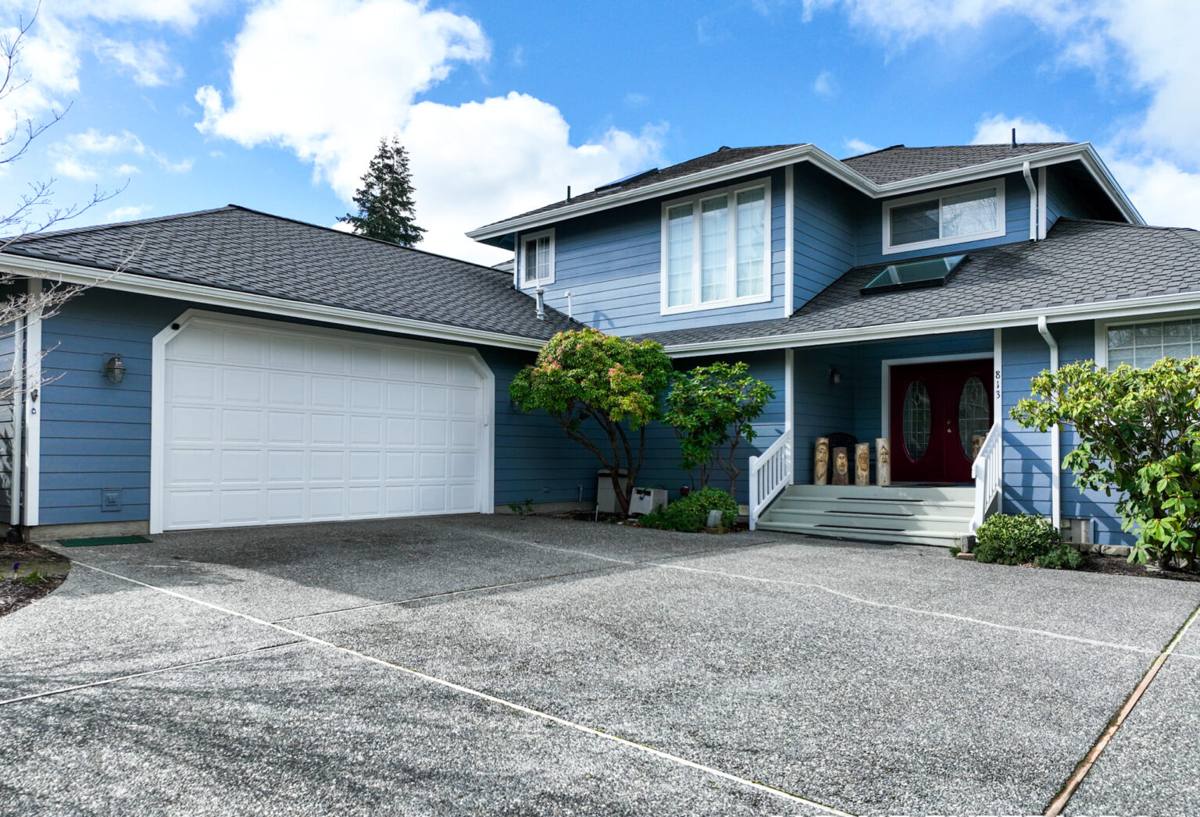
What Driving Rain and a Long Moss Season Do to a Window Assembly
Window failures in this part of the Fraser Valley rarely start with the glass. They start at the edges — the flashing, the sealant joints, the corners where the frame meets the wall.
Wind-Driven Rain at the Flashing Line
Rain that falls straight down is easy to shed. Rain that gets pushed sideways by wind, which happens often enough here to matter, finds every gap in a flashing detail that was installed to look right rather than to perform right. Once water gets behind the nailing flange, it can travel a long way before it shows up as a stain, so by the time you see a problem inside, the water has usually been getting in for a while.
Moss, Algae, and Frame Tracks
Anywhere moisture sits — exterior sills, weep holes, the bottom track of a sliding window — moss and algae will eventually grow if that surface doesn't get enough sun or airflow to dry out between rains. Beyond the cosmetic issue, buildup in weep holes blocks the path water is supposed to use to drain back out, which turns a window that was designed to manage a little water into one that traps it instead.
Salt-Tinged Air and Hardware
Even away from the immediate coastline, this region gets enough salt-influenced marine air that hardware matters. Cheap locks, rollers, and hinges corrode faster here than they would in a drier inland climate, and once hardware seizes up, homeowners force windows open and closed, which stresses the frame and breaks seals well before the glass unit itself would have failed on its own.
Signs Your Windows Have Reached the End of Their Service Life
Not every window problem means full replacement, but these are the signs that usually do:
- Fogging or a visible film between panes — the seal on the insulated glass unit has failed and moisture is trapped inside the glass itself
- Soft or discolored wood at the interior sill or exterior trim, which usually means water has been getting past the frame for some time
- Windows that won't stay open, won't latch, or need to be slammed to seal — a sign the frame has racked out of square or the hardware has failed
- Noticeable draft or cold spot near the frame even with the window fully closed
- Visible daylight or a gap where the frame meets the siding or trim
- Difficulty finding replacement parts because the window is old enough that the manufacturer no longer supports it
If what you're seeing is limited to failed weatherstripping or a worn lock, a repair may be all that's needed. Full replacement makes sense once the frame or the seal between the window and the wall is compromised — no amount of caulking fixes that from the outside.
What a Correct Installation Actually Involves
Full-Frame Replacement vs. Insert Replacement
An insert (or "pocket") replacement drops a new window into the existing frame and is faster and less invasive, which makes sense when the existing frame is still square, dry, and structurally sound. A full-frame replacement removes the old unit down to the rough opening, which costs more time and money but is the only way to actually inspect and fix what's happening behind the frame — the flashing, the sheathing, and the framing lumber itself. Given how often we find hidden moisture damage on homes that have been through a few decades of Fraser Valley winters, we lean toward full-frame whenever there's any sign the old flashing wasn't done right the first time.
Integrating the Window With Your Siding and Weather-Resistive Barrier
A window is only as good as its connection to the wall around it. That means the weather-resistive barrier (house wrap or building paper) has to be lapped correctly over the top flange and under the sides and bottom, sealant has to go in the right locations and not others, and the siding has to be trimmed and flashed back into that same water path. Skipping any one of these steps doesn't usually cause a problem right away — it causes one in three to five years, after enough driving rain has tested it.
Sill Pans and Sloped Sills
A sill pan under the window creates a dedicated drainage plane so any water that does get past the frame has somewhere to go besides your wall cavity. Combined with a sill that's slightly sloped to the exterior, this is one of the cheapest details in the whole job and one of the most commonly skipped on lower-quality installs.
Choosing Frame Material and Glass for This Climate
There's no single "best" window — the right choice depends on the wall it's going into, the budget, and how much upkeep the homeowner wants to do. Here's how the common frame options stack up for a damp, moss-prone climate like this one:
| Frame Material | Moisture Tolerance | Maintenance | Typical Lifespan |
|---|---|---|---|
| Vinyl | Good — won't rot, but can warp under sustained heat or poor manufacturing | Low — occasional cleaning | 20–30 years |
| Fiberglass | Excellent — dimensionally stable, doesn't absorb moisture | Low | 30-plus years |
| Wood-clad | Depends heavily on cladding quality and installation detail | Higher — cladding and interior wood need periodic attention | 20–30 years with upkeep |
| Aluminum | Poor thermal performance, prone to condensation in this climate unless thermally broken | Low | 20-plus years |
For glass, a dual-pane unit with a low-E coating and a warm-edge spacer is the reasonable baseline for this region; homeowners on north-facing walls or in windier spots sometimes step up to triple-pane for the extra comfort near the glass on cold, wet nights. We'll walk through what makes sense for your specific openings rather than upsell a package that doesn't fit the house.
Why a Crew That Already Works on Both Sides of the Border Matters
Doing paid installation work in Abbotsford as a Washington-based company isn't as simple as driving fifteen minutes north with the same truck and the same product line. Windows sold and installed in British Columbia have to meet Canadian requirements, and energy-performance labeling programs aren't identical between the two countries — a window rated for a Washington energy code isn't automatically the right spec for a BC one. Permits get pulled through a different local authority, inspections follow a different process, and a contractor working in Canada needs to be properly set up on that side of the line — correct insurance, correct business registration, the right paperwork before a crew shows up. None of this is complicated once you've done it, but it trips up crews who cross the border occasionally and treat it like an afterthought. We treat Abbotsford as a regular part of our service area, not a special trip, which means the paperwork and the product specs are already sorted out before we ever get to your driveway.
Our Process, Start to Finish
- On-site assessment of every opening — frame condition, flashing history, and any visible water or rot damage
- Honest recommendation on insert versus full-frame replacement for each window, based on what we actually find
- Written estimate with frame material and glass options explained in plain terms, no pressure to upgrade
- Product ordered to meet the correct standard for the side of the border the home sits on
- Removal of old units, correction of any flashing or sheathing issues found underneath
- New window set, shimmed level and square, sealed and flashed with the weather-resistive barrier properly integrated
- Interior and exterior trim finished to match the surrounding wall
- Final walkthrough and operation check on every window before we consider the job done
What Affects the Cost of a Window Job in This Area
| Factor | Why It Moves the Price |
|---|---|
| Insert vs. full-frame | Full-frame takes longer and involves more materials, but addresses hidden damage insert replacement can't reach |
| Frame material and glass package | Fiberglass and triple-pane options cost more upfront than standard vinyl and dual-pane |
| Number and size of openings | Larger openings and specialty shapes take more time and often cost more per unit |
| Condition behind the old window | Rot or moisture damage discovered during removal adds repair time before the new unit goes in |
| Access and height | Second-story or hard-to-reach windows require more setup time and sometimes equipment |
| Which side of the border | Permit fees, applicable code requirements, and product certification can differ between Whatcom County and the City of Abbotsford |
We'd rather give you a real number after seeing the openings than a rough figure over the phone that changes once we're on site.
If your windows are showing their age, or you just want a second opinion on whether repair or replacement makes more sense for your home, we're glad to come take a look. Estimates are free and there's no pressure either way — fill out the form below and we'll get you scheduled.