 Lynden Siding
 Nooksack Homes Face a Specific Kind of Weather Wear
Nooksack sits in the wetter, greener corner of Whatcom County, close enough to Lynden that the same weather pattern hits both towns almost every winter: long stretches of driving rain, marine air pushing in off the coast, and short winter daylight that keeps roofs, siding, and fence lines damp for days at a time. None of that is dramatic on its own. What it does over five, ten, and fifteen years is the part homeowners usually don't think about until they're standing in front of siding that's cupping, staining, or growing moss in the shaded corners of the house.
We work on homes in and around Nooksack regularly, and the siding failures we get called out for follow a pattern. It's rarely one bad storm. It's years of moisture finding a gap, a butt joint, or an unsealed cut edge, and slowly doing its work behind the surface where nobody's looking. Choosing the right siding material matters, but so does how it's cut, flashed, and fastened for this specific climate — and that's the part a lot of installs skip.
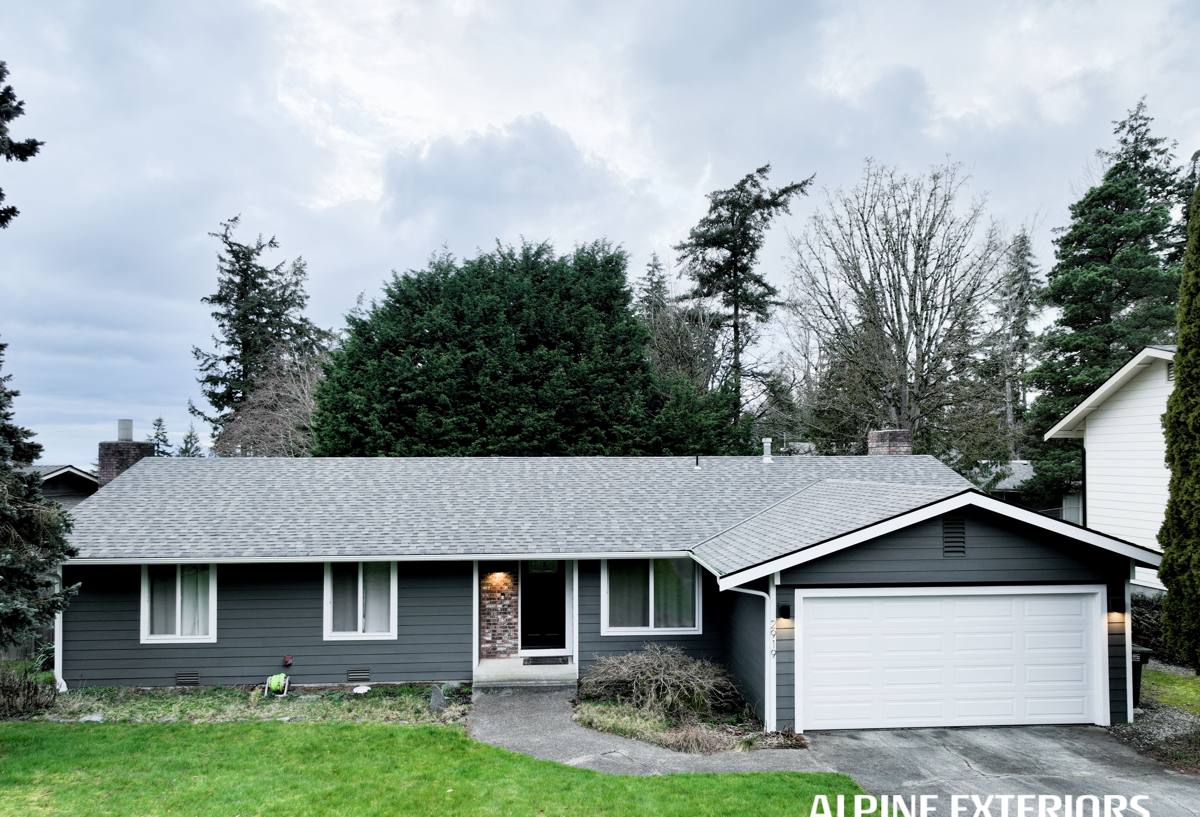
What Driving Rain, Salt Air, and Moss Actually Do to Siding
Wind-Driven Rain at Seams and Trim
Rain that falls straight down is easy to shed. Rain that comes in sideways, which is common during Whatcom County's winter storm systems, gets forced into horizontal laps, corner trim, and anywhere two pieces of siding meet. If those joints aren't cut, gapped, and sealed correctly, water works its way behind the cladding instead of running off it. Over time that shows up as soft trim, dark staining below joints, or paint and finish failure that starts at the seams and spreads outward.
Marine Air and Finish Wear
The salt-tinged marine air that moves through this part of Washington doesn't hit Nooksack as hard as it hits homes directly on the water, but it still reaches inland communities on the prevailing weather patterns. Combined with near-constant winter humidity, that air is harder on painted wood and lower-grade composite trim than most homeowners expect. Finishes that aren't baked on or engineered for moisture cycling tend to chalk, fade unevenly, or lose adhesion years before a homeowner planned to repaint.
Moss, Shade, and Trapped Moisture
Nooksack's tree cover and long overcast season create exactly the conditions moss and algae like: shade, moisture, and siding surfaces that stay damp longer than they would in a drier climate. Moss itself doesn't destroy fiber cement, but it holds water against the surface and, on the wrong material, can accelerate rot or finish breakdown underneath it. North-facing walls and anything shaded by trees or a neighboring structure are the areas we watch closest on every Nooksack project.
Why This Crew Installs Only James Hardie Fiber Cement Siding
We made a decision as a company to install James Hardie fiber cement siding exclusively — not vinyl, not LP SmartSide, not cedar, and not competing fiber cement brands like Allura or Cemplank. That's a narrower lineup than a lot of contractors offer, and we think that's the point. It lets us install one system well instead of several systems adequately.
Hardie's fiber cement is non-combustible, which matters in a state that takes wildfire risk seriously even in wetter counties like Whatcom. It's also manufactured with climate-specific product lines — HZ5 for the general Pacific Northwest moisture and freeze-thaw pattern — engineered to resist the swelling, cracking, and moisture absorption that wear down wood and lower-grade composite products in exactly the conditions Nooksack sees every winter. The factory-applied ColorPlus finish is baked on under controlled conditions rather than field-painted, which is a meaningful advantage in a climate where good painting weather is limited and finish failure is one of the most common callbacks we see on other materials.
None of that means fiber cement is maintenance-free or installation-proof. It performs exactly as well as the install behind it — which is why product choice is only half the equation.
What a Correct Installation Involves (Not Just What Product You Choose)
Water-Resistive Barrier and Flashing
Every correct fiber cement install starts underneath the siding, not with it. A continuous water-resistive barrier, properly lapped and taped, combined with correct flashing at windows, doors, and roof-to-wall transitions, is what actually keeps wind-driven rain out of the wall assembly. Skipping or rushing this step is invisible on install day and expensive to discover later.
Fastening, Clearances, and Gaps
Hardie siding has specific fastening patterns, minimum clearances from grade, roofing, and decks, and required gaps at butt joints and trim. These aren't optional preferences — they're what allows the material to handle moisture and slight seasonal movement without cracking or trapping water. A close-but-not-exact install can look identical to a correct one for the first year or two.
Field-Cut Edges and Caulking
Every field cut exposes raw fiber cement that needs to be sealed before it's weather-exposed. In a climate with this much sustained moisture, an unsealed cut edge is one of the fastest ways for water intrusion to start — and one of the easiest things for a rushed crew to skip.
| Siding Option | How It Handles Nooksack's Climate | Ongoing Maintenance | General Cost Position |
|---|---|---|---|
| James Hardie Fiber Cement | Engineered HZ5 line resists moisture cycling; non-combustible; factory finish holds up under prolonged damp weather | Occasional wash-down; repaint only if ever needed, typically well beyond 10+ years | Higher upfront, lower lifetime cost |
| Vinyl Siding | Sheds rain reasonably well but can warp or crack in wind and temperature swings; seams can allow moisture behind panels | Low, but panels can't be spot-repaired invisibly if damaged | Lower upfront cost |
| LP SmartSide / Engineered Wood | Wood-based core is more moisture-sensitive; edge sealing and gutter maintenance are critical in wet climates | Regular inspection of seams and cut edges; repainting on a set cycle | Mid-range upfront cost |
| Cedar / Primed Spruce | Natural material that moves with moisture; performs well only with disciplined, ongoing upkeep | Frequent refinishing and moisture monitoring, especially in shaded or moss-prone areas | Mid-to-higher upfront, higher lifetime maintenance cost |
Our Process for a Nooksack Siding Project
Assessment and Tear-Off
We start by walking the exterior with the homeowner, checking existing siding, trim, and sheathing for hidden moisture damage — especially on shaded and north-facing walls, which is where we most often find problems in Nooksack homes. Old siding comes off carefully so we can inspect the wall assembly underneath before anything new goes on.
Prep and Weather Barrier
Any damaged sheathing or framing gets addressed before the weather-resistive barrier goes on. This is the step that determines how the wall performs in a rainstorm ten years from now, and it's not one we shortcut to save time.
Installation and Finish Details
Hardie panels or lap siding go on to manufacturer fastening specs, with correct gaps, flashing, and sealed field cuts throughout. Trim, corners, and joints are detailed with this climate in mind, not a generic install pattern.
Final Walkthrough
We walk the finished job with the homeowner, point out anything they should know for long-term care, and answer questions before we consider the project done.
Living With Fiber Cement Siding in a Moss-Prone Climate
Correctly installed Hardie siding is low-maintenance, not zero-maintenance. A little seasonal attention keeps it performing the way it's designed to in a climate like this one.
- Rinse siding with a garden hose once or twice a year, focusing on shaded and north-facing walls where moss and algae are most likely to establish
- Keep gutters clear so overflow doesn't run down the siding face during heavy rain events
- Trim back trees and shrubs that keep siding shaded and damp longer than necessary
- Check caulking at trim and joints every couple of years and have it touched up if it's cracking or pulling away
- Have any impact damage (ladders, equipment, storm debris) inspected and repaired promptly rather than left exposed
Why a Crew That Already Works Nooksack Matters
Siding installation isn't just a product spec — it's a set of judgment calls about flashing details, wall prep, and finish work that change based on exposure, shade, and how a specific house sits relative to prevailing wind and rain. A crew that already works Nooksack and the surrounding Lynden area has seen how these homes actually age in this climate, not just how a manufacturer's install guide reads in general terms. That local pattern recognition is what catches a moisture problem before it's covered up, and it's what makes the difference between siding that looks right on install day and siding that's still performing correctly a decade later.
If your home in Nooksack or elsewhere around Lynden needs new siding, or you're planning ahead for a replacement, we're happy to take a look and give you a straightforward, no-pressure estimate — no invented urgency, just an honest read on your home's condition and what correct James Hardie installation would involve for your specific walls and exposure.