 Lynden Siding
 Nooksack Sits in a Rough Spot for Roofs
Nooksack is a small community tucked into the river valley just east of Lynden, close enough to the Salish Sea that winter storm systems still carry a trace of salt air inland by the time they reach Whatcom County. Add in the driving rain that comes off Pacific fronts, the tree cover that keeps a lot of Nooksack roofs shaded and damp for months at a time, and you've got a climate that wears on a roof differently than it does in drier parts of the state. This isn't a page about roofing in general — it's about what storm damage actually looks like on a Nooksack roof, what a correct repair involves, and why it matters to hire a crew that already knows this specific stretch of the county.
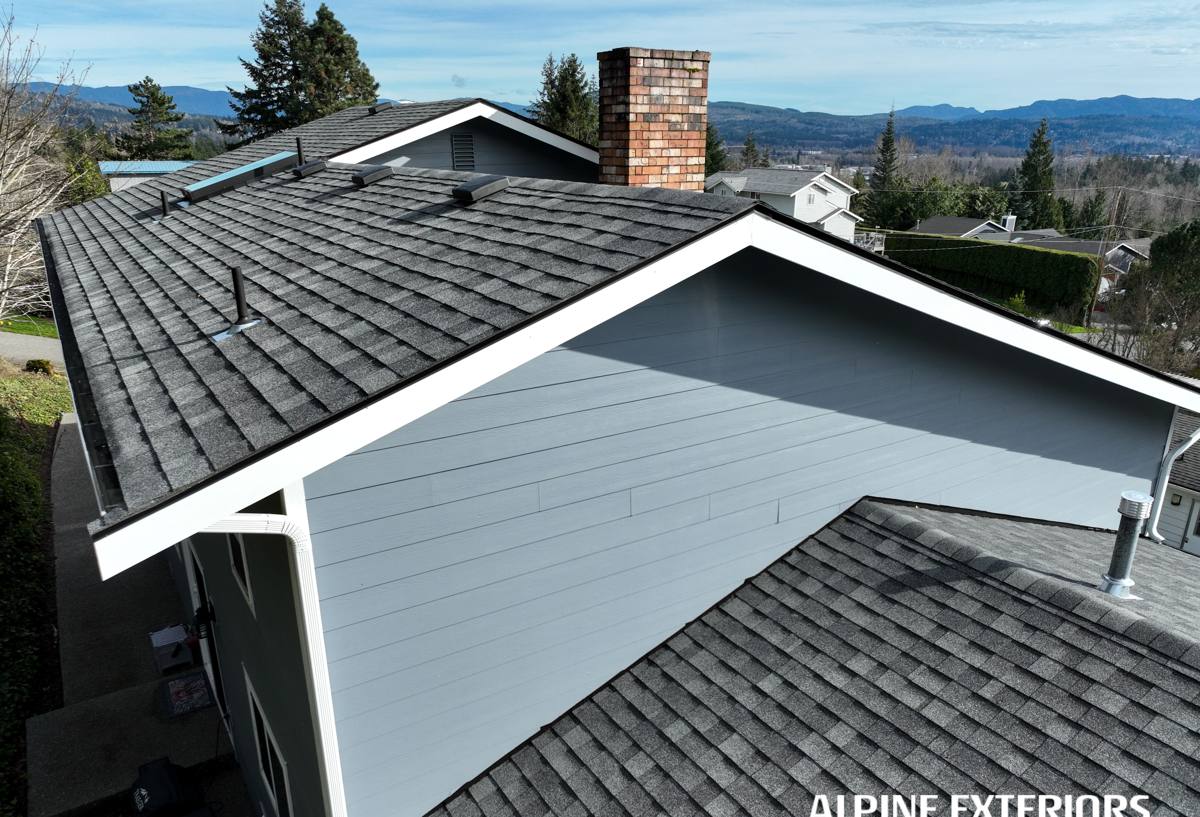
How Local Storms Actually Damage a Roof
Most storm damage in this area doesn't come from one dramatic event. It builds from a handful of recurring weather patterns hitting the same roof year after year.
Wind and Gusts
Whatcom County gets its share of winter windstorms, and the river valley terrain around Nooksack can funnel gusts in ways that catch the edges and ridges of a roof — the parts most exposed to uplift. Wind doesn't need to be extreme to do damage. A gust that gets under a single lifted shingle tab can peel back several courses before anyone notices, especially if the shingles were already brittle from age or sun exposure.
Wind-Driven Rain
Rain that falls straight down is rarely the problem. Rain pushed sideways by wind is a different story — it finds its way under shingle tabs, around flashing, and into nail holes that a calm-weather rain would never reach. This is how a roof can look intact from the ground after a storm while water is already working its way into the decking underneath.
Moss, Shade, and Standing Moisture
Nooksack's tree cover and long wet season mean many roofs stay damp far longer after a storm than roofs in more open, sun-exposed areas. Moss takes hold in that lingering moisture, and once it does, it holds water against the shingle surface and lifts edges as it grows. A storm that would otherwise cause minor damage can do a lot more to a roof that's already compromised by moss and trapped moisture.
Signs Your Nooksack Home May Have Storm Damage
Roof damage after a storm is often more visible from the ground or the attic than most homeowners expect. Before calling anyone, it's worth doing a quick check:
- Shingles that look cupped, curled, or torn, especially along ridges and edges
- Granules collecting in gutters or at the base of downspouts
- Bare or shiny patches on shingles where granule coverage has worn away
- Flashing around chimneys, vents, or skylights that looks bent, lifted, or separated
- New or worsening moss growth concentrated on one section of the roof
- Water stains or discoloration on ceilings or attic rafters after a storm
- Debris — branches, twigs, needles — that's been sitting on the roof and holding moisture
- Sagging or soft spots when you look along the roofline from the yard
Any one of these on its own might be minor. Several together, especially right after a windstorm, are worth a closer look before the next round of rain gets in.
What a Correct Storm Damage Repair Involves
Why a Patch Isn't Always Enough
The fastest fix after a storm is often to seal the visible tear and move on. Sometimes that's genuinely the right call — a small, isolated area with sound decking underneath doesn't need more than a clean, well-matched repair. But storm damage often extends further than what's visible from the ground. Wind-driven rain can soak decking several feet beyond the torn shingle, and that moisture doesn't announce itself until it's caused rot or mold months later. A correct repair means pulling back far enough to check the decking, the underlayment, and the flashing in the affected area — not just capping the hole that's easy to see.
What Affects the Cost of a Storm Damage Repair
| Factor | Why It Matters |
|---|---|
| Extent of wind uplift | A handful of loose shingles is a different job than a section that's been peeled back to bare decking |
| Decking condition underneath | Soft or delaminated decking has to be replaced before new shingles go down, not covered over |
| Flashing involved | Chimney, valley, and vent flashing take more time and material than open-field shingle repair |
| Moss or moisture damage present | Existing moss damage often means more of the roof needs attention than just the storm-affected section |
| Shingle age and availability of a match | Older roofs may need color-blended or slightly mismatched shingles if the original product is no longer made |
| Roof pitch and access | Steeper roofs and harder-to-reach sections take longer and require more safety setup |
We'll walk through which of these apply to your roof before any work starts, so there are no surprises once the repair is underway.
Our Storm Damage Repair Process
- Inspection. We check the full roof, not just the obviously damaged section — storm damage is often bigger than the visible tear.
- Documentation. We note and record what we find, including anything relevant to an insurance claim, before any repair work begins.
- Decking and underlayment check. Once shingles are pulled back, we look at what's underneath. Wet or soft decking gets replaced — it's never covered over.
- Flashing repair. Bent, lifted, or corroded flashing around chimneys, vents, and valleys gets addressed as part of the same repair, since it's a common re-entry point for water.
- Shingle replacement or matching. We replace damaged shingles with the closest available match, or discuss options if an exact match isn't possible.
- Final check for moss and drainage issues. Since moss and poor drainage make future storm damage worse, we flag anything nearby that's likely to cause the same problem again.
Choosing Materials That Actually Hold Up Here
Not every roofing product performs the same way under Whatcom County's combination of driving rain, long damp stretches, and periodic wind events. When we're repairing storm damage, we favor materials and details that are built for that combination rather than just matching what's cheapest or fastest to install:
- Self-sealing shingles rated for higher wind exposure in areas that see repeated wind damage, rather than standard-grade shingles that reseal poorly after the first lift.
- Synthetic underlayment in place of older felt products where a full section is being opened up — it holds up better to the repeated wet-dry cycles common here.
- Properly lapped and sealed flashing rather than heavy caulk or sealant patches, which tend to fail again within a season or two under constant rain exposure.
- Ridge and edge details that are mechanically fastened correctly for wind resistance, since these are consistently the first place storm damage starts on this type of roof.
We're honest about trade-offs when they exist. Some lower-cost shingle lines have thinner mat construction that doesn't hold granules as well in this climate, which shows up as accelerated wear a few years down the line — not because the product is defective, but because it wasn't built with this much sustained moisture in mind. We'll tell you when that's the case rather than let a repair look fine on day one and fail early.
Storm Damage and Insurance: What to Know
Many storm damage repairs in this area do end up going through a homeowner's insurance policy, particularly when wind or a fallen limb caused the damage. We're not an insurance company and can't speak to your specific coverage or claim outcome, but we can document damage clearly — with dated notes and a clear description of what we found and why — so you have accurate information to bring to your adjuster. If a repair turns out to be more extensive than it first appeared once we're into the decking, we'll tell you before proceeding so you can loop in your insurer if needed.
Why It Matters That We Already Work in Nooksack
A roofing crew that already works this stretch of Whatcom County knows what a Nooksack roof is up against before we even get on the ladder — the moss patterns that show up on shaded, tree-lined lots, the wind exposure that varies block by block in the river valley, and the wet-season timeline that determines how quickly a storm-damaged roof needs attention before moisture becomes a bigger problem. That local familiarity means less guesswork during the inspection and a repair plan that accounts for what typically happens to roofs here over the following winter, not just what's visible the day we show up. It also means we're not disappearing after the invoice — if something about the repair needs a follow-up look after the next storm, we're not far away.
If you've had a recent storm come through and want an honest look at what's going on with your roof, we're happy to come out for a free, no-pressure estimate. There's a form below to get started.