 Lynden Siding
 Energy-Efficient Windows for Bellingham-Area Homes
Homes in the Bellingham area sit inside a specific weather pattern that Lynden's more inland location doesn't get quite as directly: salt-tinged marine air off Bellingham Bay, rain that arrives sideways as often as it falls straight down, and a moss and mildew season that can stretch across most of the calendar year on shaded walls. That combination doesn't just wear on siding and trim. It works on windows, and it works on them in a way that has a direct effect on your energy bills, not just on how the window looks or how easily it opens.
An energy-efficient window is really two things working together: the glass and frame package that determines how much heat, cold, and sunlight pass through the unit, and the installation quality that keeps that performance intact instead of leaking away around the edges. In a climate this wet and this exposed to wind, the second half of that equation matters as much as the first. A high-performance window installed with a sloppy seal will underperform a modest window installed correctly, and we see that gap show up on real heating bills across Whatcom County every year.
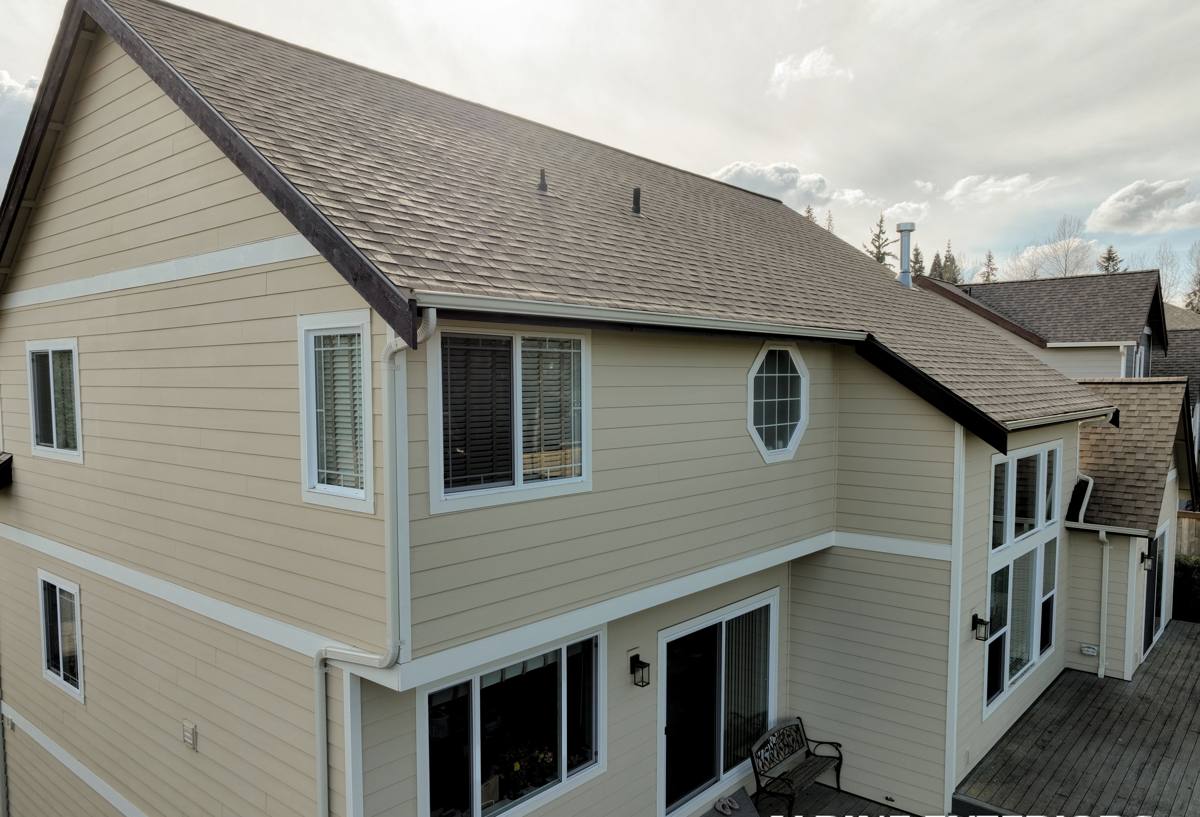
What Bellingham's Climate Does to Window Performance
Salt Air and Seal Degradation
Bellingham's bay-facing exposure means a steady flow of moisture-laden, salt-tinged air moving across the city, not just on days with an obvious storm. That kind of sustained exposure accelerates wear on weatherstripping, hardware, and lower-grade seals faster than it would in a drier, inland climate. A degraded seal doesn't just let in a draft. It lets in humid air that raises heating and cooling loads and, over time, moisture that can work its way into the frame itself.
Wind-Driven Rain and Air Infiltration
Rain here is regularly pushed sideways by wind off the water, which puts real pressure on the seal between a window frame and the wall around it. A window that would perform fine in a calmer climate can still lose efficiency here specifically because wind-driven moisture and air infiltration find their way through lap joints, trim seams, and gaps around the frame that a purely vertical rainfall model wouldn't test. Air leakage around a poorly sealed window is one of the more common and most fixable sources of energy loss in older Bellingham-area homes.
A Long Moss and Shade Season
Mild year-round temperatures and tree cover keep many walls and window sills damp for extended stretches, especially on north-facing or shaded elevations. Persistent dampness at a sill or lower corner doesn't just risk rot. It's often a sign that the window's drainage and sealing details were never quite right, and a window that isn't sealing water out usually isn't sealing air and heat in either.
What "Energy-Efficient" Actually Means
The term gets used loosely, but it comes down to a handful of measurable ratings on the National Fenestration Rating Council (NFRC) label every legitimate window carries. Understanding what they mean lets you compare products honestly instead of relying on a sales pitch.
| Rating | What It Measures | Why It Matters in Bellingham |
|---|---|---|
| U-factor | How well the window resists heat flow (lower is better) | A lower U-factor keeps heat inside during our long, cool, damp winters |
| Solar Heat Gain Coefficient (SHGC) | How much solar heat passes through the glass (lower blocks more heat) | Matters most on sun-exposed elevations; less critical on shaded, tree-covered walls |
| Air leakage rate | How much air passes through the window assembly itself | Wind-driven conditions off the bay make a tight, well-sealed unit worth more here than in a calmer climate |
| Visible transmittance | How much natural light passes through | Affects daylighting without necessarily changing heat performance |
Low-E (low-emissivity) coatings and gas fills like argon between panes are what typically improve these numbers on a modern window. The right combination depends on which direction a given wall faces and how much shade it gets, which is exactly why we look at each elevation separately instead of specifying one glass package for the whole house.
Frame Material and Real-World Efficiency
The frame matters as much as the glass, because a frame that warps, corrodes, or lets air pass through its own material undermines whatever the glazing is rated to do. Here's how the common options hold up against this specific climate.
| Frame Material | Insulating Behavior | Moisture & Salt-Air Resistance | Typical Maintenance |
|---|---|---|---|
| Vinyl | Good insulator; multi-chambered profiles improve performance further | Won't rot or corrode; performance depends on installation quality | Low |
| Fiberglass | Excellent; dimensionally stable across temperature swings | Resists moisture and corrosion very well | Low |
| Wood, clad exterior | Good natural insulator | Clad exterior protects the wood core from direct weather exposure | Moderate; interior finish upkeep if unclad |
| Aluminum | Conducts heat and cold readily unless thermally broken | Can corrode over time in salt-influenced air unless well-finished | Moderate |
Aluminum without a thermal break is generally a poor fit for this climate on both counts: it conducts cold directly into the house and it's more exposed to the corrosion salt air can cause. Vinyl and fiberglass are the two options we recommend most often for Bellingham-area homes, with the final call coming down to budget, the look you want, and how long you plan to stay in the house.
Installation Details That Actually Determine Efficiency
A window's NFRC label describes the unit in a lab, not how it performs once it's set into a real wall in a real windstorm. The installation is what closes that gap, and skipping any of these steps is the most common reason a good window underperforms its own rating.
- A properly pitched sill pan that sheds water outward instead of letting it pool under the frame
- Flashing tape and housewrap integrated in the correct shingle-lap order, so any water that does reach the wall drains down and out
- Continuous, gap-free insulation and air sealing around the full perimeter of the frame, not just at the corners
- Weatherstripping and hardware rated for salt-influenced marine air, not generic inland-spec parts
- A frame set square and plumb, since a racked frame stresses seals and can prevent full weatherstrip contact
- Interior air sealing that doesn't trap moisture against the framing
None of these add meaningfully to the cost of a window project relative to the unit itself, but skipping them is exactly what turns a high-performance window into one that drafts and fogs within a few years.
Replacement, Reseal, or Full-Frame: Choosing the Right Approach
Not every efficiency problem calls for full replacement. If the existing frame is sound and properly flashed, an insert replacement, fitting a new window into the existing opening, can deliver most of the efficiency gain with less disruption to surrounding siding and trim. If there's already moisture damage at the sill or jambs, or the original flashing was never done correctly, a full-frame replacement that rebuilds the opening from scratch is the more honest answer, even though it costs more and takes longer. Occasionally, a window with sound glass and frame just needs its seals and weatherstripping renewed rather than full replacement. We'll walk your specific windows and tell you plainly which category they fall into rather than defaulting to whichever option is easiest to sell.
Cost Factors for Bellingham-Area Window Projects
| Factor | What It Affects | Why It Matters Here |
|---|---|---|
| Frame material and glazing package | Unit cost and long-term energy performance | Higher-performing glass and thermally broken frames cost more upfront but reduce heat loss through our long, cool wet season |
| Insert vs. full-frame replacement | Labor scope and how much of the surrounding wall is disturbed | Full-frame work is often necessary once wind-driven rain has already damaged the sill or jambs |
| Number and size of openings | Total material and labor | Larger, more custom openings are common on some Bellingham-area homes and take more precise flashing work |
| Elevation and sun exposure | Which SHGC and Low-E package makes sense per wall | Shaded, tree-covered walls common here don't need the same solar control as a sun-facing elevation |
| Existing moisture damage | Repair costs uncovered once old windows come out | Years of trapped moisture behind failing seals can rot sheathing and framing before it's visible from outside |
Real numbers range from a few hundred dollars for a straightforward insert unit up to significantly more for larger or full-frame work, and we won't quote a whole-house number until we've actually walked the property and looked at each opening.
Signs Your Windows Are Costing You More Than They Should
- Noticeable drafts or a cold spot near a closed window, even on a still day
- Rising heating bills without another clear explanation
- Condensation or fogging between panes, which usually means a failed seal on a double- or triple-pane unit
- Interior condensation on the glass or frame during cold, damp stretches
- Soft, discolored, or spongy sill and trim material, especially on shaded walls
- Visible daylight, cracked caulk, or gaps around the frame from inside
- Difficulty latching a window fully, which can mean the frame has racked out of square
How Our Process Works
- On-site assessment: We walk the home, check each window's condition, orientation, and exposure, and identify any existing moisture or seal damage.
- Honest recommendation: We tell you whether a given window needs replacement, reseal, or nothing at all, and explain the reasoning in plain terms.
- Glazing and frame selection by elevation: We help you choose U-factor, SHGC, and frame material suited to each wall's actual sun and shade exposure, not a single spec applied to the whole house.
- Correct installation: Sill pan, flashing, air sealing, and hardware are installed to hold up against salt air and wind-driven rain, not just to pass a quick visual check.
- Final walkthrough: We check operation, seals, and hardware with you before calling the job done.
Why Hiring a Crew That Already Works Bellingham Matters
A crew that regularly installs windows across the Bellingham area has already seen how salt air, wind-driven rain, and a long moss season behave on real houses over years, not just how a product performs on a spec sheet. That shows up in practical decisions on install day: which elevations need the most attention because of shade or prevailing wind, how a sill pan should be pitched for the water a given wall actually sees, and which hardware and sealing details are worth the extra time so you're not chasing a draft or a soft sill again two winters later. It also means working with someone who understands how Bellingham's bay-facing exposure differs from Lynden's more inland conditions, and who accounts for that instead of treating every Whatcom County home the same.
Beyond Windows: Siding, Roofing, and Decks
Window problems rarely start with the window itself. A roof leaking above an opening, siding that's letting water track behind the wall, or a flashing detail that was never right in the first place can all show up as a drafty or fogged window even though the window is just where the problem finally surfaces. Because we also handle siding, roofing, and decks, we can look at a Bellingham-area home as one connected exterior system and trace an issue back to its real source instead of installing a new window over a problem that's still there underneath.
If your Bellingham-area home has windows that are drafty, fogged, or driving up your heating bills, we're glad to take a look and give you a straightforward, honest read on what it actually needs. Reach out using the form below to schedule a free, no-pressure estimate.