 Lynden Siding
 Birch Bay Roofs Take a Different Kind of Beating
Birch Bay sits right on the water, and that changes what a roof has to survive. Homes a few miles inland in Lynden deal with plenty of Whatcom County rain, but roofs closer to the water pick up salt-laden air on top of it. That combination speeds up the breakdown of metal fasteners, flashing, and exposed hardware faster than it would on a similar roof set back from the coast. Add in the driving rain that comes off Georgia Strait storms — wind-blown rain that gets pushed sideways under shingle tabs and around vents — and you have a roof that needs tighter detailing than a textbook installation in a calmer climate.
Then there's moss. Whatcom County's long wet season, mild temperatures, and shaded lots near the water create ideal conditions for moss and algae to take hold on north-facing slopes and anywhere debris collects. Left alone, moss doesn't just look bad — it lifts shingle edges, holds moisture against the roof deck, and shortens the life of even a well-installed roof. A roof replacement built for Birch Bay has to account for all three of these things at once: salt exposure, wind-driven rain, and moss pressure. That's a different design conversation than a generic reroof.
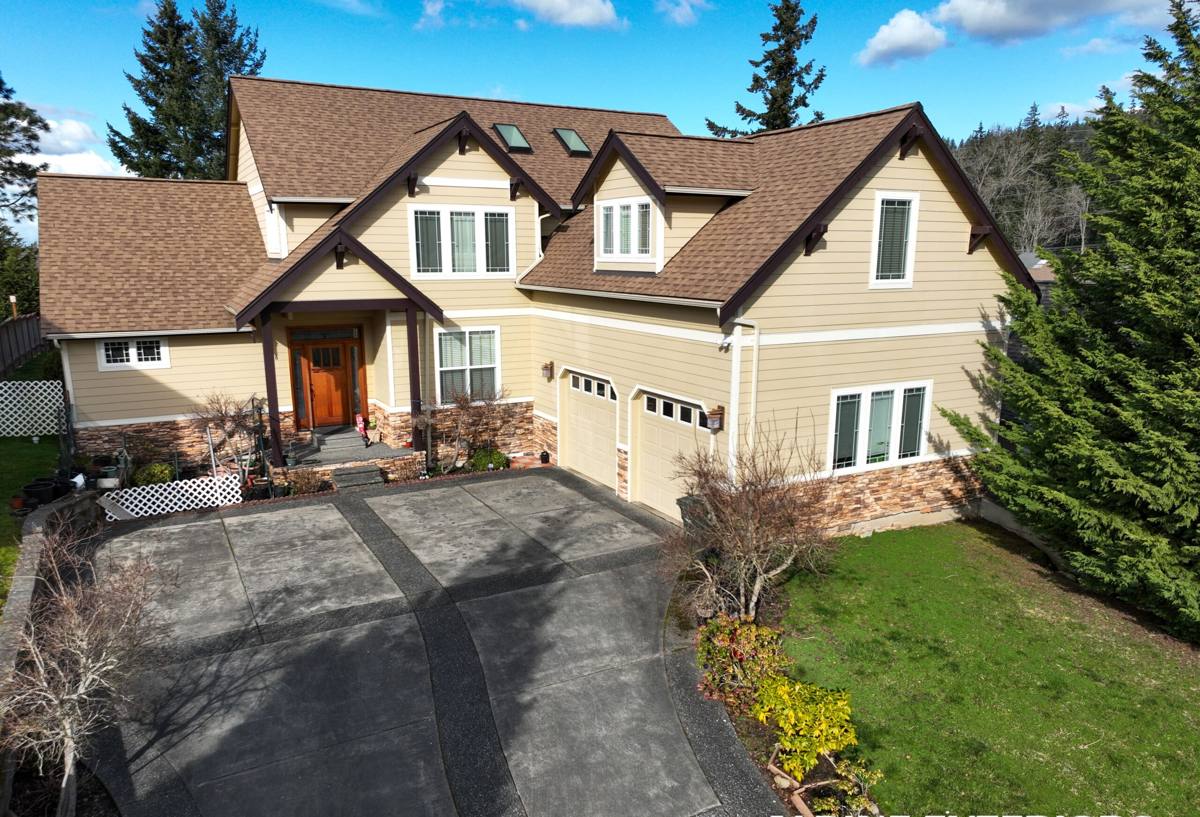
What "Correct" Actually Means on a Birch Bay Reroof
A roof replacement is more than stripping old shingles and nailing down new ones. Done right, it's really several systems working together — deck, underlayment, flashing, ventilation, and the roofing material itself. Skipping or rushing any one of them is usually where coastal roofs fail early.
Deck Inspection Isn't Optional
Once the old roofing is off, the plywood or OSB decking underneath gets inspected board by board. Near the water, we look closely for soft spots caused by long-term moisture intrusion around old flashing or valleys — areas that may have been leaking slowly for years without an obvious interior sign. Any compromised sheathing gets replaced before anything new goes down. Roofing over bad decking is one of the most common shortcuts that leads to an early second replacement.
Underlayment Built for Wind-Driven Rain
Standard felt underlayment can work fine in low-exposure areas, but on a Birch Bay roof we lean toward synthetic or self-adhering underlayment in the areas most exposed to wind-driven rain — eaves, valleys, and around penetrations. These materials seal around fastener penetrations and resist the kind of sideways-blown moisture that a coastal roof sees more often than an inland one.
Flashing Detail Work
Chimneys, skylights, vent pipes, and roof-to-wall transitions are where most roof leaks actually start — not in the open field of shingles. Near salt air, we favor corrosion-resistant flashing materials and make sure every transition is properly step-flashed and sealed, not just caulked over. Caulk is a maintenance item, not a permanent fix; good flashing shouldn't depend on it holding forever.
Materials That Hold Up Near the Water
There's no single "best" roofing material for every home — it depends on your roof's exposure, slope, budget, and how the house is built. But some materials are a more sensible fit for salt air and moss pressure than others. Here's how the common options generally compare for a coastal Whatcom County home.
| Material | Salt Air Durability | Moss Resistance | Typical Lifespan |
|---|---|---|---|
| Standard asphalt shingle | Good with proper fasteners | Moderate; benefits from algae-resistant granules | 20–25 years |
| Architectural/laminate shingle | Good to very good | Moderate to good, especially algae-resistant lines | 25–30 years |
| Metal (standing seam, coated) | Very good with proper coating and stainless fasteners | Very good — sheds moss more easily on steeper pitches | 40–50+ years |
| Cedar shake | Fair; needs consistent maintenance near salt air | Poor without regular treatment | 20–30 years with upkeep |
For most Birch Bay homes, a quality architectural shingle with algae-resistant granules or a coated metal roof are the two options we recommend most often. Cedar shake can still be the right look for some homes, but it's an honest trade-off — it demands more upkeep in a wet, salty, moss-prone environment than the other options, and we tell homeowners that up front rather than after the fact.
A Note on Fasteners and Hardware
Whatever roofing material you choose, the fasteners and exposed metal matter just as much. Standard galvanized fasteners can corrode faster in salt air than stainless steel or high-quality coated alternatives. On a Birch Bay job, we spec hardware with the coastal exposure in mind rather than defaulting to whatever's cheapest — it's a small line-item difference that affects how the roof ages over decades, not years.
Ventilation and Moisture Control
A roof replacement is also a good time to fix ventilation problems that have nothing to do with the shingles themselves. Poor attic ventilation traps moisture underneath the roof deck, which accelerates rot, encourages mold, and can void material warranties. In a climate as consistently wet as Whatcom County's, balanced intake and exhaust ventilation — soffit vents paired with ridge or roof vents — matters more than it does in drier regions. We check existing ventilation as part of every roof replacement estimate, not as an upsell after the fact.
Moss prevention also starts here. Zinc or copper strips near the ridge can help suppress moss regrowth over time by releasing trace metals that wash down the roof slope in the rain. It's not a substitute for keeping gutters and valleys clear, but combined with good ventilation and the right material choice, it meaningfully cuts down how often a roof needs moss treatment.
Our Roof Replacement Process
Every roof is different, but the general sequence we follow stays consistent from estimate to final inspection:
- On-site inspection of the current roof, decking access points, ventilation, and any interior signs of past leaks
- Written estimate that spells out material options, tear-off scope, and any decking or flashing work anticipated
- Permitting and material ordering once you approve the scope
- Full tear-off of the old roofing material down to the deck
- Deck inspection and repair of any soft or damaged sheathing
- Installation of underlayment, ice-and-water protection at eaves and valleys, and new flashing
- Installation of the new roofing material per manufacturer specification
- Ventilation check and adjustment where needed
- Full site cleanup, including a magnetic sweep for stray nails
- Final walkthrough so you know exactly what was done and what to expect going forward
Signs Your Roof Needs Replacing, Not Just Repair
Not every roof problem means a full replacement — sometimes a targeted repair is the honest answer. But near the water, certain signs usually point to a roof that's past the point where patching makes sense:
- Shingles that are cracked, curling, or losing significant granule coverage across large sections
- Heavy moss growth that returns quickly after cleaning, especially on north-facing slopes
- Soft spots or visible sagging when walking the roof or viewing it from a ladder
- Water stains on interior ceilings or in the attic that show up in multiple locations
- Flashing around chimneys, vents, or skylights that's rusted, lifted, or repeatedly recaulked
- A roof that's approaching or past its material's expected lifespan and has never been fully inspected underneath
- Rising energy bills tied to poor attic ventilation or insulation gaps at the roofline
What Roof Replacement Generally Costs
Pricing depends on roof size, pitch, current layer count, decking condition, and material choice — so any number without a site visit is a rough guide, not a quote. That said, homeowners planning ahead generally see costs move with these factors:
| Factor | Effect on Cost |
|---|---|
| Roof size and complexity (valleys, dormers, multiple pitches) | More cuts, flashing, and labor time increase cost |
| Number of existing layers to remove | Multiple tear-offs add disposal and labor cost |
| Decking condition | Rot or soft spots found during tear-off add repair cost |
| Material choice | Asphalt shingle is typically the most affordable; metal costs more upfront but lasts longer |
| Ventilation upgrades | Adding or correcting vents is a modest add during a full tear-off |
Straightforward asphalt shingle replacements on a typical single-family home tend to fall in the low-to-mid five figures; metal roofing and larger or more complex roofs run higher. We walk through the specific factors driving your number during the estimate — no vague ranges left unexplained.
Why Hiring a Crew That Already Works Birch Bay Matters
A roofing crew that mostly works inland jobs isn't necessarily going to think about salt-air fastener corrosion, wind-driven rain at the eaves, or moss pressure on a shaded north slope — because those aren't daily concerns everywhere in Whatcom County. A crew that regularly works Birch Bay and the surrounding coastal communities has already seen how roofs in this specific environment age, fail, and hold up over time. That shows up in small decisions: which underlayment gets used where, how flashing gets detailed at transitions, which fastener grade gets specified, and how ventilation gets balanced for a consistently wet climate.
It also matters for the practical side of the job — knowing local permitting requirements, being realistic about weather windows for tear-off scheduling, and understanding how coastal wind exposure affects staging and safety on the roof itself. None of that replaces a good estimate and honest material advice, but it's the difference between a roof installed to a general standard and one installed for the specific conditions it has to survive.
Ready for a Straight Answer on Your Roof?
If your Birch Bay roof is showing its age, dealing with persistent moss, or just due for an honest inspection, we're happy to take a look and walk you through what we find — no pressure, no scare tactics. Fill out the form below for a free estimate and we'll go over your options in plain terms.