 Lynden Siding
 Siding Repair in Nooksack: What the Climate Actually Does to Your Walls
Nooksack sits in a stretch of Whatcom County that takes weather seriously. You get salt-tinged air pushing in off the Strait, long stretches of driving rain that hit siding sideways rather than straight down, and a moss season that can run most of the year in shaded, north-facing spots. None of that is exotic — it's just steady, and steady is what wears siding out. A single bad storm rarely causes the damage we get called out for. It's usually months or years of moisture finding the same seam, the same nail hole, or the same low corner, over and over, until something finally gives.
That matters for how you think about repair. A patch that looks fine on a dry afternoon can fail the first time water is driven at it from the wrong angle. Siding repair done right in this area isn't just about matching color and covering a gap — it's about understanding where water wants to go on a Nooksack house and making sure it can't get in.
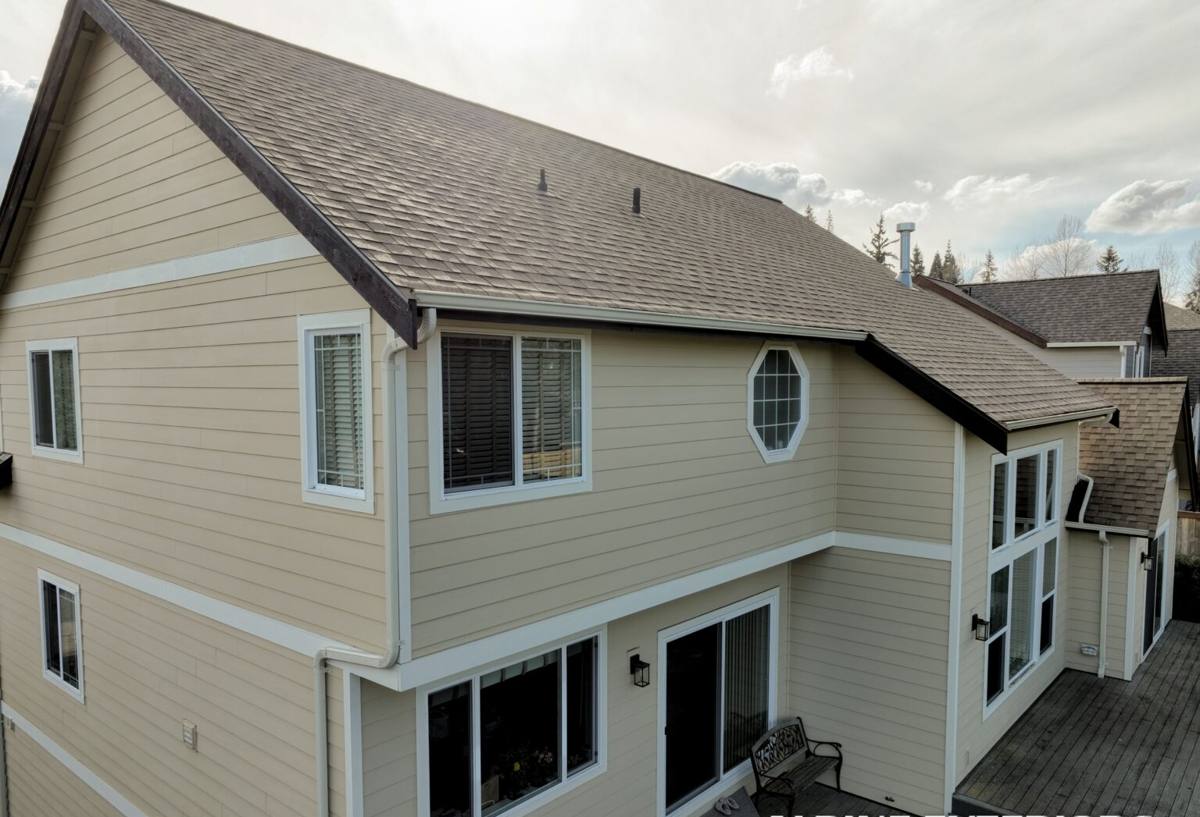
Signs Your Siding Needs Repair, Not a Full Replacement
Most homeowners call us because something looks wrong, not because they've diagnosed the cause. Here's how we sort out what's actually a repair job versus something bigger.
- Cracked, chipped, or split boards in isolated spots — usually repairable if the underlying sheathing is dry
- Soft or spongy spots when you press on the siding near the bottom edge, around windows, or below downspouts
- Moss or algae buildup concentrated on one or two shaded elevations, especially north- and west-facing walls
- Gaps opening up at seams, corner boards, or trim where caulking has failed or shrunk
- Bubbling, peeling, or discolored paint in a localized area rather than across the whole house
- Staining or dark streaks below a specific joint, suggesting a repeated water path rather than general age
If the damage is scattered across every elevation, or if probing reveals wet, dark, or crumbling sheathing behind the siding, that's usually a sign the whole system has been compromised — not just the visible boards. We'll tell you honestly if that's what we're looking at rather than patching over a bigger problem.
Why Small Damage Doesn't Stay Small Here
In a drier climate, a cracked board might sit for years without consequence. In Nooksack's rain pattern, a crack is an entry point every time weather comes in sideways. Add in the humidity that keeps things damp longer after a storm, and untreated damage tends to spread into the wall assembly faster than homeowners expect. Catching it early is the single biggest factor in whether a repair stays a repair.
What a Correct Siding Repair Actually Involves
A repair that just replaces the visible board and calls it done is the most common shortcut we see — and the most common reason a homeowner calls a second contractor within a year or two. A repair job we stand behind includes:
- Removing enough surrounding material to inspect the sheathing and house wrap behind the damaged section, not just the board itself
- Confirming the water-resistive barrier and flashing details are intact before anything new goes back on
- Letting any wet sheathing dry, or replacing it, before closing the wall back up
- Matching the replacement material's profile, reveal, and fastening pattern to the existing siding
- Re-caulking and sealing joints with products rated for our wet, mild-winter climate — not a generic tube off the shelf
- Color-matching using ColorPlus factory finish when the existing siding is James Hardie, so the repair doesn't fade differently than the surrounding boards over time
Skip the inspection step and you can end up with a beautiful new board over sheathing that's already compromised — which just moves the failure a few years down the road instead of fixing it.
Repair or Replace? How We Help You Decide
| Situation | Usually a Repair | Usually Points to Replacement |
|---|---|---|
| Extent of damage | Isolated to one or two areas | Present across most or all elevations |
| Sheathing condition | Dry, solid when probed | Soft, dark, or crumbling in multiple spots |
| Age of siding | Under 15–20 years, otherwise sound | Original siding is near or past its expected service life |
| Cause | One-time impact, isolated flashing failure | Systemic moisture intrusion or a product prone to recurring issues |
| Cost pattern | One targeted repair addresses the problem | You've already paid for repairs more than once in the same spots |
We walk every house looking for the pattern, not just the visible symptom. If a repair is the honest answer, that's what we'll recommend and price. If the underlying siding or substrate is failing in a way that repair only masks temporarily, we'll say so and explain why — this is a decision we'd rather get right than upsell.
Why We Repair (and Install) Only James Hardie Fiber Cement
Not every siding product ages the same way, and that shapes what a "correct" repair even looks like. We made a deliberate call some time ago to work exclusively with James Hardie fiber cement, and it's worth explaining why, especially in a climate like this one.
Vinyl siding can crack in cold snaps and warp or bow under sustained heat and moisture cycling — and once a panel is damaged, exact color matches get harder to find as products age out of production. LP SmartSide, Cemplank, Allura, and primed spruce or cedar all have real strengths, but each comes with its own moisture sensitivity, coating requirements, or maintenance schedule that we've found doesn't hold up as well against years of Whatcom County rain and shoulder-season dampness. Cedar in particular looks beautiful going up, but it demands a re-staining and sealing commitment most homeowners underestimate until moss and gray weathering set in.
James Hardie fiber cement doesn't swell, warp, or rot from moisture exposure the way wood-based products can, and it's non-combustible — a genuine advantage during dry-season wildfire smoke and ember events that have become a real regional concern. The ColorPlus factory finish resists fading and chipping better than field-applied paint, which means a repair patch actually blends in rather than standing out as a slightly different shade five years later. Hardie's HZ5 product line is engineered for wetter, harsher climates, and the warranty is transferable if you sell the house — a detail that matters more than people expect when they're preparing to list.
Practically, this means when you call us for a repair, we're not guessing at a mystery substrate or trying to source a discontinued panel. We know the material, we know how it fails, and we know how to fix it so it lasts.
Our Repair Process, Start to Finish
1. On-Site Assessment
We inspect the damaged area and the surrounding siding, probe for soft spots, and check flashing at nearby windows, doors, and penetrations — problems often cluster around these details rather than the open wall field.
2. Honest Scope and Estimate
You get a clear explanation of what we found, what's causing it, and what it will take to fix — including whether we think a broader replacement is the better long-term investment for your specific house.
3. Repair Work
We remove only what's necessary, inspect and address the substrate underneath, and install matched material with proper fastening, flashing, and sealing detail for our climate.
4. Final Check
Before we consider the job done, we walk the repair with you, confirm the color and profile match, and make sure water has a clear path away from the repaired section — not toward it.
What to Ask Before Hiring a Siding Repair Contractor
- Will you inspect the sheathing behind the damaged siding, or just replace the surface board?
- What happens if you find wet or rotted material once you open up the wall?
- How will you match the color and profile of my existing siding?
- What products and sealants do you use, and are they rated for this region's rain and humidity?
- Do you carry manufacturer training or certification for the siding material on my house?
- Can you explain, in plain terms, why this is a repair and not a replacement situation?
A contractor who can't answer these clearly, or who quotes a repair without ever probing the substrate, is guessing — and a guess on a wall assembly usually costs more to fix the second time.
Why Local Experience in Nooksack Matters
Whatcom County weather isn't uniform even within a few miles. Homes closer to open fields and exposed farmland take wind-driven rain differently than homes tucked against tree lines, and shaded lots hold onto moss and dampness longer into the season. A crew that already works this specific area has a feel for where damage tends to originate on Nooksack-area homes — which corners, which elevations, which details fail first — instead of applying a generic playbook. That local pattern recognition is part of what makes a repair estimate accurate on the first visit rather than something that changes once the wall is opened up.
Get a Straight Answer on Your Siding
If you're seeing cracked boards, soft spots, moss buildup, or gaps opening up on your Nooksack home, it's worth getting eyes on it before the next round of rain finds its way in. We'll give you a clear, no-pressure estimate and an honest read on whether you're looking at a repair or something bigger — just fill out the form below to get started.