 Lynden Siding
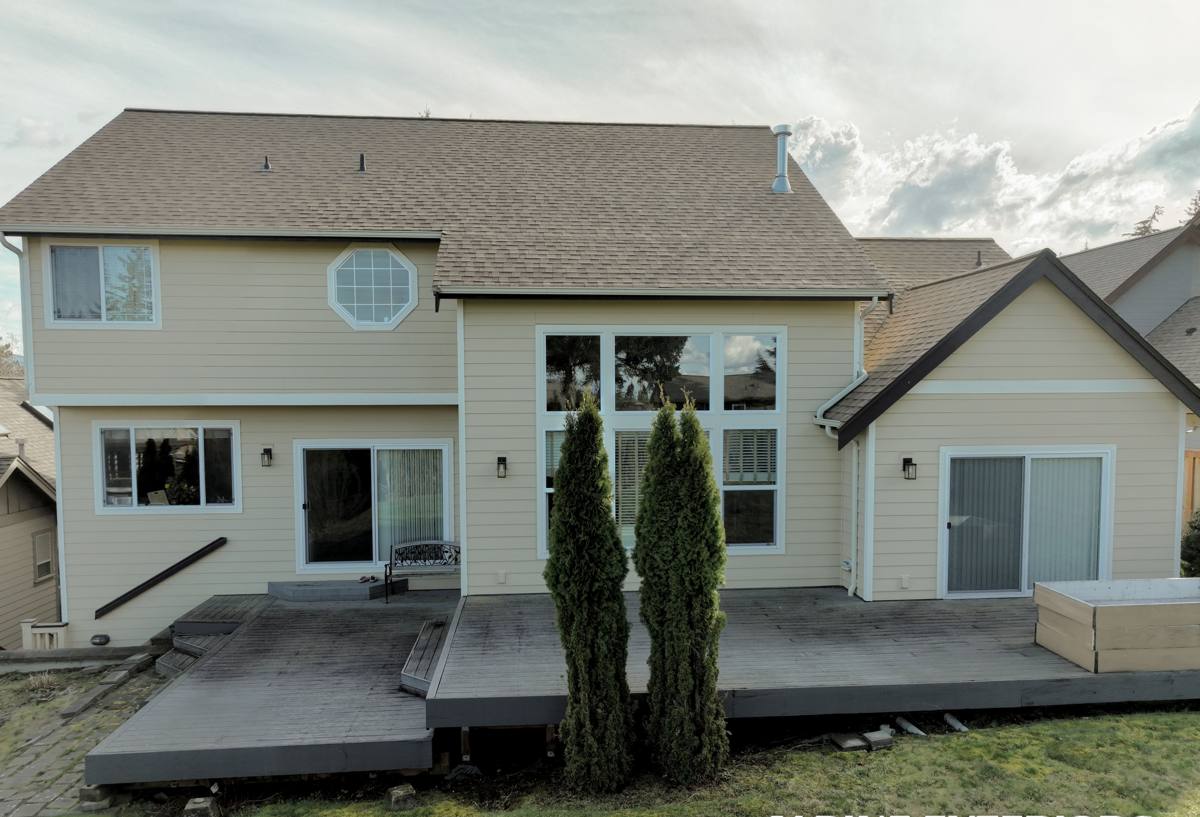
 Deck Replacement for the Nooksack Area
Homes in and around Nooksack sit in one of the wetter corners of Whatcom County, and it shows on decks before it shows almost anywhere else on a house. A roof sheds water fast and dries in the wind. A deck sits low, catches standing moisture, gets shaded by trees and fences, and takes the brunt of splashback off the ground. By the time a deck starts to feel soft underfoot or the boards start cupping, the framing underneath has usually been dealing with moisture for a lot longer than the surface let on.
This page is specifically about replacing a deck in the Nooksack area near Lynden — not patching boards, not a quick refinish, but a full teardown and rebuild done to hold up against the driving rain, salt-tinged marine air, and long moss season that define this part of Whatcom County. If your deck is past the point of spot repair, this is what a correct replacement actually involves.
Why Local Climate Changes the Job
A deck built the same way in a dry inland climate and one built in Nooksack will age very differently. A few regional factors matter more here than most homeowners expect:
- Driving rain pushes water sideways under railings, fascia boards, and ledger connections — not just straight down onto the deck surface.
- Salt-tinged air off the Salish Sea corrodes standard fasteners and hardware faster than inland framing typically experiences, which is why fastener choice matters as much as lumber choice.
- Extended moss and algae season means shaded decking stays damp for weeks at a stretch during fall and winter, which accelerates rot in any wood that isn't properly ventilated underneath.
- Freeze-thaw cycles, while milder here than in the mountains, still stress footings and fastener joints over a decade or more of use.
None of this means a deck can't last — it means the details that get skipped on a rushed job (flashing, ventilation, fastener grade) are exactly the details that determine whether a deck lasts 10 years or 25 in this climate.
Repair or Full Replacement?
Not every deck problem calls for a full rebuild. But there's a point where patching individual boards is just delaying a bigger cost. Signs that point toward replacement rather than repair:
- Soft, spongy, or spring-back boards in more than a few spots, not just one isolated board
- Rot or discoloration at the ledger board where the deck attaches to the house
- Posts or footings that have shifted, settled, or show visible rot at ground contact
- Railings that flex or feel loose under normal weight
- A deck older than 15-20 years that has never had the substructure inspected
- Persistent moss or algae growth that keeps coming back no matter how often it's cleaned
If the framing underneath is sound and it's really the surface decking that's failed, a resurfacing job might be enough. But if the ledger, joists, or footings show rot or movement, resurfacing just puts new boards on top of a structure that's already compromised — and that's not a shortcut we recommend.
What a Correct Deck Replacement Actually Involves
Full Teardown, Not Just a Surface Swap
A real replacement means removing the decking, railings, and — where needed — the framing down to what's structurally sound, so we can actually see the condition of the ledger board, joists, posts, and footings before anything new goes on. Covering over hidden rot with fresh boards just hides the problem for another season.
Ledger Board and Flashing
The ledger board, where the deck bolts into the house, is the single most common failure point on decks in wet climates. It needs proper flashing that directs water away from the house sheathing, not just caulk and a hope. This is the detail that gets skipped most often on lower-cost jobs, and it's the one that causes the most expensive damage later — including rot that spreads into the house framing itself.
Footings and Post Bases
Footings need to be sized and set to current code depth for frost and load, with post bases that keep wood posts off direct ground or concrete contact. Standing water at the base of a post is one of the fastest ways to rot a deck from the ground up.
Fasteners and Hardware
In coastal-influenced air, standard hardware corrodes faster than most homeowners expect. We use fasteners and structural hardware rated for exterior, moisture-heavy environments, not generic interior-grade screws that'll streak and weaken within a few years.
Ventilation Underneath
Decks built low to the ground or over patios need airflow underneath to let moisture escape after a rain. Skipping this is one of the quiet reasons decks in shaded, damp yards fail years before a similar deck in more open sun.
Choosing a Decking Material
There's no single "best" decking material — there's a best material for a given budget, maintenance appetite, and how much sun or shade the deck gets. Here's how the common options compare for a wet, moss-prone climate like this one:
| Material | Upfront Cost | Maintenance | Moisture Behavior |
|---|---|---|---|
| Pressure-treated wood | Lowest | Annual cleaning, periodic sealing | Prone to cupping and splintering if sealing lapses |
| Cedar | Moderate | Regular sealing to hold color and resist rot | Naturally rot-resistant but still needs upkeep in shade |
| Capped composite | Higher | Occasional wash, no sealing | Resists moisture absorption; shaded areas still need cleaning for moss |
| PVC decking | Highest | Occasional wash, no sealing | Fully synthetic, best moisture resistance, no wood fiber to rot |
Our default recommendation for shaded, damp yards leans toward capped composite or PVC, simply because wood decking in heavy shade demands a maintenance schedule most homeowners don't keep up with in practice. That's not a knock on wood — it's a maintenance-burden and moisture-behavior tradeoff, and we'll walk through it honestly based on your yard's actual sun exposure rather than push one product line by default.
Railings, Stairs, and Code
Railing height, baluster spacing, and stair rise/run are all governed by current building code, and code requirements have tightened over the years — a deck built 20 years ago often won't meet today's guardrail spacing or stair standards. A full replacement is the right time to bring all of that up to current code, not just match what was there before.
Whatcom County requires permits for most deck replacement work, particularly anything involving new footings or structural changes. We handle the permit process as part of the job so it's not left for the homeowner to sort out separately.
How Our Process Works
- On-site assessment — we inspect the existing deck, ledger connection, and any visible framing to give an honest read on repair vs. replacement.
- Material and layout discussion — we go over decking options, railing style, and layout changes based on how the deck actually gets used.
- Permit filing — we pull the required permits before work starts.
- Teardown — old decking, railings, and any compromised framing come out.
- Framing and flashing — ledger flashing, footings, joists, and posts are inspected or rebuilt to current code.
- Decking and railing install — new decking and railings go on per the agreed plan.
- Final walkthrough — we go over the finished deck and maintenance expectations with you before calling the job done.
What Drives Cost
Deck replacement pricing varies a lot based on size, material, and how much of the substructure needs rebuilding. Rather than quote a number that won't mean much without seeing the deck, here's what actually moves the price:
| Cost Factor | Why It Matters |
|---|---|
| Deck size and shape | Square footage and multi-level layouts both add material and labor |
| Decking material | Pressure-treated, cedar, composite, and PVC span a wide price range |
| Substructure condition | Rotted footings, posts, or ledger connections add rebuild scope beyond surface decking |
| Railing style | Cable, glass, and custom railing systems cost more than standard baluster railing |
| Height and access | Elevated decks with stairs or difficult site access add labor time |
| Permit requirements | Structural changes typically require permit fees and inspection scheduling |
Keeping a New Deck Lasting Longer
Whatever material you choose, a few habits go a long way in this climate:
- Sweep debris and standing leaves off the deck surface regularly, especially in shaded corners
- Keep gutters and downspouts clear so runoff isn't dumping directly onto or under the deck
- Wash off moss and algae growth before it gets a foothold, rather than after it's established
- Reseal wood decking on the schedule the product calls for — don't wait until it's visibly gray and dry
- Check the ledger flashing and railing connections yearly for any signs of movement or water staining
Why a Local Crew Matters for This Job
A deck replacement done right depends on understanding how the local climate actually behaves against a structure over years, not just at the moment of installation. A crew that already works in and around Lynden and the Nooksack area has already seen how shaded yards hold moisture through the winter, how salt-tinged air treats hardware over time, and which footing depths and flashing details actually hold up here versus what a generic install guide assumes. That local track record is worth more than a lower bid from a crew unfamiliar with Whatcom County conditions.
If your deck is showing its age or you're just ready to plan ahead, we're happy to take a look and give you a straight read on what it needs. Fill out the form below for a free, no-pressure estimate.