 Lynden Siding
 Building a Deck That Actually Survives Everson's Climate
Everson sits along the Nooksack River in Whatcom County, close enough to the water and to Bellingham Bay that homes here deal with a specific combination of weather: salt-tinged marine air, long stretches of driving rain from fall through spring, and a moss season that can run six months or longer in shaded yards. A deck built the way it might be built in a drier climate — standard lumber, minimal flashing, decking laid tight to the house — will show problems within a few seasons here. Soft spots at the ledger board, black streaking on the boards, moss carpeting the walking surface, rusted fasteners bleeding rust stains into the wood.
None of that is inevitable. It's a function of how the deck was designed and built, not just what it's made of. A deck built correctly for this part of Whatcom County sheds water instead of holding it, resists moss instead of feeding it, and keeps its structural connections dry where it matters most. That's the standard we build to on every Everson project.
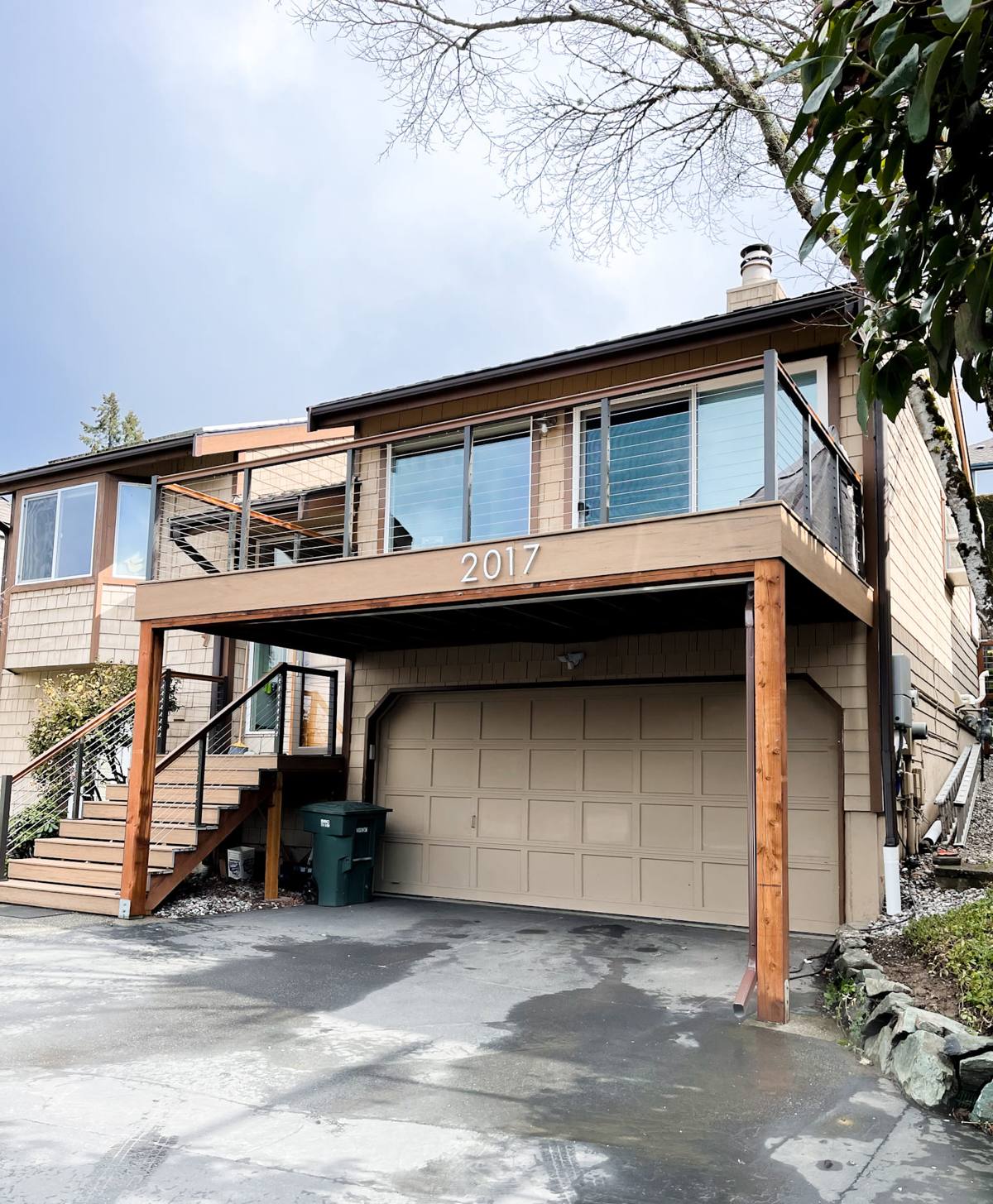
What a Correctly Built Deck Actually Involves
Footings sized for local soil and frost depth
Everson's river-bottom soils vary from sandy loam to heavier clay depending on where you are on the lot, and both drainage and frost depth affect how footings need to be sized and set. Undersized or shallow footings are one of the most common causes of a deck that starts to sag, twist, or pull away from the house within a few years. We size and set footings to the local frost line and soil conditions, not a generic minimum.
Ledger board flashing — the single most important detail
Where a deck attaches to the house, the ledger board and its flashing are the part most likely to fail quietly, behind the scenes, while everything still looks fine from the outside. In a climate with as much driving rain as this one, water finds any gap in the flashing and works its way into the rim joist and framing behind it. That's how you end up with rot nobody sees until the deck starts to feel spongy underfoot. Proper ledger flashing — installed in the right order relative to the house's water-resistive barrier, with the right lap and a drainage gap — is non-negotiable on every deck we attach to a house.
Fasteners and hardware that won't corrode
Salt air accelerates corrosion on standard fasteners, and once a fastener starts to rust it weakens and stains the wood around it. We use coated or stainless fasteners and structural hardware rated for exterior, coastal-influenced exposure, not the cheapest box of deck screws at the hardware store.
Framing that allows airflow underneath
A deck built low to the ground with poor ventilation underneath traps moisture against the joists and posts. Adequate clearance and, where the site allows it, some form of ventilation or drainage path underneath the deck keeps framing lumber drying out between rain events instead of staying wet for weeks at a time.
Choosing Decking Material for This Climate
There's no single "best" decking material for every homeowner — it depends on budget, how much maintenance you're willing to do, and how much moss and shade the site gets. Here's how the common options actually perform in Whatcom County conditions:
| Material | Moisture & Moss Behavior | Maintenance | Typical Lifespan |
|---|---|---|---|
| Pressure-treated pine/fir | Resists rot with proper sealing; moss and algae will grow on the surface if not cleaned and re-sealed regularly | Annual cleaning, re-seal every 1-2 years | 15-20 years with upkeep |
| Cedar | Naturally more rot- and insect-resistant than pine; still needs sealing to resist moss and graying | Cleaning and re-sealing every 1-2 years | 20-25 years with upkeep |
| Composite decking | Won't rot; moss and algae can still grow on the surface film in shaded, damp spots and needs periodic washing | Occasional washing, no sealing or staining | 25-30+ years, manufacturer-dependent |
| PVC/capped decking | Fully moisture-sealed board; least hospitable surface for moss buildup of the group | Occasional washing | 25-30+ years, manufacturer-dependent |
Wood costs less up front and can look excellent when it's maintained, but it asks for real, recurring maintenance in a climate this wet — skip a year of cleaning and sealing and moss gets a foothold fast. Composite and PVC cost more initially but trade ongoing sealing and staining for occasional washing. We'll walk you through the honest tradeoffs for your specific site and budget rather than push one product across the board.
A note on manufacturer warranties
Composite and PVC decking warranties are typically structured around correct installation — proper spacing, fastening, and ventilation underneath the boards. Installing to spec matters as much for warranty coverage as it does for performance, which is one more reason installation quality matters as much as the material choice itself.
Moss, Drainage, and the Shape of the Deck Itself
Moss needs shade and standing moisture to establish, and a lot of Everson properties have both — tree cover along the river, north-facing exposures, and long wet stretches where a deck surface simply doesn't dry out between storms. Design choices affect how much of a moss problem you'll have down the road:
- Board spacing that allows water to drain through rather than pool on the surface
- Grading and drainage at ground level so water isn't sitting under or beside the deck
- Gutters or drip edges positioned so roof runoff isn't dumping directly onto the deck surface
- Orientation and layout that avoid unnecessary shade traps where practical
- A decking material matched to how shaded and damp the site actually is
No design eliminates moss entirely in a shaded Whatcom County yard — some level of periodic cleaning is realistic to expect. But a deck designed with drainage in mind needs that cleaning far less often, and stays safer underfoot in the meantime, since wet moss on a walking surface is a genuine slip hazard.
Permits and Building Code
Most decks above a certain height or attached to the house require a building permit in Whatcom County, and inspections typically cover footings, framing, and guardrail construction before the decking goes down. Guardrail height, baluster spacing, and stair rail requirements are code items, not style choices — they're there because deck failures and falls are two of the most common ways decks cause real injury. We handle permitting and coordinate inspections as part of the build, so you're not left figuring out the county's process on your own.
Our Deck Building Process
- On-site consultation — we look at your yard's grade, sun and shade exposure, soil, and how the deck will attach to the house, and talk through material and layout options.
- Design and quote — a clear scope covering size, materials, railing, and any stairs, with an honest cost range before any work starts.
- Permitting — we prepare and submit what the county requires and schedule inspections along the way.
- Footings and framing — footings set to proper depth, ledger flashed correctly, joists and beams sized for the actual span and load.
- Decking and railing installation — installed to manufacturer spec for spacing and fastening, with attention to drainage underneath.
- Final walkthrough — we go over care and maintenance for whatever material you chose before we consider the job finished.
Maintenance Checklist for Everson Deck Owners
Whatever material your deck is built from, a few habits go a long way toward keeping it safe and good-looking through Whatcom County's wet season:
- Sweep leaves and debris off the deck regularly, especially in fall — trapped organic matter feeds moss and holds moisture against the boards
- Wash the surface at least once a year with a deck-safe cleaner to remove early moss and algae before it takes hold
- Check and re-seal wood decking on the schedule your product calls for — don't wait until it's visibly graying or absorbing water
- Keep gutters and downspouts clear so roof runoff isn't draining onto or under the deck
- Look at the ledger board and flashing area once a year for any staining, soft wood, or gaps
- Trim back overhanging branches where practical to reduce shade and debris buildup
- Check fasteners and railing connections periodically for rust staining or looseness
Why a Crew That Already Works Everson and Lynden Makes a Difference
A deck built by a crew unfamiliar with Whatcom County conditions might build something perfectly adequate for a drier climate and still run into moss, ledger rot, or drainage problems within a few years here. We already know how the rain moves through this area, what the county's inspectors look for, and which details actually matter for a structure that's going to sit outside through a Pacific Northwest winter year after year. That local familiarity shows up in the footings, the flashing, and the material recommendations — not just the finished look.
If you're planning a new deck in Everson or want an honest look at whether an existing one is holding up the way it should, we're glad to come take a look. Use the form below to request a free, no-pressure estimate.