 Lynden Siding
 Storm Damage Roof Repair for Everson Homes
Everson sits in the Nooksack River valley just east of Lynden, and roofs out here take a different kind of beating than roofs closer to the coast. You still get the driving, sideways rain that rolls in off the Salish Sea and up the valley, but you also get colder pockets in winter, heavier moss growth under the tree cover along the river corridor, and wind gusts that funnel through the valley during fall and winter storm systems. A roof that looks fine from the driveway can have wind-lifted shingles, torn flashing, or a soft, moss-saturated deck underneath that's been quietly failing for a season or two.
Storm damage repair isn't just patching whatever's visibly broken after a bad night of wind. It's finding everything the storm loosened, cracked, or opened up — including the damage that won't show as a leak until the next heavy rain — and fixing it correctly the first time so it doesn't come back as a bigger job in six months.
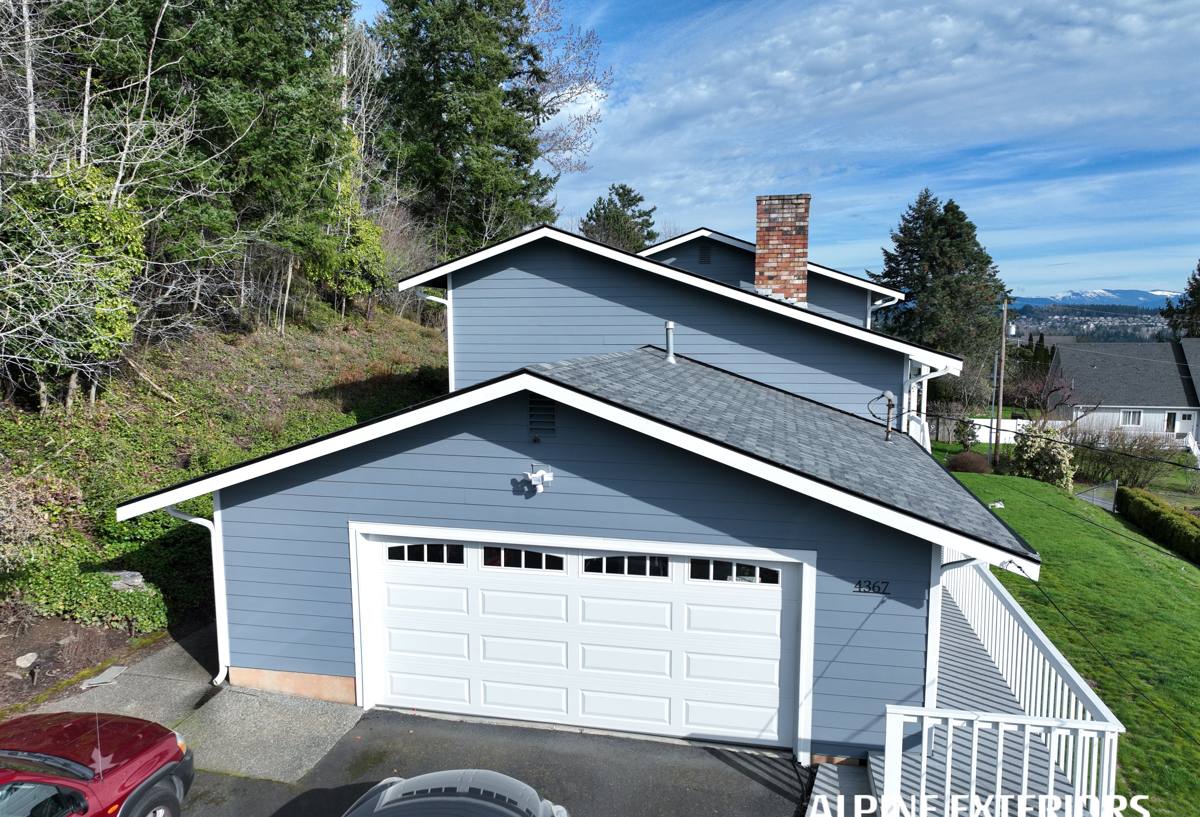
What Whatcom County Weather Does to Roofs Over Time
Three things drive most of the storm-related roof calls we see in this part of Whatcom County:
- Driving rain: When wind pushes rain sideways instead of straight down, water gets forced up under shingle tabs, around flashing edges, and into any gap that would normally shed water fine under calm conditions.
- Wind gusts and uplift: Valley wind doesn't need to be hurricane-force to do damage. Repeated gusts work shingle edges loose, crack ridge caps, and can tear off sections that were already weakened by age or a prior storm.
- Moss and moisture buildup: Everson's tree cover and long damp season mean moss gets a real foothold on north-facing slopes and shaded roof sections. Moss holds moisture against the roofing material year-round, which accelerates granule loss on shingles and can rot decking underneath long before the shingles themselves look worn out.
None of these are dramatic on their own. The problem is they compound — a roof with moss buildup and a little wind-loosened flashing is far more vulnerable to the next storm than a clean, well-maintained one.
Signs Your Everson Roof May Have Storm Damage
Not all storm damage announces itself with an active leak. Some of the most costly damage is the kind that sits quietly for months. After any significant wind or rain event, it's worth checking for:
- Shingles that look lifted, curled, or creased, especially on the side of the roof that faces prevailing wind
- Granules collecting in gutters or at downspout outlets — a sign shingles are being stripped by wind and rain abrasion
- Bent, lifted, or missing flashing around chimneys, skylights, and roof-to-wall transitions
- Soft or spongy spots when walking the roof (a sign of decking damage, best confirmed by a professional)
- New or worsening moss patches, particularly in shaded valleys and north-facing slopes
- Water stains or discoloration on interior ceilings, especially near exterior walls or after a heavy storm
- Debris, branches, or dented vents and caps left behind after wind events
If you notice any of these after a storm, it's worth having the roof looked at before the next round of rain, not after another leak shows up inside.
What a Correct Storm Damage Repair Actually Involves
Finding the Real Source, Not Just the Visible Symptom
Water rarely leaks in a straight line. A stain on a bedroom ceiling might trace back to a flashing failure three feet away, or to wind-driven rain that worked its way in at a ridge vent. A correct repair starts with tracing the actual entry point and the extent of the damage around it, not just patching the spot that's obviously torn.
Checking the Decking, Not Just the Shingles
Shingles are the visible layer, but the plywood or OSB decking underneath is what actually holds everything together. If storm-driven moisture has been sitting under a damaged section for a while, that decking can be soft or delaminated even if the shingles look repairable. Replacing shingles over compromised decking is a short-term fix that fails again the next time it rains hard.
Matching Flashing and Underlayment to the Original System
Flashing around chimneys, valleys, and roof-wall intersections is where most storm leaks actually originate, not in the open field of shingles. Correct repair means replacing flashing with properly lapped, sealed material — not just adding sealant over a bent or loosened piece, which is a temporary fix that tends to fail within a season or two.
Addressing Moss and Moisture, Not Just Storm Damage
If moss contributed to the failure, a repair that ignores it is incomplete. That can mean moss removal, treatment, and in some cases minor adjustments to improve drying and airflow on chronically damp sections of roof.
Our Storm Damage Repair Process
- Inspection and documentation. We walk the roof (weather permitting) and document damage with photos — useful both for your records and for any insurance claim.
- Assessment of decking and structure. We check for soft spots, delamination, or structural concerns under the visible damage, not just the surface layer.
- Written scope and estimate. You get a clear breakdown of what needs repair, what's optional, and what it costs before any work starts.
- Repair or tarp-and-schedule. If the roof needs immediate protection before a full repair can be scheduled, we can tarp vulnerable areas to stop further water intrusion.
- The repair itself. Damaged shingles, flashing, and decking are replaced with matching or compatible materials, properly integrated with the existing roof system.
- Final walk-through. We review the completed work with you and flag anything else worth keeping an eye on.
Repair vs. Replace: How We Make That Call
Not every storm-damaged roof needs full replacement, but sometimes a repair is just delaying an inevitable, more expensive job. Here's roughly how we think through it:
| Factor | Leans Toward Repair | Leans Toward Replacement |
|---|---|---|
| Age of roof | Under 10-12 years | Nearing or past expected lifespan |
| Extent of damage | Isolated to one section or slope | Widespread across multiple slopes |
| Decking condition | Solid, dry, intact | Soft, delaminated, or rotted in multiple spots |
| Moss/moisture history | Minor, treatable | Long-term saturation with granule loss throughout |
| Prior repairs | First or second repair on this roof | Repeated patch jobs in the same areas |
We'll always give you our honest read on which side of that line your roof falls on, and we won't push a full replacement when a solid repair will genuinely hold up.
Materials and Cost Factors
Repair cost depends less on the roofing material itself and more on how much of the system needs to come apart to fix it correctly. Rough factors that move the price:
| Factor | Why It Matters |
|---|---|
| Roof pitch and access | Steeper roofs and difficult access take longer and require more safety setup |
| Decking replacement needed | Rotted or soft decking adds material and labor beyond the shingle layer |
| Flashing complexity | Chimneys, skylights, and multiple valleys each add time to do correctly |
| Matching existing shingles | Older or discontinued shingle colors/styles can be harder to match cleanly |
| Moss remediation | Heavy moss buildup may need removal and treatment as part of the job |
We give a written, itemized estimate before starting so you know exactly what's driving the cost — no vague lump-sum guessing.
Working With Your Insurance Claim
Most homeowners' policies cover sudden storm damage — wind, falling debris, wind-driven rain intrusion — though coverage details and deductibles vary by policy. We're not your insurance adjuster and won't promise a claim outcome, but we can help in practical ways:
- Documenting damage with clear photos at the time of our inspection
- Providing a detailed written estimate your adjuster can reference
- Explaining what we found in plain terms if you need to describe it to your insurer
If you're unsure whether damage is storm-related or the result of gradual wear (which most policies exclude), that's exactly the kind of question worth getting answered before you file a claim.
Why a Crew That Already Works Everson Matters
Storm damage repair isn't a one-size-fits-all trade. A crew that regularly works roofs in and around Everson and greater Lynden already knows how Whatcom County's mix of driving rain, valley wind, and long moss season shows up on local roofs, and what tends to fail first. That familiarity means faster, more accurate assessments and fewer surprises once a repair is underway — we're not guessing at how the local climate behaves, we're working from what we see on roofs in this area season after season.
It also means we're not disappearing after the invoice. If something related to a repair needs a follow-up look after the next storm, we're a local call away, not a company that worked its way through the area once and moved on.
Get a Free Storm Damage Assessment
If your Everson home has visible storm damage, or you just want a roof checked after a rough stretch of weather, we're happy to take a look. The estimate is free, there's no pressure to book anything on the spot, and you'll get a straight answer about what's actually wrong and what it will take to fix it right.