 Lynden Siding
 Decking Built for Everson's Wet, Mossy Climate
Everson sits in the same Whatcom County weather pattern as Lynden and the rest of the Nooksack Valley area: damp marine air moving in off the Puget Sound region, driving rain that comes in sideways more often than straight down, and a moss and algae season that can run from October well into May. A deck built for a dry-climate spec sheet doesn't hold up here. One built with this climate in mind will.
Composite decking has become the default recommendation for homeowners in this area for good reason — it doesn't absorb water the way solid wood does, it won't splinter or need annual staining, and modern capped boards resist the surface mildew that turns a wood deck black by its second winter. But "composite decking" isn't one product with one installation method. The board brand, the substructure underneath it, and the way it's fastened all matter more in a wet, low-sun climate than they would somewhere dry. Get any one of those wrong and you end up with a deck that looks fine for two years and then starts trapping moisture, growing moss between boards, or sagging at the joints.
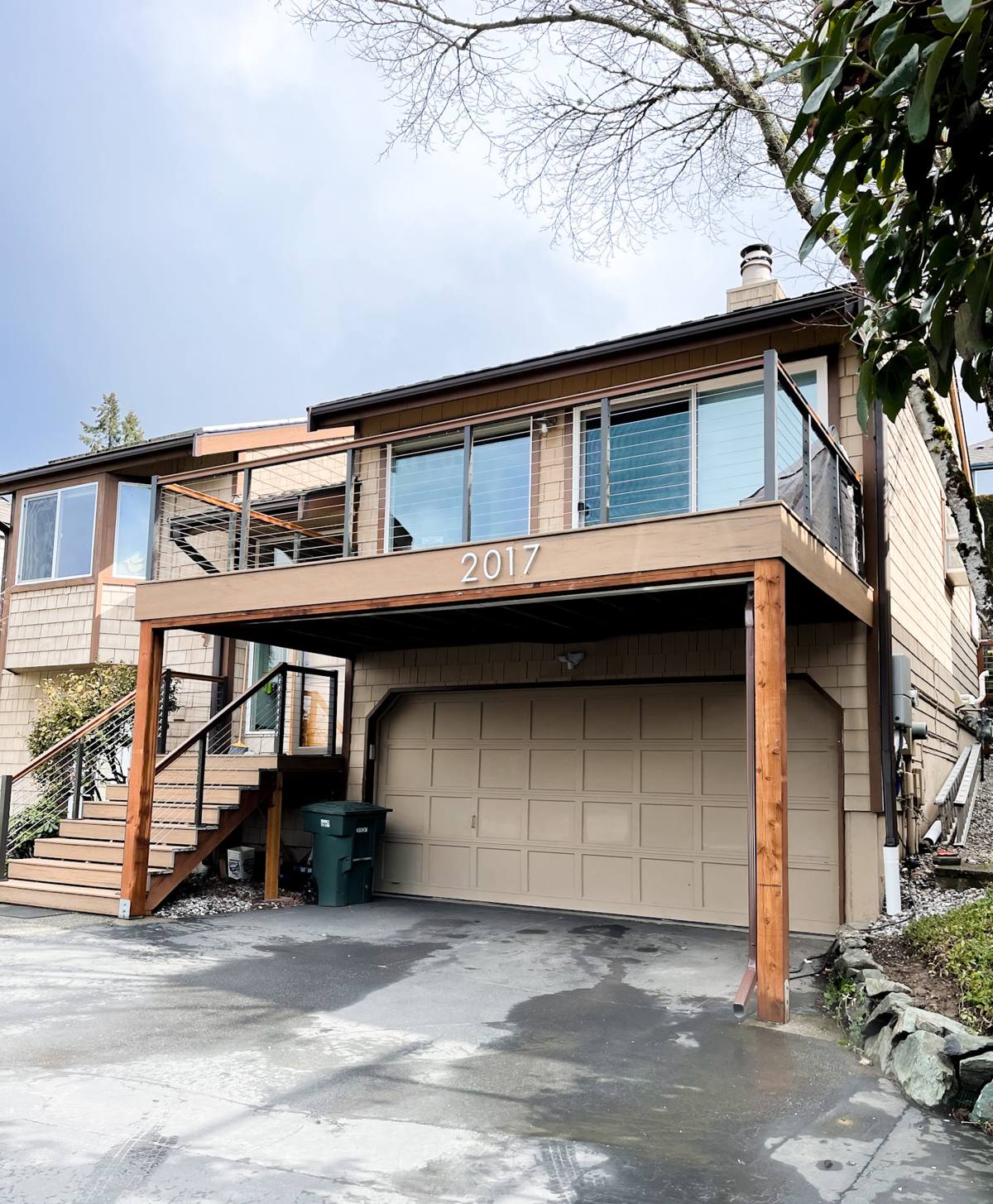
What a Correct Composite Decking Installation Actually Involves
The substructure comes first
Composite boards are only as good as what's underneath them. In this climate, the framing needs to be pressure-treated lumber rated for ground contact where it's close to grade, spaced correctly for the specific board's span rating, and level enough that water doesn't pool anywhere. Skipping joist tape or using undersized joists to save a little material is one of the most common shortcuts we see on decks that start failing early — the composite decking itself might be fine, but the frame underneath is rotting or flexing.
Fastening and gapping
Composite boards expand and contract with temperature and moisture more than most homeowners expect. Hidden fastener systems, installed with the manufacturer's specified gap between boards, let the deck move without buckling and let water drain through instead of sitting on the surface. Face-screwing boards tight against each other might look clean on installation day, but it's one of the fastest ways to cause cupping and standing water within a year or two in a climate that sees this much rain.
Drainage and airflow underneath
Low decks built close to the ground without adequate airflow underneath trap moisture against the joists and the underside of the boards. That's exactly the environment moss and mold need to take hold. A correct installation accounts for ventilation, proper drainage away from the house foundation, and enough clearance underneath — even on lower decks — that the space can actually dry out between rain events.
Composite vs. Wood vs. PVC Decking: A Local Comparison
Every material has trade-offs. Here's how the common options actually perform in a climate with driving rain, salt-laden air, and a long moss season, rather than how they perform in a manufacturer's brochure.
| Material | Moisture Behavior | Maintenance in This Climate | Typical Lifespan |
|---|---|---|---|
| Pressure-treated wood | Absorbs water, prone to splintering and rot at fastener points | Annual cleaning, sealing or staining | 10-15 years before major repairs |
| Cedar | Naturally rot-resistant but still absorbs moisture over time | Regular oiling; moss and graying without upkeep | 15-20 years with consistent care |
| Uncapped composite | Won't rot but the exposed wood-plastic surface can absorb some moisture and support mildew growth | Periodic cleaning; more prone to staining than capped boards | 20-25 years |
| Capped composite / PVC | Sealed outer shell resists moisture absorption and surface mildew | Occasional washing; lowest ongoing maintenance | 25-30+ years, manufacturer-warrantied |
For most Everson homeowners, capped composite is the right balance of upfront cost and long-term maintenance given how much rain and shade this area gets through the fall and winter. Wood isn't a bad option if it's cared for, but "cared for" means real annual upkeep, not just a coat of sealant every few years.
Signs Your Current Deck Is Losing the Battle with Moisture
Whether you have wood or composite decking now, these are the warning signs worth walking outside and checking for, especially heading into another wet season:
- Green or black film building up between boards, particularly on the shaded or north-facing side of the deck
- Boards that feel spongy, spring back slowly, or show visible cupping
- Fasteners that have backed out or left rust streaks down the board face
- Standing water that takes more than a few hours to drain after rain
- Gaps between boards that have closed up tight, with no room for the material to move
- A musty smell coming from underneath the deck or from a low-clearance area
- Railing posts or stair stringers that feel loose or have visible rot at the base
None of these mean the whole deck needs to be torn out. Sometimes it's a substructure repair and a board or two. Other times it's a sign the original installation didn't account for this climate and a full replacement is the more honest recommendation. We'll tell you which one it is.
Our Process for an Everson Composite Decking Project
Honest on-site evaluation
We start by looking at what's actually there — existing framing, drainage, sun and shade exposure, and how the deck ties into the house. That tells us whether a full tear-off is needed or whether the substructure can be reused, and it's the basis for a straight answer on scope and cost before any work starts.
Board selection matched to the site
A deck that sits in full shade most of the day needs different consideration than one in open sun — mainly around which board finish and color will show algae growth least and how much airflow the design needs underneath. We'll talk through the composite options that fit your budget and the way you actually use the space.
Installation done to the substructure standard, not just the surface
Framing, flashing where the deck meets the house, joist protection, correct fastener spacing, and drainage all get done to the same standard regardless of which board line you choose. The visible decking is the last step, not the only step.
Walkthrough and care guidance
Before we consider the job finished, we walk the deck with you, point out anything you should know about that specific board's cleaning recommendations, and leave you with a clear sense of what routine maintenance actually looks like — which for most capped composite is minimal, but not zero.
Maintenance Composite Decking Still Needs Here
Composite decking is a major step down in maintenance compared to wood, but "low maintenance" doesn't mean "no maintenance," especially with a moss season as long as this region gets. A rinse with a garden hose and a soft-bristle brush a couple of times a year, more often on shaded sections, keeps organic buildup from getting a foothold. Avoid pressure washers on close settings — they can damage the cap layer on some boards even though they won't hurt the core. Keeping gutters clear and trimming back vegetation that shades the deck year-round both go a long way toward keeping algae from becoming a recurring problem rather than an occasional one.
Cost Factors for Composite Decking in Everson
Composite decking generally costs more upfront than pressure-treated wood and less than most premium hardwoods, with the gap narrowing once you account for how much less maintenance it needs over its lifespan. Exact pricing depends on square footage, board tier, substructure condition, railing type, and site access, but a few factors move the number more than homeowners expect:
- Whether the existing substructure can be reused or needs to be rebuilt
- Board tier — uncapped composite costs less than fully capped or PVC options
- Railing material, since composite or metal railing systems add more than basic wood rail
- Deck height and stair complexity
- Site access for equipment and material delivery
We give straight, itemized estimates rather than a single lump number, so you can see exactly what's driving the cost and where there's room to adjust if the budget needs it.
Why Hiring a Crew That Already Works in Everson Matters
A lot of decking problems in this area trace back to installation practices that would be fine in a drier climate but weren't built for this much sustained rain and shade. A crew that regularly works Everson and the surrounding Lynden area already knows which substructure details matter most here, which board finishes hold up against moss in the shaded yards common to this area, and how to plan drainage on a lot that stays damp for a good part of the year. That's not something you get from a general handyman crew doing one deck a year — it comes from doing this specific work, in this specific climate, repeatedly.
If you're weighing a deck replacement or a new build, we're happy to take a look and give you a straightforward assessment — no pressure, no inflated scope. Fill out the form below for a free estimate, and we'll walk you through what your project actually needs.