 Lynden Siding
 Board & Batten Siding for Homes Near Abbotsford, BC
Board and batten is one of the most requested siding profiles we install in and around Abbotsford, BC — the vertical lines read as farmhouse, modern, or Craftsman depending on the trim and color, and it holds up well against the wide-open weather this stretch of the Fraser Valley and northern Whatcom County shares. We're a Lynden-based crew that already works this corridor regularly, so we're not learning the local conditions on your dime — we know what this climate does to a wall before we ever pick up a nail gun.
This page is specifically about board and batten siding for homes in the Abbotsford, BC area — what the profile needs to perform here, what a correct installation actually involves, and why the crew matters as much as the material.
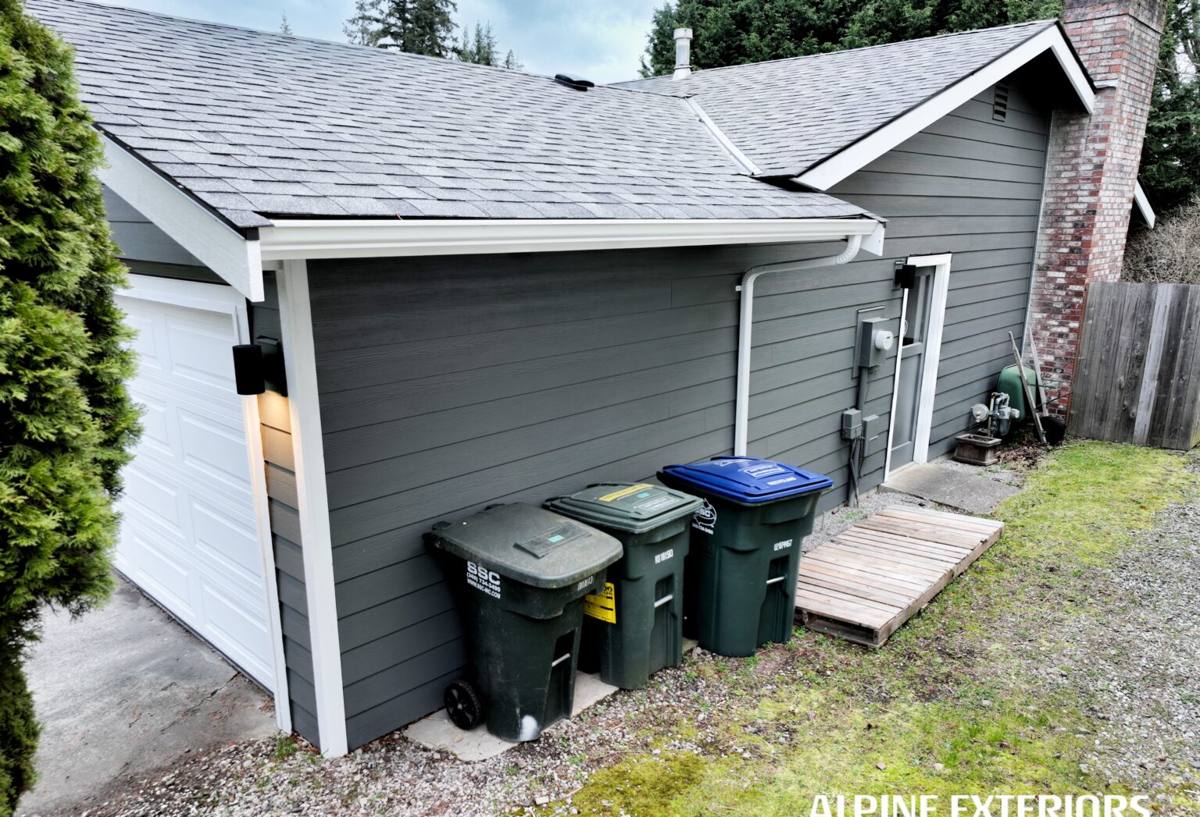
What This Climate Does to a Vertical-Board Wall
Abbotsford sits in a transition zone — close enough to the coast to catch salt-tinged air on stronger weather systems, and squarely in the path of the long, wet Pacific storm track that soaks the Fraser Valley and Whatcom County for months at a stretch. Board and batten siding, because of its vertical seams and raised battens, is more exposed to water intrusion at those joints than a horizontal lap profile if it's not detailed correctly.
The three things that wear a board and batten wall out early
- Driving rain: wind-driven rain here doesn't just fall straight down — it gets pushed sideways into vertical seams, battens, and butt joints. Any gap in flashing or caulk becomes a water path.
- Moss and algae season: shaded north and west walls in this region can stay damp for weeks at a time from fall through spring. Untreated or porous materials pick up moss and green staining fast on vertical battens where water sheets down and lingers.
- Salt-influenced air: homes closer to open exposure or lower elevations pick up airborne salt on stronger weather days, which accelerates corrosion on fasteners and hardware that isn't rated for it.
None of this means board and batten is a bad choice here — it means the material and the installation both have to be built for these conditions, not just installed to a generic spec sheet.
Why We Only Install James Hardie for This Profile
We install James Hardie fiber cement exclusively — we don't run LP SmartSide, vinyl, Cemplank, Allura, primed spruce, or cedar on our jobs, including board and batten. That's a deliberate standard, not a sales pitch, and it matters more on this profile than almost any other.
What the alternatives get right — and where they struggle here
Wood-based board and batten (cedar or primed spruce) has real visual warmth and a long tradition in this look, and we understand why homeowners are drawn to it. But wood is organic material in a climate that stays wet for a good chunk of the year — it needs consistent refinishing, and the vertical batten joints are exactly where moisture gets trapped against end grain. Vinyl board and batten is low-maintenance and inexpensive, but it's a thin, flexible material that can show waviness in direct light and doesn't hold paint if you ever want to change the color. Other fiber cement brands make a reasonable product, but we've standardized on one manufacturer, one warranty structure, and one factory finish system so every job we do is consistent and backed the same way.
James Hardie fiber cement is non-combustible, dimensionally stable in wet-dry cycling, and available in the HZ5 product line engineered for the kind of freeze-thaw and moisture exposure this region sees. The ColorPlus factory finish is baked on and warrantied against peeling and cracking — no field-painted vertical joints drying unevenly, which is a common weak point on wood board and batten.
| Factor | Wood (cedar/primed spruce) | Vinyl | James Hardie fiber cement |
|---|---|---|---|
| Moisture behavior in long wet seasons | Absorbs, swells, needs sealed end grain | Won't rot but traps moisture behind panel | Engineered for wet climates (HZ5) |
| Finish durability | Repaint/reseal every few years | Color fades, can't repaint easily | Factory ColorPlus finish, long warranty |
| Fire rating | Combustible | Combustible | Non-combustible |
| Moss/algae resistance on vertical joints | Prone without upkeep | Moderate | Strong with proper detailing |
| Long-term maintenance | High | Low, but limited lifespan/appearance | Low, with periodic caulk/inspection |
What a Correct Board & Batten Installation Actually Involves
The look of board and batten is simple — vertical boards, raised battens over the seams — but the assembly behind it is where jobs succeed or fail. This is the part homeowners rarely see quoted or explained, and it's where corners get cut on lower-bid jobs.
The install sequence that matters
- Weather-resistive barrier and rainscreen: a drainage gap behind the siding lets any water that gets past the surface drain and dry instead of sitting against the wall sheathing — critical in a climate with this much sustained damp weather.
- Flashing at every horizontal transition: window heads, door heads, roof-to-wall intersections, and any horizontal trim need proper metal flashing, not just caulk, because caulk is a maintenance item, not a permanent water seal.
- Fastener placement and spacing: Hardie board and batten has specific fastening requirements for board width and batten overlap; going off-spec here is one of the most common causes of early failure and voided warranties.
- Corrosion-resistant fasteners and hardware: given the salt-influenced air this area can see, we use fasteners rated for that exposure rather than standard hardware that can streak or corrode early.
- Caulking only where specified: Hardie's installation instructions call for sealant at specific joints, not everywhere — over-caulking traps moisture just as badly as under-caulking lets it in.
- Factory-finished cut edges sealed: any field cut on ColorPlus board needs the edge treated per Hardie spec so the factory warranty stays intact.
Skip any one of these steps and the wall may look fine for a year or two before problems show up — usually right at the seams, which is the hardest and most expensive place to repair after the fact.
Our Process for This Job
We keep the process straightforward because most of the value is in the details above, not in a complicated sales process.
- On-site walkthrough: we look at wall exposure, existing siding condition, moisture history (moss lines, staining, soft spots), and window/door flashing before quoting anything.
- Written estimate: board width, batten spacing, color, trim details, and a clear scope — no vague line items.
- Tear-off and inspection: once old siding comes off, we check sheathing for hidden rot or moisture damage before closing the wall back up.
- Install to Hardie spec: rainscreen, flashing, fastening, and sealant done to manufacturer instructions, not shortcuts.
- Final walkthrough: we go over the finished job with you before calling it done.
Why Hiring a Crew That Already Works This Area Matters
Board and batten siding isn't a profile you want a crew learning on. The vertical joint pattern is less forgiving of flashing mistakes than horizontal lap siding, and the consequences of a bad seal show up as trapped moisture, not just cosmetic issues. A crew that's already worked homes in and around Abbotsford, BC and the Lynden area knows the wall exposures, the wet-season timing, and the moss patterns specific to this stretch of the Fraser Valley and Whatcom County border — that's not something you can fully substitute with a generic install manual.
Working locally also means faster response if something needs a look after a big storm, and a crew with a reputation to protect in the same communities we live and work in.
Cost Factors to Expect
We don't publish fixed per-square-foot pricing because board and batten costs shift with board width, trim complexity, wall condition, and access — but these are the factors that move the number most:
| Factor | Why it affects cost |
|---|---|
| Existing siding removal | Tear-off and disposal of old material adds labor |
| Sheathing condition | Hidden rot found during tear-off requires repair before new siding goes on |
| Board width and batten spacing | Narrower spacing means more material and labor per wall |
| Trim and corner detail | Custom corner boards, window trim, and transitions add time |
| Wall height and access | Multi-story or difficult-access walls require more equipment and time |
A Few Things Worth Checking Before You Hire Anyone
- Ask whether a rainscreen/drainage gap is included — some lower-bid quotes skip it.
- Ask what flashing details are used at windows, doors, and roof lines — get it in writing.
- Confirm the fastener type and spacing match the manufacturer's published instructions for your board width.
- Ask whether the installer is a certified/preferred Hardie installer, and what that means for your warranty.
- Get the finish warranty terms in writing, not just verbally described.
If you're weighing board and batten for a home near Abbotsford, BC, we're happy to take a look, walk the exterior with you, and put together a straightforward, written estimate — no pressure, no obligation. Reach out through the form below and we'll get a time on the calendar.