 Lynden Siding
 Why Bellingham Siding Wears Differently Than Inland Siding
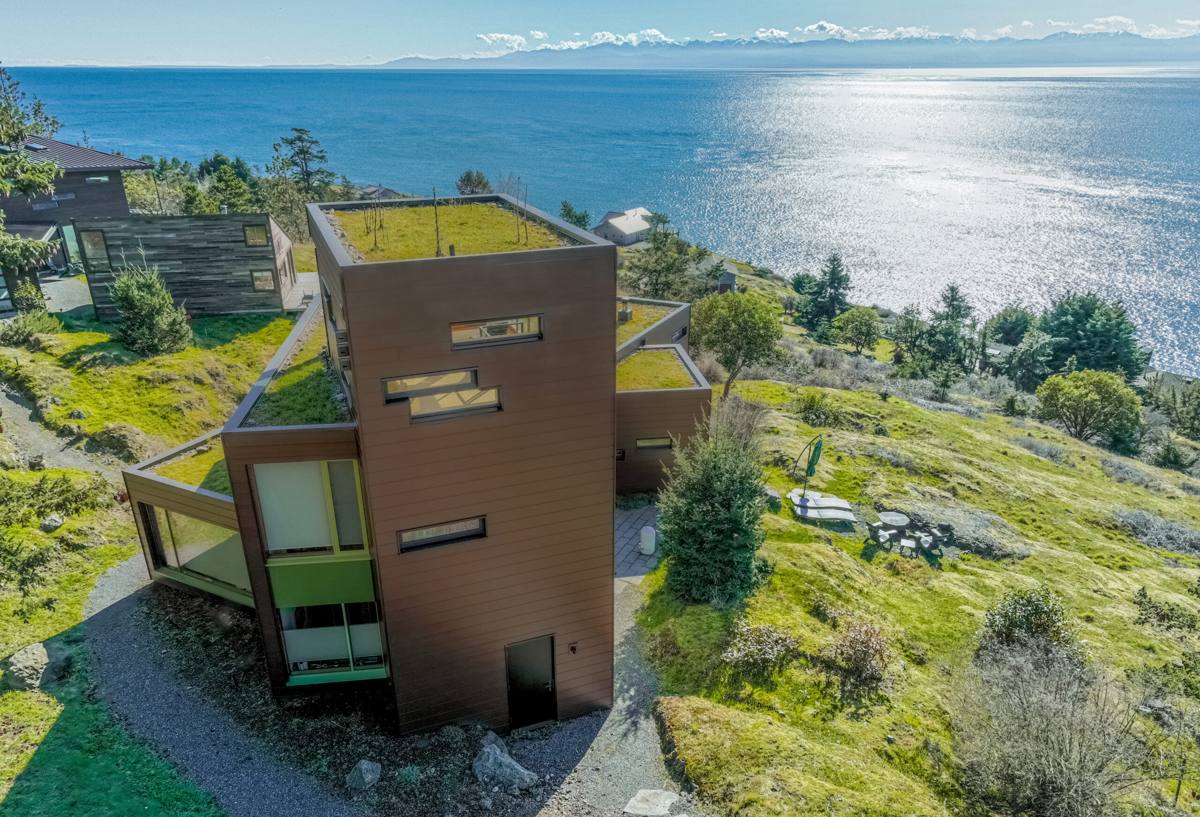
Bellingham sits right on Bellingham Bay, and that changes what siding has to survive compared to homes even a few miles inland in Whatcom County. Salt-laden air off the water accelerates corrosion on fasteners and metal trim, driving rain off the Strait pushes moisture sideways into seams and laps that would stay dry in a gentler climate, and the long, damp shoulder seasons here give algae and moss months at a time to establish themselves on north-facing walls and anything shaded by trees or roof overhangs. None of this is exotic — it's just Pacific Northwest coastal weather doing what it does, year after year. The problem is that a lot of siding products and a lot of installation shortcuts are engineered for an easier climate than this one, and Bellingham homeowners are the ones who find that out the hard way, usually ten or fifteen years in.
Siding replacement in Bellingham isn't just a cosmetic project. Done right, it's the thing standing between your framing and three overlapping stressors — salt, sustained wet, and moss/algae growth — that don't let up for months at a time.
Signs a Bellingham Home Actually Needs Siding Replacement
Not every issue calls for full replacement, but in this climate certain signs mean the siding's job is basically over, even if it still looks okay from the street:
- Soft or spongy spots when you press on siding, especially near the bottom courses and around window and door trim
- Persistent moss or dark algae staining that comes back within a season or two of cleaning
- Visible gaps, warping, or buckling at panel seams and laps
- Paint that's failing repeatedly in the same spots — often a sign moisture is moving through the material, not just weathering the surface
- Rust streaking from fasteners or trim, common where salt air has been at metal for years
- Rot at butt joints, corners, or anywhere siding meets a roofline, deck, or porch
If you're seeing two or more of these, patch repairs are usually a delay tactic, not a fix. The moisture and salt exposure that caused the damage in one spot is doing the same thing everywhere else on the wall, just on a slower timeline.
What a Correct Siding Replacement Job Actually Involves
Siding replacement is not just removing old panels and nailing up new ones. In a marine-influenced climate like Bellingham's, the parts you don't see matter as much as the finished look:
Full Tear-Off and Substrate Inspection
Old siding comes off entirely so the sheathing underneath can actually be checked, not guessed at. This is where hidden rot, past water damage, or old flashing mistakes get found — and they need to be fixed before anything new goes up. Covering over a compromised wall with new siding just delays the same failure.
Water-Resistive Barrier and Flashing
A correctly lapped weather-resistive barrier, properly integrated window and door flashing, and correct kick-out flashing at roof-to-wall intersections are what actually keep driving rain out of the wall assembly. Siding sheds most of the water, but the barrier behind it is the backup system — and in a climate that gets sustained, wind-driven rain, that backup system has to be right.
Fastening and Clearances
Fastener type, spacing, and depth all affect long-term performance, especially with fiber cement. So does keeping the bottom edge of the siding at the correct clearance above grade, decks, and roofing — a detail that's easy to shortcut and expensive to ignore, since it's one of the most common causes of moisture damage at the base of a wall.
Factory-Finished, Not Field-Painted
Where the product allows for it, a factory-applied finish holds color and sheds moisture far more consistently than a field-applied coat, and it removes painter skill and weather timing as variables in how the finish performs over the next decade.
Why We Install Only James Hardie Fiber Cement in Bellingham
We don't install vinyl, LP SmartSide, primed spruce, cedar, or other fiber cement brands. That's a deliberate standard, not a supply limitation, and it's worth explaining rather than just stating.
Vinyl siding is inexpensive and low-maintenance in mild climates, but it's dimensionally unstable in temperature swings, it can crack on impact in cold weather, and it doesn't hold up structurally the way fiber cement does over decades of coastal wind and moisture cycling. Wood products — cedar or primed spruce — look great when new, but they need real maintenance discipline (recoating, caulking, moisture monitoring) to survive Whatcom County's wet season after wet season, and they're the most vulnerable of the common options to the rot and moss issues we see constantly on Bellingham homes. Engineered wood siding like LP SmartSide is a genuine improvement over raw wood in some ways, but it's still a wood-strand product with edge-sealing requirements that have to be maintained correctly for its warranty and performance to hold up in a climate this consistently wet.
James Hardie fiber cement is non-combustible, dimensionally stable, and engineered specifically for climates like this one — Hardie's HZ5 product line is formulated for the freeze-thaw and moisture cycling common to the Pacific Northwest. The ColorPlus factory finish resists the fading and peeling that field-applied paint struggles with, and it holds up to salt air and sustained damp better than a job-site coat. It's also simply the product we trust enough to install to spec and stand behind, which is the whole point of standardizing on one system instead of installing whatever a homeowner happened to ask for.
Material Comparison for Bellingham's Coastal Exposure
| Factor | James Hardie Fiber Cement | Vinyl | Cedar / Primed Wood |
|---|---|---|---|
| Moisture resistance | Engineered for wet climates (HZ5) | Doesn't absorb, but seams/gaps let water behind panels | Absorbs moisture without regular maintenance |
| Salt air durability | Strong; non-combustible, stable material | Can become brittle over time | Vulnerable without diligent recoating |
| Moss/algae resistance | Factory finish resists staining better than field paint | Moderate; surface can trap grime | High risk without frequent cleaning/treatment |
| Maintenance | Low; occasional wash, no repainting for years | Low, but limited repair options if damaged | High; regular recoating and inspection required |
| Fire resistance | Non-combustible | Combustible | Combustible |
Our Process for a Bellingham Siding Replacement
- On-site assessment — we walk the exterior, check for rot, moisture intrusion, and past repair shortcuts, and look at exposure specifics like tree cover, north-facing walls, and proximity to the water
- Scope and product plan — we spec the correct Hardie product line, profile, and finish for the home, and flag any sheathing or flashing repairs the tear-off is likely to uncover
- Tear-off and substrate repair — old siding comes off, damaged sheathing or framing gets replaced, not covered up
- Weather barrier and flashing installation — water-resistive barrier, window/door flashing, and kick-out flashing installed to manage driving rain correctly
- Siding installation to spec — correct fastening, clearances, and lap details, following Hardie's installation requirements rather than shortcuts that void warranty coverage
- Final walkthrough — we go over the finished work with the homeowner before calling the job done
Why Hiring a Crew That Already Works Bellingham Matters
Siding installation instructions look the same on paper everywhere. What changes is judgment — knowing that a wall facing the water needs more attention to flashing and clearances than a sheltered inland wall, recognizing moss staining patterns that point to a drainage or shading problem rather than just a cleaning issue, and understanding how Whatcom County's wet season timeline affects sequencing a tear-off so the wall isn't exposed longer than it needs to be. A crew that regularly works Bellingham and the surrounding coastal areas has already seen how these houses age in this specific climate, which shows up in fewer callbacks and fewer surprises once the old siding comes off.
It also matters for accountability. A contractor based nearby, working in this region regularly, is easier to reach if a question comes up after the job than one that only shows up for the install and moves on.
Cost Factors to Expect
Every Bellingham home is different, but a few factors consistently move the cost of a siding replacement project up or down. We won't quote a number without seeing the house, but this is what typically drives the range:
| Factor | Why It Matters |
|---|---|
| Extent of substrate repair | Rot or water damage found during tear-off adds material and labor beyond the siding itself |
| Home size and wall complexity | Dormers, multiple stories, and cut-up wall lines take more labor per square foot than simple rectangular walls |
| Product line and profile | Hardie offers multiple plank widths, textures, and trim options at different price points |
| Access and site conditions | Tight lots, landscaping, or difficult staging areas affect labor time |
| Existing flashing and trim condition | Failed flashing around windows and rooflines often needs replacement alongside the siding |
If your Bellingham home is showing signs of siding failure — soft spots, recurring moss, failing paint, or damage near the base of the walls — it's worth getting a real look before winter's driving rain finds every weak point in the wall. We offer a free, no-pressure estimate: we'll walk the exterior, tell you honestly what we find, and lay out what correct replacement would involve for your specific home. Use the form below to get started.