 Lynden Siding
 New Roof Installation for Kendall Homes
Kendall sits in the rural stretch of Whatcom County east of Lynden, in the Nooksack River valley corridor where farmland, tree line, and foothill terrain meet. It's not a waterfront community, but it still sits well within the marine-influenced weather system that governs exterior work across this whole part of Washington. That means a new roof going onto a Kendall home has to be specified and installed for the same fundamental conditions we deal with closer to the coast: salt-tinged air that travels further inland than most homeowners assume, rain that arrives sideways as often as it falls straight down, and a moss season that can run most of the calendar year on a shaded roof plane.
Lynden Siding Company installs roofs, siding, windows, and decks across this part of Whatcom County, and Kendall is one of the areas we work in regularly. A new roof installation is one of the largest single investments a homeowner makes in a house, and it's also one of the easiest jobs to get subtly wrong in ways that don't show up for a few years. This page walks through what a Kendall roof specifically needs, what a correct installation actually involves, and how our process works from first look to final inspection.
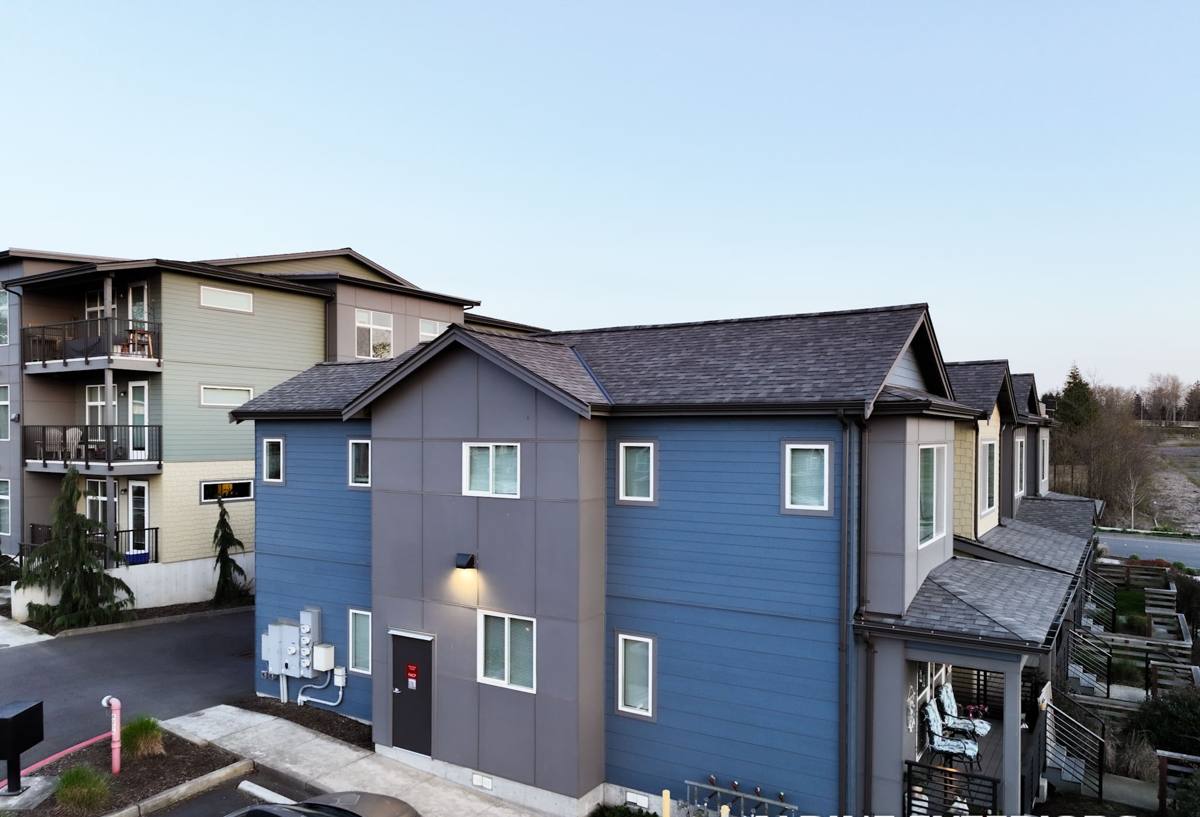
What Kendall's Climate Puts a Roof Through
Salt Air This Far Inland
Kendall is far enough from the immediate shoreline that it's easy to assume salt exposure isn't a real factor out here. It still is. Marine air moves across this entire corner of Whatcom County, and over years that steady, low-level salt exposure accelerates corrosion on exposed fasteners, flashing, and lower-grade metal components. It's a slower process than at the coastline, but it's real enough that hardware and flashing choices shouldn't assume a dry, purely inland climate.
Driving Rain
Rain through fall and winter in this valley rarely falls straight down. Wind pushes it sideways into roof valleys, around chimneys and vent pipes, and up under shingle edges and flashing laps that would hold fine in a calmer climate. That sideways load is the detail that separates a roof that stays watertight for decades from one that starts leaking behind the shingles within a few wet seasons, regardless of what the shingle itself is rated for.
A Long Moss Season
Mild year-round temperatures, tree cover, and near-constant dampness add up to a moss and algae season that can run close to year-round on shaded, north-facing roof slopes. Kendall's mix of open farmland and tree-sheltered rural lots means this plays out differently from house to house — a wide-open, sun-exposed roof plane dries out fast between rains, while a roof shaded by mature trees or set against a tree line often stays damp far longer. Moss doesn't just look bad on a roof; it holds water against the surface, works its way under shingle edges, and can lift or loosen roofing material if it spreads unchecked over a few seasons.
Freeze-Thaw and Temperature Swings
Whatcom County doesn't see extreme cold most winters, but Kendall's inland, valley-floor location means it can run a few degrees colder on clear winter nights than areas closer to the water, with more frequent light freeze-thaw cycling. Roofing material that stays saturated more often than it fully dries out ages faster under that cycling, which is one more reason underlayment and material selection matter as much as the shingle brand on the label.
New Roof vs. Repair: How to Tell Which One You Actually Need
Not every roofing problem on a Kendall home means a full replacement, and we don't default to recommending one. We look at the age of the existing roof, how much of the surface is affected, whether the roof deck underneath has moisture damage, and how many prior repairs the roof has already had.
- A single leak on an otherwise sound, mid-life roof is usually a straightforward repair, not a reason to replace the whole thing
- Moss-related damage spread across multiple roof slopes, rather than one shaded corner, points toward a roof nearing the end of its usable life
- Soft spots or sagging in the roof deck almost always mean water has been getting in for a while, and a repair at that point just delays a bigger job
- A roof that's already had several patch repairs in different spots over a few years is usually more honestly addressed with full replacement
- Granules piling up in gutters and downspouts on an asphalt shingle roof signal the shingles are breaking down, not just dirty
We'll tell you plainly which situation your roof is actually in, including when a repair is the right call and a full replacement isn't necessary yet.
Roofing Materials for a Kendall Home
There's no single correct roofing material for every house — it depends on the roof's pitch, how much shade it gets, your budget, and how long you plan to stay in the home. What matters is understanding the real trade-offs for this specific inland-valley climate before deciding.
| Material | Moss & Moisture Behavior | Typical Maintenance | Realistic Lifespan Here |
|---|---|---|---|
| Architectural asphalt shingle | Performs well with proper ventilation; moss-resistant granule options help on shaded slopes | Periodic moss removal and gutter checks | 20-30 years |
| Standing seam metal | Sheds water and resists moss buildup well due to its smooth, non-porous surface | Low; occasional fastener and sealant checks | 40-60 years |
| Cedar shake | Absorbs moisture readily; needs airflow underneath to dry fully between rains | Higher; regular treatment and active moss control | 20-30 years with consistent upkeep |
| Composite/synthetic shingle | Resists moisture absorption; actual performance varies significantly by product quality | Low to moderate | 30-50 years depending on product |
On a shaded, tree-lined Kendall lot, moss resistance and drainage design matter more than they would on an open, sun-exposed farmhouse roof a half-mile away. We factor your specific roof's exposure into the recommendation rather than defaulting to whichever product is easiest to sell.
What a Correct New Roof Installation Actually Involves
Buying the right shingle or metal panel is only part of the job. A roof that performs the way it's supposed to for its full rated lifespan depends on what happens underneath it, and this is where a lot of roofs in this climate quietly fail years before they should.
Tear-Off and Deck Inspection
We remove the existing roofing down to the deck rather than laying new material over old, because that's the only way to actually see the condition of the sheathing underneath. Years of trapped moisture behind failing shingles or under moss growth can rot decking and framing in ways that aren't visible from the outside, and that damage needs to be addressed before anything new goes down.
Underlayment and Ice-and-Water Shield
We use underlayment rated for sustained moisture exposure, not just a minimum-code product, and we install ice-and-water shield at eaves, valleys, and other spots where water and debris naturally collect. In a climate where roofs stay damp more often than they fully dry, this layer is doing real work most of the year, not just during the occasional freeze.
Flashing at Every Transition
Valleys, chimneys, vent pipes, skylights, and roof-to-wall transitions are where the overwhelming majority of roof leaks in this region actually start. Each of those needs flashing that's properly lapped, sealed, and integrated with the underlayment as one continuous system rather than treated as a separate afterthought step.
Ventilation
Attic and roof deck ventilation lets moisture escape from inside the structure instead of getting trapped against the underside of the new roofing. Poor ventilation shortens the service life of almost any roofing material, and it's an easy detail to shortcut on a job since it doesn't show up on the finished roof from the ground.
Fasteners and Metal Components
Given the salt exposure that reaches even this far inland, we use fasteners and metal flashing rated for corrosion resistance rather than standard hardware. It's a small cost difference relative to the total job, and it's exactly the kind of detail that separates a roof that still looks and performs well after fifteen years from one that starts showing rust streaks and failing seals well before that.
How Our Process Works
- Initial inspection and walk-through. We look at the existing roof, the attic or roof deck from inside where accessible, and the specific sun/shade exposure of each slope before recommending anything.
- Honest repair-vs-replace assessment. We tell you what we actually found and what it means, including if a repair is genuinely the better call.
- Material and scope discussion. We walk through the realistic material options for your roof's pitch and exposure, and the honest trade-offs between them, rather than pushing one product.
- Written estimate. You get a clear scope and price before any work begins, with no surprise line items added mid-job.
- Tear-off and deck repair. Old roofing comes off, the deck is inspected, and any rot or damaged sheathing is repaired before new material goes down.
- Underlayment, flashing, and new roofing installation. Installed as one integrated moisture-management system, not a stack of separate steps.
- Final walk-through. We go over the finished roof with you before considering the job complete.
Cost Factors for a Kendall Roof Replacement
| Factor | What It Affects | Why It Matters in Kendall |
|---|---|---|
| Roof size and pitch | Total material and labor | Steeper pitches and larger footprints common on rural properties add labor and safety equipment time |
| Deck condition | Repair costs before new roofing goes on | Years of trapped moisture behind aging shingles can rot sheathing before it's ever visible from outside |
| Material choice | Upfront cost and lifespan | Shaded, tree-lined lots benefit more from moss- and moisture-resistant materials than open, sun-exposed roofs do |
| Number of penetrations | Flashing labor and material | Chimneys, vent pipes, and skylights are common leak points and each needs proper flashing integration |
| Site access | Labor time and equipment needs | Rural lots, longer driveways, and tree cover can add staging and material-handling time |
Real numbers depend on the specific roof and property, which is why we walk the site before quoting rather than pricing off square footage alone.
Signs Your Kendall Roof Needs Attention
- Moss buildup in valleys or on shaded slopes that returns quickly after cleaning
- Granules collecting in gutters or at the base of downspouts
- Curling, cupping, or missing shingles, especially after a windstorm
- Water staining on interior ceilings near exterior walls or around chimneys
- Daylight visible through the roof deck when viewed from inside the attic
- Sagging in the roofline or soft spots when walked on
- Flashing that looks lifted, rusted, or missing sealant around vents and chimneys
Why a Crew That Already Works Kendall Matters
A crew that works roofs across this part of Whatcom County through every season sees how moss, wind-driven rain, and salt-tinged air actually behave on real houses over years, not just how a product performs on a spec sheet. That translates into practical decisions on install day: which roof orientations on a Kendall property need extra flashing attention because of tree shade, how much ice-and-water shield a particular valley actually needs, and which details are worth the extra time so you're not dealing with a callback two winters later. It also means understanding the difference between an open farmland roof that dries out quickly and a tree-sheltered roof nearby that stays damp for days after a storm, and not applying the same approach to both.
Beyond the Roof
A new roof installation is also a natural point to catch related issues before they compound. A roof-to-wall transition that's been letting moisture into the siding below, trim that's been slowly rotting under a gutter that no longer drains correctly, or a deck ledger board trapping water against the house can all be addressed as part of the same project instead of surfacing as separate problems later. Because we handle roofing, siding, windows, and decks, we can look at a Kendall property as one connected exterior system rather than fixing the roof and leaving a related issue for you to discover on your own.
If your Kendall home needs a new roof, or you just want an honest read on whether a repair will actually hold, we're glad to take a look. Reach out using the form below to schedule a free, no-pressure estimate.