 Lynden Siding
 Roof Repair Built for Kendall's Climate, Not a Generic Job
Kendall sits out in the foothills east of Lynden, close enough to the Nooksack valley that the same weather patterns that soak the rest of Whatcom County land here too — just with more tree cover and more shade holding the moisture in. A roof repair that works fine on a dry, open lot in another part of the state doesn't always hold up the same way out here. Whatcom County's marine climate pushes salt-tinged air in from the Sound, drives rain sideways during winter storms, and keeps roofs damp long enough each year that moss gets a real foothold. A repair that's done right for Kendall accounts for all of that, not just the hole or the leak you can see.
This page is specifically about roof repair for Kendall homes — not a full re-roof, and not siding, gutters, or anything else. If your roof is basically sound but has a problem area, this is what to expect and what a proper fix looks like.
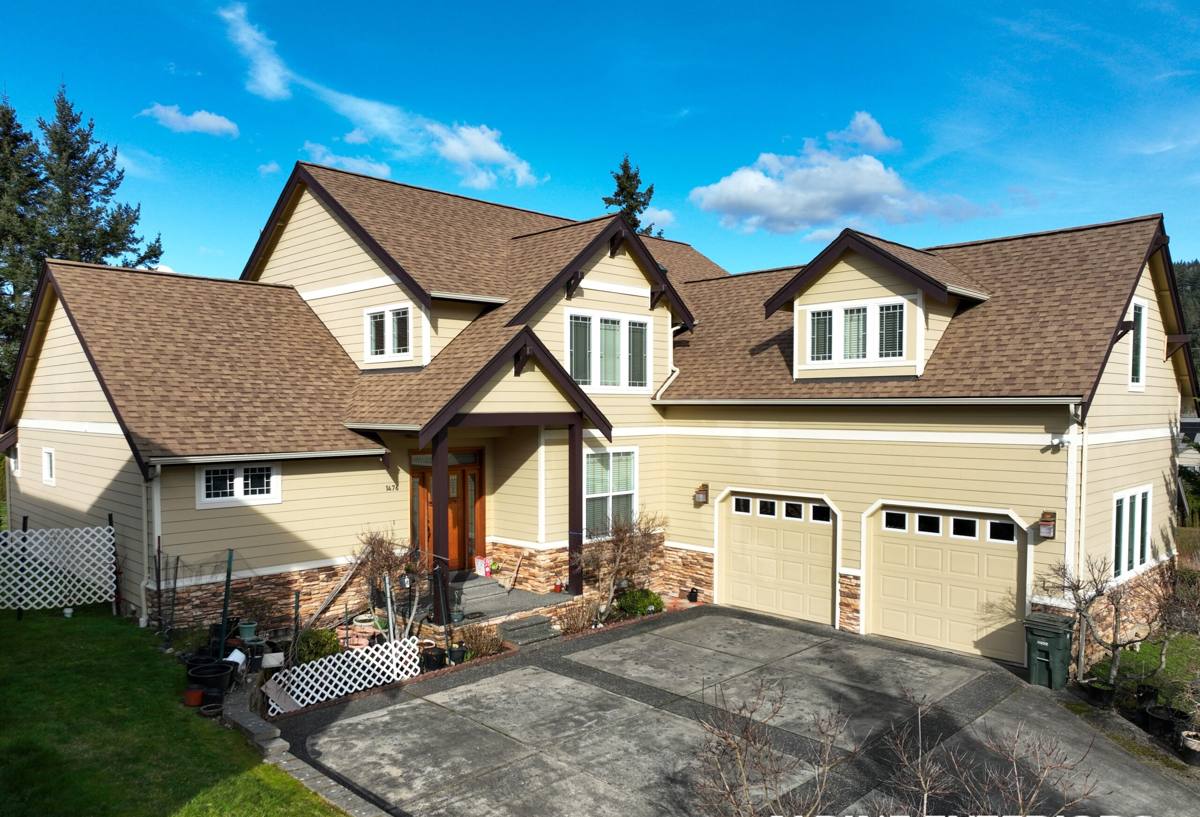
What Kendall's Weather Does to a Roof Over Time
Moss and Organic Growth
Shaded roofs in and around Kendall stay damp far longer after a rain than roofs out in the open, and moss doesn't need much more than that to establish itself. Once moss gets a mat going, it holds water against the roofing material, lifts shingle edges, and works its way into fastener lines and flashing seams. Left alone long enough, moss growth turns a simple maintenance issue into an actual leak.
Driving Rain and Wind-Driven Water
Storms in this part of Washington don't always drop rain straight down. Wind-driven rain gets pushed sideways and upward under shingle edges, around chimney flashing, and into any gap that a calm-weather rain would never find. Repairs that don't account for wind-driven water tend to leak again the next big storm, even if they looked fine on a dry day.
Temperature Swings and Roof Movement
Whatcom County doesn't get extreme heat, but the freeze-thaw cycles and daily temperature swings still cause roofing materials to expand and contract. Over years, that movement works fasteners loose, opens up sealant joints, and stresses flashing at penetrations like vents, skylights, and chimneys — usually the first places a repair is actually needed.
Signs Your Kendall Home Needs a Roof Repair
Most roof problems give some warning before they turn into a real leak. Worth checking for:
- Dark streaks, green film, or thick moss patches on north-facing or shaded roof sections
- Granules collecting in gutters or at the base of downspouts
- Curling, cracked, or missing shingles, especially after a windstorm
- Soft or discolored ceiling patches on the top floor, particularly near chimneys or skylights
- Daylight visible through the attic roof deck, or damp insulation up there
- Rusted, lifted, or separated flashing around chimneys, vents, and roof-to-wall junctions
- Sagging areas anywhere on the roofline
Any one of these on its own doesn't mean you need a new roof — it usually means it's time for a repair before the problem spreads.
What a Correct Roof Repair Actually Involves
Diagnosing the Real Problem, Not Just Patching the Symptom
Water doesn't always leak in where it shows up on the ceiling — it can travel along rafters or sheathing before dripping somewhere else entirely. A repair that just patches the visible spot without tracing the actual entry point often looks fixed for a season and then fails again. Proper diagnosis means getting on the roof and, when needed, into the attic to follow the water path back to its source.
Flashing, Underlayment, and Water Path
Most roof leaks trace back to flashing — the metal that seals transitions at chimneys, valleys, skylights, and walls — rather than the field of the roof itself. A correct repair replaces or re-seals flashing properly, checks the underlayment beneath it for damage, and makes sure water has a clear path off the roof rather than pooling or backing up under material.
Matching Materials Correctly
On an older roof, the biggest challenge with a repair is often finding shingles or panels that match closely enough that the patch doesn't stand out and doesn't create a weak seam. Mismatched profiles, weights, or even slightly different colors can leave a repaired section performing differently than the rest of the roof, which shows up as a problem again a few years later.
Repair vs. Replace: How We Help You Decide
Not every roof problem calls for a full replacement, and not every roof is a good candidate for another round of patching. These are the factors that actually drive the decision:
| Factor | Leans Toward Repair | Leans Toward Replacement |
|---|---|---|
| Age of roofing material | Under roughly two-thirds of expected lifespan | Near or past expected lifespan for the material |
| Extent of damage | Localized — one section, one penetration, one storm event | Spread across multiple roof planes or slopes |
| Underlying deck condition | Solid, dry sheathing under the damaged area | Soft, rotted, or repeatedly wet decking |
| Moss and organic buildup | Surface-level, hasn't damaged material underneath | Long-term growth has already degraded shingles or panels |
| Repair history | First or second repair in this area | Same spot has been patched multiple times already |
We'll always tell you honestly which side of that line your roof falls on. If a repair is the right call, that's what we recommend — a repair-first approach costs you less and doesn't waste a roof that still has useful life left.
Our Process, Start to Finish
- Inspection. We get on the roof and, where needed, into the attic to trace the actual source of the problem — not just the spot where it shows up inside.
- Straight assessment. You get a clear explanation of what's actually wrong, what caused it, and whether repair or replacement makes sense — with reasoning, not just a quote.
- Written estimate. Scope of work and materials spelled out before anything starts.
- The repair itself. Proper flashing, underlayment, and matched materials — done to hold up through Whatcom County storms, not just pass a dry-day look.
- Cleanup and walkthrough. Debris and old material hauled off, and we show you what was done and why.
Materials We Work With
Repair work depends heavily on what's already on your roof. Here's how the common options compare when it comes to repair specifically:
| Roofing Type | Repair Approach | Matching Difficulty |
|---|---|---|
| Asphalt composition shingle | Section replacement of damaged shingles and flashing | Low to moderate — easier on newer roofs, harder as color/profile discontinues with age |
| Architectural (dimensional) shingle | Similar to composition, but thicker profile requires closer matching | Moderate |
| Metal panel | Panel or seam repair, fastener and sealant renewal | Moderate to high — panel color and profile must match exactly |
| Cedar shake | Individual shake replacement, often paired with moss treatment | Moderate — weathering makes new shakes stand out until they age in |
| Low-slope membrane | Seam and penetration repair, patching or partial re-cover | Low — material is more uniform, but workmanship matters more |
We don't push a particular brand or system for the sake of it. Our standard is matching what's already on your roof as closely as possible and using flashing and underlayment details that hold up in this climate — that's a bigger factor in whether a repair lasts than which manufacturer's name is on the shingle.
Why a Crew That Already Works Kendall Matters
A roof repair crew that already knows this part of Whatcom County isn't guessing about how much moss growth is normal versus a real problem, or how aggressively wind-driven rain behaves on an exposed valley-facing slope versus a shaded, tree-covered lot. That local pattern recognition shortens the diagnosis step and cuts down on repairs that miss the real cause. It also means a shorter drive when a leak shows up mid-storm and you need someone out quickly rather than waiting on a crew based somewhere else in the county.
Keeping Your Roof Healthy Between Repairs
A repair holds up longer when the rest of the roof is kept in reasonable shape. A few habits go a long way:
- Keep gutters and downspouts clear so water isn't backing up under roof edges
- Trim back branches that keep sections of roof shaded and damp
- Have moss treated before it forms thick mats, not after
- Do a visual check after major windstorms for lifted or missing shingles
- Get a professional look at flashing every few years, especially around chimneys and skylights
- Address small leaks right away — they rarely stay small in this climate
If you're seeing signs of a problem on your Kendall-area roof, or just want an honest read on whether it's a repair or something bigger, we're happy to come take a look. Fill out the form below for a free, no-pressure estimate.